 SHARE:
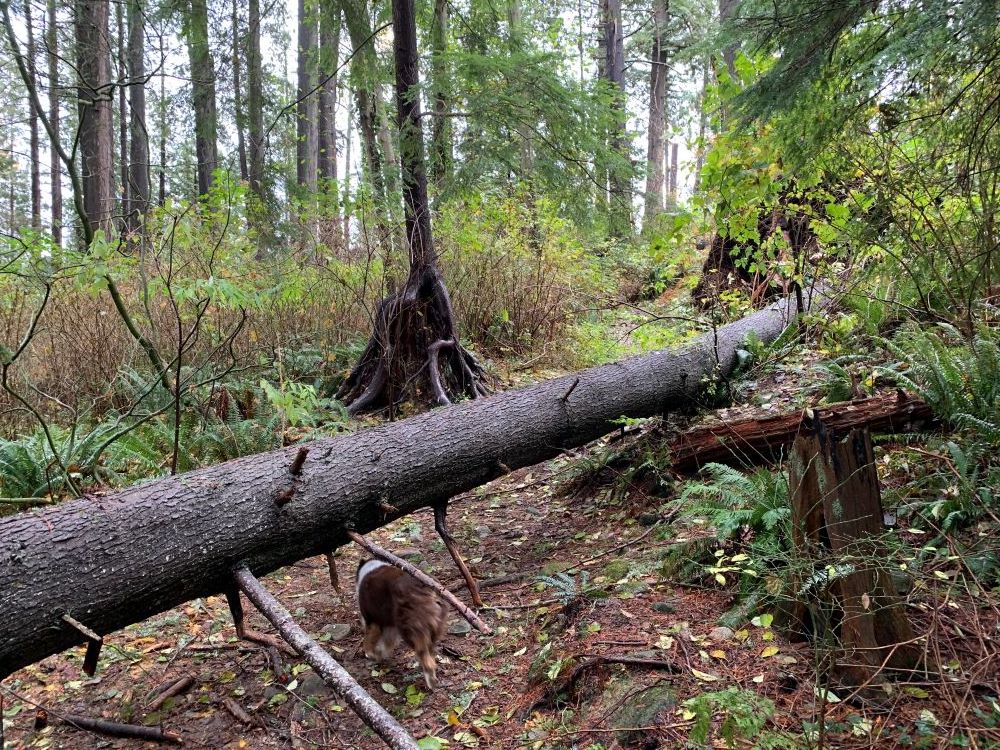
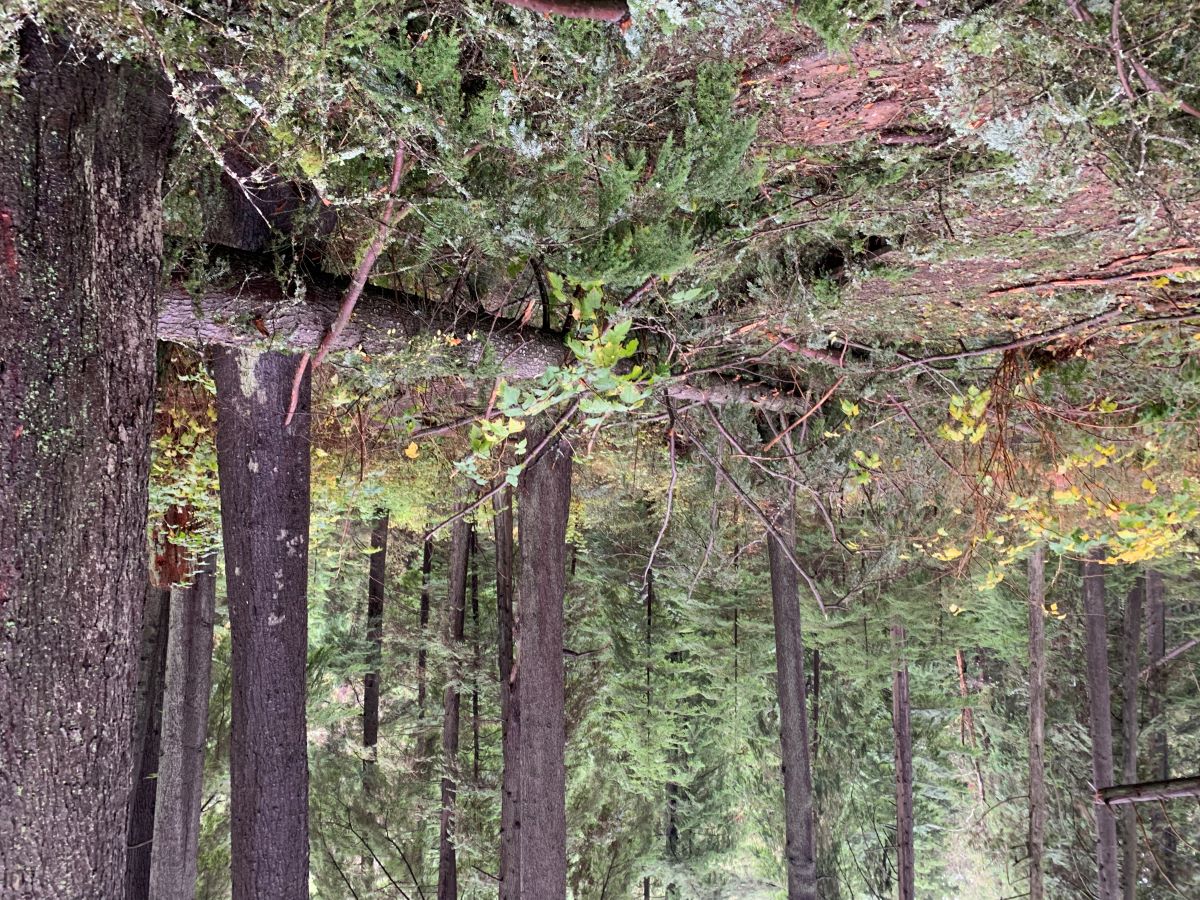
After a night of heavy rain, a big hemlock came down in our local park in November. It had stood on a slope; the rain had softened the soil around it, and its own weight had toppled it.
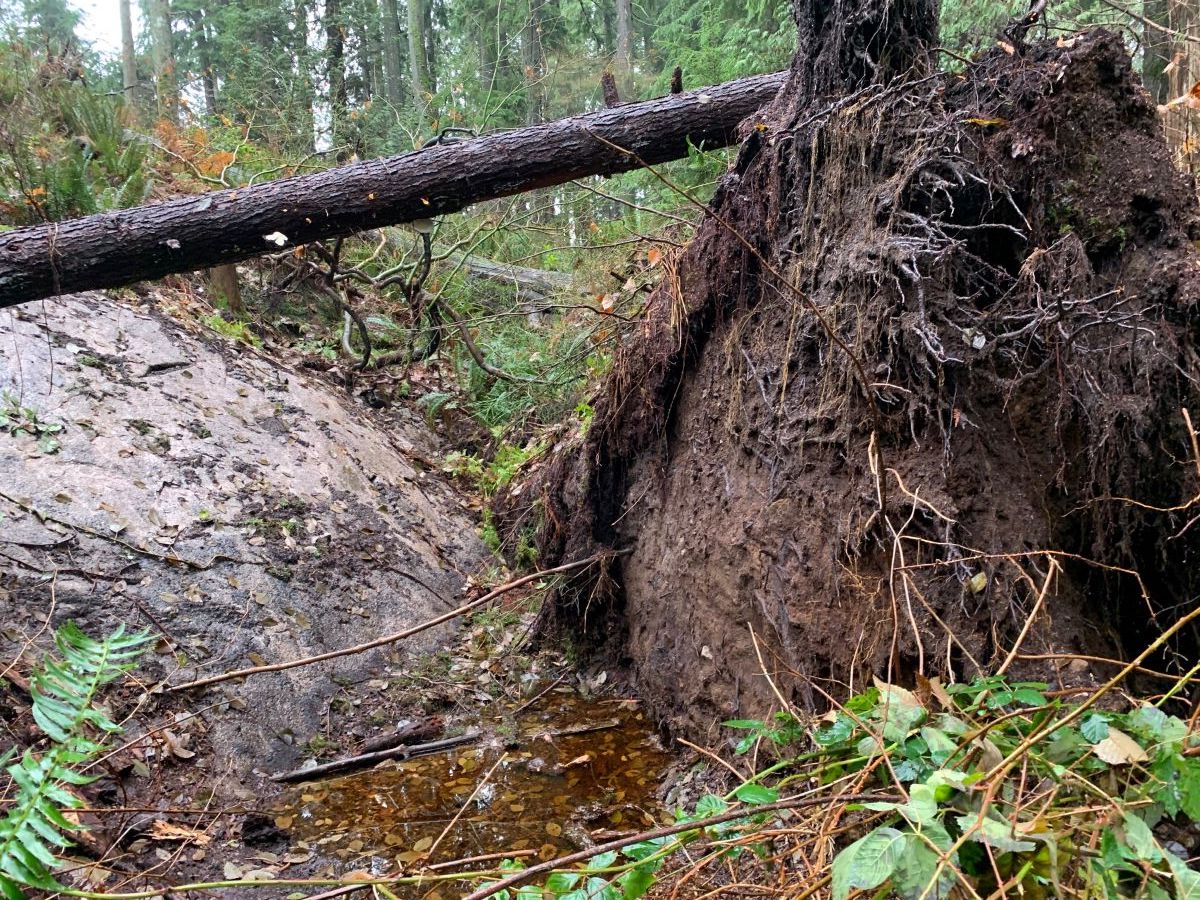
Now its roots and soil formed a vertical wall, only about a metre thick. Behind it was the smooth, bare rock it had clung to for decades — a reminder of what the last ice age had done to the North Shore. I’ve lived here for 55 years, and have walked this local park almost every day since 1972, when we moved into our house just across the street. This winter I’m here as always, but seeing the forest a little more clearly than I once did.
The fall of the hemlock in November blocked two trails where they joined, but a parks crew soon cut up the tree into logs, rolled them out of the way and left them lying there. This park is just trails and trees and a creek flowing out of a small bog; the policy, wherever possible, is to let nature take its course.
The park is a second-growth forest of Douglas firs, hemlocks, cedars and a few alders. The area was probably clear cut over a century ago. Here and there huge stumps remain, still showing notches where the loggers’ springboards had gone. Today’s trees look like saplings in comparison.
A lot of trees have fallen in recent years. Just last winter, a cedar came down and took another hemlock with it, right across the park’s main trail. In a few years the debris will rot into the thin soil and ferns will push through. Sometimes a tree dies standing, providing years of support for polypore fungi and pileated woodpeckers until the rotted snag collapses of its own weight.
The worst loss was in the storm of December 2006 that also damaged Stanley Park; as it passed east, a downburst hit the centre of our park, snapping and uprooting a dozen trees.
Now a clearing, the spot has rebuilt itself. Salmonberries and huckleberries grow among the logs, which have been efficiently colonized by fungi. Vine maples have exploited their access to light. So has a patch of invasive English ivy, which now cloaks a five-metre snag.
The park supports plenty of wildlife, though not all are residents. I once met a black bear and her cub when I was walking my dogs, and no one got hurt. (The bears, though, did not likely live much longer.)
Another time, in the woods with the dogs, I looked down and saw a skunk at my feet, scrabbling with its front paws while looking me straight in the eye. With impressive speed for an old guy, I managed to get the dogs away without their ever noticing the skunk.
The park also supports an endless supply of rats, which in turn support a family of barred owls. They are silent gliding between the trees, but very talkative when they choose to be. Pileated woodpeckers are fairly easy to spot when they’re banging away on a tree, but I suspect the owls see me far more often than I see them.
Walking on gunpowder
During the dry weather of last spring and summer, I worried about fire. Walking on the desiccated duff of twigs and pine needles was like walking on gunpowder. I worried more after a neighbour reported meeting a couple in the woods while the man was starting a campfire.
A fire ban might be in effect, but this guy seemed to think he had a constitutional right to start a fire if he wanted to. The neighbour persuaded him otherwise, but the next person might be able to exercise his rights without hindrance.
A wet autumn has made it less anxious for a neighbourhood that lives on the wildland-urban interface, even if it’s at the cost of some trees. I know the fungi are already at work on the hemlock, the threads of their mycelia exploring the logs. It will take a year or two, but eventually the fungi will emerge from the cut face of each log, or along the bark.
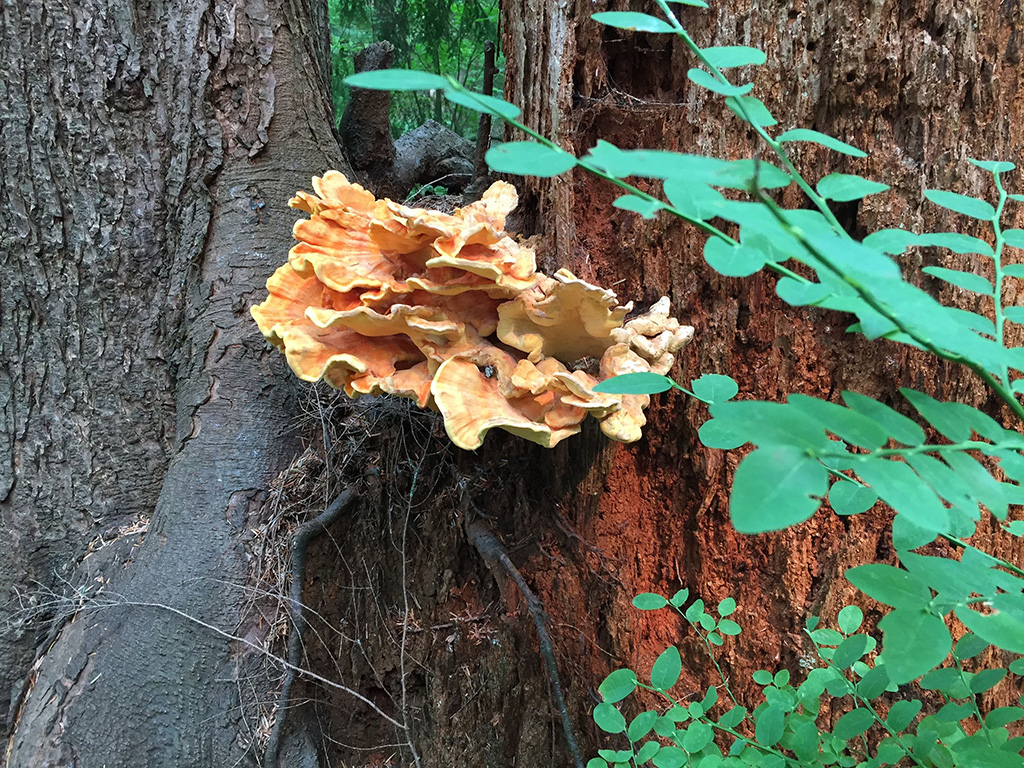
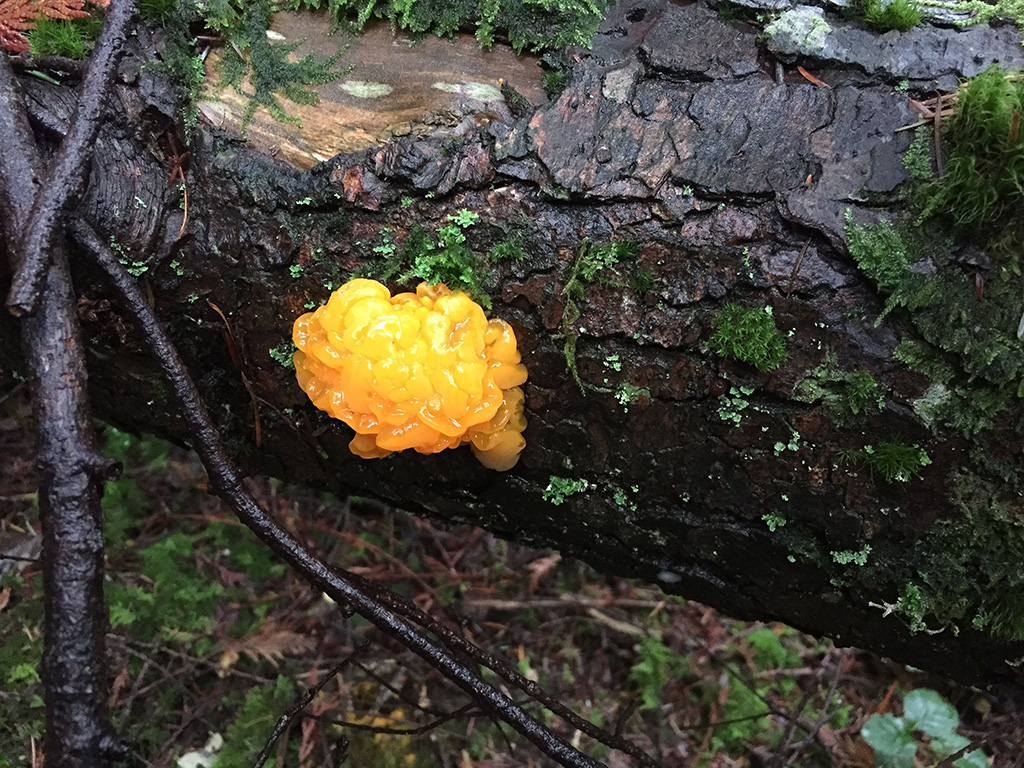
This year, orange jellies and woodlovers seem to be thriving. One rotted stump near the fallen hemlock had a predictable sulphur shelf every year, but something may have gone wrong — or the sulphur shelf just isn’t in the mood to scatter more spores.
I used to think of the park as just a convenient place to walk a dog or bring my toddlers to feast on salmonberries (I thought they tasted awful, but the girls packed them away).
But as the years went by I began to notice the fungi, the green fire of May sunshine through vine maple leaves, the nurse log long vanished, but leaving its outline in the above-ground roots of the tree it had nourished.
I saw how easily the thin, tannic soil eroded down to hardpan, the tough clay laid down by glacial streams that flowed thousands of years ago. And as with the hemlock, I saw how that soil could rip away from bedrock and then slowly return to the forest floor as rain washed it from the hemlock’s decaying roots.
And I’ve begun to see the woods as a community of plants, fungi, birds, snakes, animals, insects and untold numbers of invertebrates.
My dogs and I are transient visitors like the bears, deer, coyotes and raccoons. We may pause here, but we move on.
The fall of a tree in the forest is like the death of an elder in a small town. I may not have known the person, but I feel their absence. The light looks different; old memories return. I realize the small town has seen many deaths since I began visiting, and I don’t know it as well as I thought I did.
And yet it looks much as I remember it from my first visits over 50 years ago. Not every lost tree has a replacement yet, but bushes and ferns and fungi and worms are preparing the ground for it.
Some seedling will rise from year to year, sending its roots down to hardpan or granite, escaping the falls of other trees and perhaps hosting barred owls on its branches while enduring the countless punctures from sapsuckers and bark knocked away by woodpeckers.
The individual tree is very little. The forest is everything.
Happy holidays, readers. Our comment threads will be closed until Jan. 2 to give our moderators a much-deserved break. See you in 2024! ![[Tyee]](/design-article.thetyee.ca/ui/img/yellowblob.png)
Read more: Environment