

 SHARE:
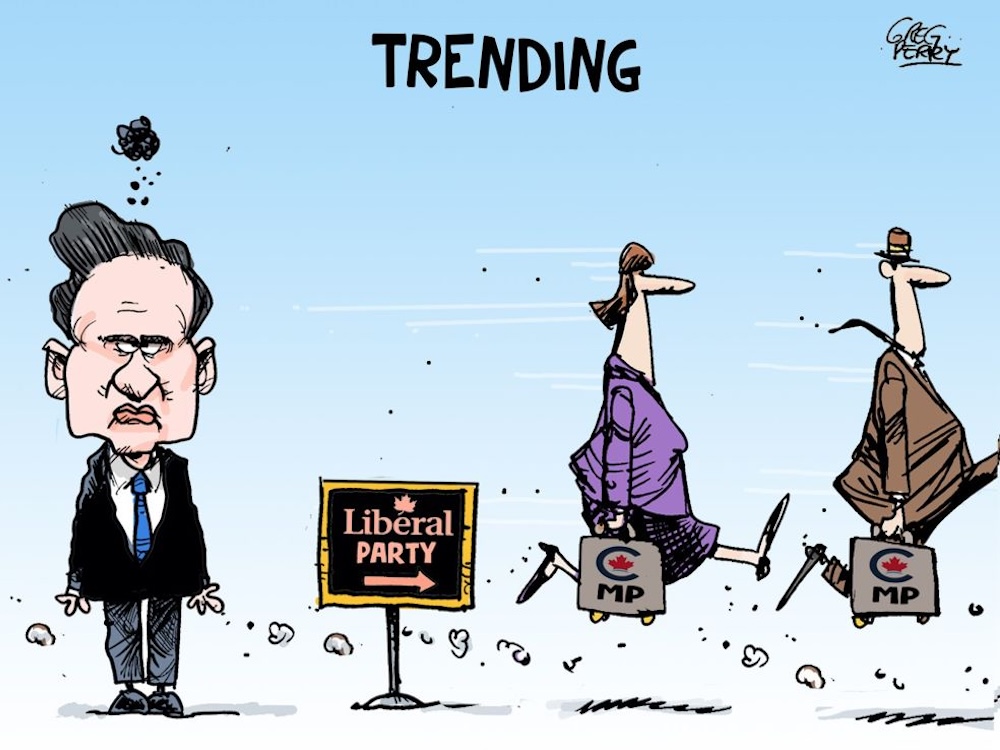
After a Liberal sweep of all three of Monday’s byelections, Prime Minister Mark Carney now sits at the helm of a majority government, dramatically altering Canada’s political landscape.
Three new MPs, all of them women, are on their way to Ottawa. Liberals will now have a free hand in Parliament to pursue their legislative agenda without the need of a coalition partner or the fear of being defeated on a non-confidence motion.
Instead of an election being potentially months away, it could now be years before Canadians head to the polls again.
Although Carney pledged to work with all parties in Parliament, Conservative Leader Pierre Poilievre threw his offer back in his face. Instead of the standard congratulations to the victor, Poilievre claimed that Carney’s majority is not legitimate because it was not the result of a democratic vote. Instead, he claimed it was the product of undemocratic, backroom deals that led to five floor-crossings that were key to the majority.
Poilievre’s analysis is somewhat strange, given that after he lost his own seat in Ontario, he took over a seat in Alberta from an MP Albertans had voted for.
When is a political tent too big?
While the new political situation is a big change, it was hardly a surprise. After Conservative MP Marilyn Gladu defected to the Liberals, leaving the government one seat short of a majority, it was a virtual certainty that Carney would get it. That’s because the two Toronto ridings involved in the byelections, University-Rosedale and Scarborough Southwest, were already Liberal strongholds.
If there is any surprise in the results, it is that Carney also won in Terrebonne, a riding 30 kilometres outside Montreal. The Bloc Québécois is very strong in this mainly francophone district. So strong that the Liberals won the seat by only a single vote in the last general election.
That tiny margin prompted the Supreme Court to annul the result because a voter’s ballot was misdirected by an Elections Canada error, resulting in the byelection. This latest Liberal victory in Terrebonne could be seen as mere icing on the cake, since it was not needed to give the Liberals their majority. But it is more than that. It is further proof that Carney’s personal appeal cuts across party lines, regional differences and specific policies. That is perhaps why Carney has been able to draw floor-crossers from both the Conservatives and the NDP. Ideology doesn’t seem to matter as much as pragmatic governance.
Will Monday’s byelection results trigger more defections from the Conservatives? There have been published reports that as many as eight more MPs from both the Conservatives and the NDP are flirting with joining the Liberals.
As strategically important as defections have been for the Liberals, they are not without risks. What will Carney’s own caucus who ran as Liberals make of some of these changelings? Gladu is a case in point. How good a fit can a hard-right, social conservative like Gladu, who once opposed a bill banning conversion therapy, be in a caucus full of social progressives? Will Carney’s “anyone is welcome” approach to defectors come back to bite him?
Poilievre’s sinking ship
But Carney’s potential political problems are nothing compared to the dire straits that Poilievre finds himself in. His polling is a leader’s nightmare. Nik Nanos, Canada’s premier data scientist, had this to say about the Conservative leader:
“In a week that featured focus on U.S. tariffs and an MP defection, last week was not a great week for Pierre Poilievre. He now trails Mark Carney in the preferred PM tracking by 31 points.”
What is driving the Conservatives’ poor performance? Part of it comes down to Donald Trump. Trump’s belligerent attitude toward Canada, as well as his punitive tariffs, have forced Canadians to decide with some urgency who is best able to deal with the bully.
They have overwhelmingly decided that Carney is that person. Part of that is based on his experience as the chairperson of national banks in two countries. Part of it also comes from Carney’s first year in office, largely a period of unspectacular but competent stewardship of the nation’s business. Carney has stood up to Trump without being obnoxious, while reaching out to the rest of the world to find more reliable trading partners.
But the most critical reason for the malaise facing the Conservatives must land on Poilievre’s doorstep. He brings no experience to the table other than being a professional politician. As inadvisable as it may have been to say it out loud, Carney was right when he called out Poilievre as a rank amateur. He seems to represent little more than the lust for power and an enduring regard for the politics of his mentor, former prime minister Stephen Harper.
The misgivings Canadians have about Poilievre, so graphically reflected in the polls, have only deepened in recent days. Conservative MPs who are leaving the party demonstrate that members of his own caucus would rather switch than follow his dubious leadership.
Instead of trying to face his own inadequacies, and perhaps work on them, Poilievre has instead criticized the Conservative defectors as turncoats who have betrayed their voters.
But has Poilievre betrayed his party? He not only led the party to defeat in the recent federal election but also lost his own seat. Poilievre continues to ignore his own record of failure and to behave as though he has been a successful leader. Abject failures at the polls and in the polling expose the delusion of that approach.
What’s next for the Conservatives?
The byelection wins of Danielle Martin, Doly Begum and Tatiana Auguste give a broad hint of what may happen in Canada’s next federal election. With the next trip to the polls likely several years off now that Carney has a majority, there is plenty of time to face the writing on the wall for the Conservative Party of Canada.
Canadians have made clear their opinion of Poilievre. By every measure, he is not seen as prime minister material. The only question now is what the party will do about it. Sticking with the status quo is the recipe for continuing political irrelevance. ![[Tyee]](/design-article.thetyee.ca/ui/img/yellowblob.png)
Read more: Federal Politics








Tyee Commenting Guidelines
Please note that email notifications for replies are not currently working due to a software issue which may be resolved in a future update.
Comments that violate guidelines risk being deleted, and violations may result in a temporary or permanent user ban. Maintain the spirit of good conversation to stay in the discussion and be patient with moderators. Comments are reviewed regularly but not in real time.
Do:
Do not: