

 SHARE:
[Editor’s note: The Tyee published a version of this article on June 24, 2011. The author has added a postscript.]
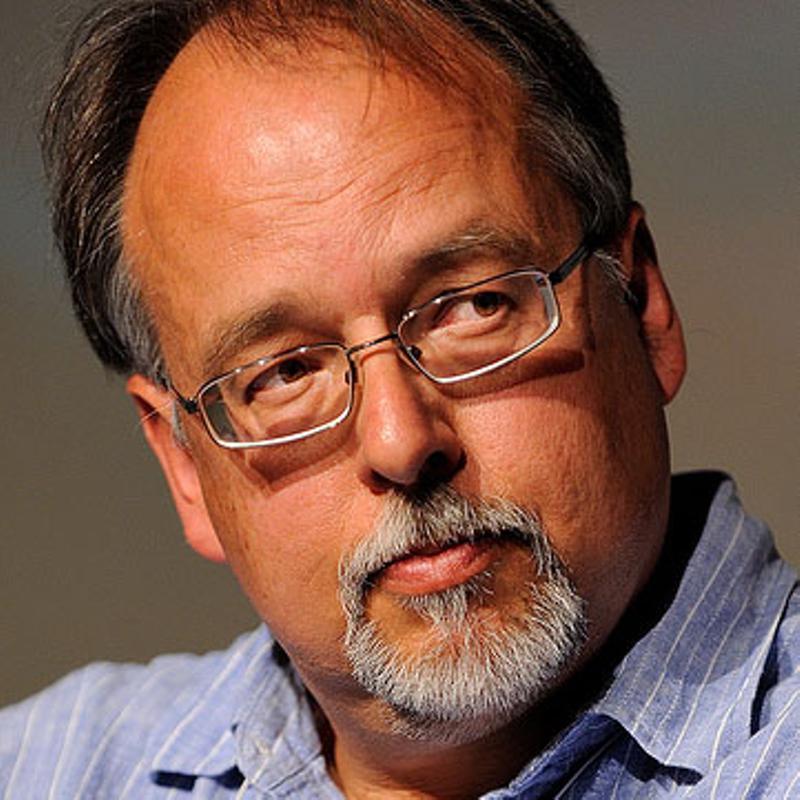
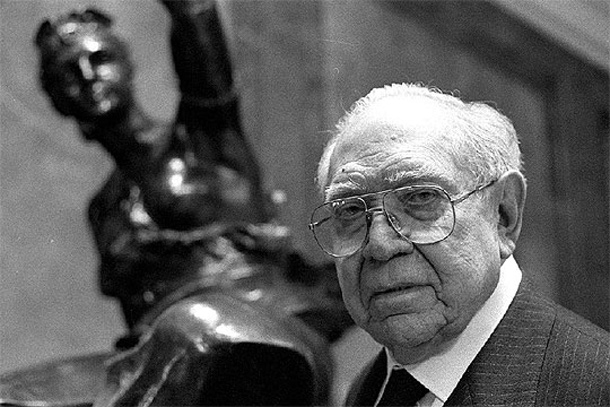
One day the indomitable Arturo Uslar Pietri (and his statue should tower over Fort McMurray), awoke from a feverish dream in Caracas and grabbed pen and paper. The young writer called his dream “To Sow The Oil” (Sembrar El Petroleo).
The year was but 1936 and Venezuela was already the world’s second largest oil supplier after the United States. U.S. companies exported the Venezuelan crude so that every Sunday millions of gringos could go joyriding in their flivvers and jalopies.
Pietri’s bold dream (and the man was but 30 years old) went like this: for most of its history Venezuela was an agrarian country. But now its true physiology became clear: it was a backward place that lacked schools, hospitals, aqueducts, roads, sewers and parks or everything except malaria.
Moreover, the cattle, coffee and coca businesses were shrinking. In fact, the only economic activity that shined in Venezuela “originated from destructive and non-reproductive ideas such as mining and oil” or the felling of hardwood trees.
So Pietri dreamed of using the transient wealth of oil to develop a productive and renewable economy based on agriculture and national industries. He dreamt of what oil could permanently create instead of what oil could temporarily buy.
To Pietri it seemed a simple call to reason. Oil was not the product of hard work but a one-time gift of nature. “Take the dark and foul-smelling substance that sprouts from drilling towers and that flows heavily and viscously through the oil pipelines” and convert its magical dollars into “irrigated and sowed hectares, into fat herds, into chimneys of factories.” Pietri was, well, a writer.
Somewhat in disbelief, the novelist watched his words take on a magical life. The phrase “To Sow the Oil” soon appeared in newspapers and universities. Why, even the Venezuelan Development Corporation adopted the slogan in 1946.
‘Ravenous and threatening’
Time flowed by and more oil was pumped. During the Second World War, new laws won a fair share of oil profits for Venezuela or “the largest that any country has ever derived from a single activity.” But a dictator used the money to concentrate his power and champion what he called “the conquest of the physical environment.” Pietri fled the country. Everyone still talked about sowing, but the powerful only wanted to spend.
In 1961 Pietri revisited his youthful dream and revised his thoughts. To his dismay he found that little oil wealth had been planted. It all went to “ornate public works, sumptuous or unjustified investments and to the excessive growth of the bureaucracy.” The avalanche of petrodollars did not take the grime off the poor’s face or polish Venezuela’s economy. Or build resilience. Oil only sowed more interest in oil.
Pietri repeated his call: take the returns of oil and mining and employ them for “the maximum benefit for the country.” Sowing the oil, he noted with much displeasure, “continues to be the fundamental slogan for Venezuelan progress.” He ran for president in 1963 but became, as the Guardian noted, “the best president Venezuela never had.”
In 1972 Pietri, now one of Venezuela’s foremost intellectuals (which means the elites just ignored him) warned that oil had become Venezuela’s destiny and that the country looked more like Saudi Arabia than, say, Colombia. “It is like the minotaur of ancient myths, in the depths of his labyrinth, ravenous and threatening.”
He went on: “The vital historical theme for today’s Venezuela can be no other than the productive combat with the minotaur of the petroleum. Everything else loses significance. Whether the republic is centralist or federalist. Whether voters vote white or any other color. Whether they build aqueducts or not.... Whether the workers earned five bolivares or 15 bolivares.... All these issues lack meaning. Everything is conditioned, determined, created by petroleum.”
‘The resource curse’
More time passed and a series of democratically elected Venezuelan presidents repeated the slogan but squandered the money. Events, booms and easy living defeated them while academics mumbled about “the resource curse.” Meanwhile Pietri went on to host a television show on Venezuela’s history and literature. The old man sat behind a desk and greeted viewers with the line, “Welcome, my invisible friends.”
In 1995 a journalist from the petrostate of Oklahoma visited Pietri in his neighborhood of La Florida in the sprawling chaos of Caracas. For the gringo, Pietri summarized the country’s history in three simple sentences: Columbus discovered it, Bolivar liberated it and “oil riches sank us.”
During 75 years of oil production more than $175 billion dollars had poured into the country. But all that Venezuela had to show for it was a modern airport, a highway system, a clean subway and many people with degrees. But four in 10 Venezuelans lived in poverty and corruption was rampant. Moreover, everyone expected a government handout. The wealth of oil had taught Venezuelans a crude lesson: it was better to be lazy and cunning than hardworking and honest.
Venezuela, Pietri explained, was once like the poor farming kingdoms of Texas and Louisiana. “The country was poor, small and not very developed, with limited possibilities. Then suddenly without effort, without work, it became immensely wealthy. That is the short history of Venezuela.”
‘Country without a brain’
Before the dreamer died, the poet Rafael Arraiz Lucca paid him a visit in 2001. Pietri was then 94 years of age and battling cancer. He told Lucca that Venezuelans “are a very immature and superficial people. A mountain of resources fell on this country and we were not capable of using them wisely.”
The old man continued: “The day when we write about Venezuelan history after the discovery of oil is going to be very frightening.... No other country was rained upon so suddenly by massive riches, the equivalent of six or seven Marshall Plans. This is an immature country without a brain and without a managerial class.”
The poet then asked Pietri about Hugo Chavez, the colonel and populist who came to power in 1998 and promised, of course, to sow the oil. Pietri called him a selfish sloganeer.
“He is delirious, extremely arrogant and he says anything that comes to mind. What a disgrace.” Events have only strengthened Pietri’s assessment: the authoritarian Chavez played the old game of either spending petrodollars to concentrate the power of the state or waste it on grandiose schemes of little real consequence. The poor of Venezuela today remained as poor as they were 40 years before.
But Pietri had more to say. “I tell you, I am in a very bad state of mind, I have no hopes, I exist as though I’m in Dante’s Inferno. We have nothing to hold on to here. It’s sad to see a country without a managerial class. An improvised and improvisational country. To think what this country might have been like with its mountain of resources, if only the government had had a bit of common sense.”
Shortly after that final interview, the dreamer that encouraged oil exporters to use their temporary and finite oil wealth to build permanent and renewable economies, died. Chavez, of course, did not attend the funeral.
Sow what?
Canada now exports more oil to the United States than Venezuela. Just as Pietri’s country once pompously called itself “grand,” Canada now arrogantly calls itself a “clean energy superpower.” But everyone agrees Canada is just improvising: we are neither clean nor super.
And what would Pietri make of Canada’s petrostate, where the corrosive reality of oil is rarely discussed in polite company?
With bitumen now accounting for over seven per cent of our GDP and about 14 per cent of our exports, the minotaur of petroleum has seized our destiny. But wait. To date not one major Canadian public intellectual (with the exception of Peter Lougheed) or one major newspaper has talked about sowing the oil. Or asked what we are doing with the money. Or dreamt of making the transition from a destructive economy to a renewable one. Or even cautioned about the ethical perils of easy money.
It’s as though we’ve become another oil-based improvisation with no time for dreams.
Postscript, January 15, 2026:
In 2025 the U.S. government of Donald Trump announced a new national strategy that set two priorities: securing oil reserves and dominating the Western Hemisphere with a new Monroe Doctrine. That was followed by a massive military buildup in the Caribbean and the kidnapping of Nicolas Maduro, successor to Hugo Chavez as Venezuela’s president.
The Trump administration is now considering a plan to take over Venezuela’s oil industry for years to come in an effort to drive oil prices down to $50 a barrel to ease inflation. According to the Wall Street Journal the plan would “effectively give the U.S. stewardship of most of the oil reserves in the Western Hemisphere, when factoring in deposits in the U.S. and other countries where U.S. companies control production.” Fossil fuels still dominate 80 per cent of the primary energy consumption in the world.
Canada is now the world’s fourth major producer of oil. Fossil fuel exports account for 20 per cent of the nation’s GDP and nearly a third of the nation’s greenhouse gas emissions. The majority of oilsands extractors are foreign owned, largely by U.S. companies.
Canada’s federal government recently twinned an export pipeline at a cost of $36 billion to secure more diverse markets for the bitumen. As Alberta and the oil industry press for another export pipeline to the west coast, there has been no national debate about oil’s corrosive influence on the nation’s economy and politics over time.
Nor has there been any national discussion about revenue transparency, saving for the future or sowing the oil for economic diversification that makes the country less vulnerable to oil shocks. ![[Tyee]](/design-article.thetyee.ca/ui/img/yellowblob.png)
Read more: Alberta




Notice about commenting changes
The Tyee’s commenting system will be moving to a new platform on Nov. 12. If you’re already a Tyee commenter you must register with the new system on or after Nov. 12 with your preferred username.More information can be found here.