
Books

'The Jesus Sayings'

Author Rex Weyler on sorting myth from history, and why we need both.

By Linda Solomon, 2 May 2008, TheTyee.ca

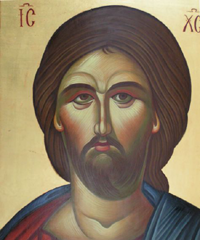
Jesus Christ

Traditional Greek-Orthodox Byzantine icon.

  • The Jesus Sayings
  • Rex Weyler
  • House Of Anansi Press (2008)

In his knockout book The Jesus Sayings: The Quest for His Authentic Message, Vancouver author Rex Weyler deconstructs one of the most highly constructed figures in the Western world. By the end Jesus appears as a wise and humble teacher, advocating self-awareness and social compassion. He challenged the conventional thinking of his time, replacing blind ritual with informed action.

Weyler uses the earliest ancient sources and modern text scholarship to distinguish the authentic sayings of Jesus from later interpretations, innocent mistakes, and later not-so-innocent doctrine. The core, genuine message of Jesus includes pearls such as this:

  • Find the light inside, and share this light with the world
  • Give to anyone who asks; knowledge and righteousness are revealed in action
  • Beware those who claim to speak on behalf of God; first, know yourself

"This authentic message is as useful today as ever," says Weyler, whose search for a historical Jesus is supported by recently discovered texts, such as the Gospels of Thomas, Mary, Philip, the Ebionites and others -- banished and lost from human history for 1600 years. During the last century, archaeologists have retrieved these texts from their desert graves, providing what Weyler describes as "astonishing revelations" about Jesus and his followers:

We discover that the first Jesus followers weren't "Christians" at all. Like Jesus, they were peasant Jews with naturalist beliefs and pagan traditions. And we find that Jesus borrowed freely from worldly wisdom (Taoism, Buddhism, and Cynic philosophers).

Weyler opens the book with a 1652 quote from Margaret Fell, the Quaker founder: "We are all thieves; we have taken the Scriptures in words, and know nothing of them in ourselves." The book sets out to solve this fundamental problem.

"The voice of Jesus survived decades of oral transmission before written records appeared, and then centuries of revision thereafter," Weyler says. "Jesus wrote nothing and spoke in Aramaic. The gospel authors composed in Greek, and some 40 years elapsed between the execution of Jesus and the first written narrative accounts. The earliest surviving complete manuscripts of the popular gospels appear three centuries later. We might wonder then: How accurately did the message of Jesus survive decades of spoken discourse and centuries of revision?"

Weyler is not a Bible scholar by trade, but a seasoned journalist. His book Blood of the Land was nominated for a Pulitzer Prize and his last book, Greenpeace: The Inside Story attracted honours as well. In the 1970s, Weyler was a co-founder of Greenpeace International.

He remembers his grandmother as his first religious hero. "She most genuinely embodied the authentic spiritual life as I understood it at age 13," he recalls. She prayed daily for others, treated everyone with respect, and gave whatever remained in her bank account at the end of every month to various Christian charities.

"As a youth," he writes, "I considered an idea that probably occurs to many young people faced with the problem of supernatural punishment and reward: Perhaps I'm better off to believe what I'm told, even if it seems improbable, since the reward of believing correctly, eternal bliss in heaven, is infinitely better than what might come of correctly not believing. Doubt poses the monumental, if unlikely, risk of perpetual torture in hell."

He later discovered that this is the famous "Pascal's Wager" posed by the 17th century French mathematician. "Even as a youth, I realized that one persistent fact defeats this gambler's logic: There are many versions of deities all over the world, so even if we imagine it safer to believe in God, which god should we believe in?"

As Weyler clashed with his catechism teachers, he discovered that pointing out religious contradictions can be incendiary. "The Toronto Star called my book 'revisionist,'" Weyler says, "as if the search for truth ended in the fourth century. A so-called 'theologian' wrote a letter to a newspaper calling my book 'blasphemy,' even before he had read it. Some theologians forget that 'ology" means to study. Apparently, to some people, even raising these issues is considered profane."

"In the West, when we discuss Vedic or African beliefs we have no problem talking about it as mythology. But when people talk about their own religions, they cling to idea that their metaphors are real."

This can be dangerous, he says, "because logic and mythology both have value. And to honour both, we need to distinguish between them. Through myth and story we examine human feelings -- love, regret, hope -- that cannot be defined by pure data. We produce novels, poetry, music and dance to examine the mysteries of life beyond logic. History, on the other hand, is important because it teaches lessons about real decisions and actions in the world.

"Organized religions often mistake their mythologies for history. Most of the time, this doesn't hurt anybody. It doesn't affect my life if my neighbor believes there is one deity or a hundred. However, it does hurt others when people presume that their mythology gives them the right to persecute others. We witness religious violence every day. We see how people use religion to justify war and inhumanity. Religious beliefs are too often used to separate people, abuse children, keep women in slavery, and promote violence from Belfast to Palestine. If we fail to distinguish mythology from history, our mythologies are destined to clash with the heartfelt mythologies of others."

In our conversation, here are some other comments Weyler had to share . . .

On what Jesus would say about religion today

"He would not recognize Christianity because he wasn't a Christian and he never claimed he was a messiah. The 'Christ' story was introduced by Paul, not by Jesus. The idea that 'faith' in a messiah could land one in heaven came from Paul and later church doctrine writers, not from Jesus. The letter-writer Paul, never knew Jesus, tells almost nothing about him, and created his own new religion. This Paulist religion was later linked to Jesus by church writers.

"The Messiah, or 'anointed one,' in Judaism was a title given to Jewish kings such as David, who might end the oppression of foreign kings and establish a kingdom for 'God's people.' The Persians believed in a similar idea. Jesus does not claim to be such a person, and he encourages his listeners to seek spiritual resources within themselves, not to wait around for a deity to solve their problems."

On stalking the historical Jesus

"I was genuinely curious about whether or not Jesus actually existed as a historical person, and if so, what he really said. About five years ago, during the U.S. invasion of Iraq, I began looking into these questions. I reviewed the archaeology, began reading the earliest known texts that attested to Jesus, and studied the modern scholarship that has helped distinguish his actual words from the doctrine of later writers.

"Throughout history, even today, people have reinterpreted Jesus for political purposes, using Jesus as an excuse to go to war or oppress other people. I knew there existed a huge gap between the authentic message of Jesus and the misuses of his name to justify violence and hatred. For many years, I have been disturbed by the abuse of children in the churches and residential schools. How did the message of Jesus go so wrong?"

On sparring with the nuns

"At the age of 13, I began asking questions in catechism class. Take Hell, for example. I didn't believe that a God who could create the whole universe would set up an eternal torture chamber for people who had never been taught the presumably correct doctrines. The nuns told me 'We can't understand God's purpose,' a very unsatisfying answer. We possess common sense and reason. We don't have to believe preposterous things that people invented centuries ago and attached to the name of the peasant Jewish sage Jesus."

On who really ordered Jesus's execution

"Paul blames 'the Jews.' The New Testament gospels adopted this explanation, which has served as Christian doctrine ever since. However, the only parties in the first century with authority to execute anyone in Palestine were the Romans. The crucifixion of Jesus was a Roman job. They crucified troublemakers, sometimes by the hundreds, to intimidate the general population.

"There are stories of peasants following a messiah into the desert, only to be rounded up and slaughtered by the Romans, who didn't like the riff-raff assembling and posing a political threat. Anyone such as Jesus or John the Baptist who attracted crowds would be considered a political threat."

On whether we really need to know more about JC

"Jesus is one of the most researched topics on the planet. Nevertheless, we need to take a fresh look at what Jesus actually said, because his message has been buried under centuries of doctrine and his name has been used to acquire power and money.

"Since the late 19th century, new manuscripts have been discovered and translated, including the gospels of Thomas, Mary, Philip and others. To understand what Jesus really said, we need to carefully read these documents, compare them with each other, and separate his most likely words from the messiah religion of Paul and the machinations of fourth century Roman sycophants."

On the mysterious woman, Mary Magdalene

"The gospels of Thomas and Mary are particularly important and revealing. Mary Magdalene was slandered by the churches, called a prostitute, but she was an honoured disciple, who had a special relationship with Jesus. The Magdalene has been trivialized again in modern portrayals as Jesus' wife or girlfriend, but she appears in the historical record as a strong woman leader in her own right, a woman of great courage and wisdom.

"I was not interested in doing a pop treatment of Jesus and Mary, with all the royal bloodline hoopla. I wanted to know the real history, purged of ancient prejudice and modern fiction."

On the bloody effort to make a Christian monolith

"The depressing discovery for me is the tragedy of the manipulation and misinformation, innocent seekers abused, libraries burned, manuscripts destroyed, and the full horror of what the grasping for power did to the truth.

"By the fourth century, Constantine adopted the messiah religion of Paul, merged it with a Romanized Mithraism borrowed from Persia, and created his state religion which we now call Christianity. Very little of this echoes the voice of the modest Jewish, Israelite peasant Jesus.

"We have allowed absolute propaganda to stand as history. Constantine often gets credited by historians with ending persecution against Christians, but this is simply not true. He only ended persecution against his Christians. He persecuted and executed all the Jesus followers who did not adopt his version of Christianity. His armies eradicated the authentic Jesus followers and executed innocent ascetics. They burned the libraries of Europe and Alexandria in an attempt to purge all competing ideas.

"Constantine and his favored Bishops drafted their religion at the Council of Nicea in 325, and their doctrines had almost nothing to do with Jesus or his authentic message. They outlawed the 80 competing factions of Jesus followers and hundreds of texts.

"We now know what some of these texts said because some brave monks in Egypt buried them. Archaeologists have discovered them over the last century, and now we have a better understanding of what Jesus really said, as opposed to what Constantine said.

"The war against knowledge lasted for another 1000 years, through the horror of the Inquisition and then the purges and persecutions of the so-called reformed churches. It is time now that we learn about the authentic message of Jesus just as we might learn about the authentic ideas of Buddha or Aristotle. The Jesus Sayings is my effort to find this real message.

On what Jesus was about

"Jesus starts with knowing yourself, finding the light inside, and then sharing that light with the world. For Jesus 'knowing yourself' is not a private affair, but the beginning of a public affair. For Jesus, knowing one's self, is the first step to offering comfort and compassion to the world."

Rex Weyler speaks on "Jesus, the Magdalene, justice, ecology, and action," Saturday, May 10, 7:30 p.m., Canadian Memorial United Church, 1806 W. 15th Ave.. Presented by Banyen Books.

 [Tyee]

39  Comments:

  • dorothy

    01-05-2008

    not new

    With all due respect: this stuff is not new revelations (no pun intended). It looks like a pretty close paraphrasing of the knowledge in Burton L. Mack's 1993 book, The Lost Gospel, the Book of Q and Christian Origins. Good to have people reminded of the greater perspective now and then, but it should at least be recognized, that it has been said before.

  • ME2

    01-05-2008

    Far from new

    Yes, Dorothy, the account put me in mind of The Jesus Seminar, an interfaith study which holds that perhaps only a third of the sayings attributed to Jesus are consistent with one another and thus logically His.

    Anyone today who believes in the literality of the Bible is not in the least interested in entertaining other ideas, whatever proof is offered.

    Paradoxically, they are not at all loathe to offer "proof" of its literality !! ie, red herrings like "Scientific Creation."

    In the end, all that we are left with is that religion of whatever kind is totally dependant upon faith. The illogic of this is easily dismissed by saying "But all the others are wrong."

  • Jeffrey J.

    02-05-2008

    Ethical Teachings Important

    A great article.

    Separating the ethical teachings of Jesus of Nazareth from the Catholic church (and other Christian regimes) is an uphill battle. But one which we must continually strive to do. Organized Christian religions are loath to accept this distinction as it immediately undermines their control over their subjects.

    Thus, thousands of pages have been written trying to deny the basic discovery of modern philosophy: ethical teachings can stand on their own without resort to a supernatural being or an organized bureaucracy.

    Jesus teachings are a very good example. His ethical exhortations (Sermon on the Mount being one of his best) do not require a "god" or a "church" to be accepted by society. Jesus eschewed money and wealth. Early adopters of his ethics were mostly women and slaves.

    Gandhi is another example. He developed an ethical framework of peaceful non-violence to inspire social change. Mohammad, while less of a pacifist, reformed the treatment of slaves, women and reduced male dominance.

    All of these ethical precepts stand on their own. We all intuitively see their value and logic. None require the concept of 'god' or 'church'.

    Books like these are an important step in our society's progress towards ethical progress without the need for black magic. Thanks Tyee!

  • sickofrel

    02-05-2008

    'The Jesus Sayings'

    There is still no extra-biblical evidence that the character Jesus written about in the Xtian bible actually existed.

    Any discussion of what "he" actually said is predicated on unproven myth. That makes this book a complete waste of reading time.

    You may as well discuss the difference between what Zeus said, and what people said he said.

  • Rex Weyler

    02-05-2008

    Evidence of Jesus, Yeshua

    Mr. Sickofrel is mistaken about the evidence for an historical Jesus (Yeshua).

    Some historians doubt Jesus existed, but no one in the field is unaware of the extra-Biblical evidence: Ebionites, Nazoreans; the Thomas, Mary, Philip and Gnostic accounts; hundreds of fragment accounts; two possible references in the Jewish historian Josephus, and a vague reference in Tacitus. I examine all of this in my book.

    None of this proves that Jesus existed, and his story includes fanciful legend. We face the same challenge in knowing what Lao Tzu or Guatama Buddha said. The important point is this:

    Regardless of whether Lao Tzu, Buddha, or Jesus existed, the body of ideas and wisdom associated with their names does exist and in each case represents an historic treasure.

    For excerpts from my book, see rexweyler.com. In the resource section, I provide links to the best historians in this field: Burton Mack, Elaine Pagels, John Dominic Crossan, and so forth.

    For anyone interested in discussing this history, I'll be speaking about it with Minister Bruce Sanguin at the Canadian Memorial Church (16th & Burrard, Vancouver) on Saturday, May 10, 7:30 PM.)

    Know yourself. Give to others. Sounds simple.

    Cheers, rw.

  • Fogotwillingate

    02-05-2008

    Jesus the Who?

    Religion is the biggest fraud ever devised. The Jesus' story was embellished for political purposes. It was so poorly received in Roman Palestine, that Paul - a Roman citizen - had to peddle it to Greeks, who were primed to accept anything contrary to the Roman Pantheon, which was a derivative of Greek/Etruscan, etc concoctions. The New Testament - cleansed of embarrassing sections (apocrypha) - was first written in Greek, to advance the anti-imperial agenda. Paul of Tarsus came to reject Roman control, and praticed secret treason.

    As for the Hebrew kernel, Abraham was a Chaldean con-man who found pigeons in the Hebrew minority in Mesopotamia. Pre Hebrew Chaldean magic scripts have been long collected by archaeologists. As for the Muslims, they are indoctrinated to accept that both Jewish and Christian "holy" texts were distorted by "Shaytan" (satan), and that Abraham was the first Muslim. Except where strategic deception (al-Taqiyah) dictates, a Muslim WON'T touch "Shaytanic" scripture. In some cults, only a Sheikh with 6 years training can conduct comparative religious study of the Judeao-Christian Testaments (to the profit of deceit). So much for Jimmy Carter's "blood of abraham" unity flatulence.

    Science dictates: cultic spew on the age of the universe is snakeoil. In fact, some light that strikes a self-deceiver's eyeballs originated as long as 10 billion light years ago. No? Then tell me what kind of a deity would create suspended - and distorted through gravity/time shifts - light, AFTER the nominal source was created. Or maybe, the god entity only needed the worship of fools for the last 3,000 religious polluted years.

    You were spoonfed religion with your pablum as infants; reject it with science, as adults. There are no prophets or gods; there are con-men and their fictions.

  • RickW

    02-05-2008

    History = Fiction

    “History is written by the victors.”
    - Winston Churchill

  • sickofrel

    03-05-2008

    "The Jesus Sayings"

    NW said: Mr. Sickofrel is mistaken about the evidence for an historical Jesus (Yeshua).

    "Some historians doubt Jesus existed, but no one in the field is unaware of the extra-Biblical evidence: Ebionites, Nazoreans; the Thomas, Mary, Philip and Gnostic accounts; hundreds of fragment accounts; two possible references in the Jewish historian Josephus, and a vague reference in Tacitus. I examine all of this in my book."

    The sources you mention (Ebionites et al) were writing two hundred years after the alleged event. These are not eye-witness accounts, nor are they even contemporaneous writings. Fragmented accounts are nice in Indian Jones movies, but useless in real scientific inquiry. The references to Jesus in Josephus and Tacitus have been shown to be fraudulent. Josephus himself, given his position in the Holy Roman Kingdom of Spain has to be questioned, if not doubted.

    "None of this proves that Jesus existed, and his story includes fanciful legend. We face the same challenge in knowing what Lao Tzu or Guatama Buddha said."

    We don't have the same problem with Lao Zu or Buddha. We have copies of their literature and what their contemporaries said about them. We have nothing that dates to the period when the alleged Jesus is said to have existed.

    "Regardless of whether Lao Tzu, Buddha, or Jesus existed, the body of ideas and wisdom associated with their names does exist and in each case represents an historic treasure."

    If Jesus didn't exist, why are your writing a book on his teachings? Why do you sound like you actually believe he existed? By the way, what you call the teachings of Jesus were around for centuries before his apparent existence. The resurrection myth was not unique to xtian mythology. Other cultures had this myth long before the Roman Catholic Church and it's descendants.

    I would like to know what qualifies you to select the "best historians." Besides, your reference to Burton Mack and the others is just argument from authority. Just because some "experts" said it's true, doesn't necessarily mean it is. They are still talking about a mythical figure, they haven't proved existed.

    Something for people to consider: The current xtian bible was put together at the council of Nicea 300 years after Jesus' supposed existence. A group of about 300 xtian bishops were called together by the Roman emperor Constantine. He wanted to reclaim a crumbling empire, and he recognized that a unifying religion was a good way to do it. Anyone who disagreed became entertainment for the masses at the colloseum.

    Here are a couple of very good references for you to check:

    http://www.skepticsannotatedbible.com/
    http://www.nobeliefs.com/

  • kurt

    03-05-2008

    God is a concept by which we

    God is a concept by which we measure our pain (J. Lennon said it best, although I recxommend Dawkins' new book.)

  • Gannyaa

    03-05-2008

    Your book review on Jesus Sayings...

    Has the author read any literature by Gerald Massey, circa 1907 a.d. before writing his book "the Jesus Sayings"?

    Link to Gerald Massey Lecture's
    http://gerald-massey.org.uk/massey/index.htm
    I make some quotes:

    "We are finding out that names the most hallowed are spurious counterfeits of the ancient gods. We are learning that the literary fortunes of the Bible were made by Mythology"

    "The founders of Historic Christianity began with an utterly false theory of life. They mistook the anti-physical for the spiritual; the anti-natural for the divine. Life was a disease, and death the only cure."

    "The orthodox teachings are so false that they have made the utterance of truth a blasphemy, and all the proclaimers of truth blasphemers! Oppose their savage theology, and you are denounced as an Atheist. Expose the folly of their faith, and you are an Infidel all round. Deny their miracles, and they damn your morals."

    I agree with "Sickofrel ~ this book [the Jesus Sayings] is a complete waste of reading time."

    Haw'aa

  • craig obrien

    03-05-2008

    Jesus' starting point

    Reading the New Testament as the primary source of documents for exploring what Jesus said and what his followers did with it is an excercise that is both valid and also consistent with common practices in historical studies. As well, it is possible to explore the history around the collection of this material and the preservation of the texts. Many scholars have dedicated years of their lives to these two types of studies and have in large part come to far different conclusions than Rex Weyler.

    My surprise is not that he has come to an "unorthodox" conclusion, but that his conclusion ignores the Jewish context from which Jesus worked: Jesus' most message summarized was, "Repent for the Kingdom of God is at hand." Or another choice could have been, "Love the Lord your God with all your heart and with all your soul, and with all your mind, and with all your strength; this is the first and greatest commandment. And the second is like, "love your neighbour as yourself."

    The framework of both Jewish and Christian religion includes an idea that we don't just discover reality by knowing ourselves. That message as a "first-thing" is diametrically opposed to the world-view from which Jesus seems to have subscribed. Rather, via belief in the Creator, and the subsequent knowledge and experience of the Creator, the created could then come to know themselves and then rightly relate to both God and their neighbour.

    It is not that knowing oneself is to be abandoned. It is just that a genunine knowledge of myself, according to Jesus, gives rise to a desparate cry for grace, "Lord have mercy on me a sinner."

  • ME2

    04-05-2008

    Guilt-tripping

    "Knowing ourselves" is not some mystical exercise out of which some magical experience arises. Rather, it is the realisation that each of us is truly unique, our ideas and beliefs being the result of a combination of events both mental and physical, which have happened uniquely to each of us.

    Thus, each of us can only approximate what it is to be "normal", however much we might try to fool ourselves into thinking otherwise.

    Knowing this, we should be very careful in what we ourselves have come to believe, and even moreso regarding what others tell us to believe as "The Truth". That in turn should lead us to be more forgiving for our and other's errors.

    Doing so should help us deep-six the Judaeo-Christian guilt-trip which traps so many, which Craig O'Brien gives us above as :

    "....a desparate cry for grace, "Lord have mercy on me a sinner."

    As the AA bumper-stickers say, "SCREW GUILT"

  • Rex Weyler

    04-05-2008

    Mr. Sickofrel (above) asks

    Mr. Sickofrel (above) asks about my credentials to select the "best historians." Simply: I do my research.

    After 40 years of researching and writing social history, ancient and modern, published and peer reviewed, here is how I determine the best historians:

    1. They're humble: The best historians recognize rules and limits of evidence, they're respectful of colleagues, even when they disagree, and they don't puff themselves up as if they know things that they don't actually know.

    2. They don't resort to insults, generally considered a thin cover for ignorance. When they arrive at interpretations that challenge others, they argue with evidence, logic, even passion, but never with ridicule. That’s for amateurs.

    3.The best historians avoid making unqualified pronouncements for which they have no evidence.

    For example, our local expert, mr. sicko, makes the following statement:

    “Ebionites et al were writing two hundred years after the alleged event.” No serious historian would make such a statement since no evidence supports it. No historian knows when the first edition of Ebionite records may have been recorded since those records were purged and destroyed, and no genuine historian would use the term “et al” as if he or she knew what this referred to without being explicit. The Ebionites, by the way, appear to be early Jewish, peasant followers of Jesus, who were not “Christian” in any sense of the word.

    Mr. sicko, who clearly appears to have read a couple of websites, also claims to have copies of “Lao Tzu’s” literature and statements about him from his “contemporaries.” Wow! This is historical! Historians all over the world would be thrilled if this were true, but of course it isn’t. No one even knows if Lao Tzu was a real person or a composite, if he did live, precisely when he lived, who his contemporaries might be, or if the “literature” left behind was compiled over time (most likely, like the Jesus material), and if so how much time, or by whom.

    No historian would make these kinds of statements, because they expose the writer as a poser.

    One more criteria:

    4. The best historians use their real names, not a cute alias.

    For anyone genuinely interested in the best Jesus historians, see the references on my website.

    rw.

  • sickofrel

    04-05-2008

    The Jesus Sayings

    Craig Obrien

    You still assume the New Testament character Jesus existed.

    Prove it.

    Statements like "Scholars agree" are not proof.

    Contemporaneous texts that mention a wonder worker in Palestine would constitute evidence. Unfortunately, there are none.

    Again, you may as well ask what Zeus or Apollo said about whatever.

    If any man come to me, and hate not his father, and mother, and wife, and children, and brethren, and sisters, yea, and his own life also, he cannot be my disciple. -- Luke 14:26

  • Gannyaa

    04-05-2008

    Gerald Massey writes ...

    Gerald Massey, circa 1907

    Ignore it, but it won't go away.

    ". . . . much of the Christian History was pre-extant as Egyptian Mythology. I have to ask you to bear in mind that the facts, like other foundations, have been buried out of sight for thousands of years in a hieroglyphical language, that was never really read by Greek or Roman, and could not be read until the lost clue was discovered by Champollion, almost the other day! In this way the original sources of our Mytholatry and Christology remained as hidden as those of the Nile, until the century in which we live."

    "We are faced with the inescapable realization that if Jesus actually lived in the flesh in the first century A.D., and if he had been able to read the documents of old Egypt, he would have been amazed to find his own biography already substantially written some four or five thousand years previously.

    Tertullian, Justin Martyr and other writers have noted that the leaders of the Christian movement confessed that many of their doctrines, rites, creeds and symbols were identical with Egyptian antetypes."

    I say, Orthodox Christianity is still keeping their "congregations" ignorant of the facts, as well as promoting ignorance through such books as these even a 100 years later.

    Regards.

  • CF1

    05-05-2008

    The Christ Myth

    It's too bad the author didn't entertain the very real possibility and probability that the Jesus character never actually existed, but was cobbled together from the ubiquitous saviour figures from that area during that time.

    http://www.pocm.info/getting_started_pocm.html

    So I would like to offer some information dealing with the historicity of this Jesus character:

    www.jesusneverexisted

    (+ audio clip): http://breakfornews.com/my/modules.p...rticle&sid=190

    http://www.atheists.org/christianity/didjesusexist.html

    http://www.jesusquest.com/jesus_articles.htm

    http://culturalvision.net/html/merry_mithras.html

    http://www.pointofinquiry.org/robert...ed_hypothesis/

    http://www.rationalrevolution.net/articles/index.htm

  • CF1

    05-05-2008

    Link

    In my post above, the second link is incomplete. It should be:

    www.jesusneverexisted.com

    Posts should be edit-able.

    .

  • sickofrel

    05-05-2008

    The Jesus Sayings

    The first thing I have to do is apologize for screwing up on Lau Tzu. I did not do my homework, and was caught making a false statement. Thank you for pointing that weakness out Rex.

    I am presuming you are an honorable person, so I accept your credentials as a critic of historians. That's nice.

    You still haven't provided any evidence that Jesus existed. Please give references to contemporaneous documents that point to his existence. Just because Josephus knew somebody who had a cousin who had a friend that heard of Jesus doesn't mean he actually walked the planet.

    I apologize again for my laziness. There was no excuse for not being certain of my facts. This is especially relevant when I am confronting others on the veracity of theirs.

    .

  • AMP

    05-05-2008

    Protecting the details - though God is not always in them...

    Protecting the details - though God is not always in them...
    AMP
    0 seconds ago

    As a yoga teacher I often watch how readily wisdom from the east is absorbed sometimes carelessly in our culture. Complex ideas get boiled down to meaningless phrases like: let your ego go. What does that mean? Do I just take a deep breath in as the Tar Sands spread across Canada and "let it go?" Of course eastern traditions would not say this. All the same I often see misunderstandings like this propagate, as I am encouraged to wear increasingly expensive clothes while I teach people a practice that traditionally shuns possessions. Simple and healing messages are constantly warped and used for the benefit of various power structures and it is us that must protect the humble message underneath.

    Weyler's initial point is important. Unless we are able to intelligently claim the traditions that helped form western culture, we are putting ourselves at a disadvantage by allowing others to shape the message. It is great to see an activist talk about this because any real spiritual figure should empower people to make the world and earth a place of life over war and selfishness. I don't think it is an accident that people of strong spirituality often engage in successful social change movements.

    Whether Jesus lived or not matters little to me, but what amazes me is the people who have been inspired to incredible acts of kindness from a deep personal understanding of some of these teachings. The image of the "crack in the jar" as an image of the kingdom of heaven gives fresh insight to all traditions. A refreshing and humble way of looking at no moment being too small, or "garbage", but an opportunity.

    Weyler points out that there have often been 2 or more strands in followers of Jesus - one that emboldened people to create heaven on earth with basic kindness, the other that enabled people to dominate. Nothing could be more crucial than the chance to re-evaluate Jesus on our own terms though we perhaps differ greatly - to save Jesus and more importantly our culture from glorifying endless modern crusades like Iraq. If we just leave this to academia and right wing religious groups we are losing a chance to shape thought on still one of the most influential figures in North America and beyond, our own piece of history, and losing some insight in the process.

    Debating over historical details is important. But after a point it really doesn't do justice to the poetic potential for insight that this mysterious history has. Luckily, we won't ever have pure certainty, which reminds us of our own responsibility in finding truth and meaning. Now lets get on with inquiry, wonder, and invention.

  • ME2

    06-05-2008

    questions

    First of all, I'd like to apologise to believers for my crude remark above. I thought I'd chased out my intolerances.

    To date, all cultures have embraced either religious or philosophical traditions as societal guidelines, but everything I've read suggests that all wind up with immense spreads between the rich and the poor and resultant environmental degradation a la Ronald Wright's A Short History of Progress.

    Is our hope that commonsense logic will eventually win out as knowledge increases, an unattainable goal?

    Or is a just society attainable only in the hands of a "benevolent dictator"?

    Pardon me for throwing that one at you folks, but to me the chasing down of such questions seems to be the logical reason for the studies you are involved in.

  • gotpeace

    06-05-2008

    proof of the pudding

    It would seem wise to suggest that for those who are truly interested in the identity of Jesus, they go to the primary source to read the actual reports of his life and sayings, as recorded by his closest friends in the New Testament.

    Millions have found, throughout the millenia, that the words, life, death and resurrection, as recorded, speak to them in life changing ways which are far more meaningful than literary analysis. The proof of the pudding is not in the details of the recipie, nor in the chemical interactions of various ingrediants, but in the eating. King David says in the book of Psalms " Taste and see that the Lord is good ".

    Darryl Klassen

  • 5keptical

    06-05-2008

    Still waiting for references

    Rex Weyler:

    We're still waiting for primary source material, from the same region and period of time that Jesus was supposed to have existed, that supports any of the biblical accounts of the life and times of Jesus.

    Not just that someone with the same or similar name existed.

    Not a second-hand report written after the fact.

    If you can't point to a piece of parchment or a stone tablet or something (anything!) sitting in a museum or collection somewhere, then what are we to assume?

    Don't go on about how historians operate, some of us know or don't care how you rationalize your beliefs.

    Put up or shut up.

    (although it seems you have already)

  • AMP

    06-05-2008

    leap of faith/logical accuracy

    Free will or determinism is a debate that has raged for centuries but has never been put to rest. Not that we can't have our say, but the other side is always as strong.

    Accuracy of facts is great. It is what I want to base things on. But the leap of faith that believers take essentially effectively leaves the entire point behind. Historical study of this material is deeply relevant historically and spiritually. Argument is tempting but after a point I think we will wind up where we have been for centuries.

    Jesus is personal, a personal image of god or a personal hero. Unlike other religions or traditions, we are left to grapple with Jesus as human. We can get close to the historical truth, or for those believers, close to the mystery. We will always have our own way of explaining what we think or experience. This is a really good thing and yes there is still a heart to the message.

    I wonder what Jesus would say during a debate about the relevance of a text...

    I wonder what we would say now about all of these different images of himself.

    Whether you believe he existed or not I ask the same question...

    The variety of our answers is another way to approach the debate.

  • Rex Weyler

    07-05-2008

    An Elusive Yeshua

    Commentators above ask about the evidence that Jesus existed:

    Historians of ancient events and persons do not establish certainties – there is no “proof” beyond doubt that Jesus either existed, did not exist, or is a composite legend.

    The Jesus story survived decades of oral storytelling, wrapped with legend, and then centuries of revision and manipulation. Digging through this to glimpse an historical Jesus presents a monumental task, the subject of my book, The Jesus Sayings.

    The Jesus Sayings includes the discussion that Jesus did not actually exist, or that the story is cobbled together from more than one source.

    Messiahs

    Five influential messiahs besides Jesus enter the historic record between 4 BC and 70 CE: Judas of Galilee; Simon, a rebel slave in Perea; Athronges, a Judean shepherd; Menahem the grandson of Judas; and Simon bar Giora, who achieved minor guerilla victories.

    Josephus describes an incident thirty years after the time of Jesus, involving another Jesus, or Yeshua, son of Ananias, who railed against the Temple priests in Jerusalem, provoked Jewish authorities, was arrested, flogged, and released. Some historians believe this Yeshua served as a model for later narratives about Yeshua the Nazarene.

    An historical Jesus?

    Josephus’ disputed references to Jesus do not “prove” he existed, and may be later forgeries, so cannot stand on their own as conclusive evidence.

    However, there is some evidence that a Jesus – Yeshua ha Nazorean – did exist, not because the legends are accurate, but only because they are widespread with marks of an oral tradition among peasant Jewish followers:

    30-60 C.E.: The oral tradition decades: memories and legends of Jesus

    The earliest Jesus saying anthologies collected

    First layer, Thomas sayings: light inside, seek and find, Yeshua as a sage

    Q sayings: blessed poor, turn the cheek, mustard seed

    Fayum fragment: Peter’s denial, cock crows

    Oxyrhynchus 1224: pray for your enemies

    Egerton gospel: healing a leper, not lip service but action.

    Hebrews gospel: Jesus as incarnate Wisdom

    Crucifixion stories, source for Peter and John gospels

    60-70: During the Jewish uprising

    A miracle anthology is compiled, now embedded in Mark and John

    Egyptians gospel: asceticism, unity of male-female

    Execution of James (Yakov), alleged brother of Yeshua in Jerusalem

    rw.

  • Rex Weyler

    07-05-2008

    Jesus as a Jew

    Craig Obrien, above, claims I fail to mention Jesus as a Jew, but in The Jesus Sayings, I devote several long sections to this discussion. I particularly distinguish a northern, Galilean peasant Jew from urban Judaism in Jerusalem. Yeshua was a hero for the oppressed underclass, even among Jews.

    Here are some good sources: Jesus as a Jew: Géza Vermes: Jesus the Jew (Fortress, 1981) and Jesus in His Jewish Context (2003). Rabbi Jesus, Bruce Chilton (Image, 2002); Jesus and Judaism, E. P. Sanders (Fortress, 1987); Jesus of Nazareth, King of the Jews, Paula Fredriksen, (Vintage, 2000); and A Marginal Jew: Rethinking the Historical Jesus, John P. Meier, in three volumes: 1. “The Roots of the Problem and the Person” (Doubleday, 1991); 2. “Mentor, Message, and Miracles” (1994); and 3. “Companions and Competitors” (Anchor, 2001).

    Going mythic

    The best way to appreciate the relevance of an historical/mythical Yeshua and the human motivations behind the Yeshua legends is to recognize both historical evidence and cultural myth. There have been some extraordinary treatments in modern literature:

    (1) The Gospel According to Jesus by José Saramago (Portugal, 1991; English translation, Harcourt Brace, 1994), a brilliant mythic/historic portrayal of Jesus and the cultural environment of the first century.

    (2) Mikhail Bulgakov’s The Master and Margarita (Russian original first published in English in 1967) includes a subplot about Jesus (“Yeshua ha-Notsri”). Bulgakov’s sources include David Strauss, Life of Jesus Critically Examined (1935); Frederic Farrar, The Life of Christ (1874); Josephus’ histories, and Jacques Thibault’s Le procurateur de Judée (1892).

    Also see The Man Who Died, D. H. Lawrence (1929; Harper, 1995); and The Last Temptation of Christ, Nikos Kazantzakis (1951; Touchstone, 1998).

    Historical sources:

    For Historical Jesus online: See Historical Jesus Theories” at www.earlychristianwritings.com.

    See “The Historical Jesus” course syllabus compiled by Dr. James F. McGrath, Department of Religion, Butler University, with a survey of Jesus historians, including the “mythicists” who doubt Jesus existed.

    The most thorough “mythicist” scholars include G. A. Wells, The Jesus Myth, (1998), Robert M. Price, Deconstructing Jesus, (2000); and others ((Robinson, Loisy, Drews, Freke, Gandy. Earl Doherty, The Jesus Puzzle, provides a good overview of these theories. None of this proves Jesus did not exist, but certainly exposes the manipulation of his story after the first century.

    rw.

    www.rexweyler.com

  • ksm

    07-05-2008

    just do it

    why doesn't everyone quit arguing about Jesus and just go read what he "supposedly" or "possibly" or how about "actually" said, say, in the New Testement, and deal with it on their own terms?

    you don't need scholars to tell you if its true or not. how about just relying on your own gut?

    and i'm tired of everyone quoting "nice" jesus, you know, the fundemental "happy sayings" found in nearly every religion from east to west. why not that radical, revolutionary, counter-cultural, socially annoying Jesus sayings? like give everything - literally everything - you have to the homeless and poor? to help your brothers and sisters out even when, or especially when, you hate them? or to quit focusing on the politics and legalities of a religion and to just LOVE?

    why don't we all just go do that instead of sitting online bickering?

    rex: not to diss your book. you're a great author and Jesus is an intruiging and worth-while subject. i'm just tired of a city that is all talk and no action.

    peace.

  • The discussion for this story is closed. No more comments can be added.