


 SHARE:
One evening eight years ago Emily Power was at home in Seattle watching the television news program 60 Minutes. The episode profiled Bren Smith, a Connecticut fisherman turned seaweed farmer who’s become a leading advocate for aquaculture to address climate change. Kelp, he wanted everyone to know, stores a lot of carbon.
At the time, Power worked for Microsoft, helping the tech giant market products people were looking up on the Bing search engine. But something in Bren Smith’s message would send her on her own search for purpose.
One year into the COVID pandemic, Power decided she didn’t want to spend the rest of her life putting ads on the internet. She quit Microsoft and founded Ocean Made — a company with an aspirational name but no product or plan.
At first, Power considered starting a seaweed farm in Puget Sound. But the regulatory hurdles proved too daunting. “It takes about seven years to get a permit” in the state of Washington, she said, “and that's if you do everything right.”
Then she decided to build an online marketplace where customers could buy environmentally conscious products that come from the sea or support ocean restoration — a kind of sustainable alternative to Amazon. That didn’t pan out either.
“It turns out that people don’t shop that way. People want to find products that solve some problem and then hope that it’s a product or company that’s also doing something good,” Power said.
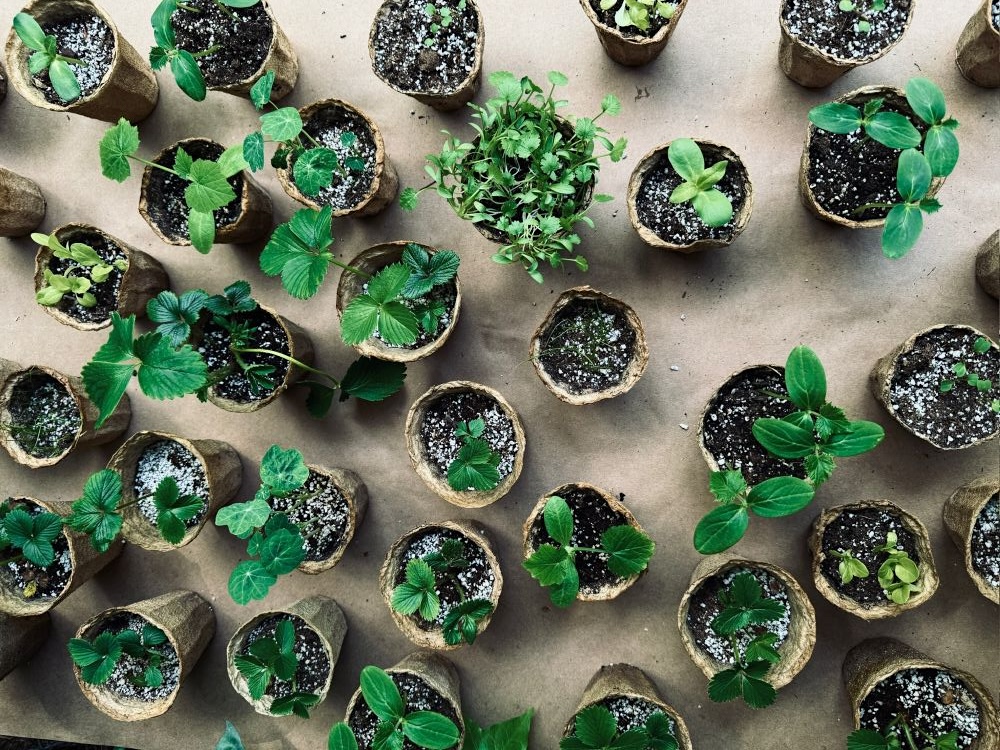
Eventually, she opted to try to offer something new: a fully biodegradable plant pot made of kelp.
After selling 10,000 seedling pots in her first year, Power's company is now expecting to sell somewhere between 25,000 to 50,000 pots across the United States and internationally this year.
“I guess I had the tenacity to go find people who knew the answers,” Power said.
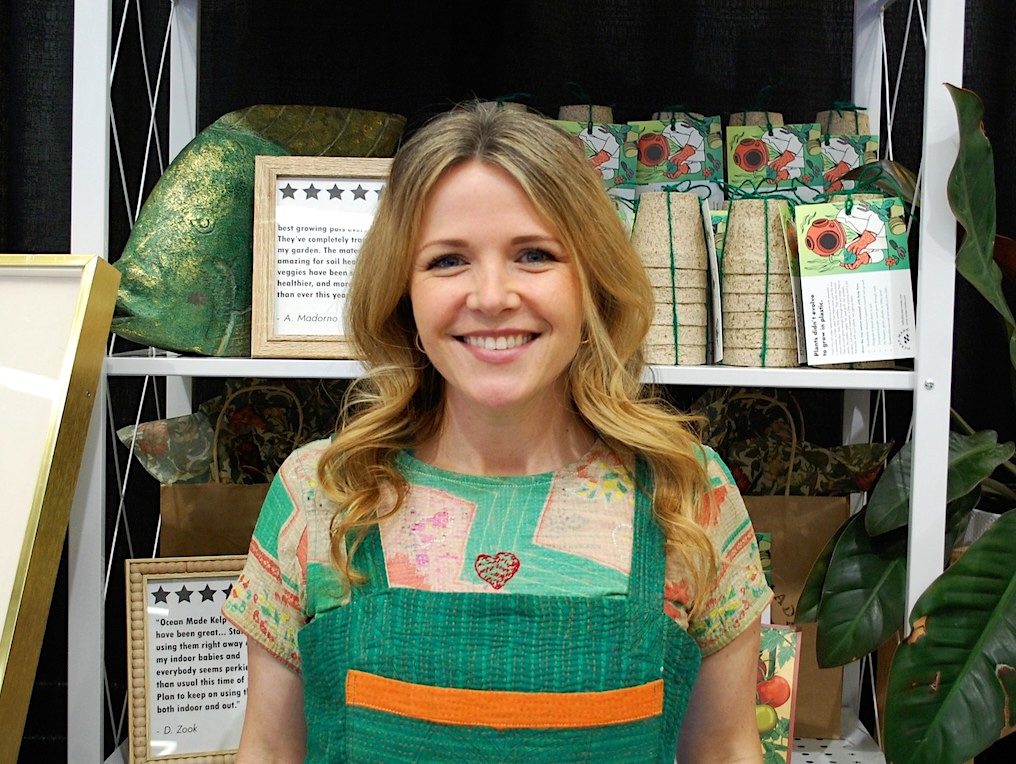
Power’s eureka moment came when she was puttering in her garden. “I knew that people were making bioplastics out of seaweed. I was using seaweed as a fertilizer and a biostimulant. And I was like: What if we put those two things together?”
She started calling everybody she could find who’d designed and sold biodegradable pots.
There were a number already out there, including some made from cow manure, coconut coir and peat. But while these pots eventually biodegrade, most aren’t meant to be directly planted into the soil. Nearly all of them contain glues, binders and other non-degradable materials.
Could a seedling pot be made free of those additives? Power wondered.
She pressed on. “A lot of people wouldn't answer me.” She called one company that makes peat-based pots “probably a dozen times and never heard back.”
‘Seaweed is the OG ancestor plant’
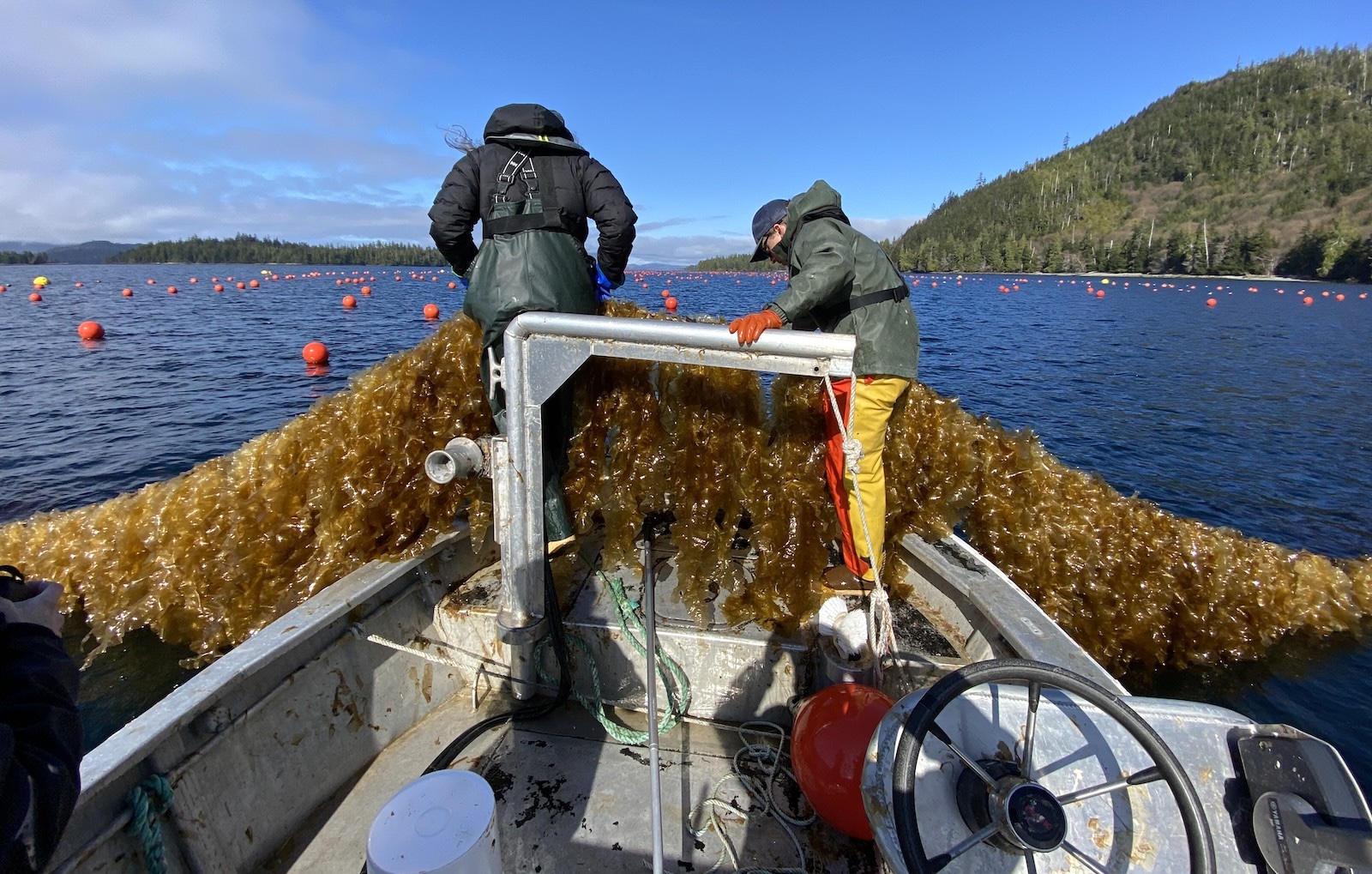
Power pivoted from the idea of a biodegradable plastic pot to a cellulose-based one. Her search for a source of kelp-based cellulose took her to Macro Oceans, a maker of kelp-based skin-care products based in Sacramento, California. The company sources sugar kelp from two regenerative farms in Alaska — Alaska Ocean Farms in Kodiak and Seagrove Kelp in Doyle Bay.
“They had a waste stream of seaweed cellulose they didn't know what to do with,” Power said. “I was like: Great! Let's start there.”
Macro Oceans ticked another box. Power was determined to use farmed rather than wild-harvested seaweed to ensure her project was increasing the world’s population of seaweed.
Power next created some prototype pots made from kelp cellulose and tested them in gardens. By one kind of tomato meter, the results were encouraging. “Not only does this not kill a plant, but we saw them outperform those that were grown in peat pots,” Power said. “We had twice as many tomatoes on our pots as the ones that we grew in plastic.”
She then found a manufacturer in southeast Washington who, for a small research and development fee, would attempt to mould the seaweed pots without glues or artificial binders. Once again, the tests were successful.
Unlike standard planting pots, Ocean Made’s version is designed to let a seedling’s roots grow through the bottom of the pot. This prevents stunted growth caused by root binding, which occurs when the roots outgrow the space and start circling the pot.
It’s a win-win for the plant and the surrounding environment. As the plant grows, the pot breaks down, and the seaweed provides nutrients and biostimulants to the soil and neighbouring plants.
“Seaweed is the OG ancestor plant to all terrestrial plants,” Power said. “It has a set of nutrients, hormones, alginates and lignin — and a bunch of other things in it that support plant health. Even if it's not directly feeding the plant, it basically helps improve the soil structure around the plant.”
Ocean Made pots generally degrade in about eight to 12 weeks, but that can vary depending on soil acidity, moisture and temperature.
Branching out
As the company has scaled up, it’s started sourcing seaweed from a second company, Ocean Rainforest, which grows and harvests seaweed in the Faroe Islands, California and Baja California in Mexico.
Douglas Bush, director of Ocean Rainforest’s California operations, says that seaweed is a great tool for promoting plant health, whether it’s a single houseplant or 100 acres of crops.
“Kelps contain lots of things that do very good things for plants and for soil. Among them are several varieties of unique marine polysaccharides,” Bush said of the compound that is known to help seed germination and plant growth.
“When applied to plants, these compounds can stimulate natural processes within the plant, processes which can help it withstand stressful conditions like heat or low-water stress, or mitigate the stresses associated with fruiting and flowering.”
In addition, these polysaccharides indirectly promote plant health by helping enrich the soil with carbon, Bush said.
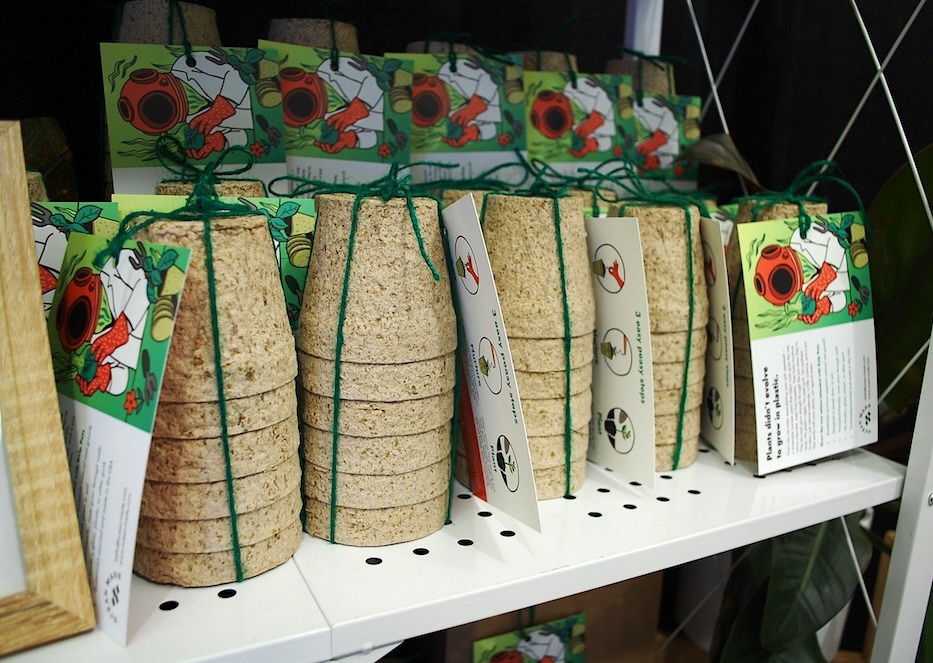
Ocean Made pots retail for a little over US$1 each, making them among the most expensive on the market. But Power believes prices will come down as demand grows.
“We started off at $1.50 a pot, and we sold out of our pre-sale in under two weeks,” Power said. “So even though it was ridiculously expensive, we had a bunch of people say we love this concept and we're here to support it.”
Ocean Made now sells most of its products online but is building ties with retail distributors, Power said. In the works is a biodegradable seedling tray designed for commercial garden centres and farms — a large, multi-plant container that looks something like a large ice tray. The company also sells Kelp Drops, a liquid growth concentrate supplement for houseplants made from Macrocystis pyrifera (giant kelp).
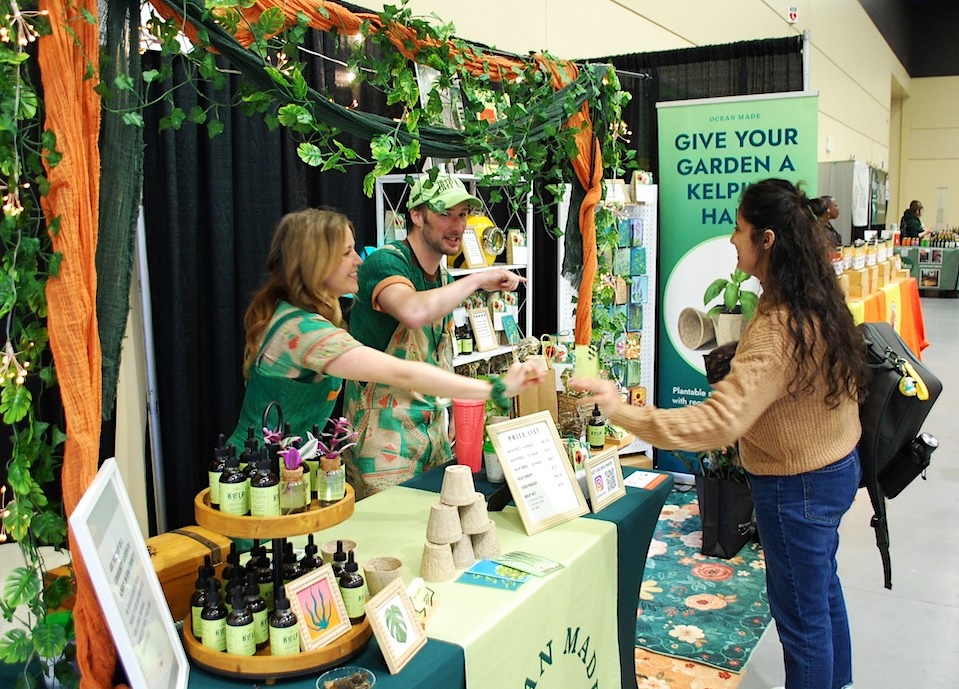
For now, the company is small, run by Power and her husband, Les Hilliard, who contract out most other work. But they are buoyed by the response they get. At the recent Northwest Flower and Garden Festival in Seattle, Ocean Made’s booth was constantly busy with curious customers.
Recent research confirms what Power learned watching 60 Minutes back in 2018. Seaweed farms can be powerful tools to store carbon. If more seaweed is cultivated for companies like Ocean Made, it could spark a circular model that helps the planet.
As Power proudly points out, when gardeners use the pots she invented, which contain solely plant materials, “it's literally nature supporting nature.”
“And we can give them an actual tool that can help them fight climate change.”
This article runs in a section of The Tyee called ‘What Works: The Business of a Healthy Bioregion,’ where you’ll find profiles of people creating the low-carbon, regenerative economy we need from Alaska to central California. Find out more about this project and its funders, Magic Canoe and the Salmon Nation Trust. ![[Tyee]](/design-article.thetyee.ca/ui/img/yellowblob.png)
Read more: Environment










Tyee Commenting Guidelines
Please note that email notifications for replies are not currently working due to a software issue which may be resolved in a future update.
Comments that violate guidelines risk being deleted, and violations may result in a temporary or permanent user ban. Maintain the spirit of good conversation to stay in the discussion and be patient with moderators. Comments are reviewed regularly but not in real time.
Do:
Do not: