


 SHARE:
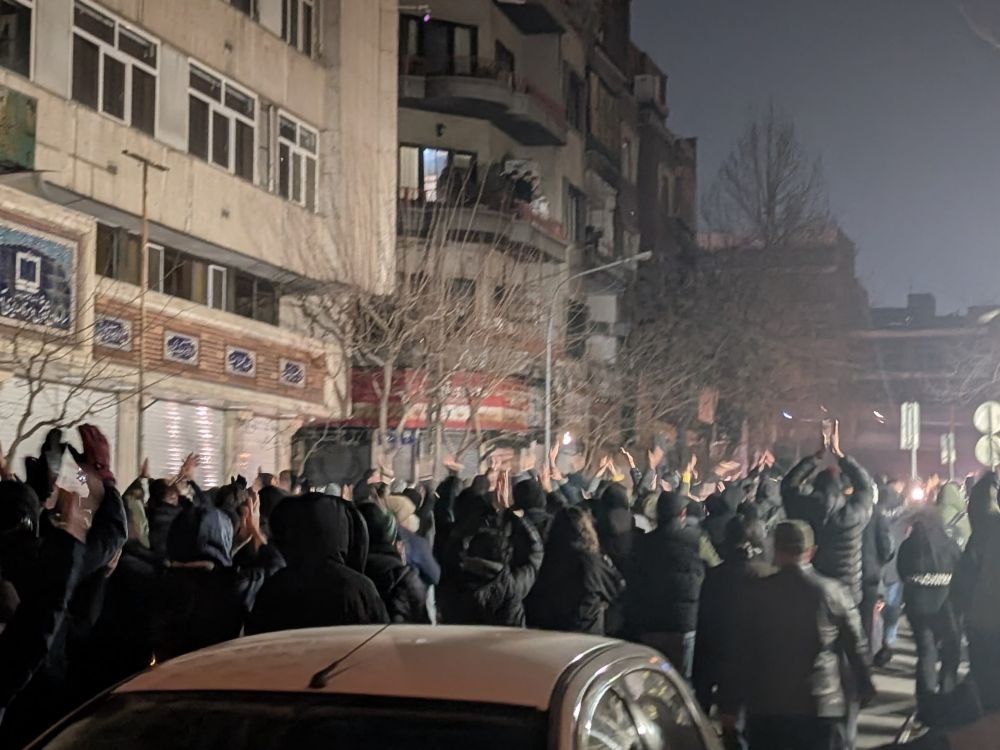
After the first internet blackout this January, Iranian students and colleagues began coming to my office, which sits at the farthest edge of the University of British Columbia’s coastal campus in Vancouver.
They weren’t there with a specific request, but just wanted to sit, say out loud that they weren’t sleeping and were failing at the basics of ordinary life in one time zone when mentally in another.
Iran is 10 1/2 hours ahead of Vancouver. When these students and colleagues are making their way around campus, their families back in Iran are asleep, or should be asleep if things were normal. But during an internet blackout that has persisted since Jan. 8, 2026, when the Iranian government turned off the internet to conceal its crackdown on non-violent protesters, any certainty is gone.
So, the Iranians on our campus hold vigil in the night, across an ocean, for the ones they cannot reach, while also expected to be present and functional during the day. The body strains to do that for very long. The mind keeps pulling toward the other time zone.
The word they keep using is feshar. It translates from Persian as stress, or pressure. Pressure is more accurate, like something bearing down.
I am a professor. I know how to define a word. I do not know how to hold a student whose text messages won’t go through, or a colleague who is trying to reach a sister who may not be ok.
All I can offer is accompaniment.
The longest nationwide blackout in history
Ninety-three million.
That is how many people the Iranian government plunged into digital darkness on Jan. 8. As of the time of this writing, the digital watchdog organization NetBlocks reports that the blackout has lasted 70 days, the longest nationwide blackout in history, despite recent tiered access through “Internet Pro,” a system stratified by political access and privilege.
Ordinary people inside Iran still have little to no contact with the rest of the world.
Some of my students are from Iran.
B.C. is home to about one in five of all international students in Canada and, according to Immigration, Refugees and Citizenship Canada, Iran ranked sixth among all countries for study permit holders as of late 2024.
An estimated 90,000 Iranian Canadians live in the Lower Mainland.
Their bodies may be here, but right now their nervous systems are wired back home, to those 93 million with little to no internet in Iran.
‘I can’t think about it from a position of comfortable distance’
I have been in this situation before. In January 2020, I was still living and teaching in Toronto, and on the first day of a new term, I took attendance in a large lecture hall. When I called out one name, a name I recognized as very likely belonging to an Iranian student, another student spoke up from across the room.
“That’s my best friend!” she said.
“She’s flying back to Toronto from Iran right now. Please don’t drop her from the course. She’ll be here at the next class meeting.”
Two days later, Ukraine Airlines Flight PS 752 was shot down by the Iranian Revolutionary Guard Corps shortly after takeoff from Tehran.
All 176 people aboard were killed, and among those destined for Canada, more than half were Iranian Canadian university students or personnel.
Within hours, the student’s name was everywhere in the Canadian news. That beautiful name I’d called out loud two days before was now listed among the dead. I immediately felt something bearing down hard on my chest. Her seat remained empty for the rest of the semester.
For days, the Iranian government refused to admit it shot down PS 752, while families waited to understand what had happened to the people they loved.
Such violence didn’t stay in Tehran. It crossed the ocean and took my student’s place in our classroom, and it has never left.
So now, when I think about what it means to accompany Iranian students through this internet blackout, I can’t think about it from a position of comfortable distance. My own nervous system has been rewired.
What it means to walk alongside each other
A mentor of mine, the scholar George Lipsitz, first taught me about accompaniment.
The idea has traveled through a chain of people who lived it before they theorized it. It began with Archbishop Oscar Romero, the assassinated Salvadoran bishop who became a martyr for the poor, who embodied accompaniment as a daily practice of walking alongside the peasants of El Salvador, learning from and with them rather than leading them.
The physician and anthropologist Paul Farmer wrote about accompaniment as the ethical spine of his medical work among the poorest communities in Haiti and Rwanda.
Lipsitz teaches that accompaniment means prioritizing those left out of dignified treatment and to be always aware of others’ circumstances. It is like marching down a road together. The march is not a parade, and there’s no drum major in front or band beating out the rhythm.
Instead, accompaniment is a loose collection of people who walk beside one another down the road, and keep their eyes on each other, who look out for each other.
I keep returning to accompaniment because it tells me something important about what I am and am not.
I am not the drum major of my students’ grief. I cannot set the pace of what they are going through or march them toward a resolution I have planned.
The professor’s instinct to define, explain and march toward knowing is not always needed or necessary. Accompaniment is the willingness to physically get on the road with others without knowing where the road ends.
I cannot restore the internet to Iranian citizens. I cannot bring anyone’s mother to the phone.
What I can do is refuse to look away. I can stay on the road.
I think this is what I most want my colleagues and students to know. That I’ve continued to keep an empty seat in one of my classrooms for six years.
I trust no drum major and can’t march to a prescribed rhythm.
But I will keep walking alongside them, and my office door will stay open, when the news from home is dark or silent or worse.
That is what I can do. I am learning that it will never be enough. ![[Tyee]](/design-article.thetyee.ca/ui/img/yellowblob.png)
Read more: Rights + Justice, Education, Science + Tech










Tyee Commenting Guidelines
Please note that email notifications for replies are not currently working due to a software issue which may be resolved in a future update.
Comments that violate guidelines risk being deleted, and violations may result in a temporary or permanent user ban. Maintain the spirit of good conversation to stay in the discussion and be patient with moderators. Comments are reviewed regularly but not in real time.
Do:
Do not: