

 SHARE:

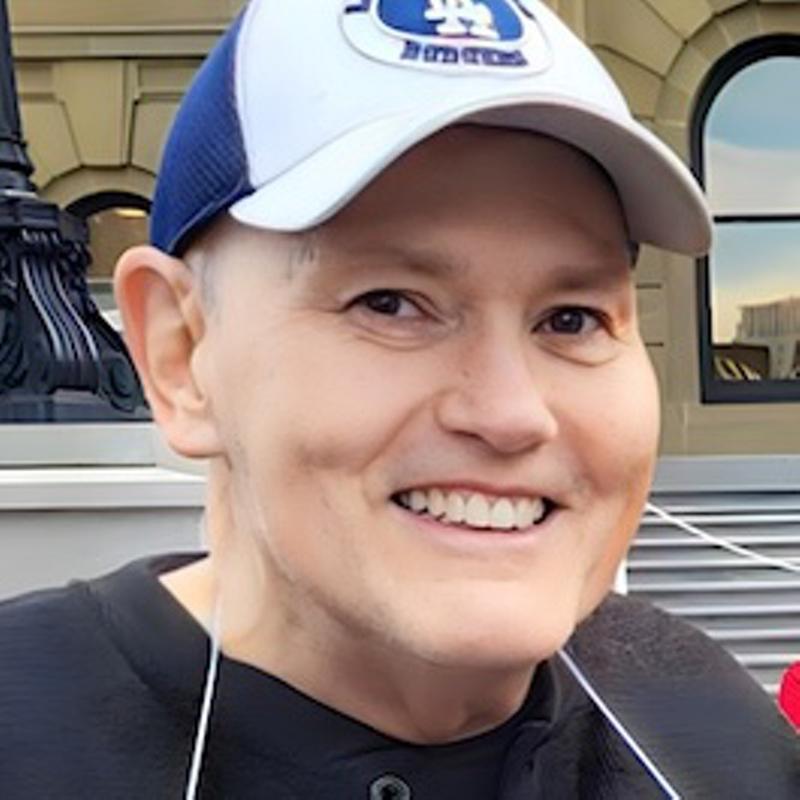
As a longtime disability advocate, I have worked to support and protect the well-being of disabled people. I have worked with Conservative governments, NDP governments, and I tried to work with the United Conservative Party.
As an advocate, I do not speak publicly about my own politics. My concern is simple: that the most vulnerable people in our society are treated with care and dignity. That is what a good society does. That is what good people do. They care for those who have fallen.
Kindness is not owned by any one political party. Conservatives can be just as compassionate as Liberals. But from time to time, I see the deep polarization in our society seeping into disability policy. I hear politicians describe disabled people as a burden, or question whether someone “looks disabled.” On the other side, I see press conferences that seem to promote the politician more than the person who is struggling.
I was once a strong, proud worker in the oil industry, until injury and disease brought me to a very different place. Cancer is a hard road. I do my best to help others, but some days I can barely help myself. I suffer, but I do not pity myself. I have seen the suffering others endure, and their strength inspires me. Still, there are nights when I go to bed and quietly say to God, “It is OK if you take me tonight.”
I am tired, not only from illness, but from being worn down by a government that says it wants to help me by changing my supports.
This summer, Alberta is moving to a dual-track disability support system. The government will retain its current stream of support, Assured Income for the Severely Handicapped, or AISH, for Albertans deemed by a medical review panel to be incapable of working. It will add a stream, the Alberta Disability Assistance Program, or ADAP, for Albertans with disabilities who are deemed able to work.
The primary concerns with the proposed ADAP are that it is expected to eventually provide up to $200 less in monthly support than AISH, it is not an assured benefit and could therefore be altered or ended in the future, and it introduces significantly lower earning exemptions for working recipients.
AISH currently allows a single disabled person to earn $1,072 per month without any clawback, with a 50 per cent reduction applied to income earned between $1,072 and $2,009, whereas under ADAP only $350 in monthly earnings may be fully exempt. In addition, the overall ADAP clawback structure remains uncertain, including whether lost Canada Pension Plan disability benefits for those who attempt to work will be replaced if employment results in their suspension.
I want to be clear: I am deeply grateful for AISH. But gratitude does not mean I am living well. I am still living in severe poverty. Feeling grateful and experiencing well-being are not the same thing.
If there is one point I hope the reader understands, it is that AISH can already do what the Government of Alberta claims it wants ADAP to accomplish. The Alberta government says it wants disabled people to have the opportunity to work, but in doing so, it risks converting a wheelchair ramp into a grand staircase. The government wants people to walk so badly that it forgets AISH was designed for those who cannot.
In ADAP, I do not see help. I see reduced future benefits, and a reduced sense of my value as a disabled person. The government insists that ADAP will be better, but its consultations with the disabled community have felt more like lectures than listening.
Some MLAs have told me their constituents believe we are faking our disabilities and should be working. That attitude shows in ADAP, with a push to reassess every disabled person, not by trusted personal doctors but by “disability assistance adjudicators” whose mandates will reasonably be expected to be shaped by their employers. The havoc created in re-evaluating 80,000 disabled people will be great, as will be the expense of the process.
Fear about these changes in the disabled community is profound. Some people are sinking into despair. Some are even considering medical assistance in dying, not because they cannot endure their disability, but because they fear they will not survive the coming loss of income and dignity. What they dread most is not just poverty, but the message that they are useless, that they are burdens, that they should be forced into work they cannot do.
There is a quiet narrative suggesting disabled people are an undeserving burden, and sadly, too many supporters of this policy believe it. When people are told that others are cheating the system, empathy fades. Compassion disappears when someone feels they are being taken advantage of.
Last summer, I helped another disabled person collect signatures on a petition asking the government to stop the transition from AISH to ADAP. One passerby called us lazy bums. Another told me I looked fine and demanded to know what was wrong with me. I told him I have Stage 4 metastatic cancer, diabetes related to treatment, and nerve damage from an industrial accident. He was stunned, for a moment. Then he turned to my friend and asked, “So what’s wrong with you?” He learned nothing. Some people believe if you are not bleeding, you are not hurt.
My disability is severe enough that I may be allowed to remain on AISH. I may also not be alive in the years ahead. Cancer takes its toll. I have lost 80 pounds of muscle in the past year. I once carried heavy work gear up long ladders on smokestacks. Now I struggle with a short flight of stairs.
I am not sharing this for sympathy. I am asking those with the hardest hearts to understand that many of my peers on AISH are living through undeserved suffering. They want to survive. They want to contribute. But they are too sick to do so.
As a disability advocate, I hope people on the left and the right reconsider their assumptions, or take heart in the empathy they already carry.
Any one of us is a single accident, illness or genetic twist away from disability. A falling object, a sudden diagnosis, a moment on the road, and life changes forever. The disabled minority, unlike any other, is a minority that anyone can join. Our letters to politicians deserve more than form responses. Our governments should reflect the compassion of the people they serve, even if they disagree with us on other issues.
A Conservative farmer may give the shirt off their back to a neighbour in need. A Liberal artist may give their coat to someone freezing on the street. Kindness is not owned by any ideology. We are all human. We are all vulnerable. And we are all capable of caring for those who need us most. ![[Tyee]](/design-article.thetyee.ca/ui/img/yellowblob.png)
Read more: Rights + Justice, Alberta






Tyee Commenting Guidelines
Please note that email notifications for replies are not currently working due to a software issue which may be resolved in a future update.
Comments that violate guidelines risk being deleted, and violations may result in a temporary or permanent user ban. Maintain the spirit of good conversation to stay in the discussion and be patient with moderators. Comments are reviewed regularly but not in real time.
Do:
Do not: