


 SHARE:
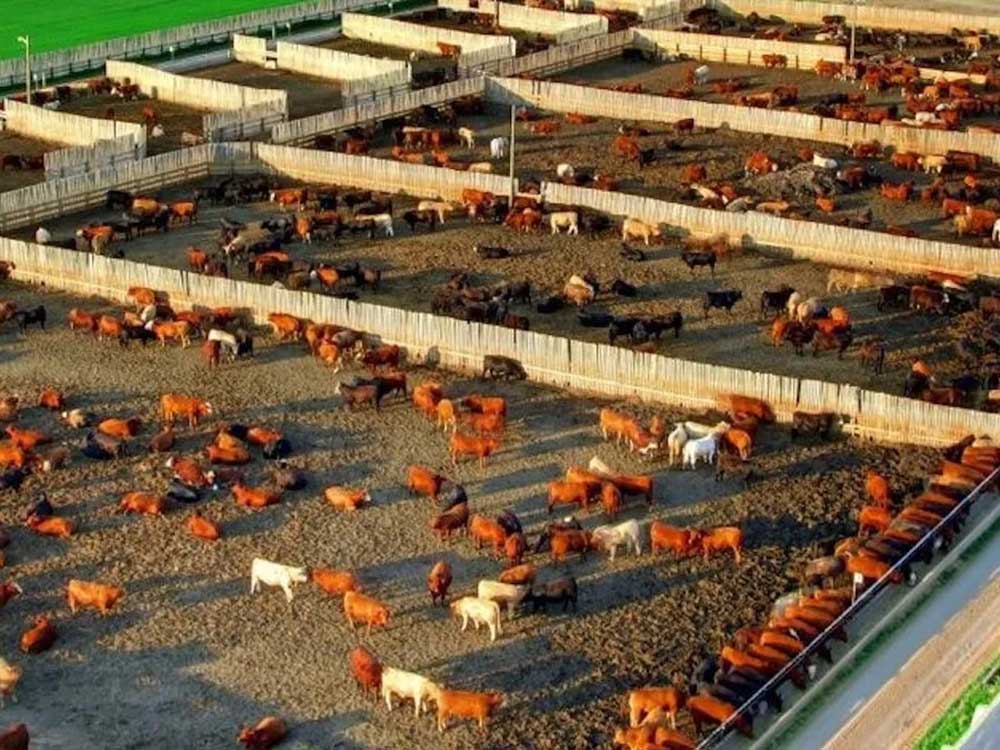
Despite a few squawks about the potential impact of Donald Trump’s promised 25 per cent tariff on All Things Canadian, at least in its public statements Alberta’s cattle industry has been surprisingly upbeat.
“Ho-hum, we’ve heard it all before” seems to be a typical reaction from cattle industry organizations, cheerfully repeated by the media.
Perhaps that’s because many in the beef industry (and I use that term advisedly) share Trump’s MAGA world view and just can’t believe that once he’s sworn in on Jan. 20 as U.S. president, he would adopt a policy obviously not in his country’s interest.
There might be some merit in that view, of course. Still, Trump being Trump, no one should bet the farm on it!
There’s also this to justify their optimism, I guess: MAGA politicians on either side of the world’s longest undefended border don’t have a particularly good record for keeping their promises when the wishes of their gullible supporters conflict with those of their deep-pocketed corporate backers.
Just look at Trump’s shifting position on immigration now that a couple of his favourite tech-bro billionaires have expressed their contempt for the American working class, or the Alberta United Conservative Party’s transparent greenwashing to push open-pit coal mining on the eastern slopes of the Rockies, never mind the legitimate concerns of their cattle-raising supporters downstream from the proposed coal mine.
Or maybe it’s because they imagine that once Conservative Leader Pierre Poilievre is Canada’s prime minister, he’ll do better dealing with Trump than Liberal Prime Minister Justin Trudeau — although that seems unlikely given the next U.S. president’s zero-sum approach to negotiations, whether or not the Conservative leader toes his ideological line.
Regardless, while we all ought to be worried, folks working in Alberta’s cattle industry should be more worried than most.
After all, close to 80 per cent of Canada’s fed cattle come from Alberta, and nearly 90 per cent of Alberta’s beef meat exports and 100 per cent of its cattle exports go straight across the 49th parallel.
So Alberta’s beef producers really could live or die by the whims of Donald Trump.
As for grain farmers, they’ve got their worries, but the United States isn’t a big enough market for Canadian grain for Trump’s promised tariffs to wreak havoc.
According to the Canadian Grain Commission, in 2023-24, Canada exported more than 43 million tonnes of all kinds of grain, but less than three million tonnes of that went to the United States.
The biggest buyer of Canadian grain — at just over 12 million tonnes — was China, which imports Canadian wheat, barley and canola.
This suggests, by the way, that we ought to be careful about slapping huge tariffs on Chinese electric vehicles and solar panels to suit the departing Biden administration when we’re at risk of getting economically hammered by the incoming Trump administration. Remember, at the moment we manufacture no EVs and very few solar panels, so we have no Canadian industry to protect.
By the way, what has depressed Prairie grain prices was the loss of the Canadian Wheat Board, dissolved by the Harper Conservative government in 2015 with its assets sold off to Saudi Arabia for a song. The board’s demise, however, will have to be a scandal for another day.
What this means right now is that while Trump’s tariffs could impact some grain producers’ bottom lines, they’re not going to immiserate Prairie grain farmers.
Tariffs on Canadian beef, though, really would be a disaster for Canadians in that business because cattle move back and forth across the U.S.-Canadian border a lot more than grain.
Alberta’s so-called free market has already driven many Alberta cow producers out of business over the past 15 years. That happened because just two foreign-owned packing plants have roughly 90 per cent of the province’s slaughter capacity, so they effectively control the price for fat cattle from feedlots. This in turn impacts the price for Alberta calves.
Having a duopoly on beef packing in Alberta means Brazil-based JBS in Brooks and U.S.-based Cargill in High River effectively have a captive supply of cattle for slaughter that are fattened up on subsidized U.S. corn imported to Feedlot Alley in southern Alberta.
Moreover, instead of fattening just Alberta-grown calves, Alberta feedlots import calves from the States to be fattened here and slaughtered by Cargill’s and JBS’s plants. Then the beef they box goes back across the border to the United States.
As for the Alberta cattle fattened on the large volumes of subsidized feed corn imported from the United States, some of those animals are also sent back across the border to be slaughtered in U.S. plants.
There’s far more to this complicated relationship, of course, including the negative impact of that subsidized U.S. corn on the price of Canadian feed barley, but it should be pretty obvious how a 25 per cent U.S. tariff on Canadian beef exported to the United States on the hoof or in a box would damage this complicated integrated relationship.
I suppose Ottawa could slap retaliatory tariffs on U.S. corn and U.S. calves entering Canada — bringing better prices for both Alberta grain farmers and Alberta cattle producers. But don’t count on either a Liberal or a Conservative government in Ottawa having the courage to do that.
As for prices on the grocery shelves, Cargill and JBS have the wherewithal to squeeze profits out of meat retailers as well, and we all know who ends up paying for that.
Well, this is what happens when any industry in a place like Alberta is allowed to become a branch plant with a single customer — especially when the big boss ends up being someone like Donald Trump.
It’s not like we weren’t warned at almost every step of the way. ![[Tyee]](/design-article.thetyee.ca/ui/img/yellowblob.png)
Read more: Local Economy, Alberta










Tyee Commenting Guidelines
Comments that violate guidelines risk being deleted, and violations may result in a temporary or permanent user ban. Maintain the spirit of good conversation to stay in the discussion and be patient with moderators. Comments are reviewed regularly but not in real time.
Do:
Do not: