



 SHARE:
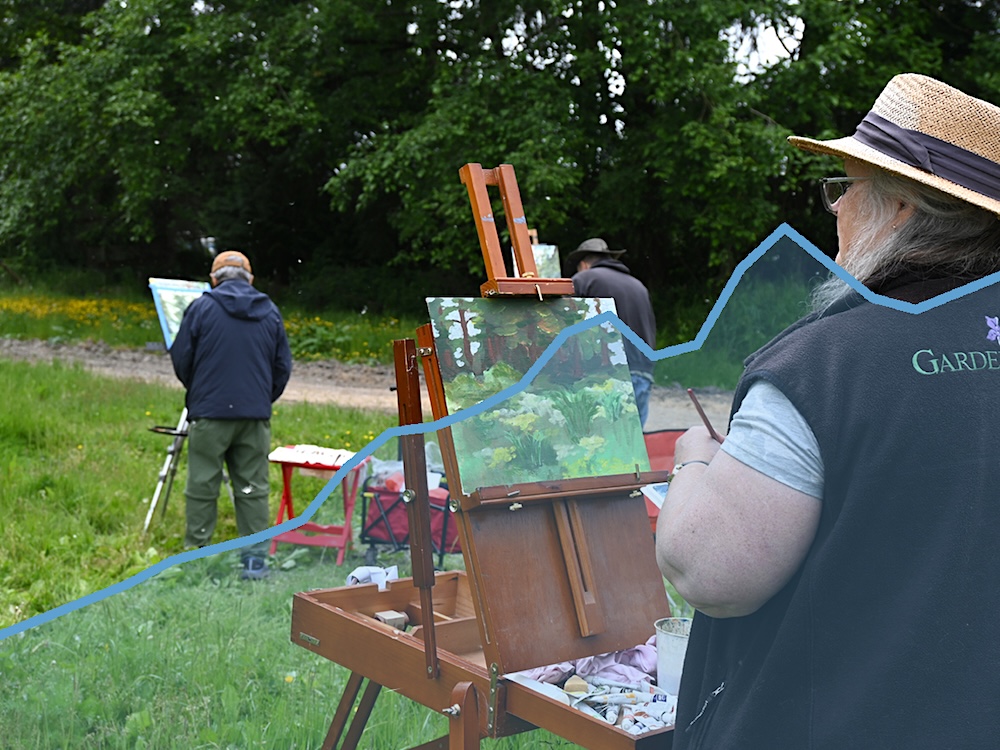
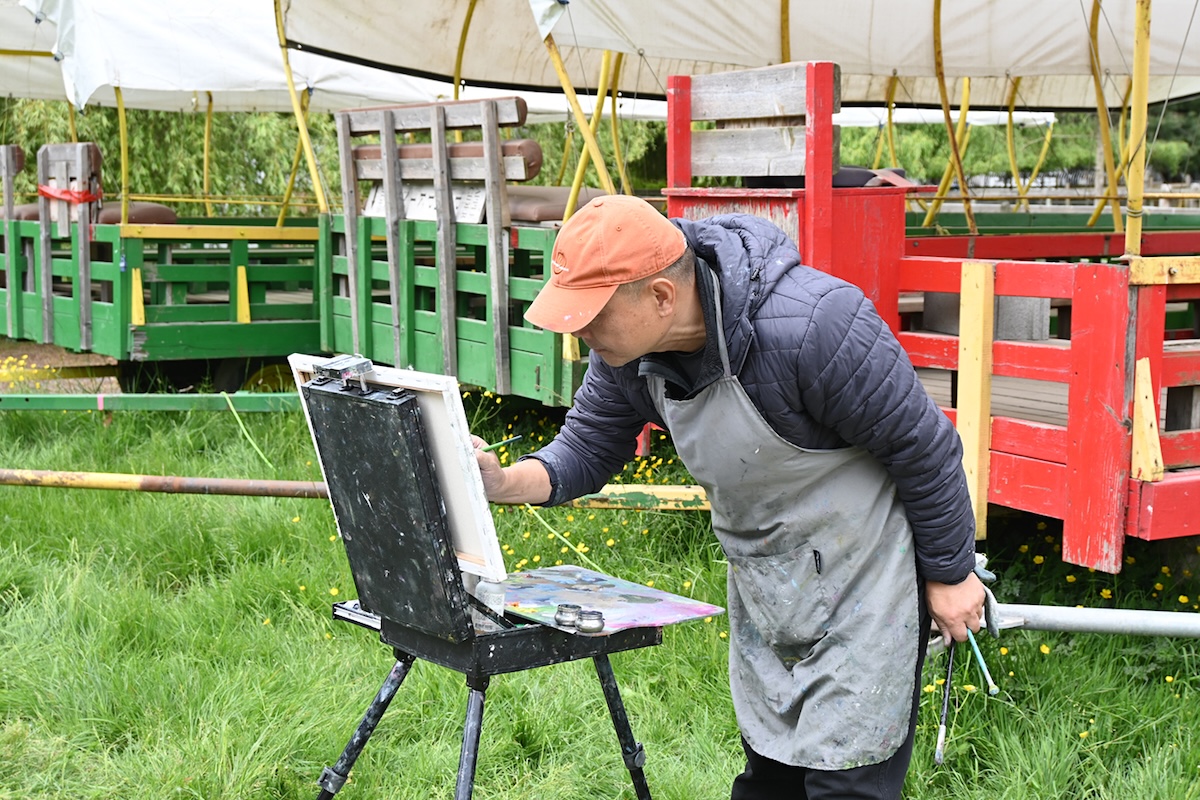
The air is filled with drifting cottonwood fluff as the Men in Hats art group set up their easels at Country Vines Winery in Richmond.
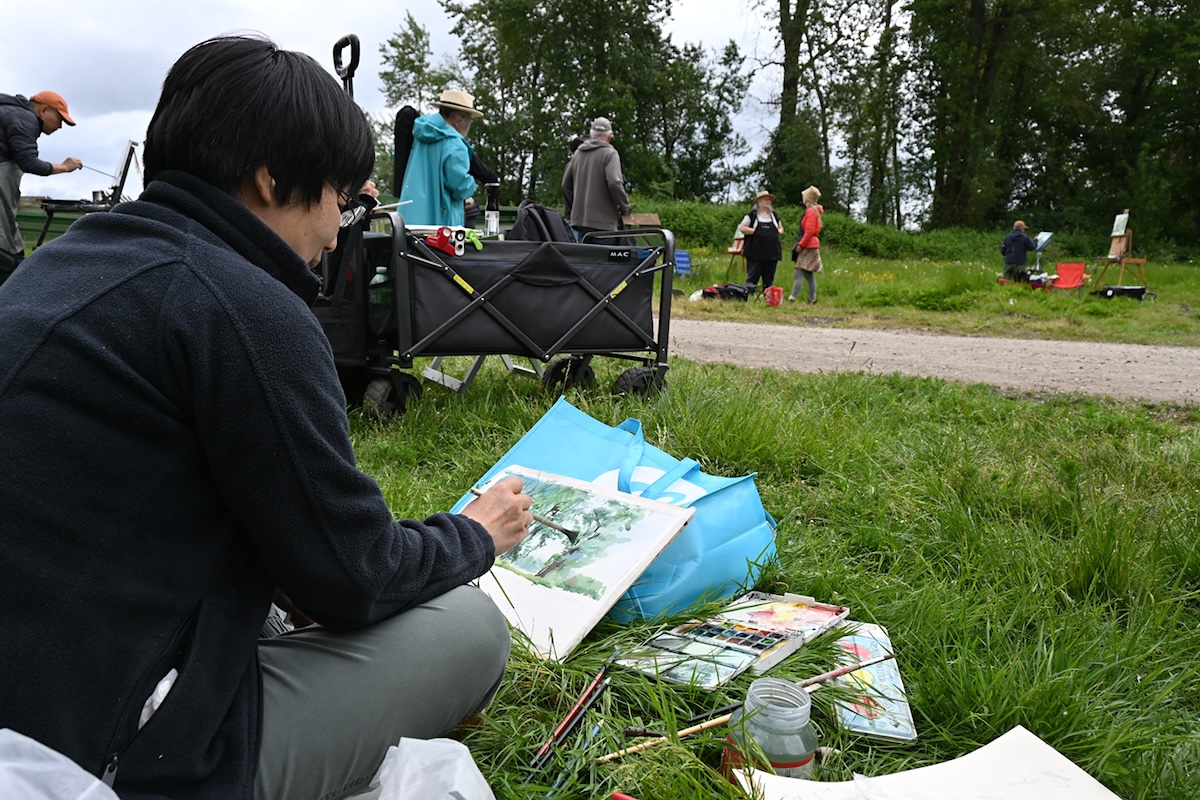
Most members are focused on a stately copse of cottonwood trees about 50 metres away. The artists — who are not all men but are mostly wearing hats — bend to their work, using watercolours and oil paints. Pastoral scenes start to take shape on their canvases.
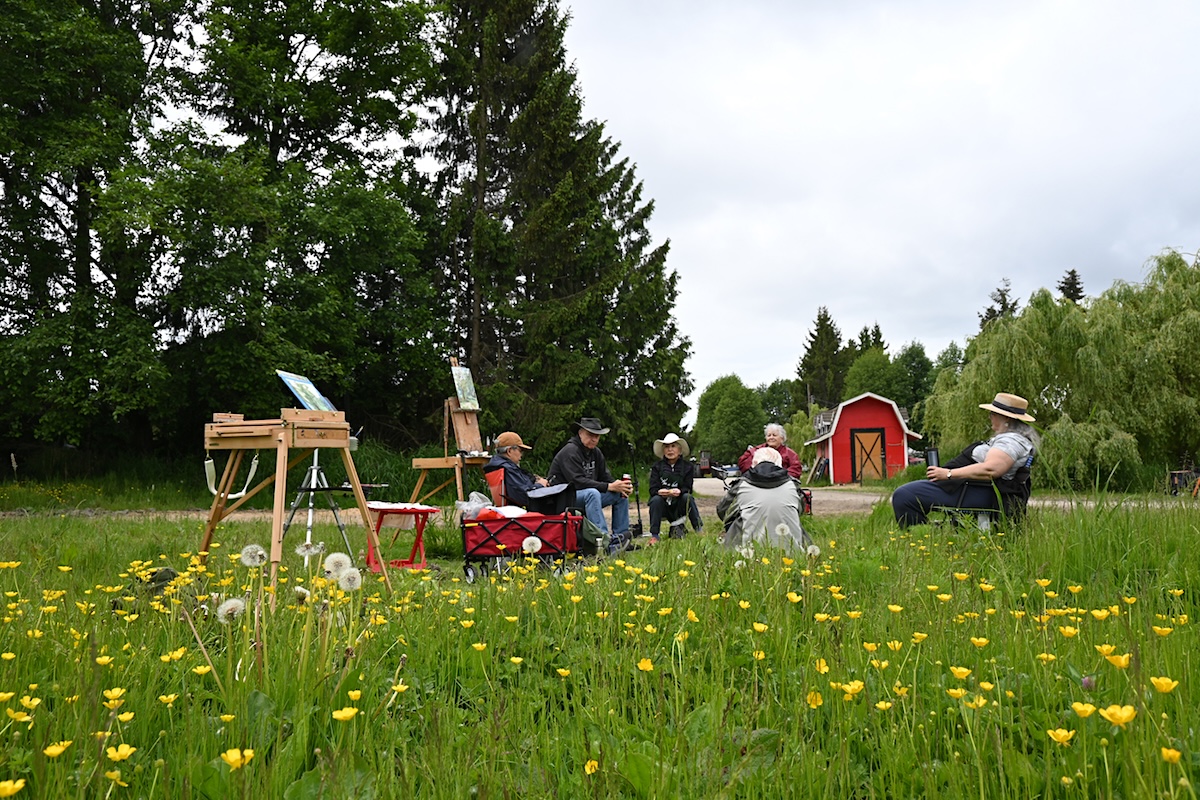
Once the artists have captured the likeness of buttercups, cows, donkeys and the lush abundance of spring, they break for lunch, grouping their chairs together and pulling homemade sandwiches out of tote bags and backpacks.
Men in Hats, a free weekly meetup, has been taking place for 30 years. It provides a glimpse into the rich social and outdoorsy life of Richmond — and it may help explain why people in this city live longer than anywhere else in B.C.
Richmond is home to 210,000 residents, and according to data recently crunched by The Tyee, the average Richmondite can look forward to a life expectancy of 89.4 years.

That’s a small but significant jump from Richmond’s neighbours — the next-highest life expectancy in B.C. is in Vancouver Westside, with 88.1 years, Vancouver South, with 87.6 years, and West Vancouver/Bowen Island with 87.5 years.
This isn’t fully attributable to wealth, which is an important longevity factor.
Richmond’s median household income was $79,000 in 2020, which is slightly lower than the provincial median household income of $85,000, according to the 2021 census. Vancouver, Surrey and Delta all had higher median household incomes than Richmond, but slightly lower life expectancies.
Richmond also doesn’t lead in the percentage of households living with at least three generations under one roof. Three per cent of Vancouver lives in multi-generational households, followed by Richmond at six per cent, Delta at seven per cent and Surrey at 10 per cent.
The Tyee was unable to speak to anyone at Vancouver Coastal Health about what makes people in Richmond live so long. But other communities may offer some clues.
In the Fraser Heath region, Burnaby boasts a life expectancy close to Richmond’s. Dr. Curtis May, a medical health officer with the health authority, said that’s likely tied to how people in Burnaby earn more than people in other communities in the Fraser Health region.
“This increased income allows us to afford food, have better housing, and likely these folks have a higher education,” May said. “This gives us an ability to have healthy behaviours that lead to longer life.”
Higher education is linked to living longer both because it can help people get higher-paying jobs and because “if you have a higher education you are probably more literate, especially in health, so you understand what the health system is telling you and what your doctor is telling you and you can choose healthier options,” May said.
This can help feed into people living healthier, higher-quality lives, which helps people live longer and better, rather than just living longer but potentially with disease, he said.
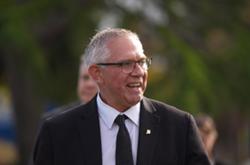
Richmond Mayor Malcolm Brodie said some of his city’s success comes from a strong business sector and “one of the higher jobs-to-worker ratios in our entire region” — with almost a job and a half per worker.
It may also be partially due to the fact that the city’s most vulnerable residents sometimes move to other areas if there aren’t enough services available to them.
The most recent homeless count identified 177 unhoused Richmondites. Around 100 people are able to access shelter spaces in the city, Brodie said.
Over the past decade Richmond opened a permanent emergency shelter, two temporary winter shelters and a home for women fleeing violence, he added. The city also provided land for mental health services.
But, critically, it is missing an overdose prevention site. Richmond has had 222 unregulated drug deaths over the last decade, which is a similar number to North Vancouver, which is also part of the Vancouver Coastal Health Authority, does not have an overdose prevention site and has had 186 unregulated drug deaths.
When people lose their homes in Richmond, they sometimes leave the city and head to Vancouver’s Downtown Eastside, where there is a large number of social services, Brodie said.
Richmondites The Tyee spoke to also pointed to several other ingredients that go into the secret sauce of local longevity: its culture of volunteering, a deep sense of respect that helps multiple communities and cultures thrive together, the fertile soil that produces an abundance of local food, and an active and outdoorsy population of all ages.
Volunteerism, clubs, peer connections
Richmond’s strong culture of volunteering combats social isolation and builds community, which in turn helps longevity, said Jocelyn Wong, executive director of Richmond Cares, Richmond Gives, a non-profit that has been operating in the community for more than 50 years.
In the 2024-25 season, some 250 volunteers racked up 11,939 volunteer hours at Richmond Cares, Richmond Gives, Wong said. Most of these volunteers are “young seniors” who volunteer with multiple organizations, she added.
These young seniors help their peers with shopping, caregiver respite, peer counselling, income tax filing, going for walks and driving to appointments. Some programs also have people do chores together and then share a meal.
“We find that really makes a difference for many people,” Wong said.
Richmond is also unique in B.C. because the “minority is the majority,” Wong said.
A little over half of the population in Richmond is Chinese Canadian. White people, or people who didn’t identify as racialized in the 2021 census, make up a little under one-fifth of the population, and about seven per cent of the community is South Asian and Filipino, respectively.
“The volunteer demographic very closely matches what the actual cultural demographic of Richmond is,” she added, which means there’s a wealth of culturally appropriate opportunities for volunteers and clients to connect on shared culture or language, she said.
Richmond also has a big network of less structured “organic” clubs that meet for activities such as tai chi and pickleball.
“You can just walk up and ask how to join,” she said. “They’re very welcoming.”
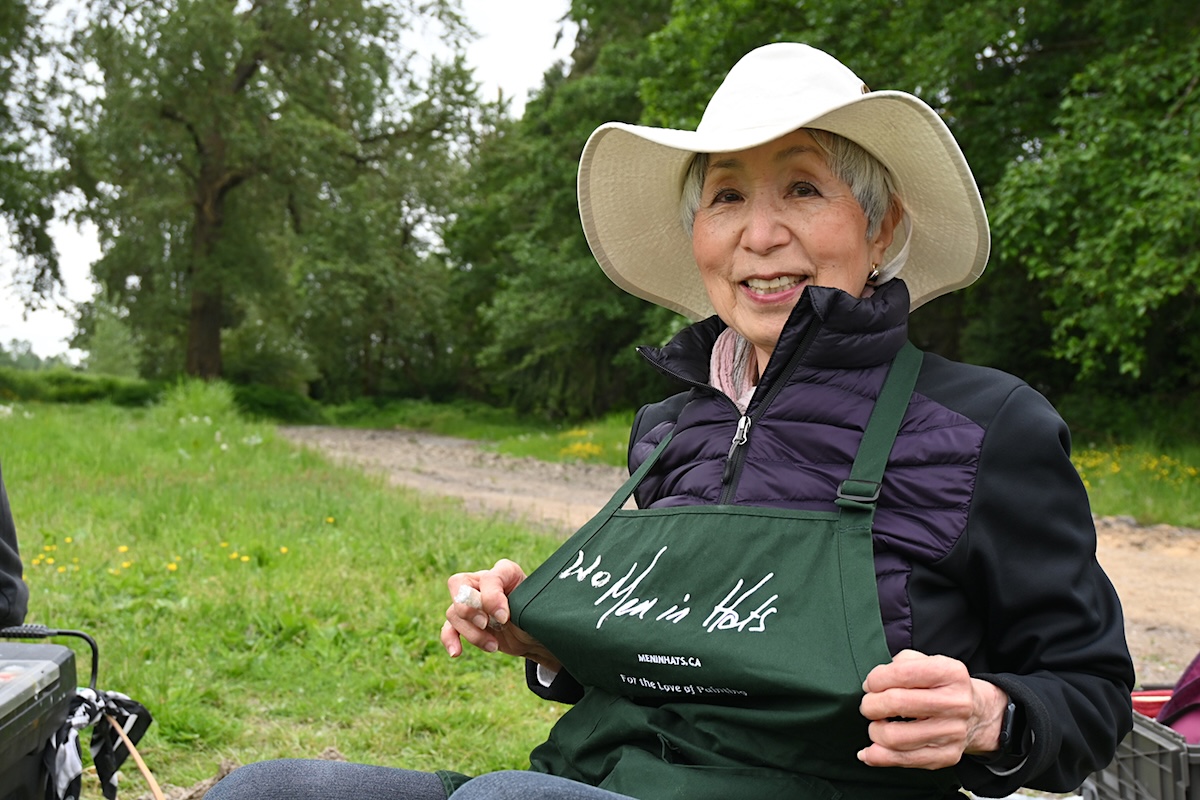
Men in Hats is another example, offering free weekly outdoor meetups during the warm months to get together and paint. All skill levels are welcome, but people have to bring their own supplies. Once the weather forces people inside, there is a small fee collected to pay for studio space.
Respectful neighbours
Another strength of Richmond — and Canada as a whole — is how the multicultural community “welcomes people from every country, every nation, every background and every culture,” Balwant Sanghera told The Tyee.
A self-described community activist, Sanghera has a long history of fostering mutual respect between cultures.
One of the best examples of this is a two-kilometre stretch of No. 5 Road between Steveston Highway and Blundell Road, which Sanghera dubbed the “Highway to Heaven” a little over 20 years ago.
Today, there are “almost 25” places of worship for all different denominations along that strip, Sanghera said.
Conflict between faith groups of any kind is rare, he said.
That’s not to say the communities in Richmond are immune to global conflicts such as the one between Israel and Palestine, “but we try to resolve them by sitting together and talking to each other,” he said.
Sanghera said it’s important to start by emphasizing similarities rather than differences.
“We are all part of the human race. We are all Canadians. We should respect each other, we should support each other. That’s our main objective,” he said.
It’s a simple but powerful message, and in 2017 it caught the attention of 13 United Nations ambassadors who visited Vancouver and sought out Sanghera for a presentation on the Highway to Heaven.
“The Canadian ambassador was just beaming. He said, ‘That’s my Canada,’” Sanghera said.
An active community fuelled by local food
Richmondites value local food, especially “us old-timers, who are more conscious of what we eat,” said Carmen Gaylard, who has lived in Richmond since 1958. She’s also a member of the Men in Hats painting group.
Fresh Richmond produce has been a mainstay in Gaylard’s life, first with the veggies her mother grew and later with her own garden. Over the years she shifted to a community garden plot, and today she grows arugula and herbs on her balcony, outsourcing the farming duties to local farms and greengrocers.
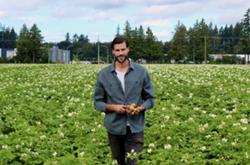
Gaylard’s favourite is GJ Farm, which in early May, when Gaylard spoke to The Tyee, was selling fresh eggs and an abundance of lettuce, cucumbers and radishes.
Gaylard also sources local produce from the Steveston Farmers and Artisans Market, which runs every second Sunday at Garry Point Park, and the Kwantlen Farmers Market, which runs every Tuesday at the Richmond library and cultural centre.
Gaylard said she and her friends buy “as much local produce and poultry as we can,” but she worries there’s a shift happening in Richmond as new large grocery chains move in and squeeze local producers out.
Gaylard also worries that people who have recently immigrated to Canada or moved to Richmond are missing out on local fishermen’s offerings and fresh cranberries, for example, because they don’t know to seek out local producers.
“Richmond grows more cranberries than Canada eats,” Gaylard said. She knows to visit cranberry farms in October for a “dry pick” before the fields are flooded for harvest. Berries picked off the bush will last in the fridge until March and can be used in muffins, to roast chicken or in a cranberry-orange marmalade, she said.
Canada’s most active community
People in Richmond are also very active — something that’s well supported by city infrastructure. Richmondites can often be found swimming in the city’s pools, walking on park trails or participating in the city’s many recreational programs, Mayor Brodie said.
There are fee subsidy programs so low-income community members can access recreational programs too, he added.
The city offers a packed schedule of recreational programs for people 55 years and up, with classes for everything from flamenco to ballet to belly dancing to Hawaiian hula.
Gaylard’s favourite class is Mind to Muscle, which works on practising and building co-ordination, and which always sells out. Yoga classes are also in high demand but sometimes have drop-in spaces available the day of. Almost any day of the week it can be hard to find parking at the Seniors Centre at Minoru Centre for Active Living, she added.
The city is very flat, so parks, sidewalks and the dikes that surround the city are safe and approachable for seniors to explore, Wong said.
Last year Richmond’s efforts were formally recognized: it was named Canada’s most active community by the non-profit Participaction.
“We focus very much on having an active, involved, inclusive and diverse community,” Brodie told The Tyee.
That’s why Richmond has had the longest life expectancy in Canada for “at least 20 years, if not more,” he added.
This story is the third in a series about how life expectancy varies across BC. The first story in the series crunched the numbers on where life expectancy is rising, and where it’s declining, across the province. The second story took a more in-depth look at why life expectancy in the Cariboo-Chilcotin is significantly lower than the provincial average — and why it has declined since 2014. ![[Tyee]](/design-article.thetyee.ca/ui/img/yellowblob.png)
Read more: Health





Tyee Commenting Guidelines
Please note that email notifications for replies are not currently working due to a software issue which may be resolved in a future update.
Comments that violate guidelines risk being deleted, and violations may result in a temporary or permanent user ban. Maintain the spirit of good conversation to stay in the discussion and be patient with moderators. Comments are reviewed regularly but not in real time.
Do:
Do not: