


 SHARE:

Four B.C. municipalities have called for an independent investigation into the health effects of liquefied natural gas production and fracking, echoing a letter last fall from the province’s public health officers.
Since February, Terrace, Squamish, Hazelton and Dawson Creek have all passed resolutions calling on the province to follow through with the probe requested.
The municipalities’ demands for an investigation come amid increasing concerns about the public health consequences of the growing LNG industry and as new investment decisions could spur dramatic growth in the sector.
“When I see other people asking the same questions, it makes sense to support each other in trying to get answers that I think are pretty important for everyone,” Squamish Coun. Chris Pettingill told The Tyee.
“It feels like at the moment we are not even looking or asking if there are health impacts.”
Last November the Health Officers Council of BC, an organization representing the province’s public health doctors and medical health officers, called for a cumulative health assessment of LNG and fracking.
The letter, which was sent to the province, warned that “new health information indicating harms to human health from the industry has occurred since several B.C. LNG and fracking projects were approved.”
The province has never conducted an independent review of the health impacts of the gas sector. But growing evidence has linked LNG and natural gas development to issues like a higher risk of early birth, asthma, heart disease, cancers and premature death.
The health officers’ letter has triggered a cascade of resolutions from local councils whose towns face the industry’s greatest impacts and who have called for the government to adopt doctors’ advice.
“When the health officers of B.C. write such a document, there are serious concerns,” Dawson Creek Coun. Charlie Parslow said in February when he introduced a motion calling for an investigation. The motion passed in a 4-2 vote.
In question period last week, Energy and Climate Solutions Minister Adrian Dix said the province’s existing environmental assessment tools are sufficient.
“All of those processes include substantial study and review of the impact of projects, whatever they may be, on human health,” he said. “There is an absolute and continuing obligation on the part of regulators to ensure that the conditions on projects are followed.”
However, B.C.’s first major LNG facility has far exceeded its permitted pollution limits set out in those earlier assessments. The problem is tied to the practice of flaring, in which facilities burn excess gas, a process that releases carbon dioxide and pollutants into the air. Recent reporting from the Narwhal found that LNG Canada, a massive project near Kitimat that began shipping liquefied gas last June, flared more gas last year than any LNG project had in 2024, likely due to startup and mechanical issues with its flare tip that vents gas into the atmosphere.
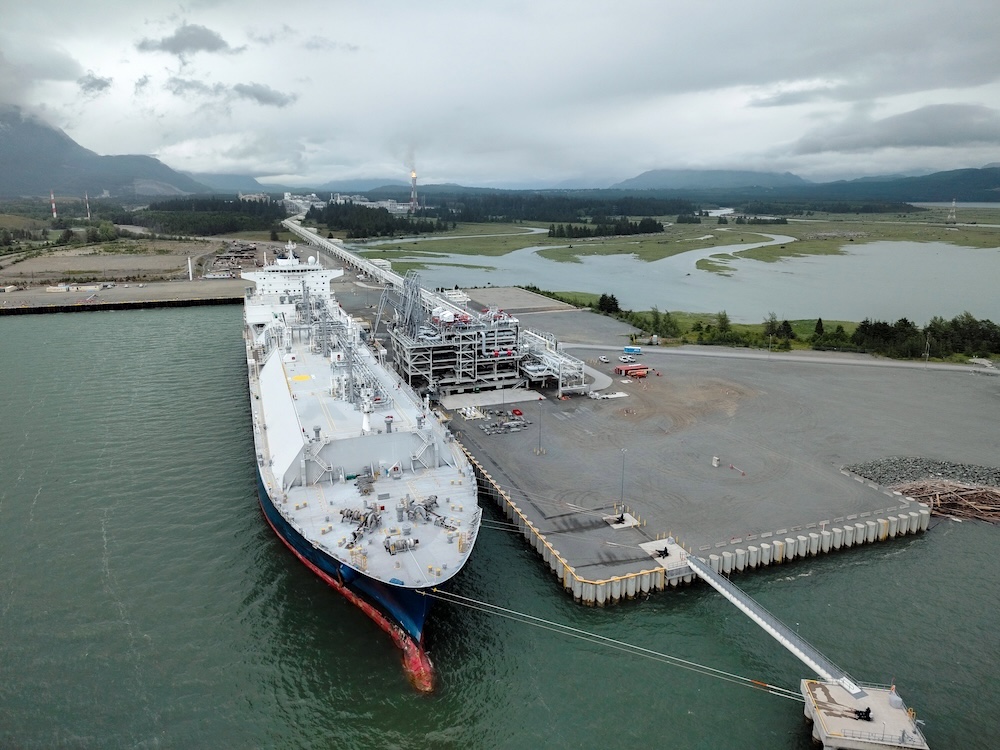
The Tyee reported last year that under the project’s nascent regular operating conditions, LNG Canada will push Kitimat’s airshed beyond the current air quality guidelines for nitrogen dioxide, a pollutant that can irritate the lungs and lead to long-term health conditions.
Tim Takaro, a physician and Simon Fraser University researcher, said the province’s assessment system has sizable gaps that have put communities at risk, noting that companies can hire their own consultants to prepare assessment reports and potentially shape the way information is shared.
“In my view, they are answering questions in a way industry wants them to be answered,” he said.
Health assessments for LNG projects also tend to look at their impacts in piecemeal fashion, Takaro said.
For example, LNG Canada’s environmental assessment focused only on the project’s health impacts in its first phase, separating its impacts from other pending or already existing industrial pollution sources in Kitimat’s airshed, including the Rio Tinto aluminum smelter. Similarly, Takaro said, Tilbury LNG in Richmond has not assessed the cumulative impact of its planned expansions.
There is also no environmental assessment process required when companies drill individual fracking wells. Gas extraction is regulated on a permit-by-permit basis, leaving few regulatory guardrails that can be used to analyze and minimize health impacts from gas extraction.
Like the health officers, Takaro would like to see an independent health assessment of LNG and fracking in B.C. that takes these layered impacts into account.
“The notion is that the whole thing needs to be assessed in a cumulative sense,” he said. “That's cumulative over time and space.”
City councils take charge
In early February, the District of Squamish voted to lend its support to the Health Officers Council of BC’s letter. The City of Dawson Creek followed suit later that month, and the Village of Hazelton passed a motion in March. Terrace became the most recent community to call for a health investigation last month.
Not every council has taken that step. Kitimat’s council opted against joining the call in February. Instead, council agreed to share Kitimat’s experiences as a host to a major LNG facility with the District of Squamish, where the Woodfibre LNG facility is nearing completion.
In communities where motions did pass, support was not unanimous.
“I have a tough time with this one,” Dawson Creek Mayor Darcy Dober said during the council’s debate on the motion. Dober said he wasn’t familiar with the Health Officers Council of BC and that the industry has made improvements in recent years. “It’s a delicate thing,” he said.
Dober was one of two out of six council members who voted against the motion.
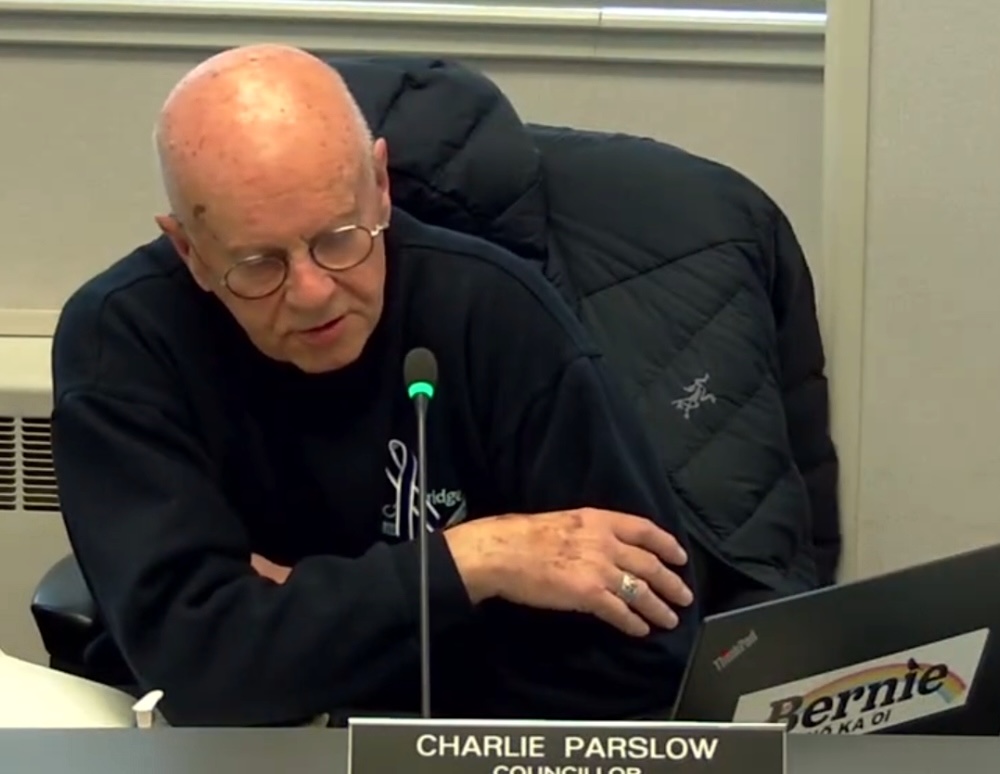
In a council meeting before the vote, Margaret McGregor, a physician and member of the Canadian Association of Physicians for the Environment, raised concerns about the industry’s health risks. McGregor was joined by local family physician Ulrike Meyer, who cited higher-than-normal rates of diagnoses of lung cancer, lung scarring and rare cancers among the town’s small population.
“A number of my physician colleagues left our community, citing concerns about the health impacts of living so close,” Meyer told council.
Élyse Caron-Beaudoin, a University of Toronto environmental health professor who is among the few researchers investigating the long-term health impacts of gas development in the northeast, also spoke to council. McGregor and Caron-Beaudoin co-authored a scoping review that found that people living near fracking wells faced higher rates of preterm births, impaired fetal growth and birth defects along with higher rates of childhood cancers and overall mortality.
“All these cities are in a tough spot,” McGregor told The Tyee. She recognizes the challenges of pursuing economic development alongside growing findings pointing to the potential harms of the gas industry. But McGregor said some improvements could easily be made. For example, B.C. requires that fracking wells stay only roughly half a block from a person’s home.
“The evidence around health harms reaching people's residences far beyond 100 metres is considerable in the literature,” she said, noting that B.C.’s rules are among the most lenient in North America.
In Squamish, Pettingill hopes that growing attention to the risks of industrial pollutants can reach across sectors.
"This isn't about certain industries," he said.
Last week, Pettingill introduced a successful motion to the Lower Mainland Local Government Association that called for stronger regulations on air pollutants throughout the region’s airshed.
He hopes the motion will provide space to talk about pollution concerns with ministers at the upcoming Union of BC Municipalities convention this fall.
It may be a rare opportunity.
“It doesn't feel that as local governments we necessarily have the same access to ministers and government as some of these large industrial projects do,” he said.
“So we do what we can.” ![[Tyee]](/design-article.thetyee.ca/ui/img/yellowblob.png)
Read more: Energy, Health, Environment











Tyee Commenting Guidelines
Please note that email notifications for replies are not currently working due to a software issue which may be resolved in a future update.
Comments that violate guidelines risk being deleted, and violations may result in a temporary or permanent user ban. Maintain the spirit of good conversation to stay in the discussion and be patient with moderators. Comments are reviewed regularly but not in real time.
Do:
Do not: