


 SHARE:
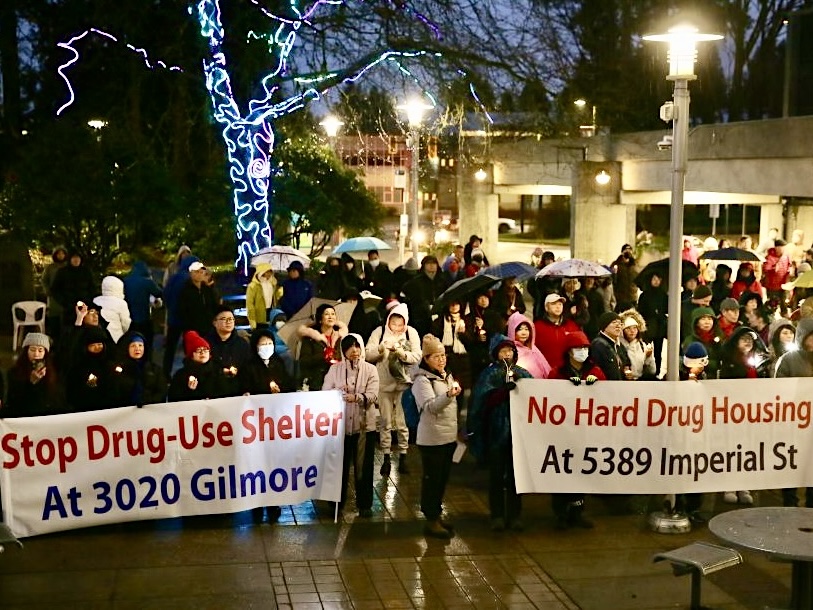
For several months, tension has been building around a proposed supportive housing project BC Housing was planning at 5389 Imperial St. in Burnaby’s Royal Oak neighbourhood. A petition against the project collected over 14,000 signatures, and residents have held several protests against the project.
The provincial government confirmed to The Tyee this week that it is no longer proceeding with the project, after revealing in the 2026 B.C. budget that it was adjusting the pace of its housing investments, including cutting funding altogether for certain projects.
“In the context of the need to adjust the pace of housing investments, we need to ensure that the existing funding is allocated where it is most efficient and effective,” the Ministry of Housing and Municipal Affairs said in a statement to The Tyee. “To accomplish this, some projects that have not made sufficient progress or are facing significant barriers are being re-evaluated.”
“There are a small number of projects that have not made sufficient progress or face significant barriers that will no longer be proceeding,” the statement continued. “The development at 5389 Imperial St. in Burnaby is one of these projects, and we needed to make the difficult decision not to proceed with it.”
The project first came to light in late November with an announcement from the province that BC Housing, in partnership with the City of Burnaby and Fraser Health, was proposing a low-rise building with 40 supportive housing units and 10 complex care units.
The city contributed the vacant piece of land, which is located within an area of the Royal Oak neighbourhood that is primarily commercial-industrial, although there are some residential buildings in the area as well.
A Change.org petition opposing the project sprung up almost immediately following the announcement and has over 14,000 signatures as of this week.
The proposal drew multiple protests at Burnaby City Hall in January and February and outside of the offices of local MLAs. It was a particular focal point for WeVote, a “civic organization” that was “founded to address the growing gap between public decision-making and meaningful citizen participation,” according to its website.
(Anecdotally, the author of this article has been a longtime resident of the Royal Oak/Metrotown area and has been asked, unprompted, to sign petitions opposing the project multiple times in recent months by local business owners and residents. The author did not sign.)
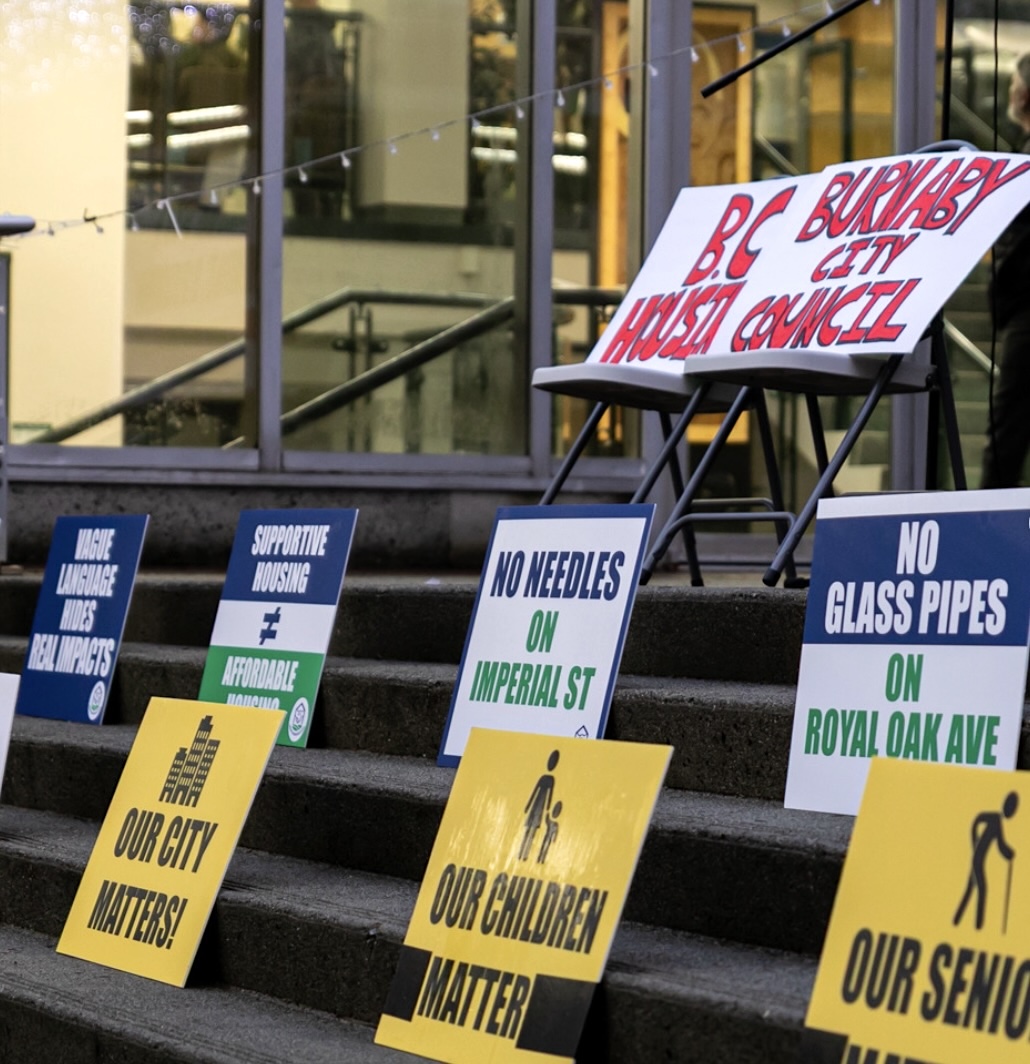
The opposition was so strong that it ultimately reached council, which received a report on Jan. 13 informing it of a petition with 11,749 signatures.
During that same meeting, Coun. Richard T. Lee had planned to introduce a motion calling for a “declaration of procedural deficiency” on the part of BC Housing and a separate motion calling for the city to cease negotiations with BC Housing and to suspend further action on the project.
And prior to the discussion of those motions, Mayor Mike Hurley introduced a motion of his own calling for BC Housing to present a “comprehensive public engagement plan” before council considered rezoning and leasing the land.
Hurley’s motion passed unanimously. The plan for public engagement, of course, is now moot.
Perceptions and politics
What ultimately defeated the project was not the outpouring of opposition or shortage in funding, but a combination of the two in conjunction with the perceptions about what supportive housing is. Plus perhaps a hint of politics.
Those who opposed the project seemed to equate supportive and complex housing projects with unbridled drug use in the form of a “drug house,” as described on signs people made for the various protests.
There is a particular concern around drug use and safety among the local Asian diaspora, according to conversations with locals who oppose the project as well as letters sent to council.
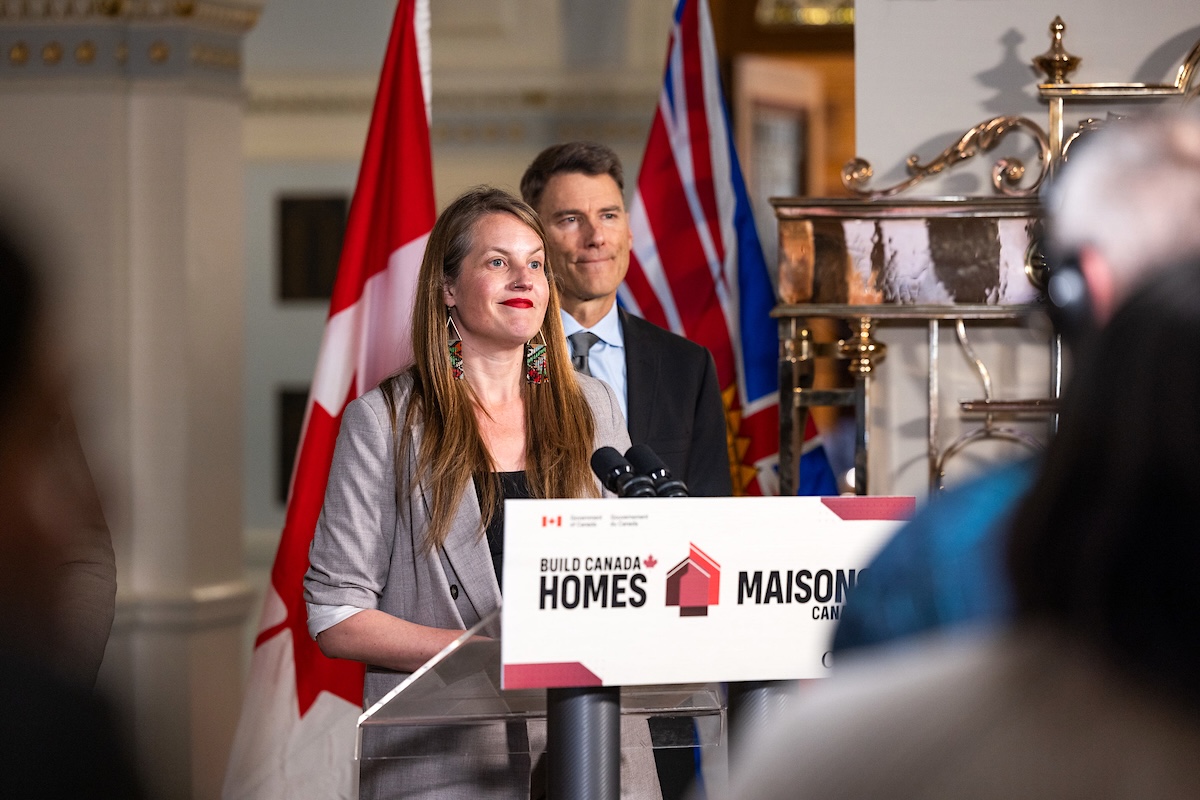
In an interview with The Tyee in early February, Minister of Housing and Municipal Affairs Christine Boyle — who worked in frontline social services and community outreach in the Downtown Eastside prior to serving on Vancouver city council — acknowledged the concerns while also highlighting that some of the perceptions may not line up with reality.
“I absolutely understand the fear that comes up for people around proposed changes to their neighbourhood, particularly related to safety,” she said. “That’s why I think it’s important we have good, clear information about what an important role supportive housing has in improving safety for vulnerable people but also for all of us.”
Boyle pointed to a modular supportive housing project on Heather Street in the Marpole neighbourhood of Vancouver that similarly drew strong opposition and protests in the late 2010s. Those opposed to the project took their challenge all the way to the Supreme Court of Canada, but after the project was completed and opened, local residents acknowledged that the reality was not as bad as they had feared, with some attributing this to an information and communication gap.
“I think one area we can always improve on is translation and having conversations across cultural communities to ensure communities understand what supportive housing is, what supports and services are involved and what those larger community benefits are,” Boyle added, recognizing a potential communication/language gap.
“That’s certainly something I hope to see us improve upon.”
According to fact sheets published by BC Housing (which are not available in any language other than English), only about half of residents in BC Housing supportive housing projects reported having a substance use issue and 40 per cent reported those issues improving after just six months.
Supportive housing projects can also reduce drug-related paraphernalia found in neighbourhoods, as some employ “clean teams” that sweep neighbourhoods in order to safely dispose of sharps and other substance use equipment.
For the Imperial Street supportive and complex care housing project, supports such as life skills training, counselling, employment assistance, physical and mental health resources, meals and laundry services were planned, according to a statement that BC Housing provided to The Tyee. The project would not turn away or evict residents for using substances but would facilitate harm reduction and recovery, BC Housing noted.
“To prevent deaths, supportive housing buildings include space where staff can offer various health-related services to the residents, including harm reduction and overdose prevention services,” added BC Housing. “These are important life-saving health-care practices. These are spaces and services offered to residents who live in the building only — this is different from a publicly accessible Overdose Prevention Site, which is available to anyone. To be clear, staff do not supply illicit or illegal substances to anyone, including CCH [complex care housing] and supportive housing residents.”
Some of that nuance can get lost in translation. Exacerbating the issue is that 2026 is a municipal election year, which means councils are paying closer attention to residents and are more likely to side with public sentiment, which Boyle acknowledged.
“I know everything gets more complicated for locally elected leaders in an election year, so we will be conscious of those challenges that they face, while continuing to lift up that housing supports are an important piece of the shared response,” she said.
“Supportive housing is the answer to encampments. It’s the answer to homelessness.”
Whether supportive housing is perceived as such by the general public, however, is a different story. ![[Tyee]](/design-article.thetyee.ca/ui/img/yellowblob.png)
Read more: Housing, Municipal Politics









Tyee Commenting Guidelines
Please note that email notifications for replies are not currently working due to a software issue which may be resolved in a future update.
Comments that violate guidelines risk being deleted, and violations may result in a temporary or permanent user ban. Maintain the spirit of good conversation to stay in the discussion and be patient with moderators. Comments are reviewed regularly but not in real time.
Do:
Do not: