

 SHARE:
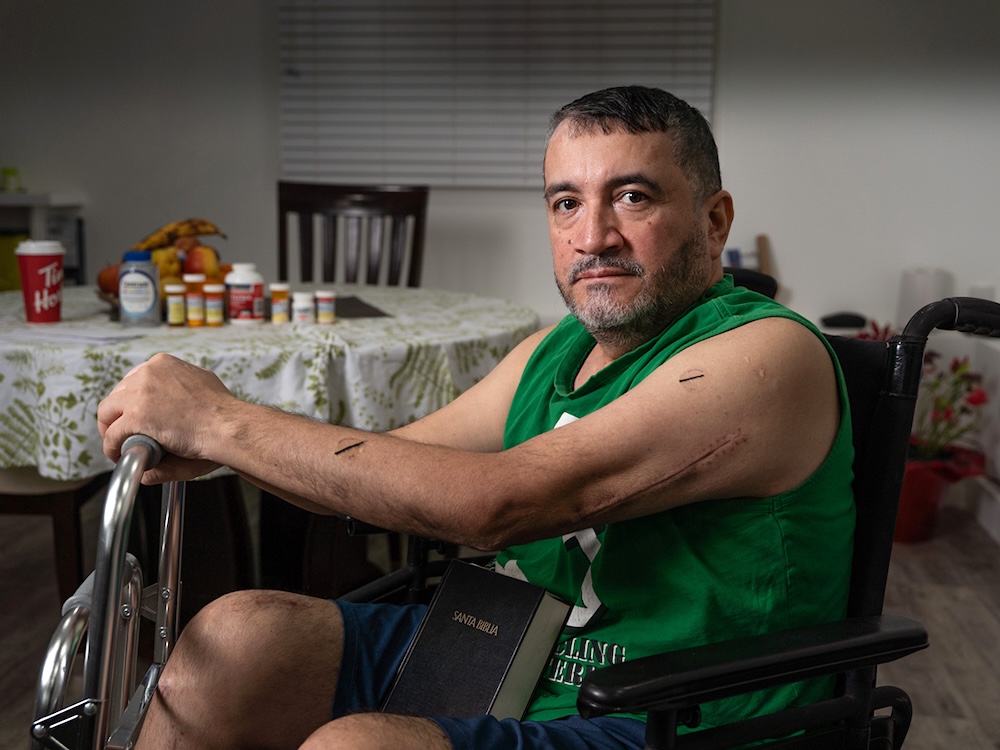
A 53-year-old Surrey resident who is too sick to be deported is facing a catch-22, as he is also too sick to work and therefore too sick to afford the cancer treatment he desperately needs. Adding insult to injury: if he does manage to get treatment and recover, he may be deported.
Francisco Barahona's predicament has taken some twists and turns but remains tenuous since The Tyee first reported on his case two months ago.
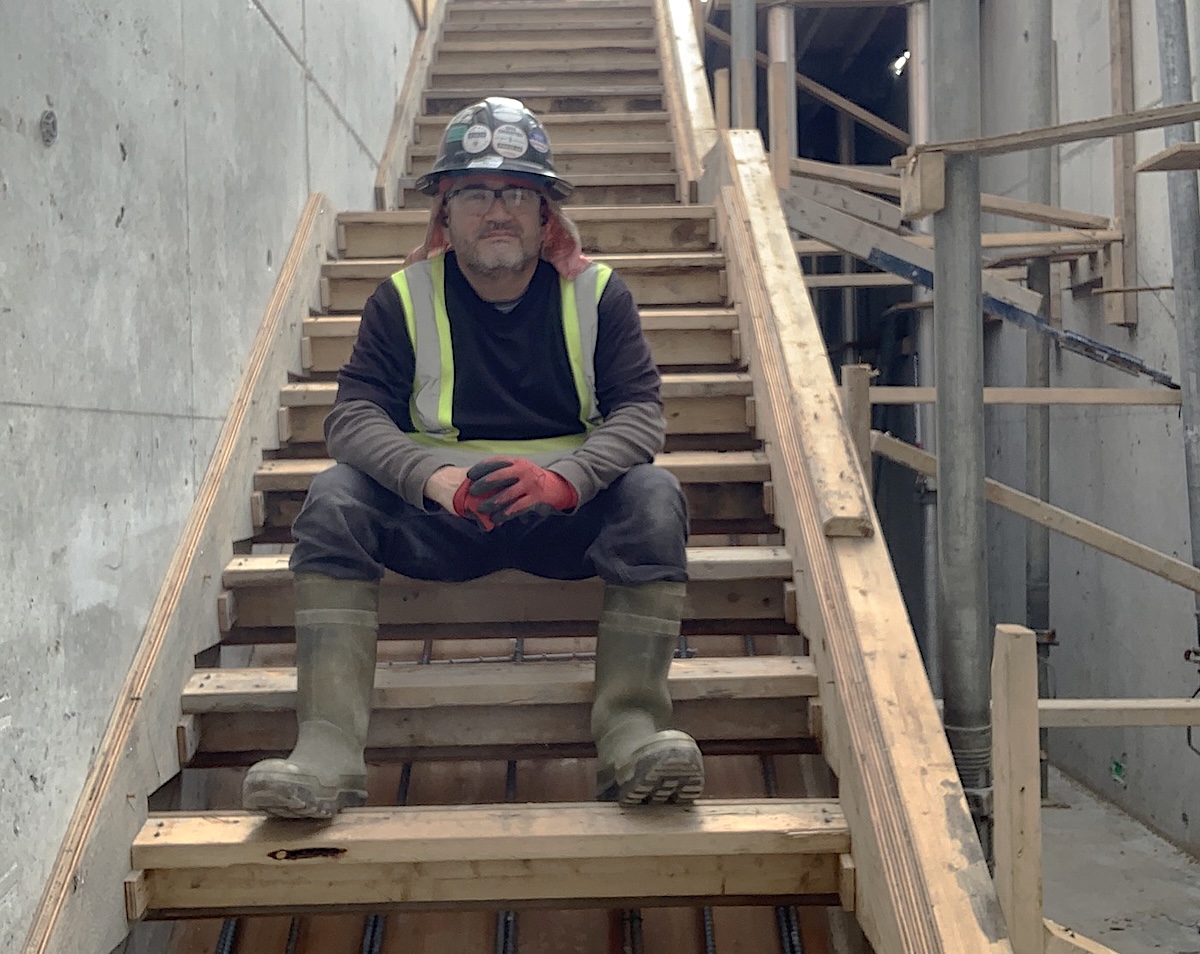
Barahona has been living in Canada and working in construction for 15 years. He said he really enjoyed helping to build a hospital in Fort St. John, for example, and felt welcomed by Canadians who took the time to try to chat with him in Spanish, his first language.
In 2023 he was diagnosed with multiple myeloma, a cancer that can weaken bones.
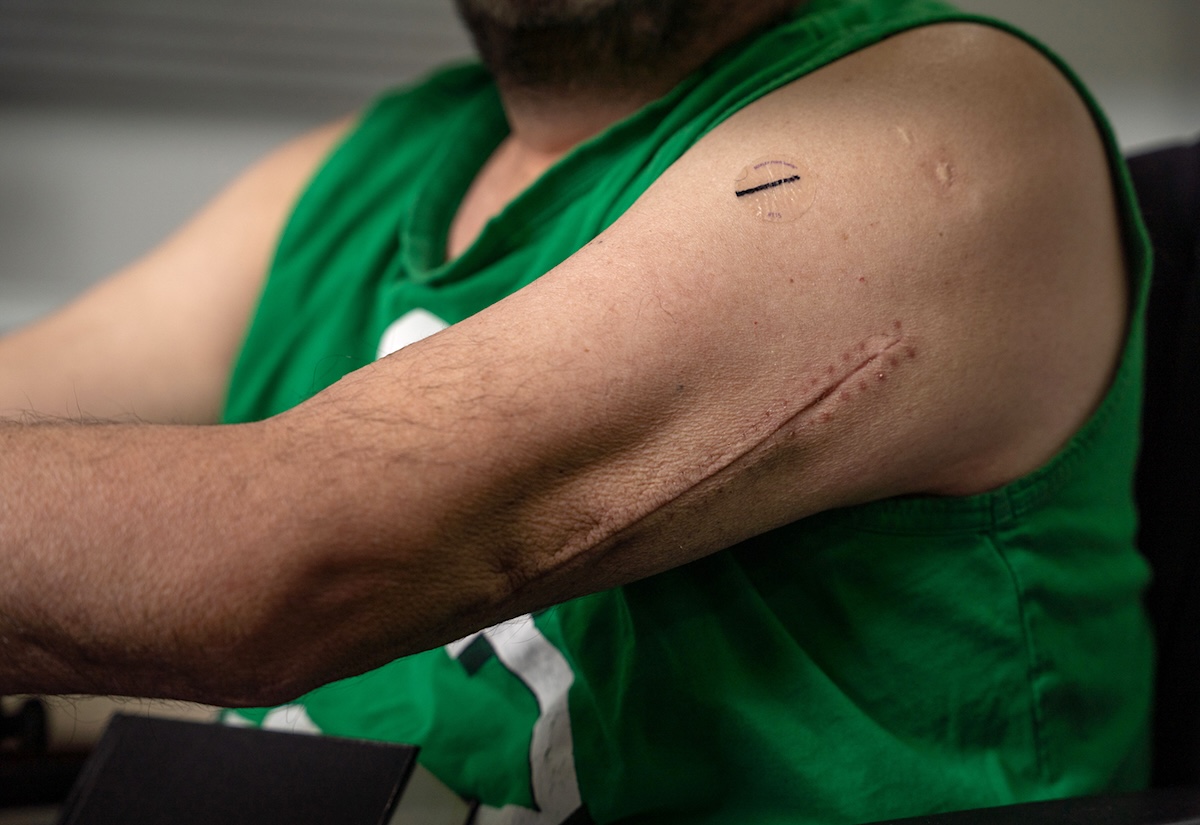
Since his diagnosis, as the cancer hollowed out his bones, he has broken his arm, his femur (thigh bone), his tibia (shin bone), his coccyx (tailbone) and a vertebra in his mid-back.
When he was first diagnosed he was covered by the provincial Medical Services Plan, or MSP, through a work permit, but now that he cannot work he has lost his status and public health insurance coverage.
Barahona said his cancer treatment stopped as soon as his MSP coverage ran out, and he was discharged home with a prescription to manage his pain. He did not receive treatment for two and a half years after his MSP coverage ended.
He told The Tyee that in 2023 BC Cancer had prepped him for a stem cell transplant but his MSP ran out before they gave it to him. At the time, the cancer was more easily treatable because it had not yet spread, he said.
He said it feels like his body was left to deteriorate. Now the cancer has spread throughout his entire body and his treatment will be more complicated.
Did Fraser Health report Barahona to immigration officials?
Barahona is also facing deportation. A Canada Border Services agent identified him and started his deportation process last September, as Barahona was waiting in the Langley Memorial Hospital emergency department suffering from a broken leg caused by the cancer.
Yanni Nicolidakis-Mustafa, an immigration lawyer with Edelmann & Co. Law Offices who has been working to help Barahona get status, said there is no way the Canada Border Services Agency, or CBSA, would have known Barahona didn’t have status, unless Fraser Health reported him to immigration.
It used to be common for Fraser Health to call immigration services when undocumented people sought care; it referred patients to the CBSA about 500 times from 2014 to 2015, for example.
After Fraser Health faced public criticism for its actions, it revised its policy in 2016 to not contact CBSA without patient permission.
When The Tyee asked if it had notified CBSA in this case, Fraser Health pointed to its policy and said it had no further comment.
Langley Memorial ended up admitting Barahona and doing surgery to fix his broken leg, despite him not having health insurance. The hospital has billed him $80,000, he told The Tyee.
Barahona’s cancer treatment begins, and hits another road bump
In February The Tyee wrote about Barahona’s struggle to apply for status so he could get MSP coverage and start treatment. At the time he was days away from a set deportation date to El Salvador.
After The Tyee article ran, things started to turn around.
BC Cancer finally admitted Barahona and scheduled a date for him to start cancer treatment, despite Barahona not having health insurance or MSP coverage.
At the same time, a doctor with the CBSA said Barahona was too sick to safely be air transported to El Salvador, Nicolidakis-Mustafa said. Two days before Barahona’s deportation, Nicolidakis-Mustafa added, he was told he was granted a deferral of removal for six months.
A crowdfunding campaign to support Barahona — organized by Sanctuary Health, a grassroots community group that advocates health care for everyone, regardless of immigration status — also received a boost in donations after The Tyee article. Barahona told The Tyee this helped pay for prescription medications, food and rent. However, the money is almost gone and the hospital bills keep coming.
Barahona started five days of radiation treatment at BC Cancer on March 18.
He also needs chemotherapy, but he said BC Cancer has told him that he won’t be able to access chemotherapy or any other treatment until he pays a deposit of $5,000 to go towards the total bill of $38,000 for cancer treatment. This does not include the cost of blood work, X-rays, pain medication or other treatment-related expenses.
The Tyee was shown an email from Harjot Saran, manager of clinical services at BC Cancer Surrey, that said “BC Cancer is providing radiation for fracture stabilization only” and that it would “not be able to proceed with any additional treatment until a payment discussion has taken place” regarding the $5,000 outstanding deposit.
In February the Health Ministry told The Tyee “BC Cancer does not refuse treatment if someone is unable to pay” and that BC Cancer will “work directly with the patient to find a solution if they are unable to make their payments.”
If a patient is not covered by MSP, BC Cancer may ask them to pay $5,000 before starting treatment and bill the rest of the treatment cost incrementally, the ministry added.
The Tyee emailed the Health Ministry with questions about how lower-income patients are expected to pay for tens of thousands of dollars in medical bills and asking why BC Cancer started Barahona on treatment only to bill him shortly after. The ministry did not respond to questions by press time.
Barahona spoke to The Tyee with the help of Cassandra Argueta, his niece, who helped translate.
Argueta said she has been helping her uncle navigate the health-care system and has been speaking with BC Cancer about payment options. She said BC Cancer told her that if her uncle were covered by MSP, the treatment, pain medication, X-rays and blood work would all be covered.
As it stands, Barahona is expected to pay everything out of pocket.
Barahona said it is “worrying” to try to think of how he will pay for his cancer treatment, and that the hospital and treatment bills feel like a burden on his shoulders. He is “not sure how to move forward.”
He said the radiation treated his legs and left arm, which is the one that fractured, but he hasn’t been able to get a full body scan so he doesn’t know how the cancer is progressing in the rest of his body, or what stage the cancer might be. Because he hasn’t been able to get these tests, he does not know if his cancer can be cured or if he is palliative. Palliative treatment would aim to slow down the spread of the cancer rather than cure it.
He said his right arm is starting to have the same symptoms his left arm did right before it broke, and that he has a lump on his skull that an oncologist said is likely caused by the cancer.
‘He is just asking for help’
Starting radiation only to have his treatment stopped and be asked for money he doesn’t have feels like candy being given and then taken away, Barahona said, adding that he has tried to do everything asked of him — from applying for immigration to following everything the doctors tell him — but still hasn’t found “the light at the end of the tunnel.”
Nicolidakis-Mustafa said he has applied for a temporary resident permit for Barahona, which will hopefully be issued in three to six months. If Barahona is granted status, even temporarily, he could get MSP coverage to help pay for his cancer treatment.
Nicolidakis-Mustafa also considered applying for the humanitarian and compassionate grounds pathway to permanent residence but said the application wait time is about 10 years and Barahona would have to leave the country during that time.
Barahona said his doctors have told him that the six months he has currently been granted by the CBSA may not be enough time to treat him.
“We know that it’s not enough time,” Argueta said, translating for her uncle. “It’s not something that he can just receive treatment for six months and then be sent home [to El Salvador] and be OK. He won’t be OK. It would basically be sending him to just fall ill all over again and have no way of treating himself there.”
When The Tyee asked Barahona if he was disappointed in how he has been treated by the country he has called home for the last 15 years, Barahona said he doesn’t blame Canada, the government, doctors or immigration officers and understands there is a legal process and way of doing things.
“All he is asking is for them to see his point of view and his situation in more of a humane vision,” Argueta said, translating for her uncle. “He is just asking for help.”
Barahona added that he is very grateful for the nurses and doctors who have helped him and everything that has been done for him.
He said any further money raised through the crowdfunding campaign will go towards the down payment with BC Cancer so he can start chemotherapy.
“That way he will have something to show or offer BC Cancer,” Argueta said, translating for her uncle. “His intention is to pay for treatment and he wants to be able to show that to them.”
Nicolidakis-Mustafa said he will keep working to try to get Barahona temporary or permanent status so he can get treatment and start to recover. However, he is worried that if Barahona makes a miracle recovery it could speed up his deportation process.
“It’s hard to be hopeful,” he said.
“I don’t think the fight is over for Francisco.” ![[Tyee]](/design-article.thetyee.ca/ui/img/yellowblob.png)
Read more: Health


Tyee Commenting Guidelines
Please note that email notifications for replies are not currently working due to a software issue which may be resolved in a future update.
Comments that violate guidelines risk being deleted, and violations may result in a temporary or permanent user ban. Maintain the spirit of good conversation to stay in the discussion and be patient with moderators. Comments are reviewed regularly but not in real time.
Do:
Do not: