

 SHARE:
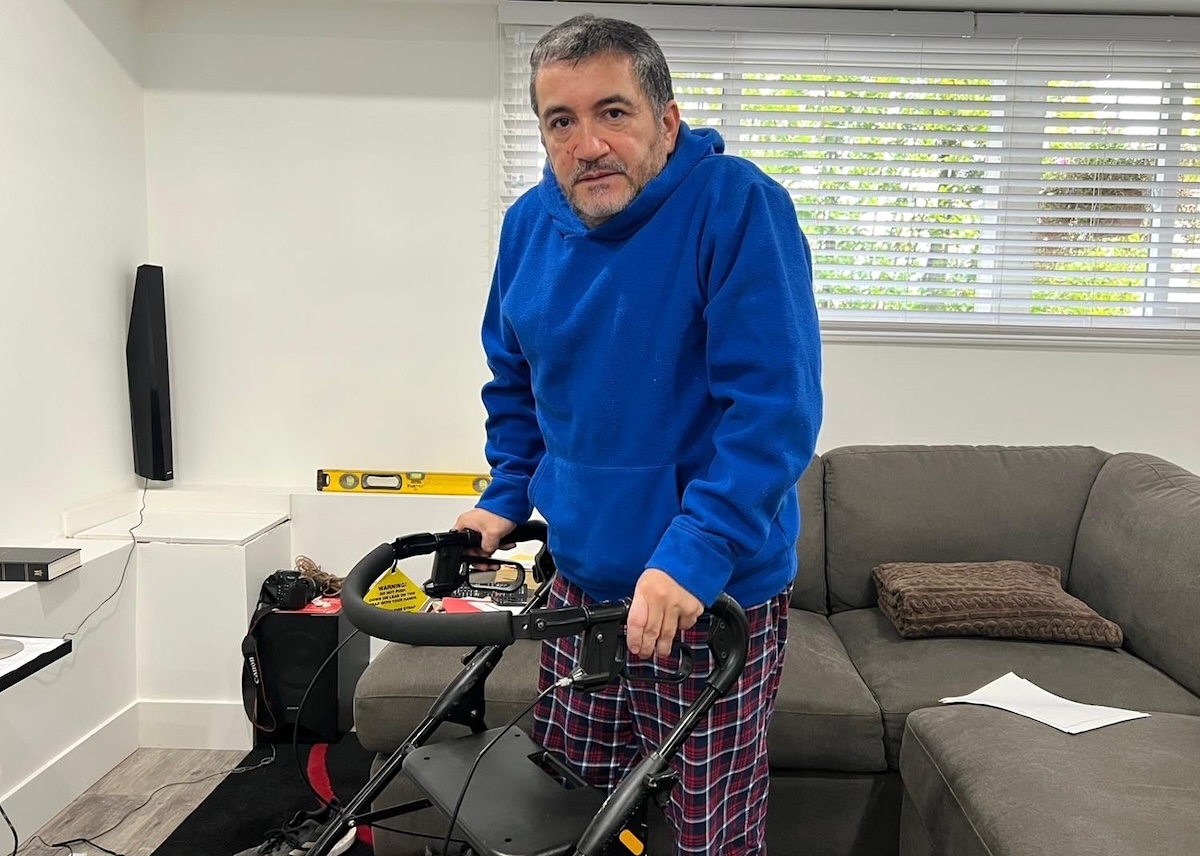
BC Cancer has agreed to treat Francisco Barahona on an urgent basis after The Tyee reported Thursday he had being denied care despite being ravaged by cancer.
But Barahona still faces deportation to El Salvador as early as next week.
Barahona has lived in Canada for 15 years, but has not yet found a way to get immigration status that would let him access the provincial Medical Services Plan. He had coverage before the cancer prevented him from working.
Without MSP coverage he hadn’t been able to access treatment from BC Cancer.
In 2023 Barahona was diagnosed with multiple myeloma, a cancer that can weaken bones.
Without treatment his bones have been “hollowed out” and he has been in and out of hospital as his bones “spontaneously fracture,” said Yanni Nicolidakis-Mustafa, an immigration lawyer with Edelmann & Co. Law Offices.
Barahona says his femur (thigh bone), his tibia (shin bone), his coccyx (tailbone), a vertebra in his mid-back, and his arm have broken since his cancer diagnosis.
Nicolidakis-Mustafa is working with Barahona to try and help him apply for immigration status in the hopes of getting him covered by MSP.
On Thursday afternoon, hours after The Tyee story was published, Nicolidakis-Mustafa said BC Cancer has agreed to treat Barahona.
“He is still waiting for a bed to open up for him, but they have taken note of the urgency of the matter and are moving quickly to get him into treatment,” Nicolidakis-Mustafa said in an email.
Barahona is still being deported to his home country of El Salvador. The deportation date is still set for Wednesday.
Nicolidakis-Mustafa is working to get the deportation date deferred.
In September a Canadian Border Services Agency officer identified Barahona while he was waiting in the emergency department of Langley Memorial Hospital with a shattered leg.
The agency then began the deportation process.
“There’s no other way for CBSA to find out he was there unless the hospital called them,” Nicolidakis-Mustafa said.
Fraser Health has a history of reporting undocumented people to immigration when they seek health care. Fraser Health says it no longer does this, but The Tyee was told about at least four cases where this has happened recently, including for Barahona.
If an undocumented person is identified by the CBSA, the CBSA has the right to deport them.
In an email to The Tyee a CBSA spokesperson said they are mandated to deport anyone in violation of the Immigration and Refugee Protection Act “as quickly as possible.”
However, CBSA officers are not supposed to get in the way of people receiving health care.
“The CBSA will not remove an individual from the hospital until they have been medically discharged,” the emailed statement continued.
It is not clear what that means for Barahona accessing treatment from BC Cancer.
Nicolidakis-Mustafa is still not confident Barahona’s deportation will be delayed while he is treated.
“This is a bit of a case of, ‘I’ll believe it when I see it,’” Nicolidakis-Mustafa told The Tyee Thursday.
If Barahona is admitted to a bed at BC Cancer for treatment the CBSA may not deport him until his treatment is finished.
Or he could be removed before he is able to start his treatment.
The CBSA is aware Barahona has cancer.
Last week the CBSA was investigating whether flying Barahona to El Salvador with a team of doctors could reduce the health risks, Nicolidakis-Mustafa said.
Being on an airplane would be extremely dangerous for Barahona. As well as having fragile bones he is also at high risk of developing blood clots after several recent surgeries.
“We have been fighting his removal from Canada and just trying to convey to CBSA that this is somebody who is quite literally falling apart and needs palliative treatment,” he said. “He is not safe to fly. Putting him on a plane will very likely result in his death.”
The Health Ministry previously told The Tyee “BC Cancer does not refuse treatment if someone is unable to pay” and that BC Cancer will “work directly with the patient to find a solution if they are unable to make their payments.”
If a patient is not covered by MSP, BC Cancer may ask them to pay $5,000 before starting treatment and bill the rest of the treatment cost incrementally, the ministry added.
Barahona says BC Cancer has been in contact with him since his diagnosis but told him he needed MSP coverage before it would start treatment.
Dr. Kelly Lau, medical director of the urgent and primary care centre at the Reach Community Health Centre in East Vancouver, also told The Tyee she often works with cancer patients who aren’t covered by MSP and who aren’t able to access treatment from BC Cancer.
The Migrant Workers Centre is supporting Barahona by hosting a crowdfunding campaign to help him cover his medical and legal bills, as well as his rent. The Migrant Workers Centre is a non-profit which offers free legal services to migrant workers.
At the time of writing Barahona was facing around $10,000 in medical bills. Last weekend Surrey Memorial refused to treat a hole the cancer had eaten through the skin and bone in his arm because he had unpaid medical bills, Nicolidakis-Mustafa said. ![[Tyee]](/design-article.thetyee.ca/ui/img/yellowblob.png)
Read more: Health



Tyee Commenting Guidelines
Please note that email notifications for replies are not currently working due to a software issue which may be resolved in a future update.
Comments that violate guidelines risk being deleted, and violations may result in a temporary or permanent user ban. Maintain the spirit of good conversation to stay in the discussion and be patient with moderators. Comments are reviewed regularly but not in real time.
Do:
Do not: