


 SHARE:
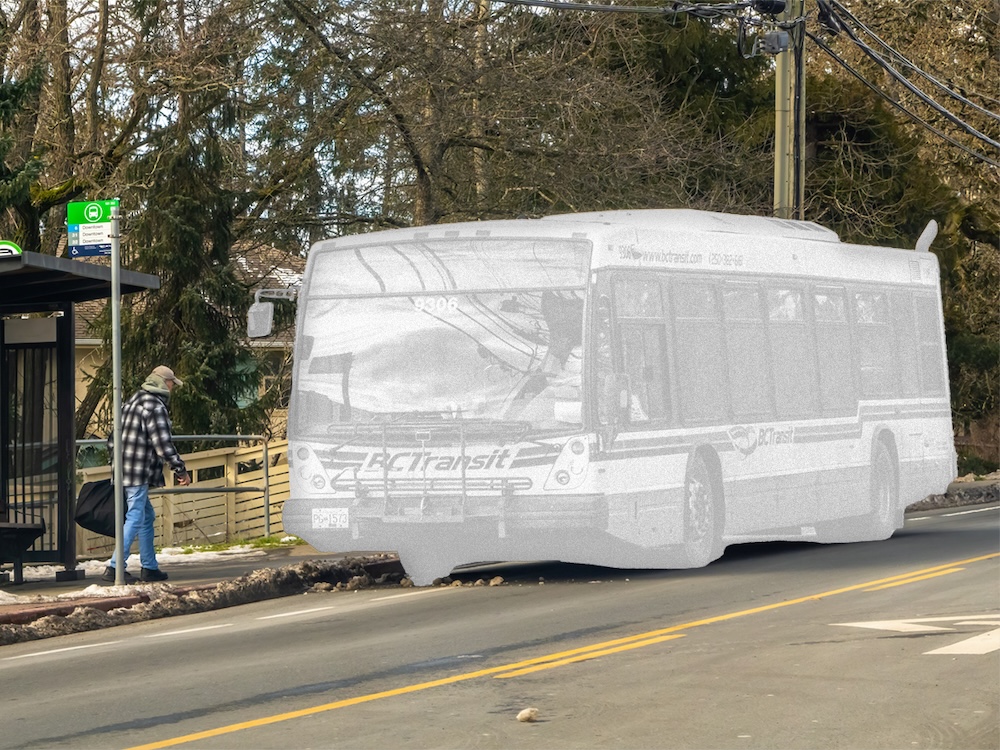
Dozens of British Columbia communities have shelved plans to expand their bus services, with officials at BC Transit blaming a lack of funding in the recent provincial budget.
BC Transit had already been unable to keep up with local governments’ requests for improved transit projects in recent years, providing money for only about one-third of requested bus expansions.
Now, all expansions for 2027 are on hold. In letters sent to local governments around the province, BC Transit officials wrote that “the 2026/27 operating budget will not provide the opportunity for service expansion.”
That has left local politicians concerned that local transit won’t get necessary improvements any time soon — and that any future expansions might have to be accompanied by matching cuts to other transit routes and services.
Communities in the Fraser Valley, on the Sunshine Coast and in the North Thompson valley are among those that have had to shelve long-awaited plans to expand local and regional transit.
In Squamish, plans are also in limbo — despite the fact that the municipality signed a memorandum of understanding last fall with BC Transit on a three-year plan to bolster transit options.
“It is really frustrating when we’ve been advocating for longer-term guaranteed funding,” Squamish Mayor Armand Hurford told The Tyee Thursday. “It’s difficult to have a three-year plan and [for the province] to just say, ‘Oh it’s not funded now and it’s unlikely to be funded next year.’”
The operating costs of bus systems outside of Metro Vancouver are split between local governments and BC Transit, a provincially funded arm’s-length agency.
When governments want to expand their bus systems, they submit a plan to BC Transit and commit to providing about half the operating costs. In recent years, however, the number of proposed expansions (and funding commitments from cities) has outstripped BC Transit’s ability to match that funding with the money it is provided by the provincial government.
As The Tyee reported last August, mayors and councillors have complained they have been limited in their ability to improve local bus service to accommodate the denser neighbourhoods facilitated by new provincial housing rules.
Last year, municipalities committed to operation funding for 119 buses, but BC Transit had money to approve only 56 new buses.
BC Transit’s impact on the provincial budget is relatively minor, and the money needed to operate a new bus is comparatively modest. Last year’s BC Transit matching commitment for those 56 buses was expected to cost $2.4 million — about $42,000 per bus. This year, the province plans to contribute a total of $195 million to BC Transit operations. It has projected a government-wide deficit of $13.3 billion.
Hurford and other local politicians note that transit is seen as a key component in other recent government initiatives, including reducing housing costs, addressing climate change and matching workers to services with labour shortages.
Squamish’s population has boomed in recent years, but many newcomers have been startled to realize that they need to own a car to participate in life in their new community.
“Transit ticks many boxes,” he said. “But for some reason it seems to be viewed as something that is nice to have rather than a must-have.”
In a statement to The Tyee, a BC Transit spokesperson wrote that the province “remains committed to public transit, and the funding for 2026/27 will support the ongoing delivery of a high level of service for our customers throughout the province.”
In an emailed statement, the Ministry of Transportation and Transit said it is still “a committed partner” in transit funding.
“Improving transit services outside Metro Vancouver remains a priority for the province, with significant investments made to support both increased service levels and long-term infrastructure throughout B.C.,” the statement said. The ministry pointed to “almost a half billion dollars” in capital investments over the coming years, and additional funding to help BC Transit to keep up with rising costs.
Local projects quashed
In the central Interior, residents and officials have been trying to get the province to ante up for improved service on the region’s Valley Connector service, which takes people in Clearwater, Blue River and other Highway 5 communities to and from Kamloops.
Now those plans are on hold.
Usoff Tsao, a rural area director on the Thompson-Nicola Regional District board, told The Tyee there had been high hopes that the service would be bolstered. The bus caters to people who need to access health care and other services in Kamloops.
It runs twice a week, dropping riders off at Kamloops’s hospital around 11 a.m. and departing around 3:30 p.m. While the bus is useful, Tsao said its limitations can make it difficult to access services. Last year, he said, local officials and BC Transit staff agreed that an expansion was a good idea.
“Then, suddenly, we get told that the provincial budget doesn’t allow for this expansion.”
Tsao said the news hurts. The service is particularly important, he said, because the provincial government has spent recent decades centralizing public services in Kamloops.
Tsao is also worried that any future improvements will require cuts to other routes.
In a letter to the District of Clearwater, which is located about an hour and a half north of Kamloops, BC Transit government relations manager Daynika White wrote that she was “pleased to confirm” the agency will review that community’s regional transit system next winter. However, White noted that the goal will be to find “opportunities to reallocate service hours from underperforming transit routes to routes that are in higher demand.”
In its statement to The Tyee, BC Transit wrote that as part of a review of Clearwater’s transit system, the agency “will be working closely with the local government partners to identify opportunities for both service expansion and optimization of existing resources.”
In the Fraser Valley Regional District, board members were told last week that “transit partners around the province have been notified” that the province’s new budget won’t support any service expansions.
That means that a planned route on the north side of the Fraser won’t proceed. The proposed service would have connected the town of Agassiz and several First Nations to Mission and the West Coast Express.
“We’re very, very disappointed,” the regional district’s chair, Patricia Ross, told The Tyee. “We see how many people need it and [expansions] should have been done awfully long ago. It’s just really frustrating.”
Ross said officials will continue working on plans for transit so that when funding does resume, the services will be ready to immediately implement.
Sunshine Coast transit plans dashed
It’s a similar story on the Sunshine Coast, where plans to expand another regional bus have also fallen victim to the cuts.
The Sunshine Coast Regional District had hoped to bolster bus service in West Sechelt and Gibsons and improve service to the area’s ferry. White has repeatedly stressed that transit is needed to help workers, including those needed to alleviate an ongoing shortage of child-care staff. He said the need for better transit is also connected to continuing efforts to increase density in town centres.
“We’ve been working with the provincial government, ironically on making housing more affordable and making sure there are people living in more-dense housing options like apartments, and transit is absolutely crucial,” White said.
He also pointed to ongoing investments being made to improve transit in Metro Vancouver.
“When you look at the significant investments that are going to TransLink, including from the federal government, we need the province to remember that it’s important to support communities all over B.C. too when it comes to transit.”
No sign of relief
Improvements to BC Transit’s new service plan suggest the province is not planning to fund more buses outside of Metro Vancouver any time soon.
Twelve months ago, BC Transit’s service plan named expanded services and key infrastructure projects as the two targeted strategies that would enable it to grow ridership across the province.
While capital projects, such as the construction of a new transit facility in Chilliwack, are still going ahead, it is unclear when provincial funding will allow for more buses.
In the agency’s new, post-budget plan, the expansion of services has been replaced by a focus on optimizing the effectiveness and reliability of public transit.
And whereas the agency’s previous budget had predicted increasing operating expenses the following year, the new budget shows no operation increases in years to come.
The murky future is a major concern for local officials, who say the expansions are already reacting to current demand, not anticipating the needs of future growth. If the past is any indication, when funding for expansions is restored, local governments will be competing against one another for the province’s limited transit dollars.
In Squamish, officials have big hopes for a more robust transit system that better responds to residents’ needs. And the demand is only getting bigger, Hurford said.
“It’s definitely kicking the can down the road and digging yourself a hole we will need to climb out of together.”
If you have a story tip, contact reporter Tyler Olsen in confidence via email.
*Story updated on March 20 at 1:10 p.m. to include comments from the Ministry of Transportation and Transit. ![[Tyee]](/design-article.thetyee.ca/ui/img/yellowblob.png)
Read more: Transportation, BC Politics










Tyee Commenting Guidelines
Please note that email notifications for replies are not currently working due to a software issue which may be resolved in a future update.
Comments that violate guidelines risk being deleted, and violations may result in a temporary or permanent user ban. Maintain the spirit of good conversation to stay in the discussion and be patient with moderators. Comments are reviewed regularly but not in real time.
Do:
Do not: