


 SHARE:
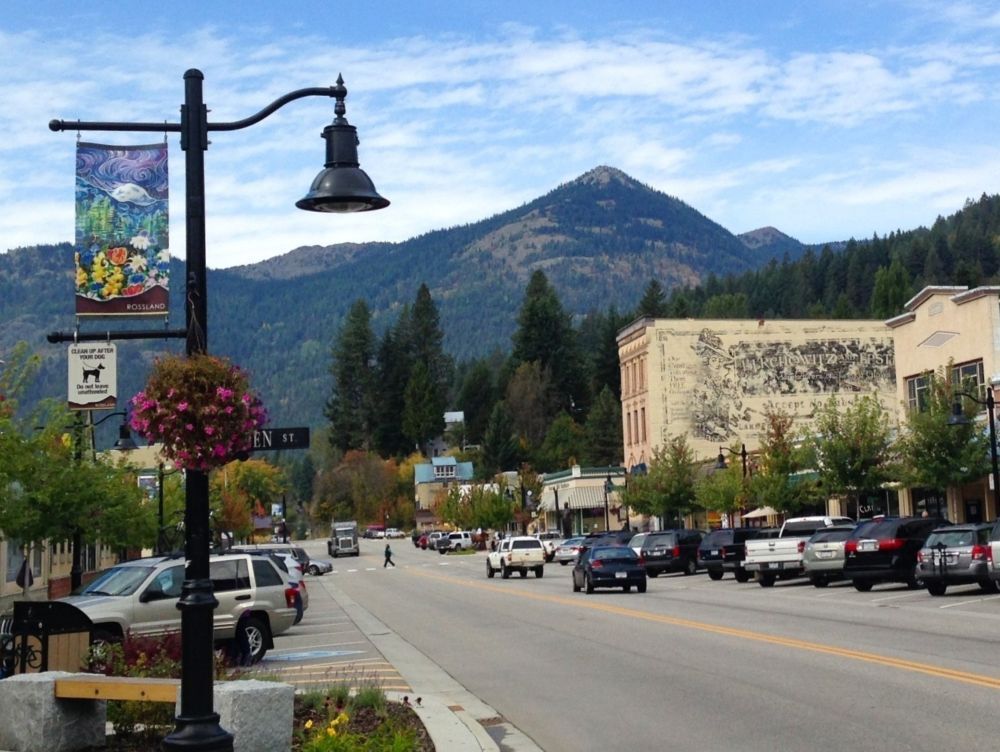
The small city of Rossland does not want to go back to its roots.
Over the last 20 years, the picturesque West Kootenay mountain town of 4,500 has been steadily — and successfully — reinventing itself.
Rossland started as a mining boom town in the late 1890s after gold deposits were discovered in the surrounding mountains. But after the area’s largest gold mine closed in 1929, residents started leaving Rossland. The exodus continued when all local mining ceased at the outset of the Second World War. Rossland’s population declined and it became a bedroom community for neighbouring Trail.
Decades of economic transition followed, mostly centred on Rossland’s Red Mountain ski resort and nearby hiking and biking trails. Today, the small city is home to a major mountain resort and world-class mountain bike trails that support a $40-million year-round tourism industry. Its population is growing, and its downtown is bustling with activity.
But now the city is facing a potential return to its past. A mining company wants to create an open-pit mine just seven kilometres from downtown. If construction proceeds, the operation would be the closest open-pit mine to any B.C. municipality.
Locals, though, are pushing back, saying the proposal threatens to upend the lifestyle and economy they have been building.
Critical minerals
In October 2025, the B.C. government approved a mining permit for Alberta-based West High Yield (WHY) Resources Ltd. to begin construction of a magnesium mine on Record Ridge, just southwest of Rossland.
Magnesium is listed as a critical mineral by the Canadian government and has green economy applications in the automotive, aerospace, construction and agriculture sectors.
While the provincial government has allowed the project to move ahead, many residents — ranging from geologists and doctors to tourism professionals and the city’s mayor — have voiced concerns about the mine’s potential impacts on the health of the community and its surrounding ecosystem.

Among those who are worried is Melanie Mercier, a former geologist and ecological horticulturalist.
“This project is involving asbestos-bearing rock, it's in a sensitive ecosystem, it's upstream of major salmon restoration work, it's close to homes,” Mercier said. “So it also raises unresolved air, water and cumulative-impact questions.”
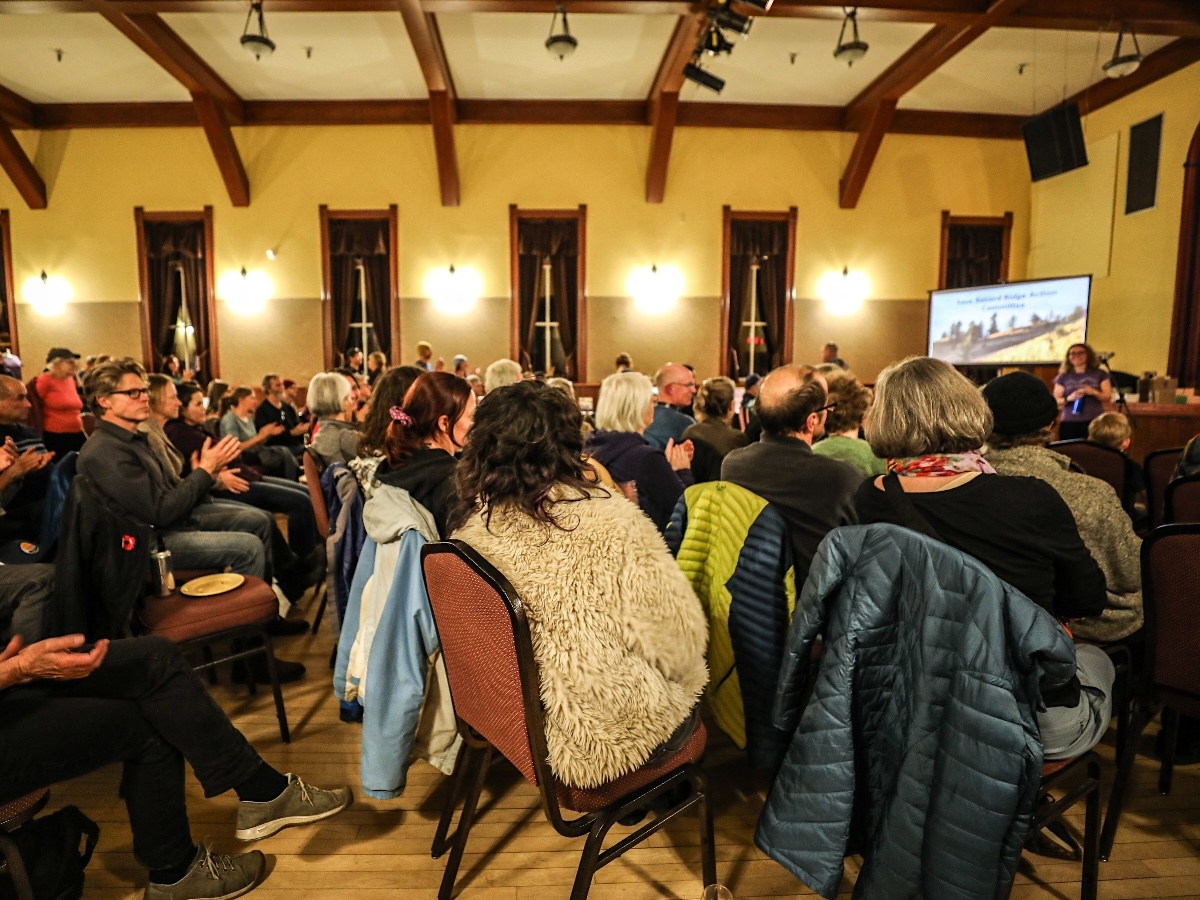
To fight the proposed mine, Mercier and like-minded locals have created the Save Record Ridge Action Committee, which has filed court challenges to the province’s decision to award permits to WHY Resources without requiring an environmental assessment.
Mercier said her committee is not opposed to mining, noting that several members of the committee and many of Rossland’s residents work in the industry. But she and others say the Record Ridge project warrants further scrutiny and a full environmental assessment.
In B.C., proposed mines must go through an environment assessment if they are expected to exceed certain production thresholds. Industrial mineral quarries can extract up to 200,000 tonnes of material per year without review, while the threshold for metal mines is 75,000 tonnes.
Opponents to the mine say WHY Resources has a pattern of deliberately adjusting its projected output to avoid an environmental assessment.
The company originally categorized the proposed mine as an industrial quarry with an output just below the threshold that would trigger an assessment.
In 2024, the Kootenay environmental organization Wildsight filed an application with the province, arguing that the Record Ridge mine didn’t meet the legal definition of an industrial quarry. The Environmental Assessment Office agreed, ruling that Record Ridge was actually a mineral mine and would be subject to environmental assessment.
WHY Resources then submitted a new proposal later for a mine with a production capacity of 63,500 tonnes. Although it slashed its projected output by nearly two-thirds, there was little apparent change to the project’s design, footprint or infrastructure.
The committee opposing the mine and the Sinixt Confederacy — a U.S.-based tribe whose traditional territory includes parts of the Kootenays and the Record Ridge mine site — filed separate applications calling on the province to subject the mine to an environmental assessment. In August, the province determined an assessment was unnecessary, given the new production thresholds.
Documentation provided to The Tyee by the Environmental Assessment Office stated that environmental protections were “reasonably addressed” through the Mines Act, the Environmental Management Act and the permitting process.
The Osoyoos Indian Band supports the project and has signed a co-operation agreement with WHY Resources.
Though representatives from the nation weren’t available for an interview, Business in Vancouver reported last summer that Osoyoos Chief Clarence Louie said he was “pleased” when the province declined to subject the mine to an environmental assessment.
WHY Resources did not respond to The Tyee’s requests for an interview. Instead, it directed The Tyee to a statement on its website that said: “The company believes the regulatory approvals obtained for the RRIMM Project were properly issued, [and] that there are no errors in the CEAO's August 2025 determination.”
The provincial government declined to comment on the matter because it is before the courts.
How accurate is the data?
Mercier said the mine merits an environmental assessment for several reasons.
The committee has filed affidavits noting that although the mine will be processing asbestos-bearing rock upwind from Rossland, reports provided by WHY Resources erroneously listed the mine as downwind. The company did not undertake dust dispersion modelling.
The company’s documentation also relied on weather data from a station in Warfield, a town on the opposite side of Rossland from the mine, instead of Rossland’s weather station. And it provided yearly average emission rates instead of the required monthly averages, despite the proposed project being seasonal. That, opponents argue, will lead to short-term emission rates six times higher than the company’s data suggests.
“That raises huge concerns... and it directly affects the credibility of this material,” Mercier said.
Mercier said her committee has documented more than 200 similar issues in the Record Ridge proposal, including missing, misleading or inaccurate data.
In September 2025, the committee asked the B.C. Supreme Court for a judicial review of the decision to allow the mine to proceed without an environmental assessment.
“Responsible mining depends on credible, consistent regulatory oversight,” she told The Tyee. “Allowing an application that does not meet requirements, or allowing it to proceed without an environmental assessment, ultimately undermines confidence in the sector.”
Mercier said it sets a bad precedent for all industries provincewide if environmental assessments can be avoided by increasing production after a mine starts operating.
“What's at stake is beyond Rossland,” Mercier said. “This file is being watched because it tests how robust B.C.’s environmental guardrails really are.”
A community opposed
Take a stroll down Rossland’s lively main street, with its heritage buildings, cafés and independent shops, and one sight will quickly become familiar: a sign in shop windows that reads: “We need an Environmental Assessment! No open pit mine in Rossland.”
Rossland Mayor Andy Morel said he “can’t see any benefit” to the construction of the Record Ridge mine.
While he said there is a need for critical minerals and mining-related jobs, Morel questions the feasibility of the proposed project and its benefit to the community. He pointed to WHY Resources’ proposal to route trucks down Highway 22 to the Paterson border crossing, where the highway relies on an old bridge ill-suited to heavy truck traffic.
“They say they can do it, but there's millions of dollars of upgrades required,” Morel said. “They don't think things through.”
He also questioned the economic benefits of the mine compared with the risk it poses to the local tourism industry.
WHY Resources has said the mine will create 30 to 40 seasonal jobs. Rossland’s tourism sector, meanwhile, employed 1,200 people in 2025.
“Locally, there's going to be very few jobs available,” Morel said.
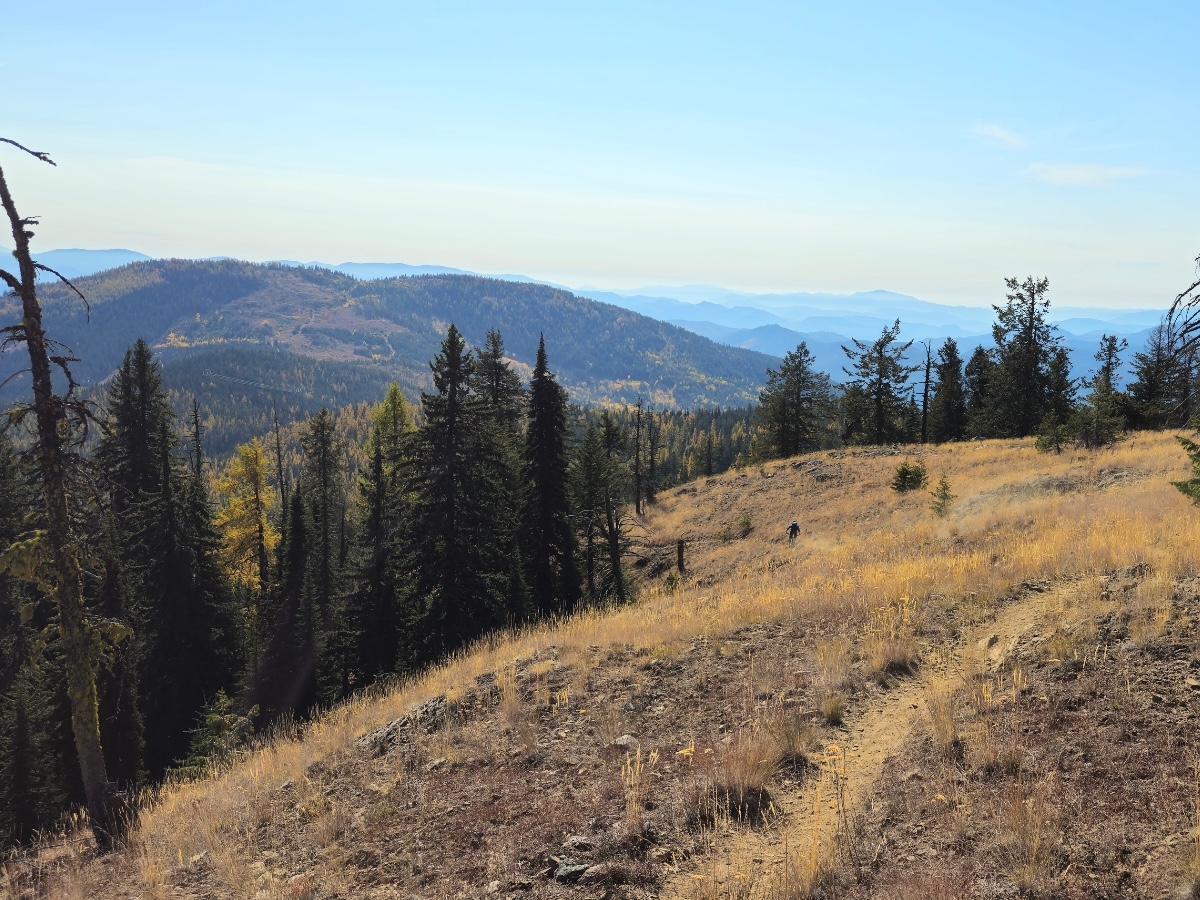
The mine site is located 200 metres from a section of the Seven Summits Trail, a 35-kilometre mountain biking trail recognized by the International Mountain Bicycling Association as one of 35 “epic” trails around the world.
The mine would take away from the area’s tourism industry, Morel said. “For a whole bunch of different reasons, [we] can't see this being a realistic and a safe project that won't compromise the community and the communities around it.”
Wildsight mining and policy lead Simon Wiebe echoed the mayor’s concerns about the mine’s viability.
Extracting magnesium from serpentinite, the rock found on Record Ridge, is generally considered to be economically unfeasible and is only in its experimental stages, Wiebe said.
A 2023 study on magnesium dissolution noted “the economic viability of all the methods suggested to serpentinites processing is open to doubt because of either energy consumption or environmental and technological problems.”
WHY Resources’ own preliminary economic assessment from 2013 concluded “the flow sheet supporting the metallurgical processing is at an early stage of development and has never been tested in a commercial application.”
“The lengths that this company has gone to push this substandard mine proposal forward is really kind of amazing,” Wiebe said. He suggested there is one major advantage to the mine. “West High Yield stock price will certainly benefit. That's something to be considered.”
WHY Resources officials declined to be interviewed by The Tyee, but the company’s president recently told Business in Vancouver that the rock would be shipped overseas. Another company official said North America has no plant that can process Record Ridge’s magnesium ore.
Sinixt Confederacy chair Jarred-Michael Erickson said his tribe believes the mine should be subject to an environmental assessment to better understand its potential impacts on human health and the ecological health of the region, especially because the mine could affect the Columbia River.
He cited the ore’s high asbestos levels and Record Ridge’s unique ungulate habitat and huckleberry-growing area, both of which are of cultural importance to the Sinixt.
Erickson said consultation between WHY Resources, the province and the nation has been limited to “staff-level” input.
“We haven't actually been consulted as far as, like, government to government or anything like that,” he told The Tyee.
In February, the Globe and Mail reported that the province is working on rewriting provincial laws in order to block U.S.-based tribal groups from participating in environmental assessments for projects developed in B.C.
Injunction granted
Last week, the committee opposing the mine won a significant fight in its long battle when the B.C. Supreme Court granted an injunction against construction of the mine until an upcoming judicial review is heard. Justice Dev Dley scheduled the judicial review to be held in Rossland the week of May 5, with the injunction in place until a judgment is rendered in that case.
WHY Resources had been scheduled to begin construction in April, while the judicial review was not set to take place until August at the earliest. The company announced that it plans to appeal the injunction in a statement posted to its website on March 12.
Mercier said she and her committee colleagues were happy with the outcome of Wednesday’s ruling but that there is still work to be done.
“In a time of uncertainty with markets and the economy and recession, like, if a community is thriving, why compromise it by putting in a different industry?” Mercier said. “Because we can't have both.” ![[Tyee]](/design-article.thetyee.ca/ui/img/yellowblob.png)
Read more: Labour + Industry, Environment









Tyee Commenting Guidelines
Please note that email notifications for replies are not currently working due to a software issue which may be resolved in a future update.
Comments that violate guidelines risk being deleted, and violations may result in a temporary or permanent user ban. Maintain the spirit of good conversation to stay in the discussion and be patient with moderators. Comments are reviewed regularly but not in real time.
Do:
Do not: