


 SHARE:
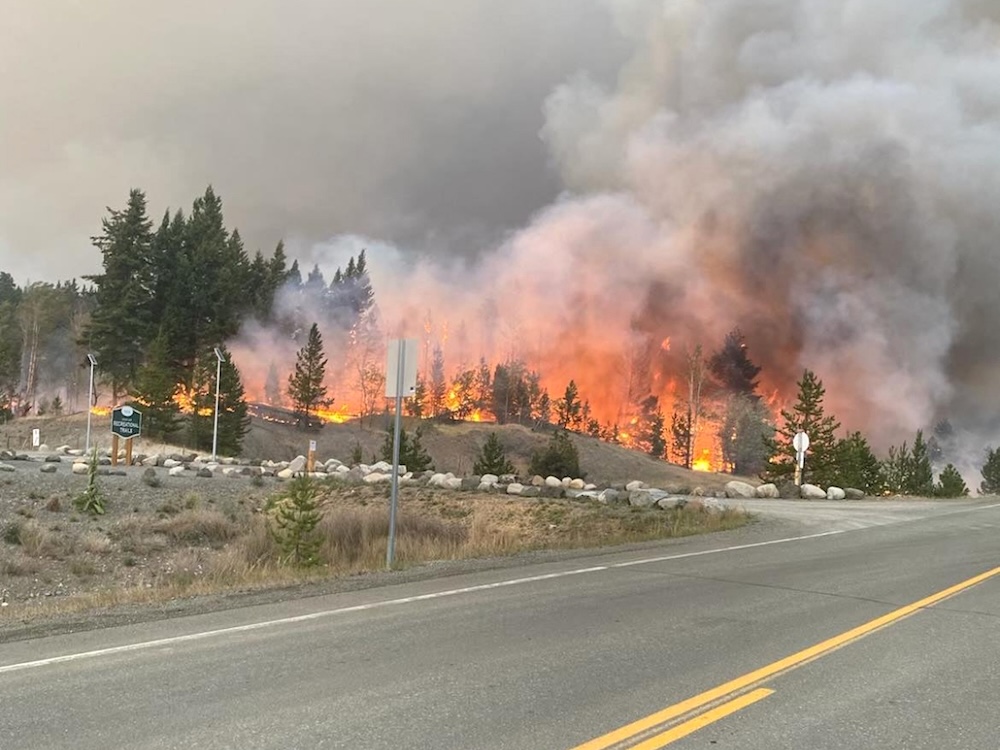
British Columbia’s FireSmart program has another lease on life — for now. But change is coming.
With the program’s pool of funding expected to run out this year, the province provided a $15-million reprieve in last week’s budget. The money will enable up to 75 communities to start work on local FireSmart plans and projects.
Since 2018, the province has provided about $175 million to First Nations, regional districts and municipalities to implement FireSmart principles, which aim to reduce the ability of wildfires to spread in developed areas.
Ahead of the release of the budget, Leonard Hiebert, a vice-chair of the Peace River Regional District, told The Tyee that FireSmart techniques had stopped wildfires from “wiping out” homes in his area. Community-wide FireSmart preparation work was also credited for saving the community of Logan Lake — Canada’s first designated FireSmart community — when a massive fire approached it in 2021.
In late January, the Union of BC Municipalities warned funding for FireSmart projects would quickly run out. The organization, which administers the program on behalf of the province, had distributed about $40 million annually in recent years. With only about $25 million left, UBCM warned that new applicants would have to compete against one another for what remained of the money and said expensive fuel management work would not qualify for funding.
The warning was followed by calls from politicians, emergency managers and fire chiefs for the province to renew funding.
While last week’s $15-million infusion will help, it’s not the $40 million UBCM president Cori Ramsay had requested.
In an emailed statement, Ramsay told The Tyee she appreciates the province’s commitment. But she has also expressed disappointment, telling a Black Press reporter, “$15 million is better than zero, but it’s not what we were hoping for.”
The one-time funding top-up comes as the province re-examines how it funds FireSmart initiatives across the province.
Over the last eight years, much of the funding the province has provided has enabled the hiring of local FireSmart officials, who then plan projects and educate residents about how to reduce fire threats on their properties. The education element often involves visiting properties and identifying vegetation and other elements that might enable a wildfire to spread to a home. The funding has also been used for rebates to compensate residents for the cost of FireSmart work, and for larger projects aimed at reducing fuel risks.
Forests Minister Ravi Parmar has hailed FireSmart work for protecting homes from dangerous wildfires. Last year, he praised residents in Dashwood for preparation work that he said helped prevent the Wesley Ridge wildfire from destroying any structures.
But he has also recently signalled that changes are coming to FireSmart programming.
“There’s been a lot of success, but I need to ensure that that program is meeting the needs of communities,” Parmar said last week.
A ministry statement emailed to The Tyee last week said that funding “is now moving towards a more holistic provincial approach where mitigation work is done where risk is highest throughout the province, instead of which community has capacity for grant funding.”
The province isn’t reducing its commitment to FireSmart initiatives, a ministry official told The Tyee, adding that it is encouraging local governments to continue their fire mitigation work. Officials stressed that the province is taking a large-scale approach and is focusing much of its efforts on reducing fire risks on Crown lands.
The question will be whether that is accompanied by an expectation — or hope — that local governments start to cover the cost of FireSmart and wildfire mitigation work within their own boundaries.
For Ashcroft mayor and Thompson-Nicola Regional District chair Barbara Roden, there are reasons for optimism — but also worry.
Ashcroft hired a FireSmart co-ordinator last year, and Roden said she was glad the funding top-up would help other communities do the same.
“The more communities, the more people are aware of FireSmart, the better,” she said.
She said the province’s direction that money go to communities to start FireSmart planning was also reason for optimism, given the startup funding usually lays the foundation for future on-the-ground activities.
“Maybe it’s an indication that the program will be continuing beyond this fiscal year, because otherwise, why would they be enrolling 75 new communities only to turn around, slam the door and say, ‘Glad you got started, good luck’?”
Parmar has indicated that changes are needed to provide more funding to communities like West Kelowna with significant fire concerns. But Roden warned that small communities like hers also have major needs — and limited tax bases to fund them.
“Smaller communities like Ashcroft, like Clearwater, like Clinton, really do need that leg up because we have far fewer resources,” she said.
If you have a story tip, contact reporter Tyler Olsen in confidence via email. ![[Tyee]](/design-article.thetyee.ca/ui/img/yellowblob.png)
Read more: BC Politics, Environment








Tyee Commenting Guidelines
Please note that email notifications for replies are not currently working due to a software issue which may be resolved in a future update.
Comments that violate guidelines risk being deleted, and violations may result in a temporary or permanent user ban. Maintain the spirit of good conversation to stay in the discussion and be patient with moderators. Comments are reviewed regularly but not in real time.
Do:
Do not: