


 SHARE:

One morning in July 2024, Jon Petrov heard a knock on his door. It was a police officer, there to tell Petrov his landlord had made a report accusing him of theft.
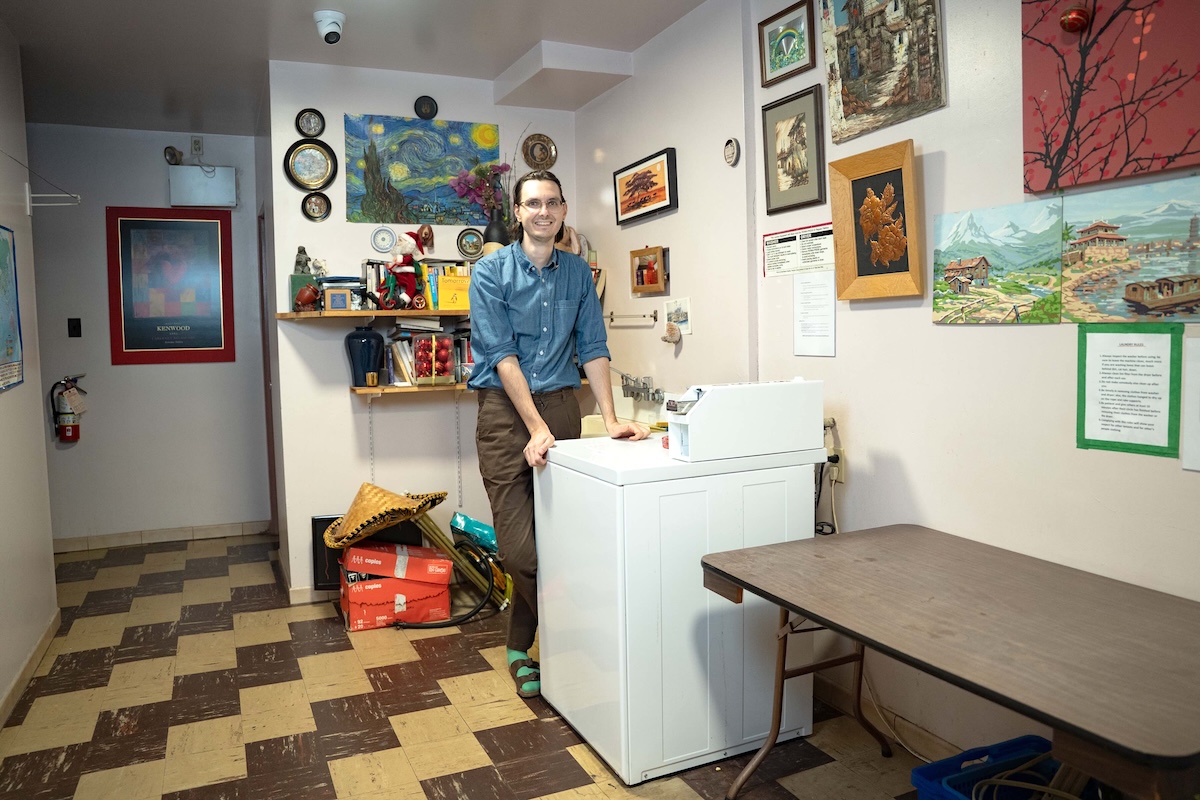
What had Petrov stolen? According to his landlord — a company called Plan A — Petrov had taken several paintings and prints from the building’s laundry room, a space where residents regularly traded books, housewares and other belongings. Over the years, people had hung various pieces of art on the walls, some made by tenants who lived in the building.
None of the artwork is priceless. There’s a gold rose against black velvet, a paint-by-numbers scene of Nepal and other prints suitable for brightening an apartment building’s laundry room. But to Petrov and other tenants, the display was a symbol of the West End apartment building’s strong sense of community.
After being confronted by the police officer, Petrov returned the art and was never charged with a crime. But soon after, Plan A tried to evict him on the grounds that he was a thief who had made other tenants feel unsafe.
Plan A’s founder and director is Anoop Majithia, whose LinkedIn page says he started the company in 2003 and that he is a chartered accountant with a law degree. Majithia, in his mid-50s, has an interest in $155 million worth of properties, mostly apartments and condos. His company has frequently made the news over disputes with tenants.
Will Gladman, a tenant advocate with the Vancouver Tenants Union, said that even in the fierce world of Vancouver rentals, Plan A stands out for its aggressive tactics.
“I don't think that I've ever seen a landlord pursue quite such a campaign against its own tenants,” said Gladman, who has been supporting the tenants in Petrov’s building for over a year. “To try and paint them as criminals, to try and pick up on these tiny alleged misdemeanours as reasons to evict them onto the streets, to sue them for defamation.”
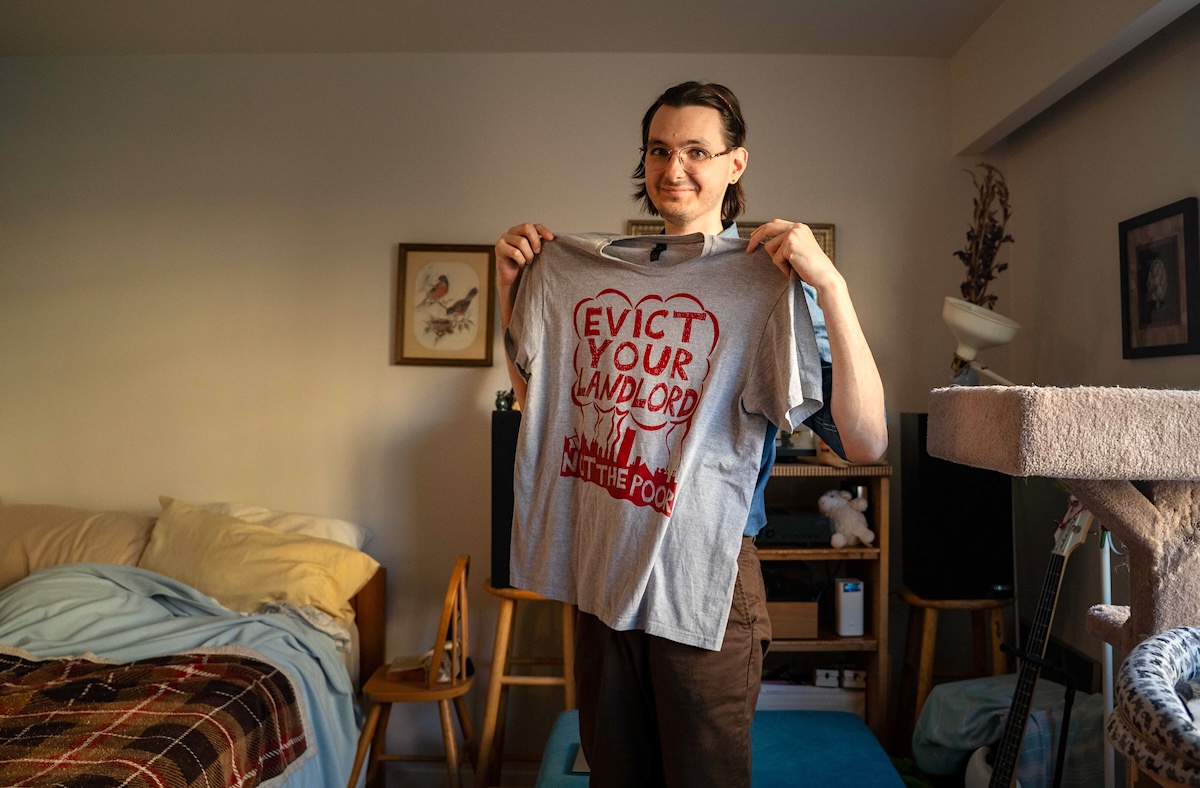
Petrov, a 34-year-old entomologist who works as a pest management technician, lives in a studio apartment with his cat, Gia. He decided to fight his eviction, a process that took months of hearings, first at the Residential Tenancy Branch — which upheld the eviction — then at the B.C. Supreme Court, and finally all the way to the Court of Appeal.
“I went into the whole process kind of expecting the worst but praying for the best,” Petrov said. “I thought, well, we have to at least try to dispute this, because I don't agree at all with the landlord's accusation that I stole his art.”
Finally, three Appeal Court justices established that Petrov was not a criminal who had stolen precious artwork from his landlord. He’d stowed the items in a storage room, with the knowledge of several other tenants, and it wasn’t clear if the art even belonged to the landlord.
At the time Petrov removed the art, residents were upset because the landlord had taken another painting and other items from the lobby and destroyed the building’s beloved garden wishing well.
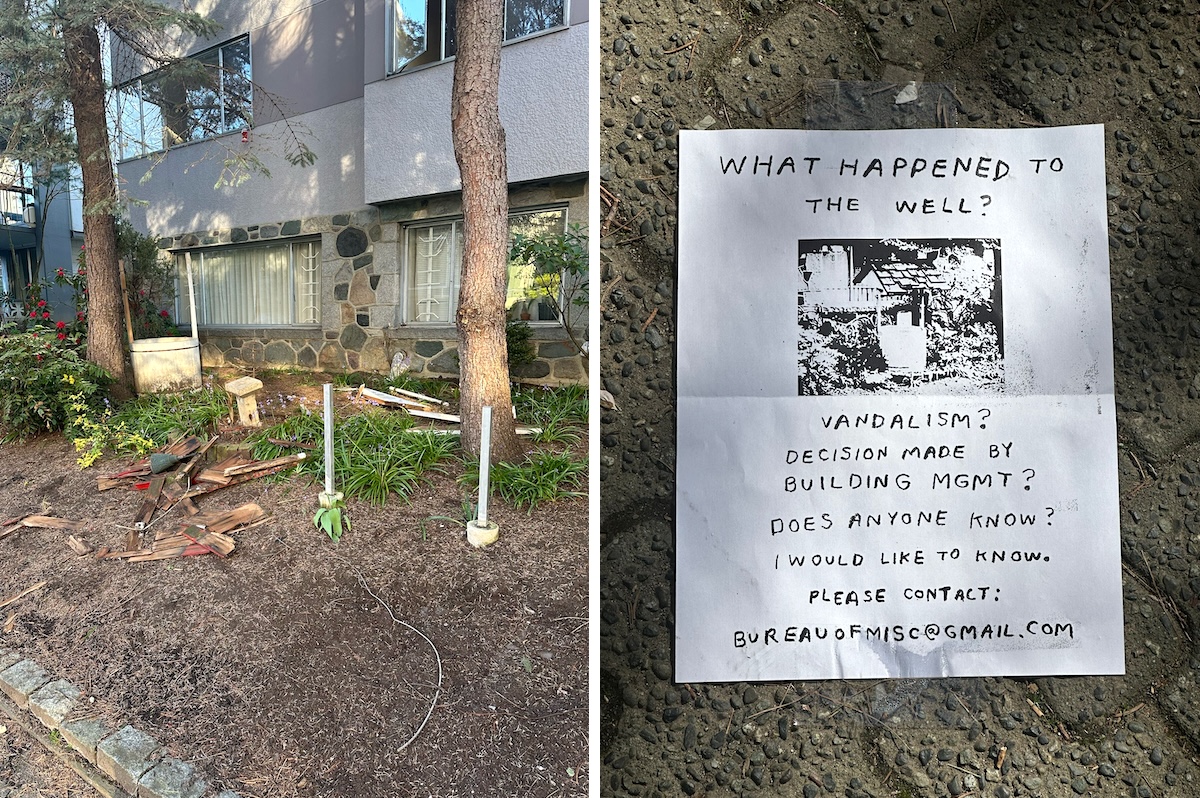
“I believed it was the right thing to do,” Petrov said of the decision to store the art for safekeeping. “I was doing it on behalf of others, and I got gratitude from my neighbours.”
The Tyee contacted Plan A with a list of all the allegations made in this story. The company sent an emailed response.
“As a policy, Plan A does not comment on individual tenants or on specific legal or regulatory matters,” it said. “Our responsibility is to maintain safe, well-managed buildings for all residents, and any enforcement actions we take follow the Residential Tenancy Act and are subject to RTB and court oversight. We treat all residents consistently and take enforcement steps only when necessary to protect the broader tenant community.”
A long history of evictions and penalties
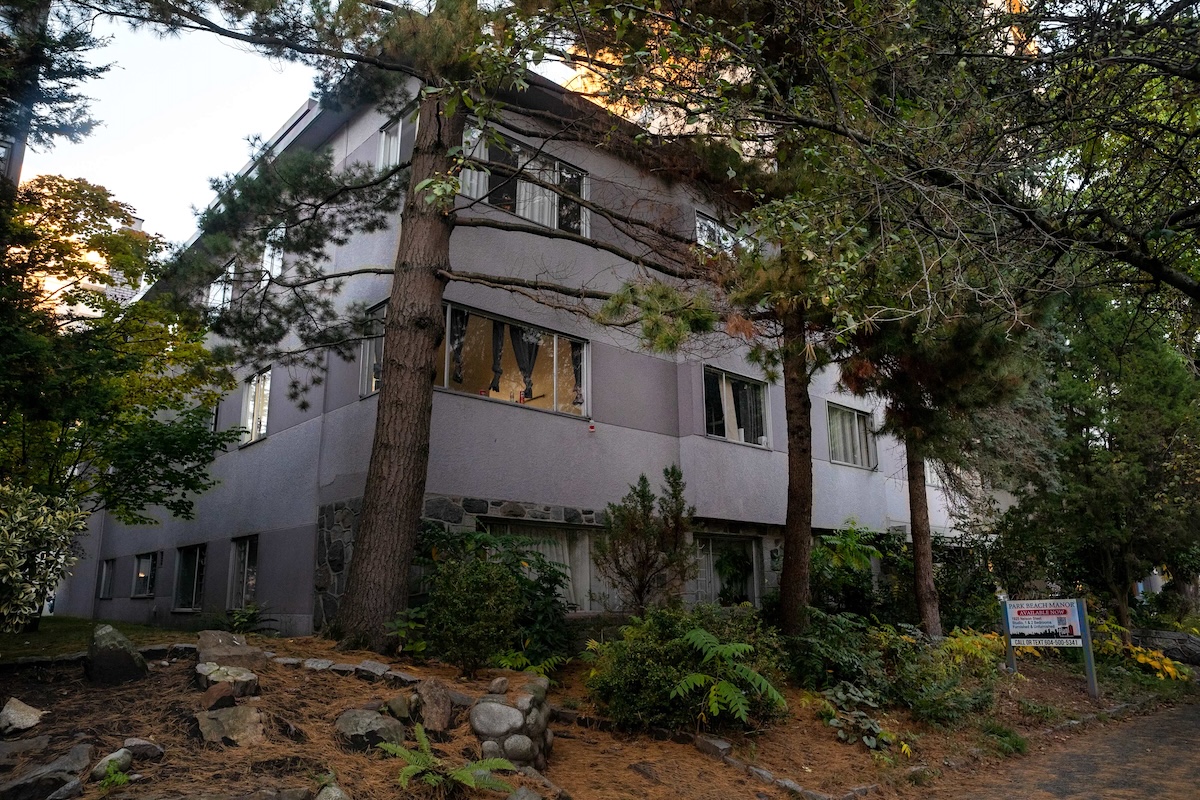
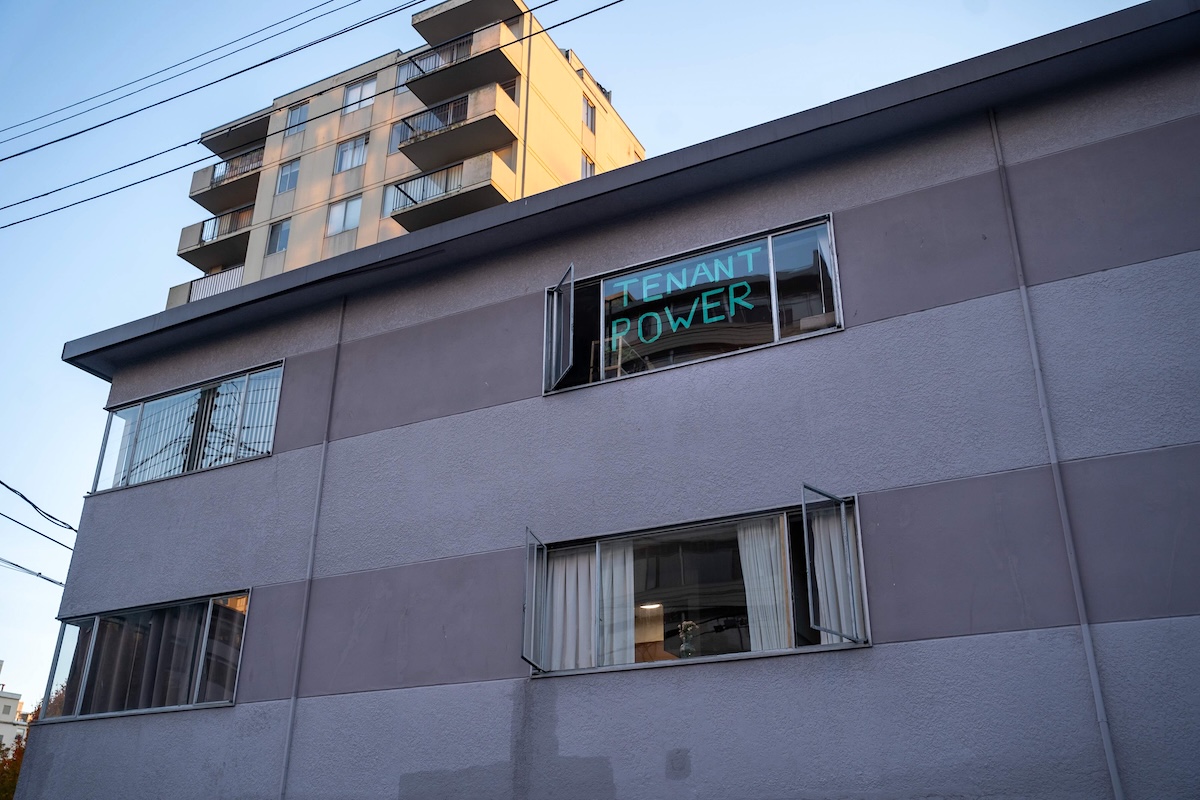
Petrov lives in Park Beach, a three-storey apartment building in Vancouver’s dense West End. The building is located in the coveted “west of Denman” area, a quieter part of the busy urban neighbourhood, bordered by Denman Street on one side and Stanley Park on the other.
The tree-lined West End, close to beaches as well as the downtown, was once filled with large Victorian homes. But from the 1950s to the 1970s, most of the single-family houses in the neighbourhood were replaced with apartment buildings, from three-storey walk-ups that were popular in the 1950s to 11-storey concrete towers in the 1970s.
Today, the West End’s large supply of aging apartments provide over 10,000 units of rental housing. Within a population of 45,000, 81 per cent are renters — putting the neighbourhood on the frontline of a battle between renters and landlords.
British Columbia has rent control, limiting increases for existing tenants, generally to the inflation rate.
But it applies only to existing tenants. When a renter moves out, landlords can charge new tenants as much as they want.
The result is a powerful incentive to evict longtime tenants, because landlords can charge far higher rents — sometimes double the existing rate — to a new renter.
Plan A has a reputation in the West End. If you Google the name of the company and its director, Anoop Majithia, you’ll find articles from 2014, when the company raised laundry rates at one building to $13.50 a load, and then tried to evict a married couple on the grounds that the husband was “an illegal tenant.” Other tenants said they were peppered with constant eviction notices.
In 2022, Plan A was fined $10,000 by B.C.’s Residential Tenancy Branch, after branch inspectors found the company had violated the Residential Tenancy Act in 152 leases. There are also multiple news stories about new tenants signing leases based on photos that allegedly didn’t actually show the unit they were moving into.
Plan A bought Park Beach (1925 Nelson St.) in 2023. Soon, tenants started to get eviction notices.
In 2024, Park Beach tenant Paula Payot was surveilled, with a camera pointed at her apartment door, so the landlord could prove that her boyfriend was visiting too often and evict her. Before a Residential Tenancy Branch hearing, she was presented with evidence that shocked her: Plan A had also hired a private investigator to watch Payot and her boyfriend. The RTB ended up ruling against the landlord, saying there was nothing in Payot’s lease that prevented or limited overnight visits from guests.
Majithia previously told The Tyee that he planned to try to continue to evict Payot. But by that time she had already moved out because of the stress of dealing with the landlord.
Marie Weeks, a 64-year-old Park Beach tenant, said she has also been threatened with eviction; the company claimed she was not a legitimate tenant because only her partner’s name is on their original 2011 lease. She said Plan A now refuses to accept rent payments from her as it continues to insist she’s not a legitimate tenant and will take payments only from her partner.
The Tyee reviewed the leases for Weeks’ unit, which show Weeks’ partner signed the initial lease in 2011. A second lease signed in 2020 — before Plan A bought the building in 2023 — lists both Weeks and her partner as the occupants of the unit. Weeks said the previous landlord was aware she was living in the unit and approved her application to become a co-tenant.

In response to questions about Weeks’ tenancy, Plan A said it couldn’t comment on individual tenants but said B.C.’s Residential Tenancy Act dictates that it cannot accept rent from residents not listed on tenancy agreements.
However, according to the act, rent can be “given, by or on behalf of a tenant,” to a landlord.
Majithia didn’t just try to evict Park Beach tenants. He sued several of them for defamation after they put up posters that described him as a “slumlord” and depicted his head with devil horns. In the lawsuit, Majithia also claimed that tenants were defaming Plan A in news media interviews. He later dropped the case, and the tenants and the company are now working out a settlement agreement, according to Petrov.
After reviewing Plan A’s history and going through an exhausting two years of accusations and evictions, Park Beach tenants and renter advocates are now asking why the company has been allowed to continue to run rental housing.
“Every time I turned around, somebody was being evicted,” said Pat Vickers, a tenant who has lived at Park Beach for 27 years.
“And these are people I’ve known for ages.”

Vickers, a prolific artist, also wants to know what happened to a painting of hers that hung in the lobby until Plan A removed it. She said she has asked for it back several times but hasn’t gotten a response.
“I’d like to know what happened to it,” she said.
Tenant evicted for not paying for laundry loads
According to B.C.’s Land Owner Transparency Registry, Majithia is an interest holder in properties with a combined worth of $155 million, mostly apartment buildings and individual condo units. The portfolio includes three condo units Majithia owns at 1151 W. Georgia, the building formerly known as the Trump Tower Vancouver, which Majithia and his wife have been fighting to combine into one single unit on the 49th and 50th floors.
At Park Beach, Vancouver residents who had always been law-abiding citizens and thought of themselves as good tenants suddenly found themselves cast in a new role: petty thieves and criminals.
And to their consternation, in several cases Residential Tenancy Branch arbitrators appear to have accepted their landlord’s depiction of them.
One tenant’s eviction was upheld by the RTB after he was accused of stealing from the laundry machines. (The tenant asked to remain anonymous because of fears of professional repercussions, but The Tyee has confirmed his identity and reviewed his eviction documents.)
The tenant said the previous building caretaker had shown several tenants how to override the payment mechanism when it wasn’t working, which was often. He calculated that he owed around $12 in washer and dryer payments.
That tenant and several others were sent eviction notices by registered mail.
Gladman, the Vancouver Tenants Union advocate who helped organize the Park Beach tenants, said some tenants didn’t receive the notices at all. Others didn’t realize the mail had to be picked up urgently, Gladman said, because the landlord had started sending multiple notices, including mundane messages, through registered mail. Every time tenants received a registered mail notice, they had to go to a post office several blocks away to pick up the mail.
When the tenants didn’t dispute the eviction notices they’d been sent through registered mail, Plan A was able to evict four of them through a process called direct request, according to documents shared with The Tyee by Petrov. Direct request speeds up the process for both tenants and landlords when it comes to getting back a damage deposit or evicting a tenant.
But Gladman said Plan A used the direct-request process multiple times to kick tenants out, bypassing any examination of whether the landlord actually had grounds to evict. Each time, the landlord provided proof to the RTB that the registered mail had been sent to the tenant.
If a tenant doesn't challenge an eviction notice within 10 days, Gladman explained, “then the landlord can go and get a direct request, which completely bypasses the need for a hearing, and it's really hard to overturn them.”
In response to The Tyee’s questions about Plan A’s use of registered mail to deliver eviction notices, the company said: “We comply with all service requirements under the Residential Tenancy Act, including the permitted use of registered mail.”
But for Gladman and other tenant advocates, the deeper concern is how the Residential Tenancy Branch arbitration process is failing tenants.
The Tyee recently reported on the stressful experience of Janet Fraser, a 74-year-old renter in Delta whose landlord — a company registered as 1392383 B.C. Ltd. — repeatedly tried to evict her. Even though Fraser and her advocate gathered abundant evidence that the landlord was acting in bad faith, the RTB arbitrator ruled in favour of the eviction. Fraser, a senior well past retirement who still works at a casino, had to fight to keep her home at the same time she was supporting her partner through cancer treatments.
Similar to Petrov’s experience, when Fraser took her case to the B.C. Supreme Court, a justice overruled the RTB arbitrator. The judge said the arbitrator had erred when they failed “to address core contradictions in the evidence, to consider reasonable alternatives, to grapple with the Landlord’s own admissions regarding timelines and permitting, and to assess the possibility of mixed motives.”
In Petrov’s case, three Court of Appeal judges ruled the RTB arbitrator had never established that the artwork was actually the property of the landlord, or proven that taking the paintings down affected the security of the building. They allowed a stay of the eviction.
The RTB’s original ruling was “a very bad decision for many reasons,” said Lily Hassall, a lawyer who represented Petrov at the B.C. Court of Appeal.
“The landlord had tried to convince the arbitrator that this was some kind of theft.
“In my view, it ought to have been clear to the arbitrator that the landlord was attempting to manipulate the facts, both by having called the police over something so insignificant and by having then gotten an appraisal of this art that was obviously valueless to anybody other than this group of tenants who had developed an attachment to it.”
Tenant advocates say the RTB needs to be reformed. Every dispute is handled by a single arbitrator with full authority over the outcome. Arbitrators aren’t bound by previous RTB decisions or required to base rulings on precedent.
“Even if one of the dispute’s parties cites a previous RTB decision, it still doesn’t obligate the arbitrator to consider it,” Robert Patterson, a lawyer and tenant advocate at the Tenant Resource and Advisory Centre, previously told The Tyee.
In many cases, arbitrators attempt to hear cases in hearings that are limited to just one hour and tenant advocates say equal time is not always given to each party. It was only after a decade of repeated lobbying from tenant advocacy groups that the hearings were recorded.
Hassall compared the Residential Tenancy Branch with the Labour Relations Board, another arbitration body in the province. Members of the Labour Relations Board aren’t just lawyers; they also have expertise in labour law.
In contrast, RTB arbitrators are not required to be lawyers, although the Ministry of Housing says many of the arbitrators do have law degrees and have previous experience practising law. All arbitrators have formal experience and education in administrative law and undergo “an intensive training process, prior to conducting hearings.”
Hassall said she finds the lack of legal training surprising, because RTB arbitrators are responsible for issuing “legally binding decisions that have an enormous impact on individuals' lives.” They have the power to remove people from their housing and potentially make tenants homeless.
Another difference between the labour board and the Residential Tenancy Branch is that the names of labour board members are publicly listed on the board’s website, while the names of RTB arbitrators are not published, except on individual decision documents.
“There seems to be no attempts at transparency, or to reassure the public that their decision-makers are neutral,” Hassall said.
The Housing Ministry told The Tyee that less than one per cent of the RTB arbitrations heard each year end up at the Supreme Court. “Each RTB decision that is reviewed by the Court is also closely reviewed by the RTB, and learnings are shared with the dispute resolution team to strengthen RTB practices and uphold the integrity of our dispute resolution processes,” the ministry told The Tyee in an email.
If tenants or landlords are unhappy with an arbitrator’s decision, they can apply for a “review consideration process.”
The Residential Tenancy Act specifically doesn’t require arbitrators to base their decisions on previous tribunal decisions in order to “support decisions being made on the merits of the case, as disclosed by the evidence and testimony submitted by the parties to the dispute.”
The ministry also told The Tyee that if tenants believe their landlord is trying to repeatedly evict them or otherwise acting in bad faith, they can report the problems to the Residential Tenancy Branch’s Compliance and Enforcement Unit.
“We recognize how stressful and exhausting it is for renters to face repeated eviction attempts. No one should have to live with their belongings packed in boxes, wondering if they’ll be forced to leave their home,” Ministry of Housing staffers wrote to The Tyee.
“If a party has concerns about their landlord repeatedly violating the RTA, the RTB’s Compliance and Enforcement Unit (CEU) may be able to help. The CEU ensures compliance with the residential tenancy laws of British Columbia by proactively providing information and direction, assessing complaints against landlords and tenants, issuing warnings, and conducting investigations when warranted. The CEU also has the power to impose administrative penalties on landlords and tenants who repeatedly or seriously violate the law.”
But Gladman said the Park Beach tenants did complain to the enforcement unit and the CEU rejected it, saying there was nothing to investigate.*
With Plan A having such a long history of RTB violations and poor relations with tenants, Gladman said he’s frustrated that the company has been able to continue operating with few consequences.
Gladman said the Vancouver Tenants Union has made complaints to the City of Vancouver, the Ministry of Housing, the Office of the Information and Privacy Commissioner, and the BC Financial Services Authority about the way Plan A operates.
“There’s an overwhelming pattern of behaviour that shows that they're acting in bad faith and trying to evict people,” Gladman said.
With files from Maya ElHawary.
*Story updated on Dec. 5, 2025 at 9:36 a.m. to include additional information from the Vancouver Tenants' Union. ![[Tyee]](/design-article.thetyee.ca/ui/img/yellowblob.png)
Read more: Rights + Justice, Housing











Notice about commenting changes
The Tyee’s commenting system will be moving to a new platform on Nov. 12. If you’re already a Tyee commenter you must register with the new system on or after Nov. 12 with your preferred username.More information can be found here.