


 SHARE:
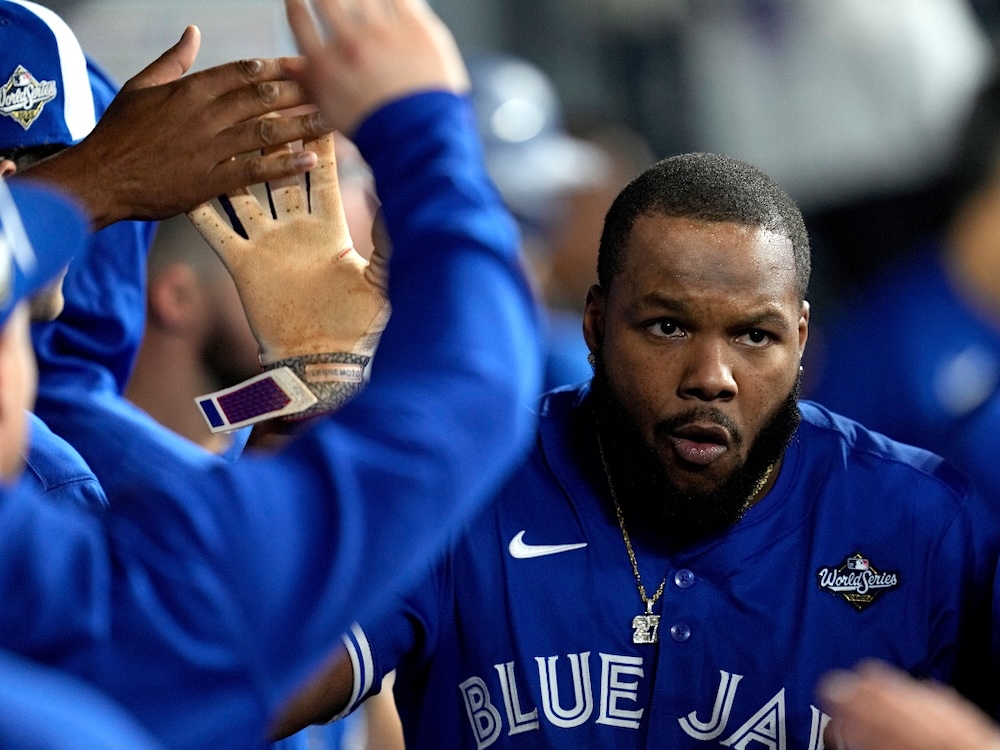
If you struggled with sleep deprivation after Monday night’s baseball game, you’re not alone.
Game 3 of the World Series lasted 18 innings and nearly seven hours before the Los Angeles Dodgers defeated the Toronto Blue Jays 6-5 thanks to a home run. It was the second-longest game in World Series history.
Baseball games generally run nine innings and about three hours. But after the teams exchanged runs in the seventh inning, they went on to play 10 scoreless innings. The game, which began at 5 p.m. in Los Angeles, concluded just before midnight on the Pacific coast. In Toronto, fans stayed up until nearly 3 a.m.
Children dozed in their parents’ arms at Dodger Stadium. The organist played “Never Ending Story.” Fans watching at home (and in Toronto’s Rogers Centre) hung on, determined to see the end of a game that would go down in baseball history.
While fans may have felt the effects of sleep deprivation at work the following day, for the athletes playing in the most important games of their careers, sleep loss could make or break their shot at winning the world’s biggest baseball championship.
Richmond-based sleep hygiene expert Pat Byrne is keenly aware of the impacts of lost sleep on professional athletes. Byrne has pioneered research on how good sleep habits affect pro athletes and worked with a variety of professional sports teams over the last two decades, including both the Vancouver Canucks and the Blue Jays. He also wrote a book about the subject called Inconvenient Sleep: Why Teams Win and Lose.
Byrne began his career in occupational hygiene, including 20 years with WorkSafeBC, but his passion for sleep — and interest in how circadian rhythms affect health, performance and safety — was sparked by the tragic loss of his nephew in a car crash after he had worked a late shift.
“That changed my focus from industrial hygiene,” Byrne told The Tyee. “I started really focusing on sleep and how that impacts people’s safety.”
Byrne helped Vancouver Canucks players manage their sleep and fatigue to optimize performance for seven years. Other clients include the NFL’s Seattle Seahawks, baseball’s Seattle Mariners and the NBA’s Dallas Mavericks and Brooklyn Nets.
The Tyee spoke with the sleep expert to discuss the recent game and how late nights, stress and travel could affect the outcome of the World Series. Our conversation has been edited for length and clarity.
The Tyee: Did you watch the game last night?
Pat Byrne: I did. I got in around the seventh or eighth inning. I was teaching a class on sleep and circadian rhythms to hockey players at the Richmond Olympic Oval. Then I went home and watched the game.
How exactly does sleep training work with the players?
It varies from team to team. A lot of it is educating not just the players, but the coaches, the training staff and the management about how sleep and time changes can affect their performance. From there, some teams want to just take it themselves, which is fine. The Canucks, they got the full menu. It was hands-on with every player for seven years, and it was hands-on with management and the travel group and making recommendations every season about when they travel and when they don't travel.
How important is sleep to sports performance?
Huge. There are some great studies in the United States on academic performance for teenagers. The difference between six and eight hours’ sleep is 12 per cent in grades. When you're sleeping eight hours, your brain has more time to store everything that you learned during the daytime into your long-term memory. If you have shorter sleep, that stuff's gone.
In terms of performance, we really focus on reaction time and the ability to focus. There is this little instrument, like a little Game Boy, that researchers use called a PVT or psychomotor vigilance tasks. It's basically a simple reaction time — a random light shows up, and you have to hit the light. It’s a five-to-10-minute test, so it challenges you for concentration, it challenges you for reaction time. They’ve compared people's sleep patterns to their reaction time, so we know there are huge differences in reaction time between five hours, seven hours, nine hours of sleep. It's measurable.
One aspect of performance is maximizing sleep, and the other is circadian rhythm. Both of those combine [to] create your real-time reaction time, so it's both the time of day and how much sleep you've had. The maximum performance from a circadian perspective is usually at 7 or 7:30 p.m.

I was watching the game Monday night and thinking that they still had to play the two following nights. How will the late game affect the rest of the series?
It depends. I don't think most of the starting pitchers played Monday night, so they should be more rested. But it’ll affect the players’ reaction time, depending on how much sleep they have. Toronto will stay at a hotel near the stadium so they will be in bed pretty quick. But the L.A. players typically will drive home through L.A. traffic. Depending on how far they live from the stadium, they could actually get less sleep.
When the Canucks were in the playoffs, what we typically did, even during home games, is we put the players up in a hotel near the stadium. I think it's a bit of a myth in pro sports that you're going to get a better sleep at home. In fact, you get a lot of distractions at home.
It's a great point, because you're going home to your family, you want to talk about the evening.
A lot of them have children, right? When I measured the sleep of the players that were married and not married with the Canucks, we found that the players that were married slept better on the road than they did at home. The married guys with kids just didn’t get the sleep that they needed.
Monday’s game wrapped up about 17 hours before Tuesday’s game started. How much of that time will be spent sleeping?
Great question. I was looking at that. So, the game was over essentially at midnight. They go back to the clubhouse. They eat, grab a shower, change. Often they have press conferences or team meetings and then they have to either go to a hotel or drive home. The fastest any of them probably got to sleep was 2 or 3 a.m. You've got such energy going and such adrenalin going, it’s hard to bring your system down to get to sleep. I doubt most of them will get more than five or six hours of sleep.
One of the things that we always encourage is afternoon napping. Even though the game is at 5 p.m., most of them should be napping by 1 or 2 p.m. The challenge is a lot of Major League Baseball players go to the clubhouse very early in the day. They show up hours and hours ahead because it's a clubhouse, they hang out. There aren’t often sleeping facilities, so it's very difficult. But for the Blue Jays, if they stay in a hotel close to the stadium, they can go back and have a nap before they show up. They have a bit of an advantage that way.
I would have a really hard time unwinding at the end of the night or just shutting off my brain in the afternoon. Do they use other sleep aids like melatonin?
There's a lot of mythology and marketing around melatonin. Melatonin is not a sleep drug. Melatonin is a natural hormone that your body produces when it's dark out that gives a signal to the rest of your body that you should start shutting things down and go to sleep. Your body already produces that. Adding extra melatonin rarely helps.
Having said that, I’ve seen players take all kinds of crazy things. There are sleep drugs — Ambien in the U.S., they call it zolpidem up here — and sometimes they'll take those, but they often can make the players groggy and a lot of them don't like that. I certainly don’t recommend players use anything, even supplements, whether it's manganese or melatonin. Most of that stuff is available through their normal diet and their own brain will just produce it. That said, it doesn't mean the players don't try it.
What about the time change? I kept thinking about the Blue Jays and how late it was in eastern time. Is that a factor that's working against them?
The question I asked my class last night was exactly that: Who had the circadian advantage — the time zone advantage — in the Toronto games and in the L.A. games? They all got the Toronto games right, which is that Toronto had an advantage because L.A. has to fly from the West Coast to the East Coast. One, you always lose sleep by just travelling. Two, because there's a three-hour time difference, it will take them three nights to catch up to be on Toronto circadian rhythm. So, a 5 p.m. game in Toronto is really a 2 p.m. circadian rhythm for the L.A. players.
That seems not so bad.
It doesn't, but you can actually measure the difference in reaction time between 2 p.m. and 5 p.m., because 2 p.m. is actually a bit of a dip [in reaction time] as well. It’s called the “post-lunch dip,” and everybody experiences that as part of our biology. That’s why a lot of countries have siestas and naps in the afternoon.
I also challenged the class about what happens when the teams fly to L.A.: Who has the advantage? Only one of my class members got it right: It’s a wash. And the reason is because L.A. was in Toronto for three nights, their body clocks got onto Toronto time. When they both fly out west, it should be a wash.
What advice would you give the players who are heading into another couple of busy evenings on little sleep? What would most improve their performance?
If I was a Blue Jays player, I’d try to get my body onto L.A. time as fast as I can. Get out and get as much sunlight as you can, but also nap in the afternoons.
I read a news article that said that Toronto, after their second game, flew all night to L.A. and got in at 4 a.m. I would never advise the team to do that. There’s a myth amongst professional coaches — and I argue with them all the time — that you should get into the new time zone as quickly as you can. You have to balance that against how much sleep loss you’ve had, because I know the players rarely sleep on these flights. Getting in at 4 a.m. I think was a mistake, quite frankly. I would say, “Stay in Toronto. Use the next day as a travel day to L.A.”
What about the fans? Do you have any advice for those of us who are struggling to stay focused at work today?
Same thing. I’m a huge fan of napping, but don't nap too long. Thirty minutes is enough. And the series is going to be over in a few days, anyway. It’s one of those things — you tough it out. But as a general thing, it’s not great ideas to start losing sleep, that’s for sure.
One last question for you. If you were to place bets on the outcome of the series based on what you're seeing around sleep hygiene, who would you favour to win?
Oh boy. Much like the game last night, it's a tie. It really is. They're both equally matched, they're both now in the same circadian pattern, and it all comes down to how much sleep they're getting. ![[Tyee]](/design-article.thetyee.ca/ui/img/yellowblob.png)
Read more: Health












Tyee Commenting Guidelines
Please note that email notifications for replies are not currently working due to a software issue which may be resolved in a future update.
Comments that violate guidelines risk being deleted, and violations may result in a temporary or permanent user ban. Maintain the spirit of good conversation to stay in the discussion and be patient with moderators. Comments are reviewed regularly but not in real time.
Do:
Do not: