


 SHARE:
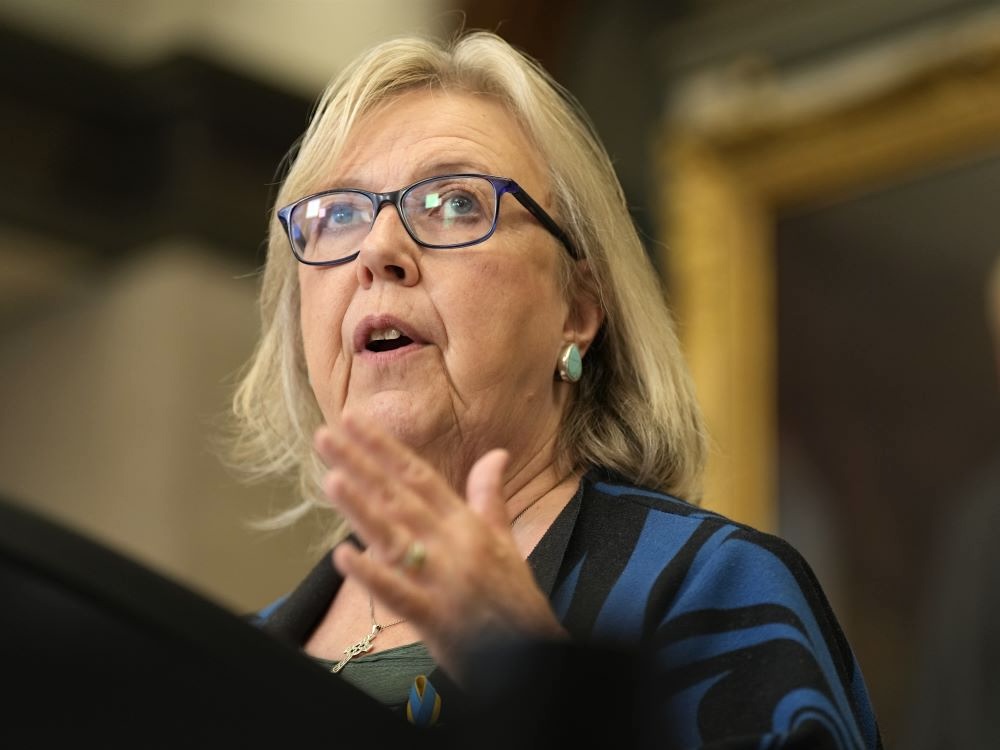
On the morning of Nov. 4, 2019, more than 13 years after she was first elected leader of the Green Party of Canada, or GPC, Elizabeth May announced to reporters in Ottawa that she was stepping down immediately.
It’s nearly six years later, and there at the helm of the Greens is May.
But May’s status as leader could quickly change depending on what happens today, as party members finish voting on whether it’s finally time for her to go for good.
Whatever the ballot outcome, a question looms over a damaged political brand fighting for relevance.
Has May, who once propelled the federal Greens to their best showings, become an anchor dragging them down?
Or, as she argues, is her leadership a temporary flotation device for keeping her party treading water?
The vote
May did step down as leader in 2019 but returned in late 2022, after the party was thrown into discord under the leadership of her successor, Annamie Paul.
Lately, as part of a leadership review required by the federal Greens’ constitution within six months of a general election, party members have been asked a simple question: “Do you endorse the leader, Elizabeth May? Yes or no?”
In July, May informed the party’s federal council — the Greens’ governing body — that she would not be the leader going into the next federal election. However, in an email sent to the Green membership last month, May asked that they vote yes and allow her to remain on the job until her successor is chosen in a leadership race.
But a group of Greens want party members to vote no and have May step down now to give a new leader time before the next federal election to rebuild a party that over the last five years has lost “over 20,000 members, dozens of electoral district associations, over half our donors and three of our four members of Parliament,” according to an open letter endorsed by more than 40 party members from the Campaign for GPC Renewal, which launched in early August.
“Currently, only 163 electoral district associations out of 343 ridings are registered, and many of these are inactive, with members saying that they lack inspiration, and motivation. A fresh leadership race would energize our membership — both new and long-standing — and ignite the grassroots activism needed to rebuild and grow the Green movement across Canada.”
The letter also stated that “importantly, many Canadians will be perplexed if Elizabeth’s leadership is endorsed to continue, especially after she has announced her intent to resign.”
May shares her to-do list
May, 71, who was born in Hartford, Connecticut, but is not a U.S. citizen, plans to seek re-election as the member of Parliament in the British Columbia riding of Saanich-Gulf Islands, where she has won election five times since 2011. She is also confident that when all the votes are tallied after Tuesday, the federal Greens will support her staying on as leader for now.
“There’s virtually zero chance of the leadership review failing,” May told The Tyee.
“The party does not want me leaving now,” she said, adding that she spoke to the federal council in May about running for Speaker of the House of Commons and said that she was told, “No, no — we’re not in any position to want you to leave as leader.”
May said that there are other matters the federal Greens need to address before year’s end, including an election to choose members of the federal council later this month, as well as an annual general meeting scheduled for November.
She also wants to help clear the party’s $600,000 2025 election campaign debt through fundraising.
“There’s no bandwidth with staff nor is there any desire for the membership to have a leadership race that starts immediately,” said May.
Furthermore, were she to lose the leadership review, the party would first have to appoint — and pay the salary of — an interim leader “and then that person could stay in place under our constitution for up to 2 1/2 years,” said May, who isn’t paid by the party to serve as leader.
Why some Greens see May as roadblock
However, as the Campaign for GPC Renewal explained in a news release, the Green Party’s constitution also requires the calling of a leadership race within six months of appointing an interim leader following a resignation or failing a leadership review.
“While Elizabeth May has stated that she intended to resign before the next election, she has made no commitment to a specific timeline,” said the group, which has the backing of three former party presidents and several past Green electoral candidates. “The party can plan more effectively with a more certain timeline.”
Amanda Rosenstock, a member of the Campaign for GPC Renewal steering committee who ran as a Green candidate in the last two federal elections, said in an interview that the party’s federal council has also “given no timelines” and “doesn’t have a mandate to begin the process of organizing a leadership contest, in our view, until either she fails the leadership review or she resigns.”
“It would be our preference for her to resign now. But our campaign has been focused on encouraging members to exercise their right by voting no in the leadership review to try and influence an outcome where she doesn’t pass the review.”
Or, as Rosenstock offered, result in less than 70 per cent support for May, “so the federal council gets a clear message that her support among members is not as strong as it used to be” and it should proceed with planning a leadership race. Under the GPC’s constitution, May will require an endorsement to remain as leader by at least 60 per cent of the membership.
However, former Green MP Paul Manly said that May leaving sooner than she planned will not make a difference “because it’s up to the federal council that sets the terms for the leadership race and the timeline,” which he noted members of the GPC renewal committee “are well aware of.”
Manly, who represented the B.C. riding of Nanaimo-Ladysmith from 2019 to 2021, said the council has created a committee to begin the process, which Manly expects to happen in early 2026.
Rosenstock said the federal council could name May as interim leader, if she either loses the review or steps down as leader, to “provide stability until the leadership contest is concluded.”
“She thinks that her being interim leader would confuse Canadians,” said 37-year-old Rosenstock, the Green candidate in the Ottawa Centre riding in the spring federal election.
“We reject that notion. We believe that the Green Party is so far from the minds of Canadians that it wouldn’t matter.”
Manly expects May to survive review
When asked about the campaign to force her out of the leadership, May said that “every Green Party member is entitled to express their own opinion.”
“What matters is what the members say in the required constitutionally mandated leadership-review vote, and we’ll know very soon.”
She added that in conversation with members of both the federal council and the board of the Green Party of Canada Fund, which oversees the party’s finances, the consensus is that “members should vote yes so we can proceed to a well-planned leadership contest with strong candidates that culminates with a great in-person convention.”
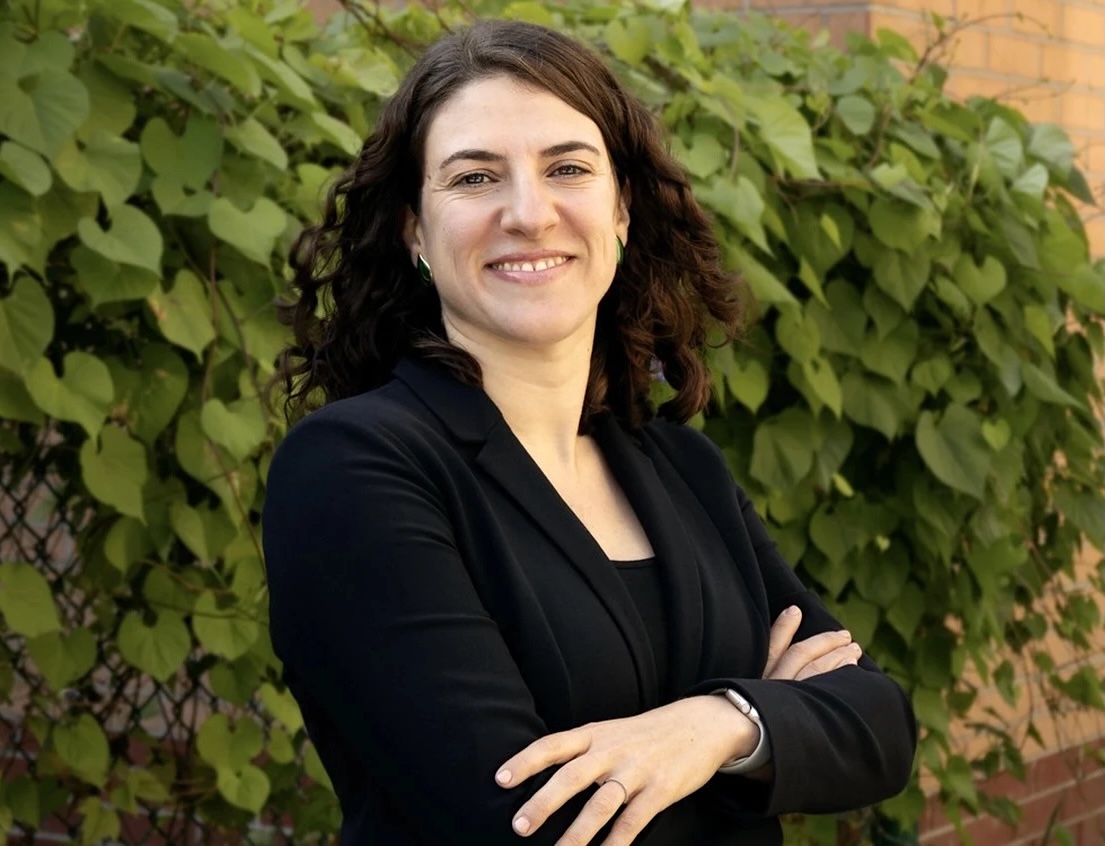
However, Rosenstock said that strength from within the party is sorely lacking.
“We’ve been calling CEOs of riding associations across the country asking them to share information about our campaign with members in their local ridings, and so many electoral district associations are deregistered, they’re inactive. Some have CEOs but have no volunteers. In many cases, there’s no activity happening,” she said.
“We raised a lot more money in the 2020 leadership race, which Elizabeth May didn’t participate in, than we did last year.”
Manly, currently a city councillor in Nanaimo, B.C., who also recently served as acting executive director of the GPC, said the pushback against May “is not unusual for people who are disgruntled to take the knives out and hurry the process along.”
“That’s not really a super-healthy process for any political party,” said Manly, who expects May to survive the leadership review.
“She’s been clear with members that she’s going to step aside and that the federal council is going to set the timeline and rules for the leadership contest — and most members understand that and want to let her carry on as leader until that’s finished,” he said.
“Elizabeth has done a lot for the party. She’s been at it for quite a long time, and she knows it’s time for renewal with a new leader,” said 61-year-old Manly, who said he is uninterested in running to become her successor.
A member of the GPC since 2019, Rosenstock said that a leadership race would “reinvigorate” existing Green Party members and “bring in new members and, with it, donations.”
May said her intention to leave as Green leader is based on her belief that “it’s time for leadership renewal” within the party.
“I wanted to step down the minute that Jonathan Pedneault left,” she explained about his resignation as co-leader following the spring federal election.
Pedneault, who ran as a co-candidate with May in the 2022 federal Green leadership race, which she won, declined to comment for this story.
May said it was “a mistake” to announce in November 2019 that she was immediately stepping down as leader.
“I should have said that I will step down as soon as a new leader is elected,” she said.
At the time, May told reporters in Ottawa that her decision was based on a strong showing by the Green Party in that year’s federal election held on Oct. 21. “We achieved more than one million votes for the first time ever,” said May. The party received 6.6 per cent of the popular vote — slightly less than the 6.8 per cent it received in the 2008 federal election, its best showing under May’s leadership to date.
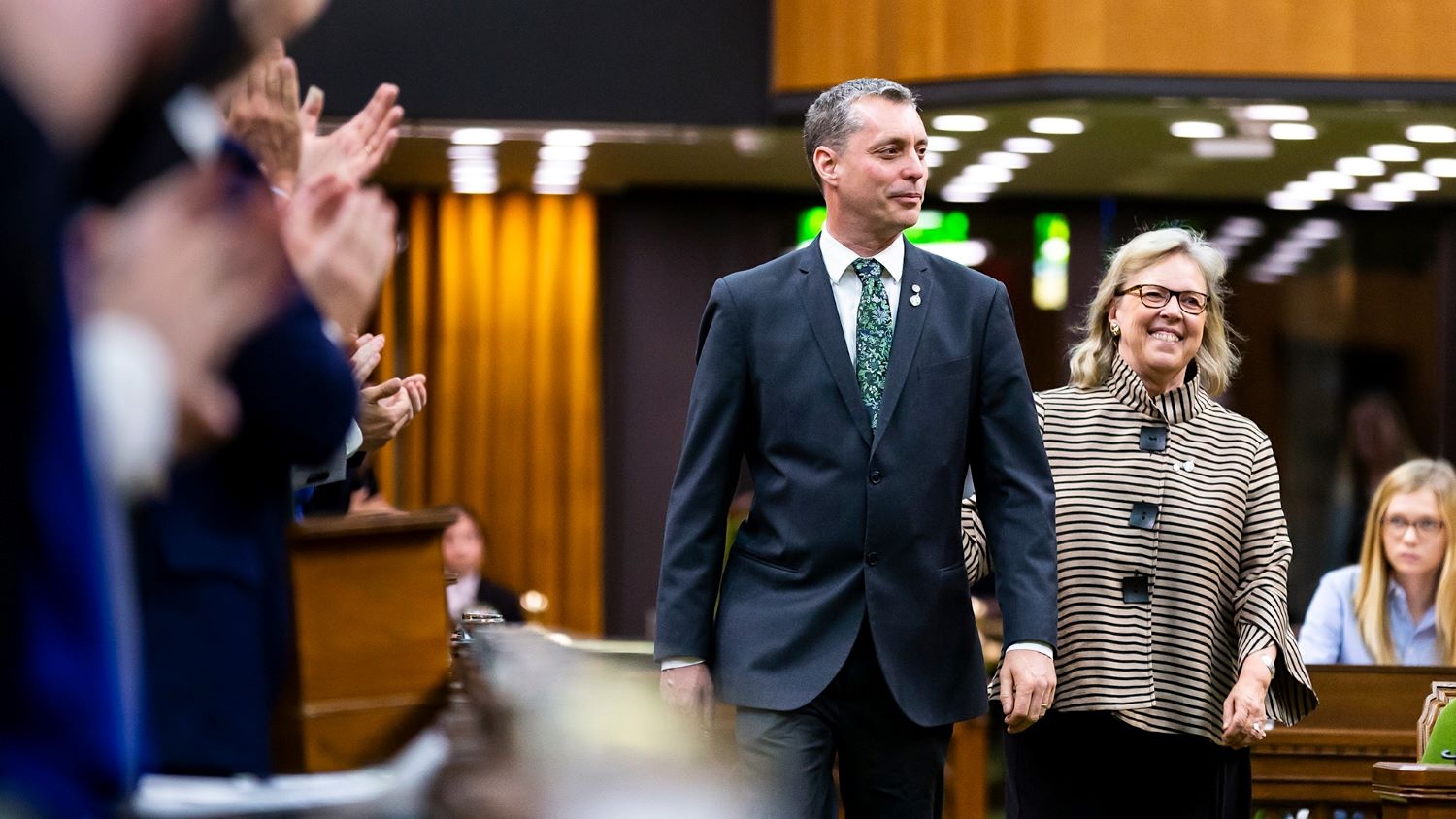
In 2019, the Greens also had the highest number of MPs elected: three, with May joined by Manly, who represented the Vancouver Island riding of Nanaimo-Ladysmith, and Jenica Atwin, who became the first Green to serve in the House outside of B.C. She won the riding of Fredericton, before crossing the floor to the governing Liberals in 2021.
May said she was leaving as party leader and would serve as the Greens’ parliamentary leader in the House because she had promised her daughter, Cate, that the 2019 election would be her last at the party’s helm.
“I’ve always kept my word and I’ve never lied,” May said at the Ottawa news conference.
Whipsawed by a ‘debacle’
Former journalist Jo-Ann Roberts was chosen as interim leader before Annamie Paul was elected the ninth federal Green leader on Oct. 3, 2020, and made history as the first Black and first Jewish woman to lead a major federal party in Canada.
But Paul’s time at the helm was punctuated by internecine squabbles and was ultimately short-lived at just 13 months.
Just days after the Sept. 21, 2021, federal election — in which Paul failed for the third time to win a Commons seat for Toronto Centre and the Greens’ popular vote fell to 2.3 per cent, or less than half of that received by the People’s Party of Canada — Paul announced that she had “started the process of her resignation.”
Back then, May called for Paul to step down immediately to avoid the party spiralling into oblivion.
It took two months, but Paul left the leadership, and the party, on Nov. 14, 2021. Ten days later, astrophysicist Amita Kuttner was appointed interim leader — and made history as the first transgender person and first of East Asian descent to lead a federal party in Canada — serving in the position until May’s return on Nov. 19, 2022.
Four years ago, May told The Tyee that Paul “had been [her] top choice” for the leadership in 2020 but added that she could not formally endorse any of the leadership candidates.
However, Rosenstock said that May fundraised for Paul, “and most members of the party effectively saw that as an endorsement.”
“From the vantage point of many members, she interfered in that leadership contest when she shouldn’t have,” said Rosenstock, who believes the “debacle” of Paul’s leadership sparked the federal Greens’ “dramatic drop-off” in membership.
May said she would only agree to consider another run at the leadership — “after the 2021 disaster” — if Pedneault would run with her as a co-candidate.
When they won the 2022 contest, Pedneault was named deputy leader, since co-leadership was not recognized in the party’s constitution.
In July 2024 he stepped down for personal reasons but returned as co-leader earlier this year after Green members voted to amend the constitution to allow for co-leadership.
May aims to remain MP
May said that as she prepares for her departure as leader this time, she is following the example of her predecessor, Jim Harris, who in April 2006 announced that he would not lead the Green Party into another federal election after it received 4.5 per cent of the popular vote in the January general election.
May was elected leader on Aug. 26, 2006, after being recruited by Harris and Adriane Carr, former B.C. Green Party leader, to leave her position as the founding executive director of the Sierra Club of Canada and run for the federal Greens’ top job.
She said she wants to remain as an MP to provide “a voice on the progressive left side of” Prime Minister Mark Carney’s Liberal government.
May would also prefer her successor — whom she stressed would not receive her formal endorsement — to be “someone who already has a seat” in the House or is “well positioned to win one soon” and has a “high public profile with media and within the Green Party.”
When asked whom she is considering, May replied: “I’ve got a couple of names. But I’m not sharing them.”
When The Tyee then asked whether that could include a sitting MP who would cross the floor to the Greens, she said, “Why not?”
Rosenstock, a policy analyst working on the federal government’s high-speed rail project, isn’t interested in running for the leadership. Instead, she’s seeking to become the party’s president as a candidate for the position of chair of the federal council, the results of which will be announced on Oct. 24.
“We believe that until Elizabeth formally resigns or fails the review, no high-profile candidate is going to come forward and express their interest in running for the leadership,” said Rosenstock about the sentiment of the GPC renewal campaign.
She added that she has heard from fellow Greens that May has told some members “behind closed doors” that she would remain as party leader if the Liberal minority government lost a confidence vote, sparking a snap federal election.
By staying on the job without indicating her departure date, May is not allowing her successor “time to get their bearings as leader of the party and time to really get acquainted with voters in advance of an election,” said Rosenstock, who also ran for the GPC in the Toronto riding of Spadina-Fort York in the 2021 federal election when she received 3.4 per cent of the popular vote.
In this year’s Ottawa Centre race, Rosenstock, who moved to the capital from Toronto in 2022, obtained only 1.1 per cent, which was about what the GPC got — at 1.2 per cent — countrywide in the April 28 federal election.
She said that during her door-to-door campaigning this past spring, voters did not view the Greens “as a viable option.”
‘Make space for the next generation’: Rosenstock
Rosenstock “really didn’t believe” that, given this year’s dismal electoral result, May “would want to stay on” as leader and not decide that “it was time to pass the torch.”
Rosenstock added that May did not reach out to candidates after the last federal election “and thank them for their efforts and encourage them to remain part of the team to move the party forward.”
She explained that while GPC members “have been working hard to recover” from “the blow” Paul’s leadership — as chronicled by The Tyee — inflicted on the party, “we don’t believe that Elizabeth May’s leadership is bringing anything new and inspiring at this point in time.”
“We appreciate and recognize her contributions — we want to celebrate her achievements as leader,” said Rosenstock. “But she also needs to make space for the next generation of leadership.”
Rosenstock said the GPC is seen as “Elizabeth May’s party” among many members — and noted that the Green Party of England and Wales also had a longtime leader in Caroline Lucas, who served for three terms (with a co-leader at one point), starting in 2003 and ending in 2018.
She was also the party’s first and only MP in the British House of Commons, serving from 2010 to 2024. In last year’s general election, four Greens were elected to Parliament; Lucas chose not to run again.
Rosenstock said she would support a leadership bid by Mike Morrice, who was recently acclaimed as the first Green candidate in the next federal election. He will run in the Ontario riding of Kitchener Centre, which 41-year-old Morrice first won in 2021 but lost in this year’s race.
A spokesperson for Morrice told The Tyee that he would be open about a potential run at the federal Green leadership but, with a new baby in the family, will focus on winning back the riding for the GPC.
“It would be ideal for somebody who has a very good chance of winning a House seat to become leader,” said Rosenstock.
“The leader should be somebody who has a demonstrated commitment to the party — who has been a member for a sizable length of time, and who understands our party’s culture and values — and wants to take the party into the next era of its development and reach more Canadians with our vision and our message,” she said. ![[Tyee]](/design-article.thetyee.ca/ui/img/yellowblob.png)
Read more: Federal Politics








Tyee Commenting Guidelines
Please note that email notifications for replies are not currently working due to a software issue which may be resolved in a future update.
Comments that violate guidelines risk being deleted, and violations may result in a temporary or permanent user ban. Maintain the spirit of good conversation to stay in the discussion and be patient with moderators. Comments are reviewed regularly but not in real time.
Do:
Do not: