


 SHARE:
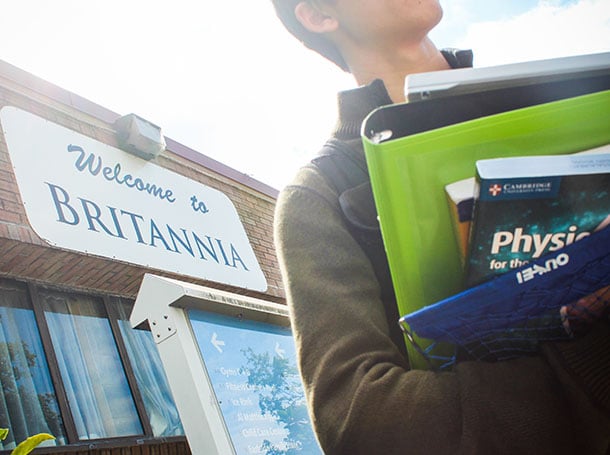
Next May, Grade 12 Britannia Secondary School student Sam Quastel will write his International Baccalaureate exams, the culmination of two years of coursework. His exam results will represent the majority of his final grade in the program, which is designed to prepare senior high school students for success at university.
But he’s nervous because Britannia’s International Baccalaureate program, IB for short, keeps losing teachers.
Quastel estimates there were between 12 and 14 IB teachers when he started the program last year in Grade 11. But since last February, five IB teachers have left the program for reasons unknown to both students and parents.
“At the start of this year, we didn’t have a theory of knowledge teacher,” Quastel said, referring to a mandatory IB course on the philosophy of education.
Students told The Tyee that despite the former theory of knowledge teacher leaving the school at the end of June — along with the IB math teacher and IB co-ordinator, who also taught IB English and history — an advertisement for the theory of knowledge job was not posted until September.
Another IB English teacher took over the course in mid-September, only to go on leave in October. That leave was made permanent when the teacher left Britannia in December; two substitute teachers took over both classes in the interim, according to sources with knowledge of the situation.
The Tyee sent the list of five teachers who students and parents reported had left the program in the last calendar year to the district communications department as part of an interview request. In an emailed statement, a district spokesperson did not dispute the five teachers had left.
“We’re anxious about what the future is going to look like,” Quastel said. “It’s not like we’re fully drowning and we’re going to fail our exams. But we’re treading water; it’s dodgy.”
The IB exams cover all the work students learn in the two-year program. The exams, alongside a couple of keystone essays, are graded by an outside International Baccalaureate body that assesses a combined total of 80 per cent of students’ final grades.
The other 20 per cent of students' final marks consists of independent assignments for each course, which are graded by their teachers.
When the sole IB chemistry teacher left the school without explanation last winter, senior students felt like they were set adrift.
According to students and parents who spoke to The Tyee, the substitute chemistry teacher who took over had no knowledge of the IB program and no access to the previous teacher’s notes or lesson plans.
The resulting grades put some students’ university offers at risk when the grades they applied with were significantly higher than their final marks.
“It’s our kids who suffer. It’s not [the] teachers and it’s not the school,” said Krista-Dawn Kimsey, whose son Judah graduated from the IB program in June.
“Ultimately it’s the kids’ ability to do well in this program, and they need to do well in this program... because they’re trying to get into very competitive schools.”
No one who spoke to The Tyee blamed the teachers for leaving Britannia Secondary.
But losing a teacher two months before exam time is “very stress-inducing” for students, said Kim Leary, who was Britannia Secondary’s IB co-ordinator from 2016 to 2019.
“Most people should be spending the last few months, a month and a half at least, just doing exam prep,” Leary added. This prep includes studying past exams, practising mock questions and working in groups with other students to address potential exam questions.
“I think [students] would feel like they were rudderless. They don’t have the kind of guidance that they would want, especially if the teacher isn’t familiar with the IB curriculum,” Leary said.
Students told The Tyee when they and their classmates approached Britannia’s principal and spoke to school district administration about the teacher absences, they felt dismissed.
“I’ve gone to the principal of the school on multiple occasions to say that we don’t have a teacher, or the substitute that’s filling in can’t do this job properly. What are you going to do about it? And she basically always says, ‘Oh, it’s under control and it’s handled. This isn’t student business, so don’t get involved,’” said a current IB student.
Because of past allegations of Britannia teachers bullying students, The Tyee agreed to keep this student’s identity anonymous.
“What the school is planning to do about our education is our business, and it is incredibly unfair of them to try to sweep it under the rug,” the student said.
When this student spoke to The Tyee in mid-December, they said the current IB program co-ordinator had approached the Grade 12 students just days before to let them know the first drafts of their 4,000-word final essays were due the week before Christmas break. It was the first notification the student had had of this deadline, they told The Tyee.
“At this point it’s our senior year, and a lot of us need specific grades. We need to do well. It’s super important,” they said.
Support needed to meet the academic challenge
The Tyee interviewed three IB students, two current and a recent graduate, who all had the same reason for taking the advanced education program: they wanted an academic challenge and had dreams of attending international post-secondary schools.
IB is an internationally recognized education program designed in part to ease student acceptance into universities all over the world. It doesn’t follow the B.C. curriculum but has many similarities.
Britannia offers one of two IB diploma programs in the Vancouver school district for grades 11 and 12. Sir Winston Churchill Secondary School runs the city’s other IB diploma program. Churchill’s IB program is larger and has more students and teachers.
Because Britannia’s IB program is small, it’s not uncommon for IB and regular stream students to be taught in the same room by the same teacher.
“Often teachers are asked to take on these one or two [IB] students, kind of off the side of their desk, which is not good for either the students or the teacher,” said Leary.
“You have students in both programs feeling like they’re not getting the attention they require.”
The IB diploma requires finishing six IB courses as well as the IB core, composed of three parts: a 4,000-word extended research essay; the theory of knowledge course and essay; and creativity, activity and service, which comprises time spent outside of class in creative, physical and volunteer endeavours.
Each IB course receives a final mark out of seven, and some courses like chemistry are equivalent to a first-year university course.
Judah Kimsey was counting on getting a high mark in his chemistry exam last spring to help him get into a school in the United States.
After the IB chemistry teacher left in February, Kimsey’s parents hired two chemistry tutors: one to help with his independent assignment for the course, and the other for covering the coursework. He also had a tutor for French.
In total his parents spent over $8,000 on tutors over two years, with Kimsey’s father picking up a second job to cover the expense.
Yet Kimsey barely squeaked by in his chemistry exam. “I got a four out of seven, which is a passing grade,” he said.
As final IB grades aren’t released until the summer after Grade 12, students use their predicted grades to apply for university. Kimsey had a predicted grade of 36, where 24 is passing and 45 the highest mark possible.
He received a final IB grade of 32.
Kimsey knows his international post-secondary dreams were lofty and that landing where he is now, at the University of British Columbia, is not a hardship.
However, he remains frustrated with how Britannia’s IB program is run.
“I don’t think that the IB program at Britannia should exist. The school is just too small and lacks the resources to sufficiently help these students,” he said.
‘Very hard work and a high level of stress’
Some IB teacher vacancies have been filled by teachers who know both the subject and the IB program. This includes the current IB chemistry teacher at Britannia, who was hired over the summer, students and parents told The Tyee.
Other replacement teachers haven't had any training in IB, which requires predicting students’ final marks in advance, helping them prep for an unseen exam and helping them finish major final projects, they said.
Others still, they said, have been replaced by substitute teachers with no IB experience.
Teaching IB is incredibly demanding, Leary said.
The program has seen budget cuts over the years, Leary said, including the loss of a full-time assistant co-ordinator, that have made operating the program more difficult.
It’s also less fun for students, with outings like trips to music festivals and other enrichment opportunities no longer possible because of the costs of buses, tickets and hiring a substitute teacher for the day.
“Really all the kids had was very, very hard work and a high level of stress,” she said.
When Leary took over as co-ordinator in 2016, it coincided with the retirement of three longtime IB teachers at the school. This marked a turning point in the program, she added.
“They were serious champions of IB, and serious champions of students from the Downtown Eastside, Grandview and Strathcona area who could definitely do this work,” Leary said.
Parents and students have no answers as to why teachers have been leaving Britannia’s IB program.
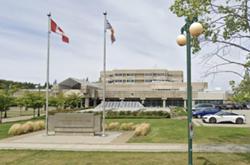
It doesn’t help that Britannia Secondary has been on potential school closure lists released by successive school boards since 2016; the school is seismically unsafe, and there are no plans to upgrade it.
A city plan to redevelop the Britannia community complex, which includes the community centre, gym, pool, hockey rink, library and Britannia secondary and elementary schools, was recently paused because of a lack of funding.
“It does feel like kind of an organized abandonment project,” said Davina Bhandar, whose child graduated from the IB program in June.
The Tyee requested interviews with school board chair Victoria Jung and Britannia principal Rose MacKenzie, but neither was made available.
In response to The Tyee’s questions about teachers leaving and parents’ and students’ anxieties about not receiving the support they needed in the program, a district spokesperson wrote that there are no plans to cut the program or close Britannia Secondary and that all the teacher vacancies in the program are currently filled. They also denied there had been budget cuts to the program.
“As a learning organization, we recognize teachers play a vital role in a student’s life and a change can bring uncertainty. When a school is made aware that a teacher is leaving, the principal proactively communicates this to the students and their families and begins working on a transition plan,” the statement reads.
But parents told The Tyee there has not been proactive communication about teachers who leave, despite parents reaching out to the school principal and IB co-ordinators. ![[Tyee]](/design-article.thetyee.ca/ui/img/yellowblob.png)
Read more: Education







Tyee Commenting Guidelines
Comments that violate guidelines risk being deleted, and violations may result in a temporary or permanent user ban. Maintain the spirit of good conversation to stay in the discussion and be patient with moderators. Comments are reviewed regularly but not in real time.
Do:
Do not: