

 SHARE:
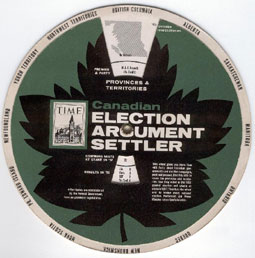
Pollsters and pundits agree -- get out the No-Doz. It's going to be a late election night.
"We will have to wait for British Columbia to see what will happen," pollster Jean-Marc Leger said. "It will be a long, long night, Monday night."
"B.C. voters have essentially moved from bystanders to final arbiters in this election," said Frank Graves, president of EKOS Research Ltd.
With polling results strongly suggesting the likelihood of a minority government, British Columbia voters are being told by pundits that for once their votes will determine the next government.
Pundits say B.C. voters will be kingmakers. But pundits say a lot of things.
A national Leger Marketing survey of 3,101 Canadians put the Liberals a single point ahead of the Conservatives, 33 to 32 percent, with the NDP trailing at 17 per cent.
The poll for the Toronto Sun and its chain of newspapers has the Conservatives ahead in B.C. at 40 percent, followed by the NDP at 27 percent, the Liberals at 26 percent, and the Greens at 6 percent.
An EKOS poll of 5,254 for the Toronto Star projected 117 seats for the Liberals with 32.6 percent of the vote, followed by the Conservatives (109 seats, 31.8 percent), the Bloc Quebecois (55 seats, 11.2 percent), the NDP (27 seats, 19 percent), and the Greens (0 seats, 4.9 percent).
All the national polls suggest Canadians will experience their first minority Parliament since Joe Clark's Progressive Conservatives formed government in 1979. The Tories turned into pumpkins before the year was out.
In B.C., the Conservatives are certain to claim about two-thirds of the province's 36 seats. Much of the Interior votes as solidly Conservative as their counterparts in Alberta, where elections are as predictable as those in Albania under Enver Hoxha.
The other third feature heated two-way, three-way, and -- in a couple of ridings with strong Green candidacies -- four-way races.
Only about 12-15 seats in the province are in play. Some of these may be won by a handful of votes.
Those who like to play the mug's game of electoral prognostication should check out some of the goofy (and wishful) reasoning to be found at the Election Prediction Project.
Recount me in
Since 1935, eight federal seats in British Columbia have been won by fewer than 100 votes. These are the results that give campaign managers their haunted appearance:
Vancouver Centre (1979) Art Phillips was a handsome, articulate, Kennedyesque figure with a reputation as a reforming mayor. He was a natural candidate as a Liberal, a shoo-in for Cabinet, and -- who knows? -- a potential prime minister-in-waiting. He squeaked past Progressive Conservative economist Pat Carney by just 95 votes, but the Tories formed government and Phillips wound up on the Opposition benches. The Liberal was thrashed in the 1980 election, finishing third in a race won by Carney, who now is a Senator.
Vancouver East (1974) It was a cold day in Hades as Liberal lawyer Art Lee defeated Paddy Neale by 57 votes in this NDP bastion, a socialist sinecure since the Depression. Only a sadist would note the 298 votes claimed by the Communist candidate, or the 181 won by the Marxist-Leninist.
Comox-Alberni (1968) On election night, veteran NDP member Thomas Barnett seemed to have stemmed the tide of Trudeaumania by just three votes. (The Liberals' red tide even claimed NDP leader Tommy Douglas, who lost by 138 votes in Burnaby-Seymour to Ray Perrault.) A recount gave Liberal challenger Richard Durante, a school principal, a nine-vote victory. Barnett went to court, arguing that military personnel stationed at CFB Comox had voted improperly in the riding. The B.C. Supreme Court agreed, declaring the result void. Barnett defeated Durante by 255 votes in a byelection on April 8, 1969.
Vancouver-Burrard (1962) A three-way battle of the barristers featured the NDP's Tom Berger (with 9,173 votes) beating Ron Basford of the Liberals (9,079) and incumbent John Taylor of the Conservatives (8,651). Basford won the rematch the next year.
Burnaby-Richmond (1957) The closest four-way race in B.C. history saw retired farmer Thomas Irwin (7,999) top the polls for Social Credit ahead of Conservative lawyer John Drysdale (7,940), high school teacher Bob Prittie of the Co-operative Commonwealth Federation (7,662) and sales supervisor Tom Goode of the Liberals (7,121). An interesting note: All four men at some time represented Burnaby-Richmond in the House of Commons. As well, Goode's namesake son was elected to the House of Commons in 1968.
New Westminster (1953) Social Credit's George Hahn slipped past Liberal incumbent William Malcolm Mott by 35 votes.
Kootenay East (1949) Liberal miner Jim Byrne finished 98 votes ahead of incumbent CCF clergyman James Herbert Matthews. Byrne won re-election five times.
Vancouver-Burrard (1935) Gerry McGeer, the flamboyant and controversial mayor of Vancouver, was a renegade Liberal MLA who resigned his seat in Victoria to contest the federal election. Earlier in the year, he had read the Riot Act to unemployed protestors in Victory Square. He defeated Arnold Webster of the CCF by just six votes. McGeer was later appointed to the Senate, while Webster became provincial CCF leader. Webster was sent to Ottawa by the voters of Vancouver-Kingsway in 1962 and 1963.
Tom Hawthorn writes regularly for The Tyee about politics and sports. ![[Tyee]](/design-article.thetyee.ca/ui/img/yellowblob.png)


Tyee Commenting Guidelines
Comments that violate guidelines risk being deleted, and violations may result in a temporary or permanent user ban. Maintain the spirit of good conversation to stay in the discussion.
*Please note The Tyee is not a forum for spreading misinformation about COVID-19, denying its existence or minimizing its risk to public health.
Do:
Do not: