


 SHARE:
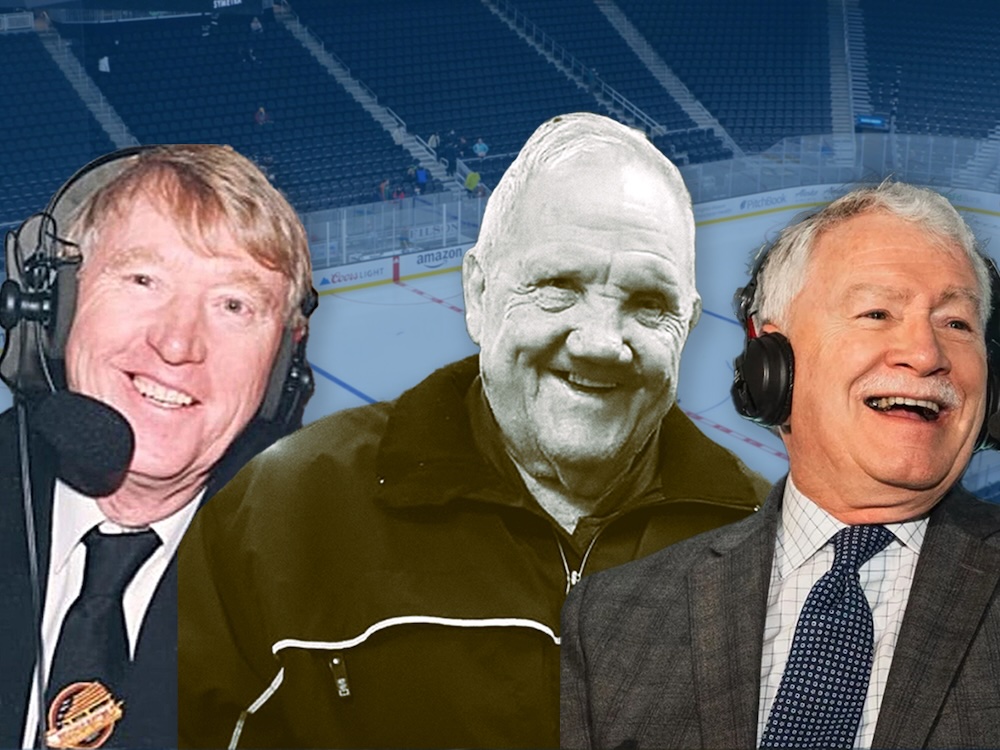
Earlier this year, Jim Robson died at 91. Beloved hockey broadcaster. The voice of the Vancouver Canucks. Retired last century after more than four decades in front of a microphone. Then, avuncular John Garrett died, suddenly, at 74, while on the road as a television analyst for a playoff game. And now coach Ernie (Punch) McLean has been called up (or sent down) at 93, and with his demise we come to the end of an era.
The three deaths in the past few weeks cap an annus horribilis for the Vancouver hockey fan.
The last-place Canucks produced what was arguably the worst season in the National Hockey League club’s history before the hockey gods slew-footed the team; Vancouver defied the odds by missing out on both the first and second draft picks in a ping-pong ball lottery. They have not won a Stanley Cup in their 56 seasons, and a fool is welcomed by countless online betting sites to part with their money should they think the Canucks might be champions next year.
With the deaths of Robson, Garrett and McLean, we have lost memories stretching back to the early postwar years. Each in his own way also represents the lost roots of our national winter sport.
Hockey today is a sport for the well-to-do — ordinary wage earners can no longer afford tickets to watch players, more of whom are hailing from Sunbelt suburbs. The trio came to the sport at a time when hockey provided an escape from hardscrabble lives destined to be spent underground in mines or above ground on a farm or factory. Robson and McLean were both born in dirt poor Saskatchewan during the Depression, while Garrett, born in 1951 in Trenton, Ontario, was raised as part of a large extended family in the military town. All three found success after settling in British Columbia.
John Garrett was one of seven children supported by his father’s salary as a teacher at Trenton High School, where he had been hired in 1937 at $7 per day. The family lived in the nearby hamlet of Glen Miller. Garrett’s stay-at-home mother also cared for her father, while her brother, John’s uncle, who had been injured in the Second World War, also relied on the family.
Family meatloaf had more loaf than meat, and ketchup was more an ingredient than a condiment. Garrett’s love for the sweet and vinegary tomato sauce continued unabated through his playing days and into his broadcast career.
At first, the budding goaltender had to make do with hand-me-down goalie equipment, as there was simply no money to buy his own gear. He played for the hometown Junior B Trenton Golden Hawks, named for the Royal Canadian Air Force’s aerobatic team, before joining the Junior A Peterborough Petes under innovative coach Roger Neilson.
The St. Louis Blues grabbed him in the third round (No. 38 overall) of the 1971 NHL amateur draft. He wound up debuting in major professional hockey with the Minnesota Fighting Saints of the fledgling World Hockey Association, a free-wheeling rival to the NHL. He quit the team in the middle of his third season when regular paycheques stopped arriving.
“I’m only 24. I can’t afford to stagnate under these circumstances,” he said at the time. “I’m out of the St. Paul picture as of now. When you keep wondering if the franchise will be here another week or month, it wears on you.”
He wound up with the Toronto Toros, who soon after became Alabama’s Birmingham Bulls, then was traded to the New England Whalers. Along the way he picked up the nickname Cheech, as his bushy moustache resembled that of Cheech Marin of the stoner comedy duo Cheech and Chong (the latter being former nightclub impresario Tommy Chong of Vancouver).
The NHL absorbed what was left of the World Hockey Association in 1979 with Garrett playing for the renamed Hartford Whalers before being traded to the Quebec Nordiques and, in 1983, to the Canucks, where he was reunited with coach Neilson, by then known as Captain Video for his obsessive use of the technology.
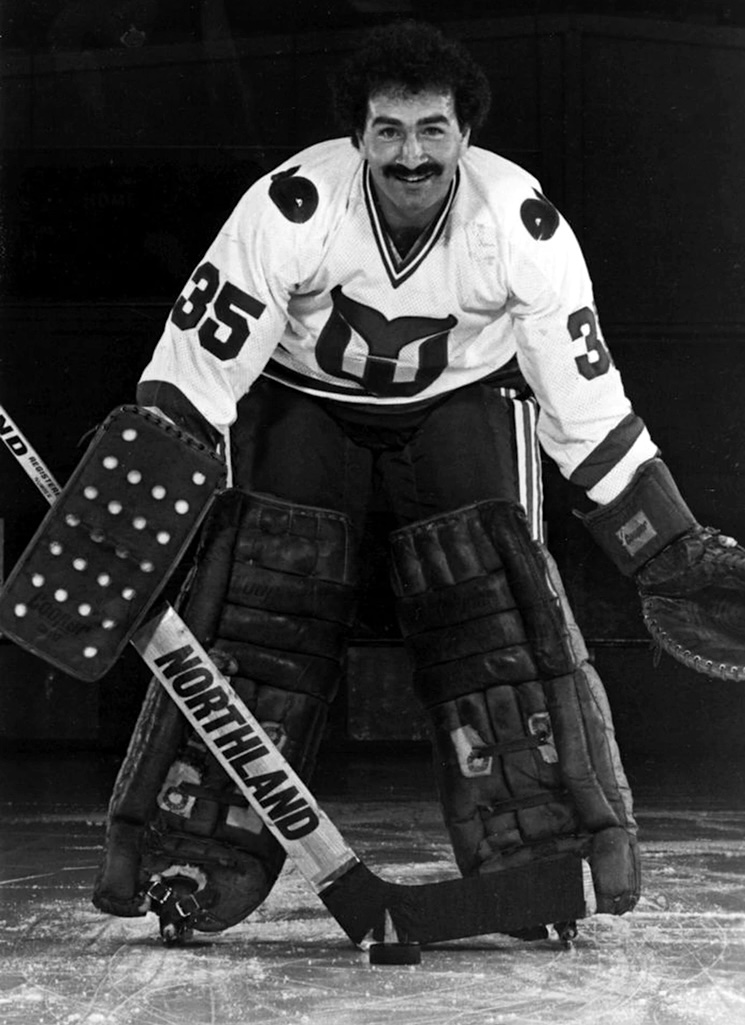
Four days after the trade and after just 62 minutes and 21 seconds in a Canucks sweater, Garrett was pressed into service as the only Canucks representative for the Campbell Conference at the all-star game. At 31, he was the oldest player on the ice. NHL rules at the time stated every team had to have at least one player in the game, and Richard Brodeur, Vancouver’s top goalie, had to withdraw because of an ear injury. Midway through the all-star game, Neilson, who was also the Campbell coach, replaced Murray Bannerman with Garrett. The score was tied, 2-2. “Better build up a big lead,” Lanny McDonald yelled to his Campbell teammates on the bench. “Garrett’s coming in.”
By the time McDonald scored in the third period, Garrett’s team was ahead 5-2. The skater began teasing him that he was going to win the $14,000 Chevrolet Camaro Z28 as the game’s most valuable player.
“After I made the first couple of saves,” Garrett said, “Lanny McDonald skated over and said I had the glove compartment. I made a couple of more and I had a tire. Halfway through the third period, it was ‘Do you want four-speed or five-speed?’”
Even though Garrett surrendered only one goal and stopped 15 shots in a 9-3 victory, Wayne Gretzky snagged the honours and the sports car for a four-goal outburst in the third period.
“A lot of people asked me if I was embarrassed to be here,” Garrett said after the game, “but I felt fortunate to be here. How many times am I going to get to play in the all-star game?”
Just the once, as it turned out. In his last of three partial seasons in Vancouver, his goals-against average was 6.49, which led some unkind fans to dub him Lotto.
His playing days over, he became a popular colour analyst, notably with John Shorthouse and Dan Murphy on Canucks regional broadcasts. His amiable, tell-it-like-it-is comments made watching the Canucks more palatable, and his good humour and lack of airs made him a welcome addition to your living room.
Many of the stories told about Garrett revolve around his love of fast food slathered with ketchup and washed down with Bud Light. His crew did road trips where every meal could only involve finger food, a challenge for those who might prefer a bacon-and-eggs breakfast.
While with the Nordiques, Garrett served as a backup to No. 1 goalie Dan Bouchard. He was seeing little action, and it became a habit for Garrett, who sat away from the players bench, to have the trainer sneak him a snack. The old Colisée in Quebec City was famous for its hot dogs (see sidebar) which warmed on rotating grills after cooking before being served on a griddle-toasted bun. The great Gordie Howe called them the best he had ever eaten, though Howe, like pretty much every player not named John Garrett, indulged himself only after the final whistle.
The Nordiques were playing Gretzky and the Edmonton Oilers in a game on Nov. 8, 1982. Garrett had not seen a minute of ice time in nearly three weeks. Halfway through the game, the backup goalie had a hot dog delivered to him on the sly. At about the same time, Bouchard unexpectedly skated to the bench, having injured his right hand making a save. With all eyes suddenly on Garrett, he shoved the wiener into his goalie pads.
“I’m sitting there and I’ve got the hot dog tucked in my pad,” he told Calgary hockey writer Jean Lefebvre in 2008. “So I’ve got to go in and I stand up and put my mask on. I can’t reach down and dig the dog out of my pads, people are looking at me...
“I had to fall down a couple of times and mustard and ketchup was flying. I had to tighten the straps on my pads so the dog doesn’t come out.”
Of the more than 15,000 people in the building that night, only Garrett and the trainer knew what was happening. And the trainer was bent over, laughing.
James Alexander Robson was Saskatchewan nice all his life. Born in Prince Albert, he was the youngest of four children. His mother was a Welsh immigrant and his father a prison guard. When Jim was eight, the family uprooted from the struggling Prairie province to start a new life in British Columbia, where one of his uncles had settled.
They survived through subsistence farming on Barnston Island in the Fraser River before getting a small patch to farm in Haney, part of Maple Ridge. No longer on an island, both parents also found work, his father in a mill, his mother in a factory making wooden boxes. The boy sold eggs to neighbours and from a stand at the front of the family home.
Hustling from a young age, the teenager was paid a dime for every inch of copy he produced for the sports pages of the Maple Ridge-Pitt Meadows Gazette. He would bicycle 40 kilometres each way from his home to Capilano (now Nat Bailey) Stadium in Vancouver to interview baseball players.
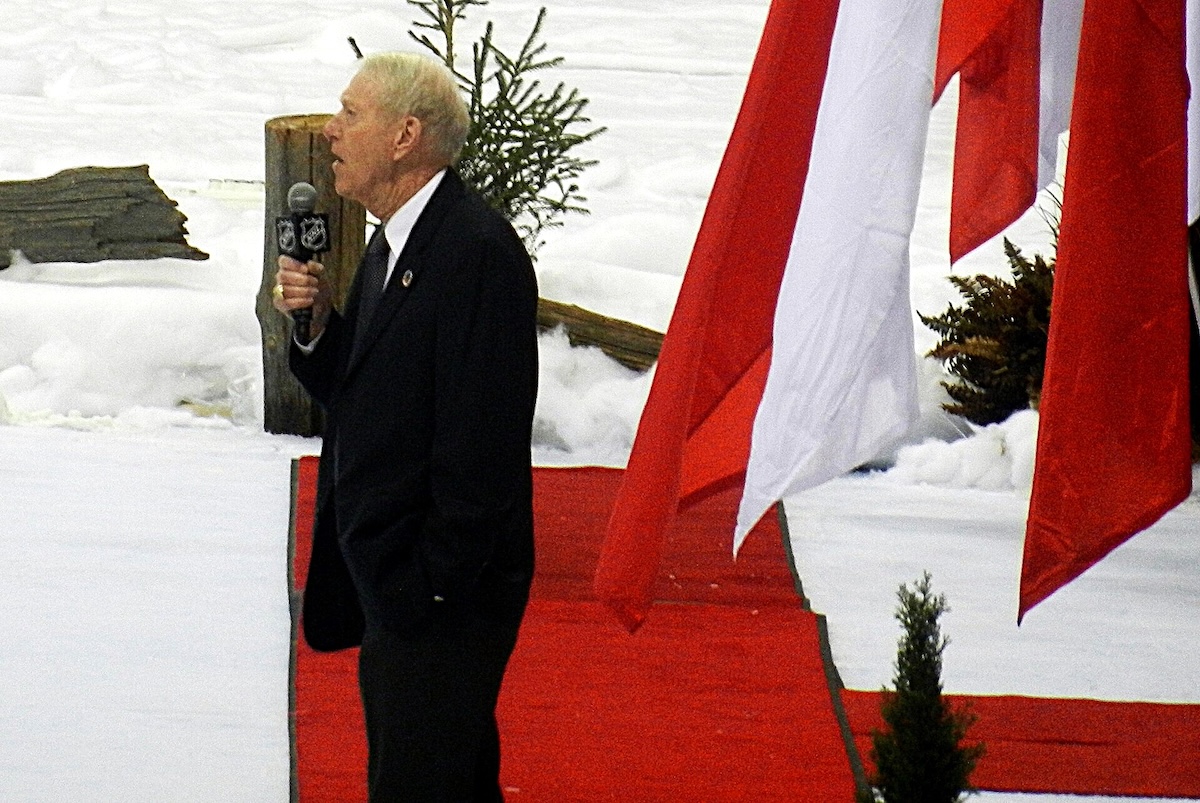
He was still in Grade 11 when hired by radio station CJAV in the Alberni Valley on Vancouver Island. Over time, he became Vancouver’s most beloved sportscaster, covering baseball’s Vancouver Mounties, football’s BC Lions and hockey’s Canucks. He was among the last broadcasters to re-create road baseball games from the home studio by using the wire-service tickertape and sound effects.
His hockey trademark was a folksy shout-out: “A special hello to hospital patients and shut-ins, the pensioners, the blind and all those people who can’t get out to games.” The pooh-bahs at Hockey Night in Canada thought the greeting was too hokey for a national broadcast, but Robson refused to drop it.
The salute to shut-ins once generated a thank-you note from an unexpected source, according to Greg (Dr. Sport) Douglas, a Canucks publicist and longtime Robson friend.
“Thank you for remembering us,” it read. “We wait for your hello and bang our tin cups on the bars.”
The handwritten note came from Thomas Scallen, one of the original owners of the Canucks, who did time in the British Columbia Penitentiary after being convicted of theft and issuing a false prospectus. He was later pardoned.
Ernie McLean coached his junior New Westminster Bruins to four consecutive Western Hockey League championships, as well as two Memorial Cup major junior national championships. More than 100 of his players went on to NHL careers.
Punch was his nickname, as well as an occasional calling card.
Whatever success he had coaching was more than overshadowed by the mayhem in which he engaged on and off the ice.
He once snatched the toupée off a linesman’s head. (“This was funny, at the time,” the linesman later wrote the coach in a note accompanied by a bill for a new hairpiece.)
He once punched a referee as he skated past the bench. (Punch, who was suspended for 25 games, blamed his trainer.) He threw a garbage can on the ice at Queen’s Park Arena in New Westminster more than once. Losing a game by 6-2, he told his players to stand still on the ice after a faceoff. (He got a two-minute delay-of-game penalty.)
Outside a Regina rink after one game, McLean was heckled by a fan who called him an animal. Incensed, the coach mistakenly thought he had been insulted by sportscaster Mal Isaac. He grabbed Isaac by the collar and as the two tussled, three Bruins players joined in the melee, kneeing Isaac in the gut and leaving him with a bloodied nose, a sore foot and a bruised back.
Punch initiated what became known as the Portland Massacre when he allowed several of his players to leave the bench to help beat three Winter Hawks skaters on the ice with four seconds left in a game.
The Portland players had their arms held by opponents, while random Bruins slugged them. Portland defenceman Blake Wesley, who went on to spend parts of seven seasons in the NHL, suffered blurred vision and was feared to have a fractured eye socket. His facial swelling was so severe, a diagnosis could not immediately be made.
“I believe it was premeditated, set up by Ernie McLean,” Wesley said at the time. “I think the guy is sick.”
The beating was so grotesque and one-sided that criminal charges were laid. Seven Bruins, ranging in age from 17 to 20, pleaded guilty to assault. They received a conditional discharge from Judge James Shaw, as well as a tongue-lashing for the shameful incident, for which the judge blamed management.
“These young men are manipulated — apparently happily — by the owners and coaches to do exactly what they are told,” the judge said in court. “You’re playing a dangerous game in advocating intimidation and violence above the basic sporting skills.”
The coach scoffed that “the judge’s ruling makes a hip check a criminal offence.”
An oddity about McLean is that he gained his nickname not from pugilism, but for an insulting exchange he once had with a junior referee. McLean barked: “Who do you think you are, Frank Udvari?” (Implying the referee was not an NHL-calibre referee.) The official responded: “Who do you think you are, Punch Imlach?” (Implying McLean was not an NHL-calibre coach.)
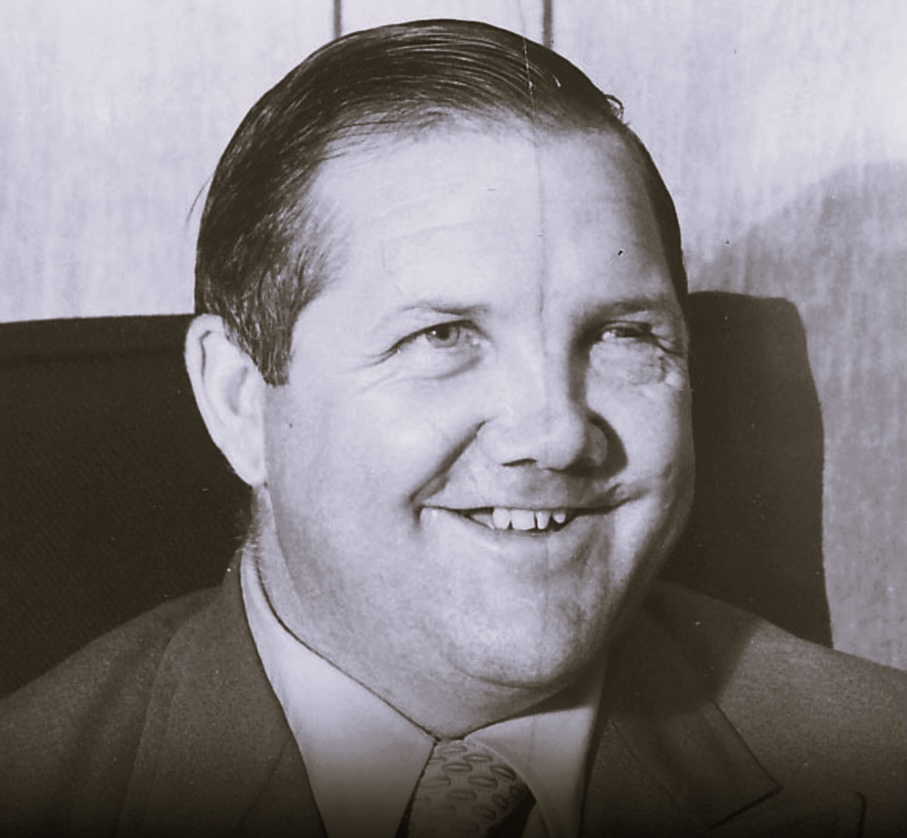
Nevertheless, Punch’s face looked as though the Pillsbury Doughboy had gone 10 rounds with legendary enforcer John Ferguson.
In summer, he worked construction. He was once walking beneath heavy equipment when a chain snapped. A piece of bulldozer struck him.
“Where did it hit him?” the team owner asked when told of his coach’s accident.
“Right on the head.”
“I hope the equipment wasn’t damaged,” the owner said.
That was but one of many close scrapes with death for McLean, who claimed to have been born in underground workers’ quarters in a coal mine because on Nov. 4, 1932, it was warmer than the family home in Estevan, Saskatchewan.
Young Ernie got his first pair of skates at age 12 and had an undistinguished junior career in his home province.
He worked for the family’s McLean Construction Co., breaking every finger on both hands. At 21, he was in the cab of a crane hoisting a steel beam into place for the superstructure of a Catholic church when disaster struck. The crane toppled, causing a counterweight to strike his father in the back, leaving a long gash above his right hip. As the machine rolled, the motor pushed through the wall into the cab, barely missing Ernie.
Ernie was again in the cab of a crane, unloading a 25-tonne compressor from a railway flatcar, when disaster struck once more in 1961. “We were lowering the compressor onto a truck trailer when the boom buckled,” Ernie told a coroner’s inquest. A chain swung free, striking older brother David McLean in the head. He suffered an extreme skull fracture and brain hemorrhage, dying in hospital at age 30. The jury ruled it an accidental death.
McLean himself claimed to have survived a four-storey fall, which destroyed his left elbow. He wore a cast for nearly two years.
In 1971, McLean was returning from The Pas, Manitoba, when his Cessna 185 crashed in the Saskatchewan bush. “My jaw was nearly pulled off and my eye was hanging by my cheek,” he said years later. “I packed snow around my eye and tied it up with a T-shirt and yellow shorts.”
The next day, he walked for hours before following the sound of a barking dog to get to a farmhouse. The farmer had no telephone, but he hand-pumped gasoline into his old truck and drove the injured man to a small hospital in Kamsack. He needed several operations to remove about 50 wood splinters from his face.
While recovering, McLean decided to move the Estevan Bruins, which he co-owned with Bill Shinske, to New Westminster, B.C. They eventually sold the team to Nelson Skalbania. McLean, who had ambitions to coach the Canucks, felt he had been blackballed by hockey’s establishment.
Away from hockey, he prospected for gold. He was 77 when he went missing near Turnagain Lake in the Dease Lake area of British Columbia’s northern Interior. McLean had fallen down a crevice and became disoriented. After five nights and four days without food or other supplies, he walked out of the bush and a searcher in a helicopter spotted him.
A campaign was launched recently to have Punch honoured with a statue in New Westminster. Two days after he told the old stories at a gathering in his honour in the Lower Mainland, he returned upcountry to look for gold. Just after noon, a road maintenance worker on Highway 37 North spotted a car down an embankment about 30 kilometres south of Dease Lake near Upper Gnat Pass.
RCMP suspect the driver swerved, going off the road before being ejected from the vehicle. Punch McLean had run out of luck. ![[Tyee]](/design-article.thetyee.ca/ui/img/yellowblob.png)









Tyee Commenting Guidelines
Please note that email notifications for replies are not currently working due to a software issue which may be resolved in a future update.
Comments that violate guidelines risk being deleted, and violations may result in a temporary or permanent user ban. Maintain the spirit of good conversation to stay in the discussion and be patient with moderators. Comments are reviewed regularly but not in real time.
Do:
Do not: