

 SHARE:
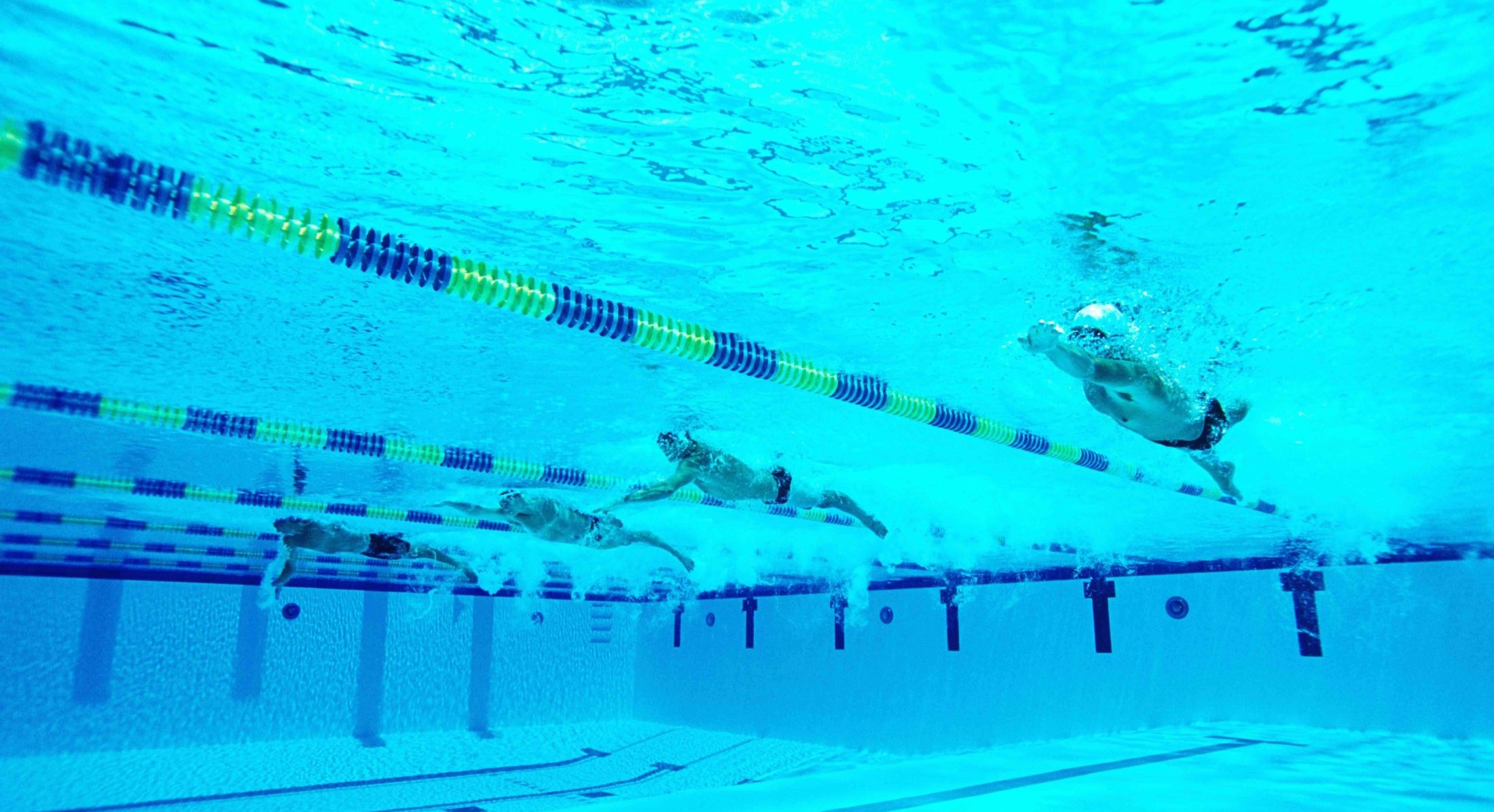
His name was Jeff. He was tall, around my age, and wearing a black spandex swimsuit, similar to the one I was wearing. From my lane, I couldn’t get a good look at him. I squinted through my foggy goggles, the result of swimming something like 20 lengths at the pool.
As he approached the pool deck, I could tell.
It was Jeff.
I went on swimming another handful of lengths. Did he see me too? We just met last week. What, if anything, should I say? I thought to myself under water. Behind me, Jeff hopped in the water, started his Garmin watch and paddled away. After a few more lengths, I took a break on the wall and Jeff swam in a few seconds later. He pulled the goggles off his face, revealing rings from the suction under his eyes.
“Hey, were you here last week too?”
I was. I started regularly coming to the pool in November after pinching a nerve in my back. I had moved to Burnaby a few months earlier and didn’t know a soul.
For years, running was my everything: my daily form of exercise, my way to unwind after a hard day and my connection to friends. Ahead of my move, I joined a Vancouver-based running club. The decision, I hoped, would give me a weekly friend group for connection as I moved away from the city.
My back had other plans. I could no longer run with my friends, but I still wanted to exercise. So, swimming proved to be a low-impact sport that didn’t irritate my spine. Plus, I found out that my local rec centre in Burnaby offered $1 swims, called “Loonie Swim,” every Thursday night. Say less.
“Yes!” I replied, cutting through the echoes of children jumping off a dock. “You can’t beat $1 swims.”
“I thought so! And you are so right.”
That was it. Jeff put his goggles back on and swam away. I was near the end of my swim and went for another few lengths. Then, I hopped out of the lap pool and into the hot tub, watching Jeff and a handful of other vaguely familiar people swimming lengths.
That was my introduction to “The Regulars.”
‘Third spaces’ are vital. And in decline
I love The Regulars.
They are the group of people I see at the rec centre every week. I wouldn’t call them friends, per se, but we occasionally lock eyes or nod in each other’s direction.
There’s Jeff, there’s the cashier attendant, there are the high school gym bros, there’s the guy who sports a “Nicaragua” ball cap and there’s the janitor who always wears a tracksuit and occasionally busts a move to a song in the gym. (I’m sure I’m part of their “Regulars” too — probably as the guy who wears short shorts, or a white swim cap.)
There’s something comforting about The Regulars. They give life to the space I choose to visit in these precious post-work hours — kind of like the same group of people you may see on a morning bus route or at a pub every Friday night. Maybe it’s just me, but whenever I don’t see the dancing janitor or the Nicaragua hat guy, I find myself wondering where they are and if they are doing alright.
I may not be alone.
In recent years, there’s been growing research on the importance of “third spaces,” a term coined by American sociologist Ray Oldenburg to describe the places outside of home (place one) and the workplace (place two) where people come to socialize and connect. A third space might take the form of a library, coffee shop or community centre. They’re proven to “serve vital and life-saving roles in our communities,” according to a 2019 report in Health & Place.
But third spaces are at risk.
According to the Health & Place report, almost all of the common third places in the U.S. — “especially commercial establishments and privately run organizations” — have declined since 2011. The only exceptions were libraries and civic and social organizations. And that was before the pandemic, which shuttered many public places for a time and closed thousands of businesses in Canada.
All that led the New York Times to recently ask, “Where Have All the ‘Third Places’ Gone?”
The rise of social media — and the pandemic — may have something to do with it, with Americans reportedly spending less time with friends since the middle of the 2010s.
Or some places, like a coffee shop, have become too expensive to hold regular hangouts. It should be noted that Starbucks, in the New York Times article above, is apparently trying to “reclaim the third space” and become the spot where people hang out and linger for a while. But my point still stands — paying $5 or more for a piece of banana bread adds up fast!
Why is all this important? Well, researchers suggest that the closure of third places “are associated with the deterioration of social connections and mental health,” according to a 2023 study.
I know that all too well. In university, I formed my main group of friends through running. I had friends in class too, but I was never particularly close with them. That said, I always looked forward to making small talk with people I regularly sat beside before class.
Then COVID-19 forced classes online. Unknowingly at the time, I started missing those small interactions. My mental health deteriorated. Instead of chatting about the weather or a funny show we had both watched recently, I logged on to class from my bedroom, alone. Day after day after day after day. Then, after university, I started working remotely full-time. My main form of social interaction came from the occasional Slack message and run meetup.
The winter was even worse. When the days became shorter and my motivation to run waned, I fell into an unhealthy cycle. I was a remote worker who lived alone in a studio apartment, and every day was Groundhog Day: wake up, walk a few feet, log on to computer, write, log off, run in the dark, make dinner, sleep. Repeat.
I never realized the importance of third places until they were out of my life.
A place where anyone can be
There’s something special about the pool.
It’s a warm, bright third space that’s open to everyone. It’s where you can swim continuous lengths until you’re out of breath or just float around on your back for hours. There are kids screaming and there are people relaxing in the hot tub.
There are so many contradictions to this place that, perhaps, there should be more confrontations. But I hardly see any. (The one and only “fight” I saw at my local pool was around Christmas, when two people were fighting over a single hot tub jet. To be fair, that jet is the best jet in the hot tub. It was also Christmas, so I’ll give them a pass.)
After a month or so, my back healed and I slowly returned to running. I met up with my Vancouver club again and found peace in the trails around my home.
But I didn’t stop swimming. Instead of slowly ramping up my mileage to 100 kilometres or more per week — something I would always do after returning from an injury — I ran less. I started running around 75 kilometres per week, which, I know, sounds a lot to most people. But most of my running friends run anywhere to 130 to 160 kilometres or more per week.
Instead of getting those extra 25 kilometres in on dark, post-work runs alone, I went to the pool. Some days, I’d swim lengths for about 30 minutes and sit in the hot tub. Other days, I would do squats and arm curls in the gym for about 30 minutes… before hitting the hot tub. (That’s always a constant.)
The winter went on and I never fell into the deep, dark depression that typically consumes January and February for me. Instead of dreading those dark, cold winter runs after work, I got excited at the end of the day.
That meant it was time to visit the pool, my gateway to exercise and The Regulars.
It’s been months since my first $1 swim, where I met Jeff for the first time. And even though my schedule has caused me to miss the occasional Thursday night session, I haven’t seen him at the pool recently. Whether at Loonie Swim or any other day of the week.
But I’m not worried.
I’ll be there next week. ![[Tyee]](/design-article.thetyee.ca/ui/img/yellowblob.png)









Tyee Commenting Guidelines
Please note that email notifications for replies are not currently working due to a software issue which may be resolved in a future update.
Comments that violate guidelines risk being deleted, and violations may result in a temporary or permanent user ban. Maintain the spirit of good conversation to stay in the discussion and be patient with moderators. Comments are reviewed regularly but not in real time.
Do:
Do not: