

 SHARE:
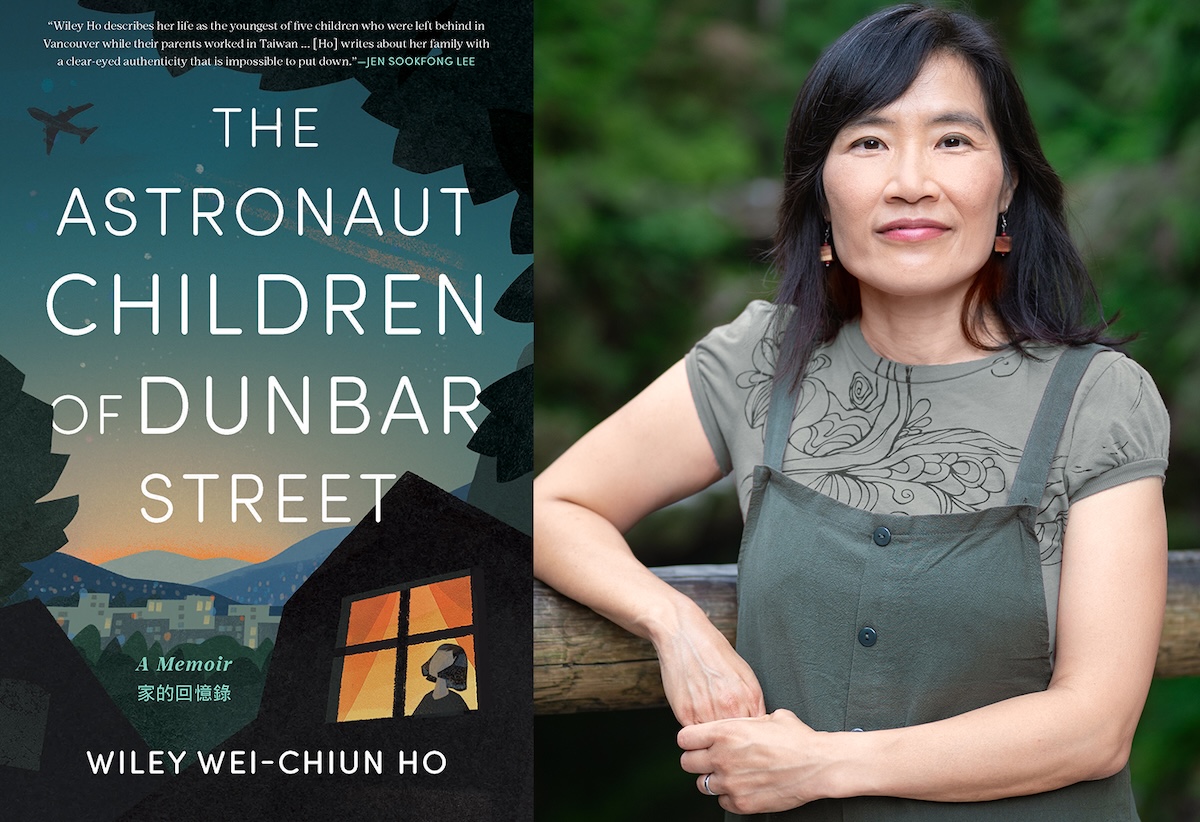
[Editor’s note: Wiley Wei-Chiun Ho’s family immigrated to Vancouver in 1980, her parents anxious about the political situation in Taiwan and the threat of their oldest son being drafted into the army. Her father, a successful doctor, tried unsuccessfully to qualify for medical practice in Canada. Their savings dwindled, and Ho’s parents made the difficult decision to return to Taiwan to work, leaving their school-aged children to fend for themselves in Vancouver. Although the parents and children visit each other, their dynamic grew more strained.
In this excerpt from ‘The Astronaut Children of Dunbar Street: A Memoir,’ out April 1 from Douglas & McIntyre, Ho, the youngest child, returns to Taiwan to visit her parents after graduating from high school.]
After high school graduation, my parents flew me back to Taiwan for a summer visit. On the long flight from Vancouver to Taipei, I had time to wonder whether the trip was my graduation present or my parents’ apology for missing the ceremony. For their general absence from my life.
By now, money was no longer a worry for my family. In the six years since their return to Taiwan, my parents had worked hard to save not just for our post-secondary educations but also for the dowries of their four daughters. Brother was slated to inherit the hospital.
As the plane circled the airport, I found myself dreading the blank summer ahead. Instead of Taiwan, I wanted to be in Europe, backpacking with my friends. Some of them were going to take a gap year, but I knew that my parents would never go for that. They believed that school, like childhood, should be completed in one continuous sweep, not something to be revisited. Once you finished, you moved on to your adult life. Ma’s plan for me was the same as for my sisters: earn a respectable degree and marry a respectable man. She said it was the recipe for a good life.
When I mentioned receiving a small scholarship, my parents were delighted. They said they couldn’t wait to see me and that I should book my ticket to Taiwan immediately. Ma even promised no matchmaking that summer. Their enthusiasm to see me made me feel ashamed for wanting to go to Europe. I didn’t know how to refuse, even though I knew they would be too busy working to spend much time with me.
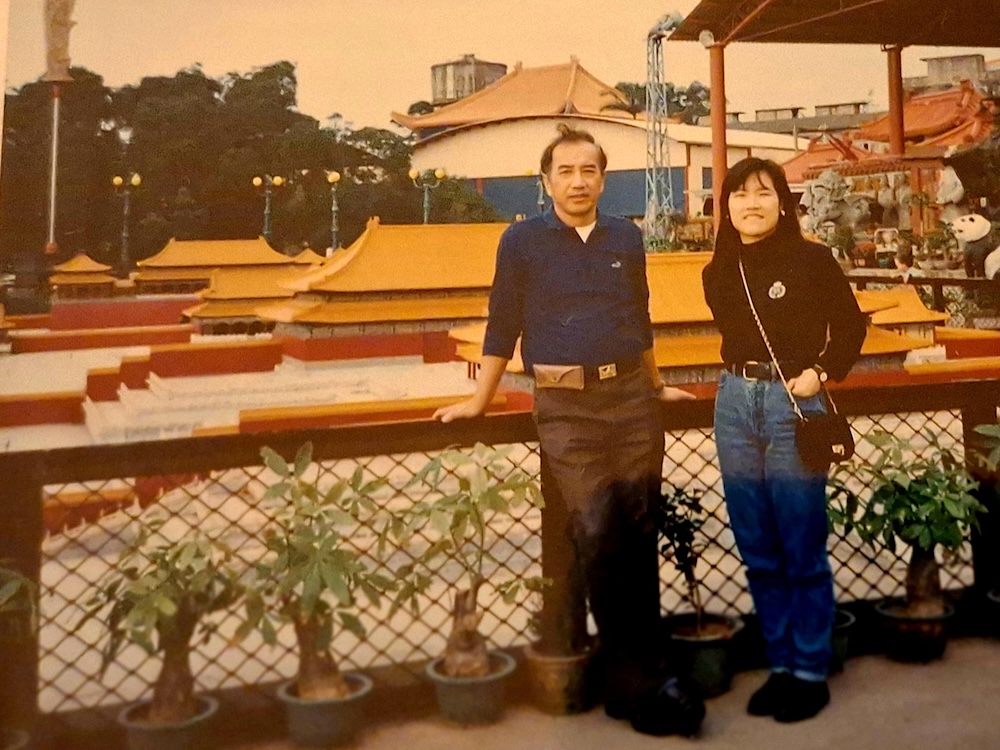
What would I do in Chutung all summer? My birthplace was a sleepy township where young people slipped away to the cities. Because I had left Taiwan before I’d learned to read and write, I was illiterate in Chinese and the unilingual signs were useless to me. The last time I was there, I had to ask for directions three blocks from the house. I had no friends there. I would see Big Sister and Second Sister, of course, but they were now married women with their own grown-up lives.
A 50-50 chance
After a few days of sleeping off jet lag and eating my fill of oyster omelette, shaved ice, tofu pudding, and bubble tea with maximum “QQ” chewiness, I was sated. And bored. With languid days of summer yawning before me, a towering figure rose to mind. The blind fortune teller of Chutung.
The blind seer had been a ghostly backdrop to my life from even before I was born. He was legendary for being able to see the future, but I wanted to ask him about the past. I wanted answers to questions my parents wouldn’t answer.
At dinner, I asked my parents where I might find him.
Ma looked up, surprised. “That was a long time ago. But he was good. Blind fortune tellers are the best. They have other ways to see your fate.”
“Ma, that guy had a 50-50 chance.”
“He saved your life, didn’t he?”
“But, Ma, he got it wrong!”
My mother set down her rice bowl with a clatter. “It’s unfilial to correct your elders.”
That was her trump card. Any time she was tired of an argument with us children, she invoked Confucius’s dictum of filial piety — unquestioning respect for one’s elders — and stopped my siblings and me in our tracks. It was a dirty trick, but I let it go.
My father disapproved of my quest. A man of reason and science, Baba was embarrassed by talk of destiny. He didn’t believe in fortune tellers. “You can’t dissect nonsense,” he said and continued chewing.
“Aiya, let it go,” Ma said quietly. “You should be grateful you’re here now.”
Her voice had a note of finality about it. A hint of shame. It was the same tone I sometimes heard on our monthly long-distance calls, when the tough shell of Ma’s voice would suddenly change and crack. Then a muffled sob before the phone passed hands, and Baba’s steady voice would fill my ear with anecdotes about life in Taiwan, an interesting surgery he’d performed that day, news about our relatives. Stuff I didn’t really have a clue about. But I’d say, “Uh-huh, uh-huh,” until enough awkward minutes had elapsed to fill our quota for the month. Then Baba would say, “Take care of yourself, OK?”
At the table, I clammed up as usual. It was easier to finish our dinner in peace than to ask my parents questions they didn’t want to answer. I let them interpret my silence as filial piety. I couldn’t explain why I wanted to find the blind fortune teller so badly. I lacked the nuance in Mandarin, Taiwanese, and Hakka — all the languages we had in common but I had let slip in favour of English.
The years I had spent apart from my parents showed in my gesticulations and stutters when I reached for translation. It showed in their bemused smiles and in their exchanged looks of disappointment. In any case, in any language, I could not articulate the clench in my heart.
‘People used to come from all over for his help with their problems’
The next morning, with the sun prickling my scalp, I set out from the old family home that my grandfather had built. With reinforced cement walls two feet thick, the house had survived earthquake after earthquake, its single concession to mortality a thin crack down the living room wall. The grey monolith was left to my father and my older uncle. After my father passed, his half would go to my brother. Ah-gong’s will had been explicit: Male heirs only.
I appraised my birthplace. Chutung didn’t seem to have changed much since I moved away a decade ago. It remained a small town, by Taiwan’s standards, which in 1989 had about 20 million citizens. Most of the township’s population of around 85,000 lived in drab-looking cement low-rises. Dusty roads radiated from the centre of town, with its traditional shops and temples, and petered out at the edges to lush, steep mountains. Chutung itself sat in a shallow basin, cradled by green ridges that folded like dormant dragons.
Though Chutung is located just 80 kilometres southwest of Taipei, it is without the capital’s shiny skyscrapers, fancy restaurants, and international tourists — or even consistent sidewalks. I had to weave my way down the main road, vying for patches of pavement with other pedestrians, scooters, and trucks parked haphazardly along 東寧路 Tung Ning Lu. Jumping every time a scooter beeped and swerved around me, I jostled my way down the street, excusing myself to no one in particular. Window shopping along the ironically named Peaceful East Road was treacherous.
By mid-morning I was sweaty from dodging traffic and the growing heat. It was evident I wasn’t going to find a blind man wandering along Chutung’s main roads. Turning down a side lane, I was welcomed with the shade cast by three- and four-storey dwellings. Pots of purple basil and red chilies were strewn here and there like a trail of bread crumbs. Occasional bursts of pink bougainvillea erupted out of fertile cracks in the ground, creeping and arching toward upper-floor windows. Water tanks guarded rooftops like sentries. I watched as a pigeon navigated high-tension wires and laundry lines, flying directly into its metal coop.
I was on the lookout for the town’s elders. They always had time to talk. Through doors left ajar, I spotted white-haired Ah-gongs and Ah-pos fanning themselves in front of blaring televisions. I left them to their shows and continued down the lane to the local temple.
Guarding the temple’s red-and-gold-lacquered doors stood a chest-high brass urn, its polished belly filled with sand that held up countless sticks of red incense. The air was pungent with smoke. A tiny woman with a hump on her back stood before the urn, whispering into a bouquet of incense clutched in knobbly hands. As I waited for her to finish her long prayers, I followed the tendrils of blue-grey smoke up to the temple’s flared roof.
When she finished her devotions, the old woman stood on tiptoes to reach the top of the urn. I stepped forward and offered to help in halting Hakka, the dominant language of the elders in this town.
“You don’t live here, do you?” she replied, handing me a few sticks of incense. I shook my head and told her I lived on the west coast of Canada. She said her grandson lived in Toronto and waved aside my attempt to explain Canadian geography. She was more interested in why I had returned to Chutung.
“I’m looking for the famous blind fortune teller,” I said, jabbing the incense into the urn’s sand. “Do you know where I might find him?”
“What’s your surname?” she asked, as if I hadn’t posed a question. Her voice was raspy, reminding me of my own Ah-po. I shuddered.
My paternal grandmother had a low growl that used to terrify me when I was little, along with a permanent frown and black-pencilled eyebrows that matched her dark wig. At night she hung her wig on the carved newel post of the main staircase. In the dim light, convinced that a black-haired ghost patrolled the sleeping house, I refused to go downstairs to the bathroom and peed the bed instead.
Before my parents moved us overseas, we had all lived together, with Ah-po presiding over the household, governing what we ate, when we slept, and where we played. She had rules not even my parents dared to defy. As a little kid I maintained a safe distance from her, which wasn’t difficult since Ah-po didn’t play with the grandchildren. She merely counted them — the boys, that is — like golden eggs in a basket. Ah-po addressed me by my birth order and rarely spoke to me other than to point to her slippers and command in Hakka, “Zui mui-eh, daigo loi.” Last one, fetch.
Outside the temple, I told the old woman my surname. She cocked her head sideways to peer up at me. “You must be a granddaughter of this town’s founder.” At my hesitant smile, she began regaling me with stories of my illustrious grandfather.
I’d heard them all before: how Ah-gong had been the town’s first qualified doctor in western medicine, curing innumerable patients; how he’d started a cement plant to employ the town’s men; how handsome and charismatic he’d been. I had difficulty reconciling these legends with my own memories, images of a balding man looking for his black medical bag, nodding absently at the family, and hurrying out the door.
“Your grandfather’s cement built this very temple,” the old woman said.
I nodded politely, wondering how I might steer the conversation back to the fortune teller.
“Your grandfather delivered every one of my sons,” she continued, softly rubbing her belly like she was still pregnant. “They’re all grown now, busy with their lives.” Her gaze was somewhere far away. “Sons rarely visit old folks, not like daughters. I wish I had a daughter.”
“But your generation only wanted boys,” I blurted out.
“Don’t interrupt your elders,” the old woman snapped, “especially when they’re trying to pay you a compliment.” She lifted her chin. “What do you know about my generation anyway?”
My cheeks grew hot.
“The blind fortune teller,” she scoffed and shuffled toward the temple doors. “He ought to be dead by now.”
“Wait.” I followed after her. “When was the last time you saw him?”
“Why do you want to find him so badly?” The old woman turned around in the doorway. “He was a fake,” she hissed, “a liar and a thief.” Her face looked stricken, as if she’d just received terrible news. “Go on then. Go look for his ghost in the wet market.”
I watched as she carefully lifted one leg over the temple’s high threshold and then the other. I wanted to ask her more questions, but she had already disappeared inside.
I knew the wet market the old woman had mentioned. It was the original open-air market where everyone had shopped before supermarkets became popular. I used to go there with my mother when I was little. It was where fishmongers yelled out the morning’s catch next to farmers flogging fragrant pears, sweet oranges, and giant heads of mountain cabbage. The screaming butcher always made me flinch. I would hold my breath against the bloody smells coming off his wooden block and squeeze past the meat hooks dangling dark, dripping organs.
By the time I reached the old market, the pavement seemed to pulsate with heat. I walked right by the market’s cave-like entrance and had to double back.
Why did the old woman hate the soothsayer so much? And was he really dead?
Entering the market’s cavern, I squinted into the sudden gloom. Several stalls had already been emptied, and the fishmonger was splashing buckets of pink, scaly slush into the gutter. Did he know of the blind fortune teller? I inquired. He shook his head without looking up. I questioned each shopkeeper, but none had heard of him. I walked deeper into the market, each step less hopeful than the last.
Around a corner the lane tapered and stopped at a large shed with corrugated tin walls. I was at a dead end.
“Are you looking for something?” a voice croaked out. Half hidden by the shed, an ancient shopkeeper guarded a small stand covered in bright fabrics. She tapped the colourful bolts with her bony fingers. “I have the best cloth in town.”
She nodded glumly when I said I didn’t sew. I asked about the blind soothsayer and watched her rheumy eyes brighten.
“That was a long time ago,” she said, “but people used to come from all over for his help with their problems.”
She pointed at my feet. “He used to sit right there.”
I stared at the pitted alley I was standing in. The old woman was still talking, but I was no longer listening. I was imagining an old man sitting here, hunched close to the ground, his unfocused eyes half closed, waiting.
An error or a lie?
Living with my father’s parents had been especially hard on my mother. After delivering a golden firstborn — my brother — she gave birth to a girl followed by another and yet another. With every pregnancy my Ah-po had said, her glare directed at Ma’s belly, “Girls are like the dirty water you pour from a bucket.”
It was the early ’70s in Taiwan, and feminism was a faint rumour from the decadent West. A daughter was considered a liability, to be raised to marital age and then transferred to her husband’s family with an expensive dowry.
The fifth time my mother became pregnant, she came to this market alone. She walked briskly through the streets and entered the alley, pushing past her favourite stalls and ignoring the beckoning sellers. She didn’t stop until she’d arrived at the very spot I was standing in now. I pictured a young version of my mother approaching the seated fortune teller. She had to kneel in front of him on the hard stone to face his blank stare. The seer leaned forward to clasp my mother’s delicate wrist in his hands. Stone-still and sightless, his fingers studied her skin, feeling the fine bones and tissues within, finding the deep, insistent pulse.
The transaction didn’t take long. He held her wrist for only a minute before he pronounced without hesitation: “Definitely a boy.” Relieved, my mother eagerly paid his considerable fee and rushed home to tell my grandmother, “There is no need for an abortion.”
A few months later, I was born: not the prophesized boy, but a girl saved by a miscalculation. Or a lie? Had he meant to save my life or had it been dumb luck? More than that, what I really wanted to know was if he’d been able to see that, after he saved my life, I would be abandoned again and again.
The old cloth vendor shuffled back to her stall to close up for the day, her gnarled hands pulling down the tarp over her unsold cloth. I studied the pitted ground beneath my feet, the surface worn smooth by generations of footsteps coming and going through this market, their echoes and desires long absorbed by stone.
Did it even matter anymore? It was all history now. The past couldn’t be changed, nor the arc of my childhood. The man with the answers was probably long dead, like my Ah-po and her terrible voice. And here I was, unmistakably alive. I felt my heart race, drumming like a newborn’s.
I knew I ought to be grateful. I’d been repeatedly told how hard my parents worked so that I could have it easy in Canada, so that I could have opportunities “other kids can only dream of.” So that I could live this fortunate life. I was lucky to have been born, to be here, to have parents at all.
Really, I should be more grateful. So why wasn’t I?
Excerpt from ‘The Astronaut Children of Dunbar Street,’ Wiley Wei-Chiun Ho, 2026, Douglas and McIntyre (2013) Ltd. Reprinted with permission from the publisher. ![[Tyee]](/design-article.thetyee.ca/ui/img/yellowblob.png)
Read more: Books






Tyee Commenting Guidelines
Please note that email notifications for replies are not currently working due to a software issue which may be resolved in a future update.
Comments that violate guidelines risk being deleted, and violations may result in a temporary or permanent user ban. Maintain the spirit of good conversation to stay in the discussion and be patient with moderators. Comments are reviewed regularly but not in real time.
Do:
Do not: