

 SHARE:
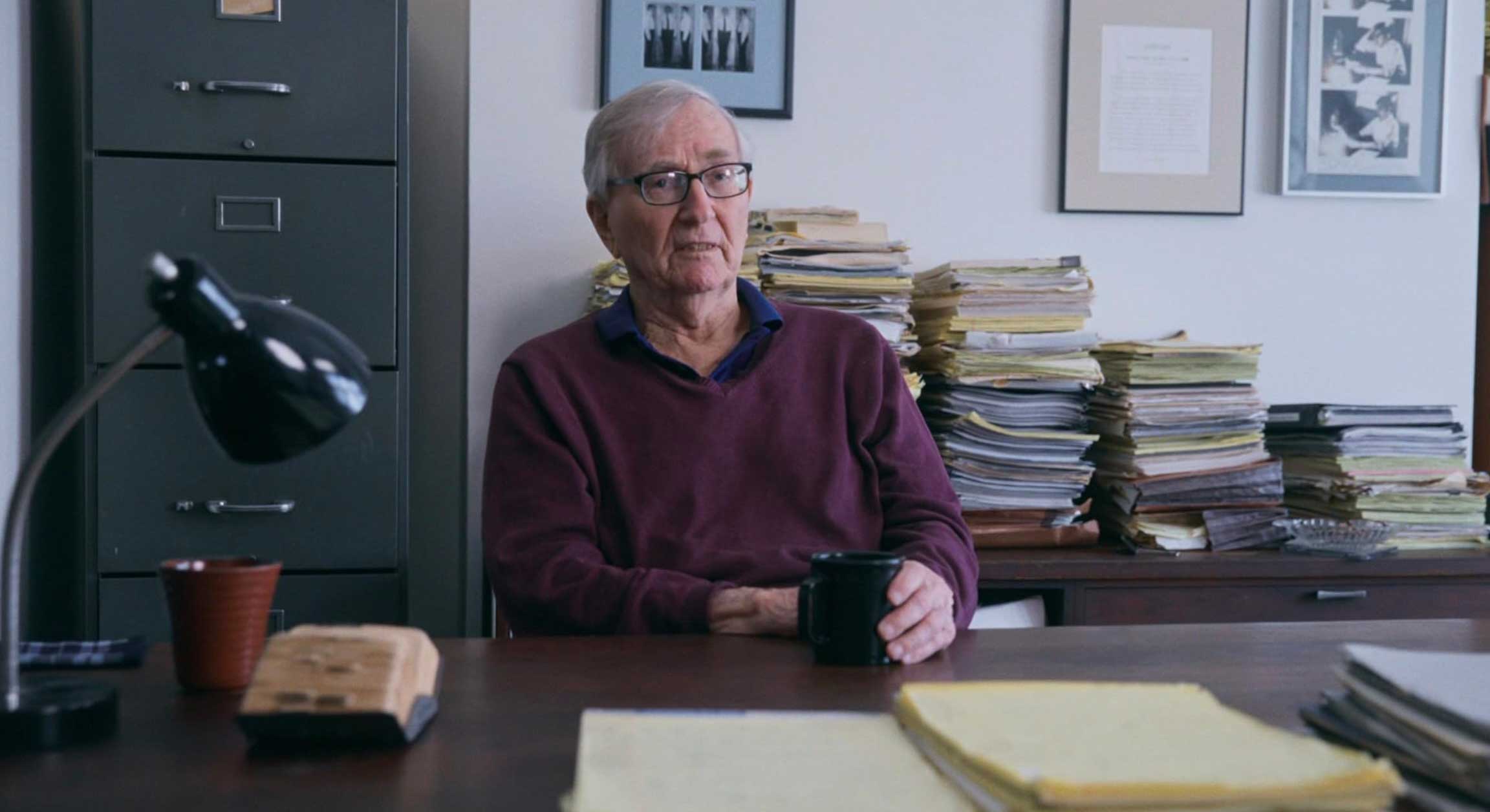
Any careful student of history will be little surprised by the week’s events. The American habit of occupying other countries is nothing new. It’s been happening for the better part of the 20th century in different parts of the globe including the Philippines, Nicaragua, Afghanistan, Iraq and now Venezuela. No one knows this better than journalist Seymour Hersh.
Over the course of his 60-year career, Hersh covered many of his country’s overt and covert campaigns, but one of his first entrées into U.S. government mendacity came about when he fell into the story of the My Lai massacre.
In 1968, the war in Vietnam was dragging on in spite of ongoing protests in the U.S. Even members of the American military referred to Vietnam as “murder incorporated.” At the time, young Hersh was hanging around the Pentagon, sniffing the air for stories and trying to make a go of a career as a writer.
The story of My Lai was initially reported in American newspapers in a tiny paragraph, buried deep amongst the back pages, but Hersh plunged after the story. The rest is history.
Over the course of her career as a documentary filmmaker, Laura Poitras has profiled a number of movers and shakers including Julian Assange and Edward Snowden. Cover-Up, Poitras’ deep dive into the life and work of Hersh, is similar in its exhaustive approach. It offers a look at the journalist’s biography and family history before settling into the events that would cement his reputation as a fearless chronicler of U.S. history.
An unlikely journalist
Hersh was an unlikely candidate to become an award-winning journalist. He was the son of immigrant parents who expected him to take over the family drycleaning business, and they deemed his twin brother the better fit for a college education. Hersh, with street smarts and a gift for gab, was supposed to run the family store. But a chance intervention from an English teacher sent the young man off to the University of Chicago.
As he recounts in the documentary, that one event essentially changed his life. In addition to meeting his wife at university, he found his calling. As he explains, initially he didn’t place a lot of value or import on writing; it was just a means of supporting his young family. After working his way up from mailroom to beat reporter at City News Bureau in Chicago, he was covering the Pentagon as a freelancer, when he received a tip about a mass killing of Vietnamese civilians.
On March 16, 1968, American soldiers had murdered, raped, and mutilated mostly women and children in the tiny village of My Lai.
Even close to 60 years later, the details are hard to take in — the level of brutality was so staggering. But My Lai was also not an isolated incident.
On the same day, similar acts of violence were taking place in other Vietnamese villages nearby. As Hersh explains in the documentary, even though he had a sense of the scope of the cover-up, he didn’t know how to find out the details. A hallway conversation with an army general at the Pentagon provided a name: Lt. William Laws Calley.
Hersh tracked Calley down, and in a conversation with the serviceman, witnessed the young soldier’s realization that he was about to be the fall guy for the massacre. Calley was eventually charged with 22 counts of premeditated murder, although he served less than a few months in prison.
It was another young infantryman, Paul Meadlo, who provided the full scope of what had taken place. As Hersh explains, it was Meadlo’s mother who gave the journalist the most telling sentence. When he tracked Meadlo down at a dilapidated farm near Terre Haute, Indiana, Hersh introduced himself and asked the elderly woman if he could speak to her son, to which she replied, “I sent them a good boy, they made him a murderer.”
Whistleblowers had tried with little success to bring the story to light. But as the film makes explicit, it wasn’t because My Lai was exceptional — it was in fact, the rule. The cover-up might very well have gone unnoticed but for Hersh’s undaunted commitment.
Struggles, failures and grim success
After being turned down by every major American newspaper, Hersh took the story to Dispatch News Service, where then-editor David Obst pitched his heart out, ensuring that it would be picked up in publications across the U.S.
CBS took notice and secured a televised interview with journalist Mike Wallace and Meadlo that arguably changed the course of the war effort in Vietnam.
Hersh’s coverage of My Lai secured him a Pulitzer Prize, but as he says, “It would have been impossible to screw up that story. All you had to do was get out of the way of the story.” My Lai set a pattern for the rest of Hersh’s career. His dogged-in-extremis tenacity resulted in some of the most influential investigative journalism of the 20th century.
In a series of filmed interviews, Poitras and her co-director Mark Obenhaus contend with the famously curmudgeonly writer, who threatens to quit the production despite the fact that Poitras had been in active pursuit of Hersh as documentary subject for over 20 years. The most telling argument originates over Hersh’s notebooks, filled with his crabbed, indecipherable script. As he explains, protecting his sources is the one thing he will not budge upon.
He is far more forthcoming about his own struggles and failures, some of which were epic. In addition to falling for a forger who offered access to a cache of fake letters from JFK to Marilyn Monroe, Hersh also famously underestimated the former Syrian president Bashar al-Assad, calling him an “okay guy” until it was revealed that Assad had in fact poisoned his own people with Sarin nerve gas.
But on the biggest of stories, however, Hersh was proven right. Over the course of his career, Hersh covered multiple cover-ups including the horrors perpetrated at the Abu Ghraib prison in Iraq. American soldiers torturing Iraqi prisoners and documenting their crimes in a series of infamous photos that included images of cheerfully grinning servicemen and women posing with the dead bodies of prisoners again came about in curious fashion.
A woman lent her laptop to her former daughter-in-law while she served in the Iraq war. When the deployment was over, the woman regained possession of her computer. “I noticed there was a lot of photographs on the laptop,” she said.
The woman contacted Hersh and gave him access to the photographs, which formed the basis of Hersh’s coverage in the New Yorker.
When Poitras asks if there would have been a story without the photographs, Hersh’s answer is immediate and absolute. “No.”
A portrait of relentless empathy
Cover-up is a classic documentary portrait, but there are odd undercurrents at work.
A large part of what enabled Hersh to do what he did was the media ecosystem of his time. Not only the friendly competition between the Washington Post and the New York Times over the Watergate story, but the courage of major networks like CBS. That world is now long gone. The unanimity of readership and arguably the level of public outrage have also been fractured into oblivion.
It is fascinating to witness Poitras push Hersh on certain aspects of his life’s work, revealing one of the unsung heroes of the story, namely Elizabeth Sarah Klein, the journalist’s wife of over 60 years.
While he was working on the My Lai story, he would call his wife from a phonebooth in tears, saying that he couldn’t go on. It was her measured yet implacable advice that afforded him the will to continue. “I married the right person who can calm me down and keep me from going into total despair because I was writing such terrible stuff.”
Pushing 90 years of age, Hersh is still writing. His Substack account is filled with coverage of recent events. It is hard to understand how someone who wrote about many of the darkest chapters of U.S. history — Vietnam, Watergate, Iraq — can hold out much hope, but as he quite rightly states by the film’s close, “You can’t just have a country that does it and looks the other way. If there’s any mantra to what I do, that’s it.”
The obvious question in watching a film like Cover-up is, where are the fearless journalists willing to dig deep, take risks to ensure that the truth emerges? In the past week, when the facts of what is taking place on the world stage have beggared belief, the necessity of an independent media world has come into explicit focus. But with corporations increasingly in control of the narrative, this is proving challenging, to put it mildly.
The greater lessons of history remain. Namely that the relationship between journalists and the greater public requires both to be paying close attention. But there is something even more critical beyond bare facts and current events.
At the very heart of Hersh’s work is a more profound truth. Namely that empathy, compassion and mercy should be foundational to the human enterprise. It is the most important part of a journalist’s job to remind us of this.
As Hersh wrote about My Lai: “Both the killer and the killed are victims in Vietnam; the peasant who is shot down for no reason and the G.I. who is taught, or comes to believe, that a Vietnamese life somehow has less meaning than his wife's, or his sister's, or his mother's.” ![[Tyee]](/design-article.thetyee.ca/ui/img/yellowblob.png)


Notice about commenting changes
The Tyee’s commenting system will be moving to a new platform on Nov. 12. If you’re already a Tyee commenter you must register with the new system on or after Nov. 12 with your preferred username.More information can be found here.