

 SHARE:

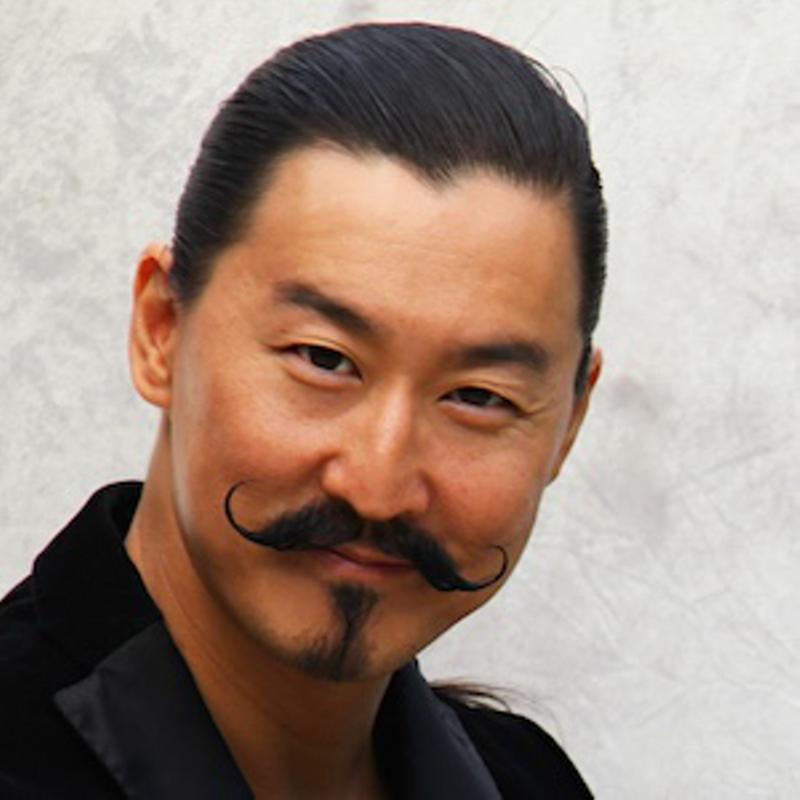
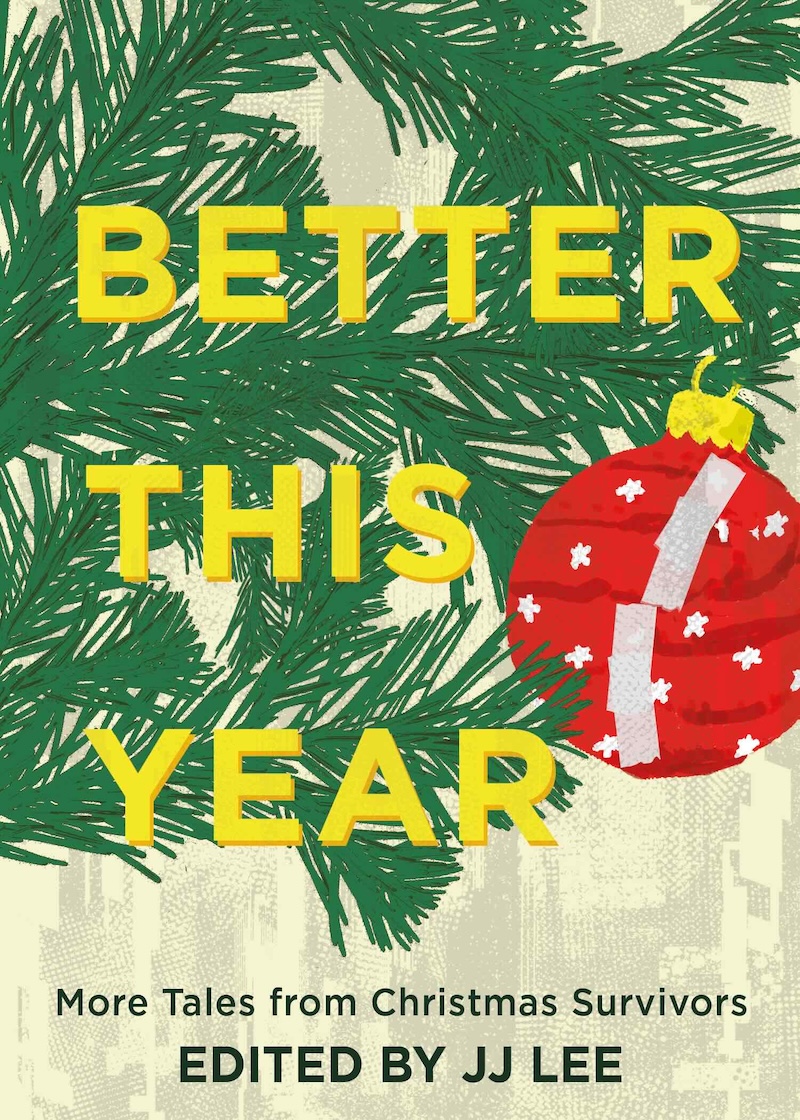
[Editor’s note: ‘Better This Year: More Tales from Christmas Survivors’ is a new essay collection edited by Vancouver author JJ Lee. The book showcases regional authors sharing true stories of memorable holiday seasons. This essay by Vancouver writer Tetsuro Shigematsu appears in the book as ‘The Heist.’]
What New Jersey was to New York, and what Oakland was to San Francisco, Surrey was to Vancouver: the suburb everyone else loved to hate. If Norman Rockwell had ever set out to paint a Canadian Christmas, Surrey would not have been the view through the frosted window.
Back in the day, Surrey’s most distinctive architectural landmark was the neon sign of the Flamingo Hotel on King George Highway, which drew biker gangs to its full-service strip club and bustling drug trade. The town’s contribution to fashion was the black- and red-checked flannel Mack jacket, a.k.a. the Surrey tuxedo. And the jokes. The endless, unfunny, inaccurate jokes. What does a girl from Surrey do in the morning? She goes home.
Still, for all its rough edges, the festive season in Surrey was nothing short of magical. I have warm memories of sitting on the orange shag carpet in my pyjamas, staring in wonder at the beauty of our fake pine tree from Sears. Under it sprouted a ziggurat of gifts wrapped in last year’s crinkled paper.
My twin sister, Hana, and I were born in England, but our time there was brief. Our parents concluded London was no place to raise five Asian children, so they emigrated to Canada.
In 1973, my father landed a job in Vancouver as an announcer-producer for Radio Canada International’s Japanese-language programs. It must have come with a decent salary but the number of presents in subsequent years had little to do with how much he made.
In fact, a public broadcaster’s wage doesn’t go very far with seven mouths to feed. There was my mom and my dad, my three older siblings, plus Hana and me. We had a household size that you might associate with Irish Catholics, but no, we were just Japanese Canadian Christians. Even within that small pond, we were a different species of fish. Unlike most other nikkei who became solidly middle class despite the setbacks of the Incarceration, my father often proclaimed with anti-capitalist pride, “We are living beneath the poverty line!”
Poor and proud, with a mountain of presents
Throughout my childhood I wondered why he took such masochistic pleasure in such declarations, and what invisible ruler he was using to measure us. Many years later, while doing graduate studies at the University of British Columbia, I discovered in their Rare Books and Special Collections room an archive of the radio programs my father produced in the ’70s and ’80s. As I looked through the liner notes, I noticed that the very subject, “Canadians Living Below the Poverty Line,” was covered in one of his programs, immortalized in six-inch black vinyl.
I also learned later that both my maternal and paternal grandfathers were card-carrying members of the Japanese Communist Party, which may make them sound like insurgent revolutionaries, but in reality they probably joined to impress the ladies.
But none of that explains the incongruities of my upbringing — that we were poor, proud, and nevertheless had a mountain of presents at Christmas.
Setsu, my older sister, could tell you that in Japanese culture there is the concept of 苦労 or kurou, which roughly translates as hardship, suffering, and toil, but in Japanese, the term also suggests that poverty can be an intentional way of living.
I once read about an old man in a village who was respected for his vast scholarly knowledge of poetry. He also happened to be dirt poor, but in pre-modern Japan, poverty was not a barrier to high social standing so long as a person’s intrinsic nobility outshone outward wealth. I suppose my father considered himself equally blessed with such impressive erudition and chose for us to be raised with premeditated poverty, kurou.
So when I share with you that as kids, we helped our mom and dad clean the offices of a businesswoman they knew from church, I trust you will appreciate their efforts at cultivating spiritual discipline. I grew up thinking that it was perfectly normal to spend an evening beneath commercial fluorescent lights vacuuming under people’s desks. Also, who gardens as a family in another person’s yard? We did.
‘Kurou’ in everyday life
My brother and sisters each took kurou forward in life in their own way. For example, Setsu is an academic and self-identifies as a Marxist feminist. She also has a big house in California and a cabin on Big Bear Lake, plus a boat that pulls her around on water-skis. In other words, she's against private property, unless it's lakefront.
Her boat’s name is “Dialectical Materialism” and it has leather seats. She once lectured me for 30 minutes about late-stage capitalism from her limited-edition Brookstone massage chair. Still, I love my big sister and I’ll give her this: her insights on our dad are illuminating.
Early on, Hana and I didn’t quite get it. As the youngest, it was too hard to navigate the rip currents of normalcy, pride, and shame that came with kurou.
Hana recalls that when we were 10, my mom announced that we weren’t going to have any meat for the next little while. Personally, I don’t have any recollection of Mom ever saying this, but I did notice that dinner tasted a lot like breakfast for a period of my childhood.
If you’re a bachelor like Jerry Seinfeld, eating a bowl of cereal any time of day is an assertion of the man-child’s prerogative, but if you’re an Asian kid getting served only scrambled eggs for supper over and over again, well, that can be unsettling.
It was during this period of particular austerity that Hana and I had a paper route delivering the Columbian and, after becoming so sick of eating eggs for dinner, took matters into our own hands.
Normally, we blew every cent we earned at the neighbourhood convenience store on 140th Street. We gorged on Fun Dip, Big League Chew, Nerds, gobstoppers, and Pop Rocks, but on one particular payday we walked an extra 10 feet past the junk food displays to the back of the store where they kept the big coolers. Mr. Lee must have thought it was a little strange to see little Hana and Hugh (I went by my English middle name back then) not buying candy for once.
It was strange for us too, marching to the back, looking through the refrigerator glass, surveying what could not have been a broad selection, and spotting the package of meat we hadn’t personally eaten before. Yet we unmistakably recognized it as precisely the kind of protein beautiful white people consumed on TV. And as twins do, with one mind, we grabbed that cold slab encased in see-through plastic.
Our little fingers indented the flesh as we tried to snatch it from each other. And what exactly did we slap on Mr. Lee’s counter? Bacon. We had no idea there was such a thing as breakfast meat.
Hana and I rode home beaming. We didn’t expect a ticker tape parade, but we were anticipating some form of affirmation, like when we first announced we got a paper route. But when we showed off our contribution to the family larder, everyone got really mad at us with an intensity we never experienced before or since. My dad’s expression darkened and he left the room. No one explained. Our older brother, Ken, simply said, “You shouldn’t have done that. Don’t ever do that again.”
Yet, the Shigematsus, under other circumstances, weren’t above taking a helping hand. Our family once received a cardboard box filled with non-perishable food from our church. Unlike the bacon, my father seemed simply fascinated by the bounty, just like the rest of us. He marvelled at this strange Canadian custom. Maybe he was simply too fresh off the boat, saw the free groceries and thought, “Oh, brave new world!”
I reached into the box and pulled out one can. “What is this?” The label suggested pure ambrosia, food of the gods, the most exotic thing I had ever seen. In the bowl, on the spoon, were bright baubles, like Mother Nature’s jewelry.
Later on, I figured out it was a Del Monte Fruit Salad, but I never got to taste it. At the top of my list of suspects was Setsu, the one sibling who possessed the focus and rapacity to enact the childhood version of manifest destiny. To this day, I believe that in the dead of night she probably snuck into the pantry, absconded with the can and enjoyed every last morsel in the privacy of her bedroom.
Which brings me back to the mirage, that cornucopia of gifts beneath the tree. It was an optical illusion based on our clandestine version of three-card monte.
Around late November, each kid would identify the prized possessions of their siblings, then snatch it away and hide it for a few weeks. Once last year’s gift paper came out, we wrapped and placed the purloined bounty at the base of the artificial pine.
For example, Rié, the eldest, had a precious hair dryer so important for keeping that feathered look in the ’80s. It inexplicably went missing sometime in November, and so when it came time for her to unwrap her so-called present, she was truly shocked.
Of course, there would be shouts of protest, but any feelings of outrage would be eclipsed by the bliss of being reunited with the very possession that had been missing for so long.
It was our very own version of a Ponzi scheme. We robbed Peter to pay Peter. We made something out of nothing.
I should say, before anyone calls child services, that Hana and I, as the youngest, did actually receive new gifts. When no one was looking, I would gently shake mine, illicitly fingering the Scotch Tape, trying to figure out what mysteries were inside. So that’s why for me, Christmas remains idyllic.
Throughout my childhood and teen years, we never had a new car, or a nice home, but we compensated. We made do. That dreamy mirage of abundance still lives in me.

‘How many evergreens did you need in your life?’
Now that I’m a father, I understand how much work, misdirection, and sleight of hand are required to create a sense of wonder in a child. With my own daughter, Mika, and son, Taizo, I did my best to spare them the indignities of being poor, not through my own industry and financial savvy, but by taking on a stupid amount of credit card debt and student loans. It kind of worked.
I once overheard Taizo chatting with his considerably wealthier cousins in Southern California. Taizo enumerated all the gifts he had just received for the holidays, sliding in a couple of items given to his sister Mika. It was a benign, reflexive annexation that caused no one any harm, but it gave me pause. It made me realize I hadn’t fully shielded him from the injuries of poverty, the ones I didn’t even realize he had sustained until he boasted to his cousins. I glimpsed him swerving around a potentially awkward moment — not enough presents — smoothly and unconsciously, but I felt it.
When I was 18, my family moved to Montreal, specifically the Anglo enclave of Pointe Claire, that part of the West Island along the St. Lawrence River, where preppies docked their sailboats in the marinas. You would think the Shigematsu kids, who were now all university students living with our parents in this leafy suburb, would be long past believing that what happened on Dec. 25 could make up for any privation we experienced earlier in our lives, or that the day actually mattered, which I believed then it did not.
We were in that liminal borderlands of life where the Three Wisemen were replaced by Snow White’s Lazy, Heedless, and Procrastination. We were, more or less, sleepwalking through the holidays.
Our dad believed it was his civic duty to hang lights outside the house, but we didn’t bother putting up stockings for Santa to fill. As for the tree, the Sears pine had been left behind in a Surrey landfill, so it fell to the kids to get a new one.
Now that we would be spending our own money instead of our parents’, we got cheap about it. We figured prices would drop as the days counted down and that it would be best to wait. We would time our purchase like stock market geniuses.
On Christmas Eve, I had visited my girlfriend’s family, and they handed me wrapped gifts from beneath their own tree, a sparse specimen with charmingly tacky ornaments. Admittedly, I got that feeling, that hit; my halls were decked.
I had thought I was good. As a cynical art student, I was also keenly aware that retailers did a huge chunk of their annual sales at the end of the year, and what was the negative space beneath the tree but capitalism’s not-so-subtle coercion to empty your wallet to fill that gap?
How many evergreens did you need in your life? By clearcutting my life of useless conifers, I was making space for my own version of kurou to take root.
But when I arrived home, I remember looking into the corner of the living room and seeing a small pile of packages. Without a tree, it looked like a mess, a pile of laundry on the floor.
I realized then that you’re part of a new version of your family every year even though the changes are so incremental you rarely notice, but in that instance I was confronted by this new barren reality, and I hated it.
This was not a good change. I wanted things to go back to the way they were.
For years, I sat under a fake tree looking at a mountain of ersatz presents, a thin spectacle devoid of substance, but now that I was upon the cusp of saying goodbye to it, it never felt more real.
Somehow staring at the emptiness of the corner of the living room felt like every kid’s worst nightmare that hopefully never comes true — Christmas cancelled.
Because the sun sets so early during Montreal winter evenings, it’s easy to lose track of time, and lose the day. After spending all of it being temporally unmoored, wandering about distracting ourselves, Setsu, Hana, and I convened in the treeless parlour and began to fret. It was about 8 at night.
“What about Canadian Tire?”
“Closed.”
“I saw a bunch of trees behind Provigo.”
“That’s landscaping.”
“What if we just... didn’t have a tree?”
That suggestion was met with such silence I could hear the baseboard heater ticking. One day we might skip the tree, but not tonight. We weren’t ready to let go of our flawed childhoods just yet. For once there was no blame or finger-pointing.
Together we were one big failure, but we weren’t ready to surrender. Still, every option was bad. Every store was closed. Every plan was stupid.
My dad was probably in his office reading his newspapers. My mom would have been in the kitchen. Both of them completely oblivious to their children’s turmoil.
Then Setsu said, “What about Pointe-Claire Plaza?”
She said it like someone asking if the vault at the Bellagio still had a night guard. That was the moment it stopped being a discussion and started becoming a plan.
Pointe-Claire Plaza was a strip mall only a five-minute drive from our house. It had shops, a grocery store, and at the very far end, a yearly pop-up tree lot. It had been there for weeks, and every time we drove past, we had glanced at it and thought, “Not yet.”
Setsu’s suggestion hung in the air of the living room.
We all knew what she meant. When we met back in the living room five minutes later, we were all dressed head to toe in black.
The heist
It was -23 C. The streets were empty. Light flurries threatened to swell into a full-blown storm. Hana drove. Setsu rode shotgun. I sat in the back of our parents’ burgundy Honda Civic. Without speaking a word to each other, we circled the mall, which was devoid of parked cars. We were casing the joint.
The tree lot wasn’t large, but it looked secure. The evergreen orphans that would never be feted were imprisoned behind nine-foot chain-link fencing. Snow had blown up against the base of the fence, forming uneven drifts. On the north side was the exterior wall of the plaza itself. On the south, a service road, Avenue Donegani. No movement. No cameras. Just silence and cold.
Hana parked alongside the tree lot. Setsu shifted in her seat. Just like when we were little kids, she was in charge, which made sense. She was the athletic, bossy sister who always got what she wanted, so we would look to her to execute the actual theft.
Hana was the kindest, least criminal-minded of the Shigematsu siblings. So naturally, that made her the designated getaway driver. That left me as a non-playable character.
Setsu spoke quietly.
“OK, listen up, Hana. Keep the engine running. Lights off. No music. No movement. You don’t look at anything except the rear-view and your mirrors. You see a cop, you don’t panic. You breathe. You don’t act. You wait for me. This is a Honda Civic. This engine has no power, but it’s light, and if I tell you to move, you feather it. No peel out, no drama. You’re not a getaway driver. You’re just a girl heading home to wrap presents. Now hear this, this is not about a tree. It’s about how we move. You stay clean, I stay clean. You get twitchy, we get seen. If I come back with nothing, we go. If I come back with the tree, we go. If I come back running, you put it in gear and go. You don’t wait for instructions. You just drive. This is a quiet job. No heroics. No improvising. And no talking unless it’s worth the time it takes to say it. You’re my sister. That’s why I trust you. But trust isn’t enough. You gotta focus. You gotta mean it. Let’s get to work.”
“What about me?” I said, anxious to move beyond my NPC status.
Setsu sighed with irritation. “You’re the lookout. That doesn’t mean you stand there like a lump on a log. It means you’re the first line of defence between me and losing my scholarship. Between this car and a cruiser. Between a quiet job and a blown one. You screw this up, we all go down. So don’t screw it up. Your eyes, not your mouth, stay open. You keep your head on a swivel. You watch the lot entrance. You see anyone walking toward this car who doesn’t look like they belong here, you say something. This is your post. Hold it. And don’t let me down. This isn’t a tree job. This is timing. This is control. This is the kind of thing we don’t talk about after — we carry it. Let’s go steal Christmas.”
OK, now did Setsu really say exactly that? I am going to say yes. And for my money, it belongs up there with the greatest speeches ever given, King Henry V on Saint Crispin’s, Sir Winston Churchill vowing to never surrender, and Pacino, Any Given Sunday.
Setsu and I left the warm safety of the Honda and walked across the crunchy grey snow of the parking lot. We were actually doing this. I don’t know why I was so nervous; I was just the lookout.
Setsu began climbing the fence effortlessly, the way normal people bound up a staircase. In less than a minute, she was up and over and disappearing into the rows of bound trees.
I kept watch. There was no movement from inside the perimeter. The trees stood silently, row after row of ghostly green shapes. I strained to hear Setsu’s movements, but I heard nothing.
She was taking way too long. I kept looking for her silhouette, her shadow, any hint she was coming back. I imagined her slipping on a patch of ice, spraining her ankle, getting stuck under a fallen stack of trees. I took a step toward the fence. Then another. And then stopped. If I went in after her, I’d only make it worse. Hana would be by herself. I couldn’t do that to her. That’s what I told myself.
The Honda Civic purred. And a thought occurred to me that had not before. Where were we supposed to fit the tree? We didn’t have any straps for the roof. The trunk was too small and filled with crap. That left the back seat. I guessed I could have it across my lap. We didn’t think this through.
I looked up at the clouds. If I could’ve looked past the overcast skies of time, I would have seen the middle-aged version of myself peering down at my twin sister Hana in the little Honda Civic, my big sister Setsu wandering through a maze of trees, and I would feel a little sorry for this younger version of myself.
Over the decades, my sisters would weave their lives together, while I observed them from an increasing distance. The gap between us widened until I could not cross it.
Eventually, I would know them only through photographs and captions on screen. If I were willing to violate the time traveller’s rule of non-intervention, I would whisper to that teenage boy, “Enjoy this moment, because you will never again be as close to your sisters as you are tonight.”
After all, when have three siblings with so much intelligence, education, and privilege ever been so united in purpose and criminal stupidity? I added this thought to the pile of useless gifts that lay bare on the floor.
Something caught my eye. A light flicked on from a second-floor window. And then — movement. A hand. Red mitten. It smudged across the condensation like a character in a horror movie wiping furiously trying to see.
My heart began to pound.
I whispered as loudly as I could, “Setsu, we’ve been blown!”
‘Who the hell works on Christmas Eve?’
The hand kept wiping. Then the person in the window pulled back. Were they calling someone? Were they writing down the plate? Were they unleashing the hounds? I felt every single second stretch as I backed toward the car.
Setsu sprinted out from the shadows and crashed through a wall of trees. She saw me. I saw her. Instead of climbing the fence nearest our car, we sprinted south, running away from the security monster in the window. Me outside the fence, her on the inside, moving in parallel south towards Avenue Donegani. I could hear Hana behind putting the car into gear, catching up, matching our speed.
Setsu must have been looking at us instead of ahead because she slammed full speed into the chain-link like a professional wrestler slamming into the ropes. The fence rattled violently. She staggered, caught her balance, and began climbing faster than a monkey. At the top, instead of swinging a leg over, she reached down and grabbed the fence, down low just above her feet, and flipped her body over the top. She was a volleyball player, and apparently a gymnast.
I would have loved to watch her final dismount, but I was already in the Civic’s back seat. Hana took the parking lot exit and then turned hard left onto the service road. I opened the back door. Setsu somehow dove into our moving car and fell onto the seat beside me. Against Setsu’s very clear instructions, Hana stepped on the gas and fishtailed down the service road.
We were all shouting over one other, breathlessly giving our own version of what just happened. No one was listening.
“Did you see that guy in the window?”
“Who the hell works on Christmas Eve?”
“What were you doing in there?”
“Finding the best tree!”
We shouted incoherently. No one listened, but every version of the story was true.
We laughed until we cried. We attempted to save Christmas, but we failed, and in that failure, there was no judgment, no recrimination, no shaming, no moralizing, no punishment, no consequences. No tree.
But in the Shigematsu family history, Dec. 24, 1990, will be half remembered as the night we nearly stole Christmas — and nearly proved to be more than enough.
Excerpted from ‘Better This Year: More Tales of Christmas Survivors,’ edited by JJ Lee. Copyright 2025 JJ Lee. Published by Tidewater Press. Excerpted by arrangement with the publisher. All rights reserved. ![[Tyee]](/design-article.thetyee.ca/ui/img/yellowblob.png)






Notice about commenting changes
The Tyee’s commenting system will be moving to a new platform on Nov. 12. If you’re already a Tyee commenter you must register with the new system on or after Nov. 12 with your preferred username.More information can be found here.