

 SHARE:
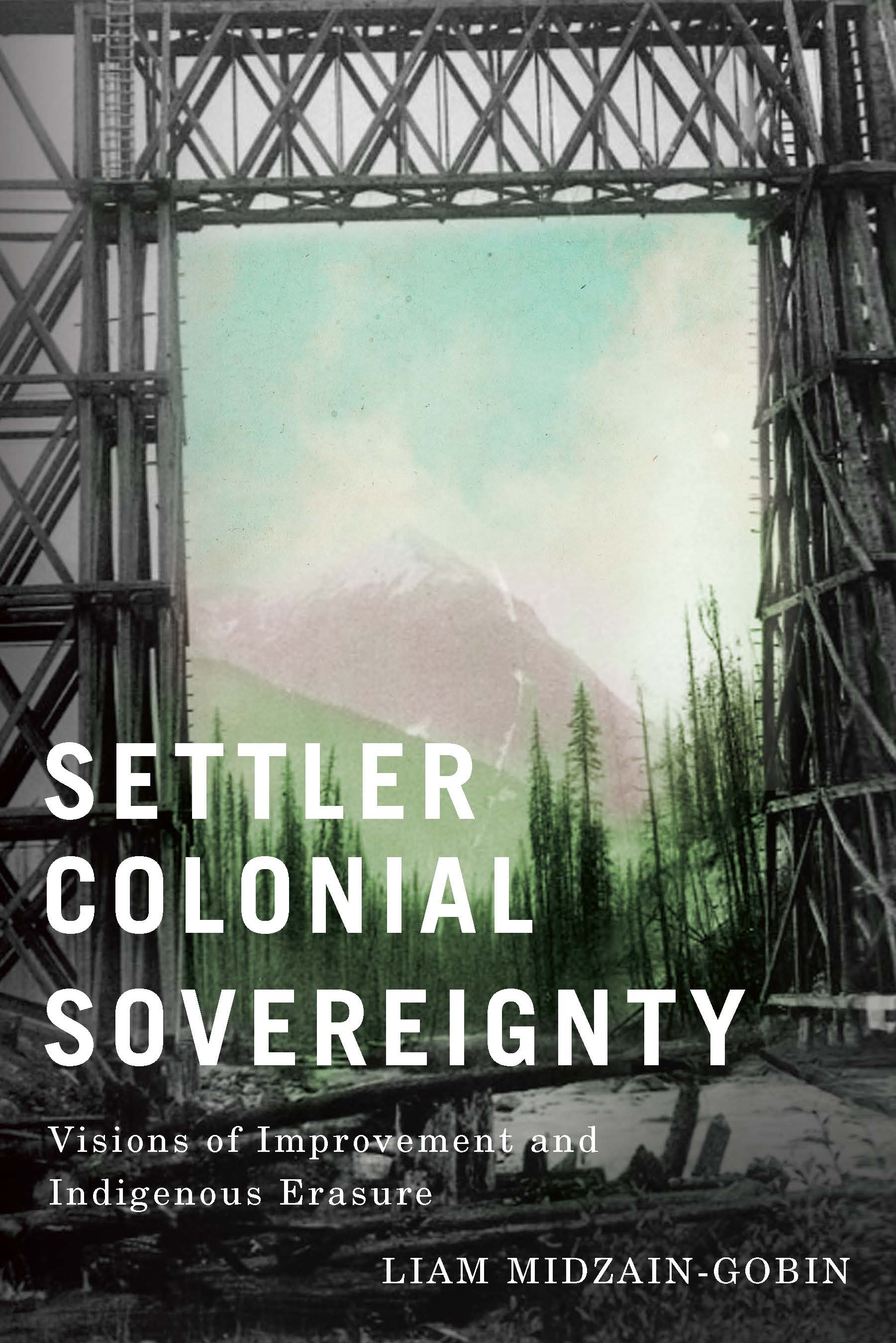
Settler Colonial Sovereignty: Visions of Improvement and Indigenous Erasure
Liam Midzain-Gobin
McGill-Queen’s University Press (2025)
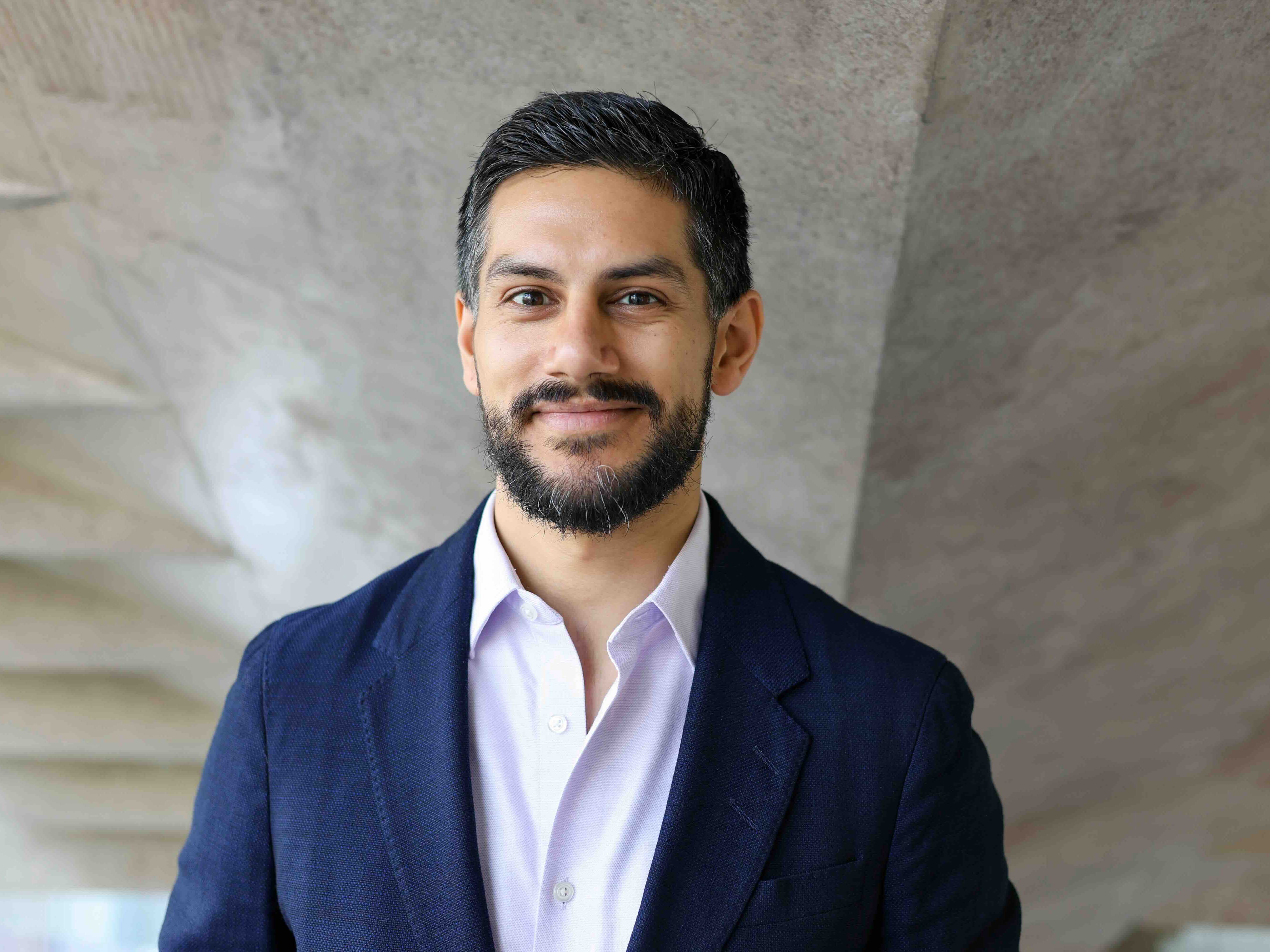
Liam Midzain-Gobin is an associate professor of political science at Brock University in St. Catharines, ON.
On the back of his recently-published first book, it’s assistant professor. But don’t be misled. As Settler Colonial Sovereignty: Visions of Improvement and Indigenous Erasure went to print this year, he got tenure.
“It was just late enough that I couldn't change the jacket,” said the newly-promoted political scientist, laughing.
A scholar of settler-colonial studies and settler-colonial states, such as Canada, Midzain-Gobin is focused on questions of sovereignty. How is it justified? How is it reified? In part, by imposing a new way of seeing the world, Midzain-Gobin argues in Settler Colonial Sovereignty, a heady and high-concept challenge to the notion of what he calls “settler common sense.”
In this dizzying, dense, but surprisingly easy-to-follow debut, Midzain-Gobin exposes the violence of settler-colonial worldmaking, deconstructs the logic of improvement and assails the hegemonic narrative — or ‘hegemonologue’ — that settlers have imposed to overwrite, and thus erase, non-Western ways of knowing and understanding the natural world.
What do we lose when we centre dominion and power instead of relation to people and land?
“There’s this sense that Canada owns this land, that this land is Canada, that it’s ours to do what we want,” Midzain-Gobin told The Tyee. “And I think that question — is it dominion, or is it relation — ends up being that dividing line between possessiveness and a much more harmonious existence.”
This interview has been edited for length and clarity.
The Tyee: It seems to me that much of the work within settler-colonial critical theory is developing the discourse. Building the language. This book introduced me to so many phrases: Imaginative geography. Grounded normativity. But my favourite new word is ‘hegemonologue.’ Can you explain to Tyee readers what it means?
Liam Midzain-Gobin: It’s a hegemonic monologue. Sort of an overarching narrative, at least in the way that I’m using it in the book, that doesn’t really take anything else in. It’s the focus on improvement — this notion that the land needs to be improved, and Indigenous people don't know what they’re doing with it, so it’s up to settlers and non-Indigenous people to come in and make it better. So the reason I call it a hegemonologue is that it’s a specific narrative, a specific way of looking at the world, that doesn’t conceive of its own incorrectness.
It’s a particular way of thinking about the world and understanding our relationships within it. The hegemonologue is all-encompassing. It’s all-enveloping. It doesn’t really allow for another space, or for a different story to be told.
I hate to focus on one word when you published a whole book, but hegemonologue is a banger. It went straight into my vocabulary. I’ve started using it in casual conversation, and honestly, the response has been wild.
I need to hear about this.
So I used it in a speech last week without defining it, and several people were intrigued enough to ask about it afterward. The next night, I was part of a panel put on by UBC Canadian English Lab. I said it there too, in a roomful of linguists, and I watched their eyes light up. They’ve since determined that it's a Type 1 Canadianism — a word that originated here — and added it to the Dictionary on Canadianisms and Historical Principles.
I’m gonna have to tell [J. Marshall Beier] about this!
That’s the political scientist who coined the term.
As far as I can tell. His work is where I first encountered it. His book is in my office.
Did it jump out to you the way it jumped out to me?
It clicked. It helped me understand how these stories that we tell ourselves just kind of become common sense. That’s the way that I saw him use it, but within international relations.
In Settler Colonial Sovereignty, the word does a lot of heavy lifting, especially as you lay out the imposition of a colonial worldview, a settler cosmology, and the policies that spin out from the hegemonologue.
A lot of this goes back to this first field work trip that I took as a doctoral student. I showed up in northern B.C. in this decolonial action camp, in a space where nothing is really talked about in the way I was familiar with. I was totally thrown for a loop. It’s this connection with the spiritual and natural world — the waters, plants, animals — that, I think, completely gets lost in the dominant narrative.
That sense of relationality. When you start to push that away, you get a certain kind of policy that comes from our sense of ourselves as owning everything, as having the right to decide what happens to the earth. That really threw me. I was in an imaginative space that was totally different from what I was used to. It took a lot of reflection and work on my part to figure out: how do I do my job in this new context? This book is kind of the result of that.
As settlers, we don't realize how much we’ve internalized an imposed narrative until we’re outside of it. For example, early in the book you gave me pause when you described the relationships between First Nations as international. My first thought was: wait a minute, that's not what that word is for. But of course it is.
It seems strange to people, especially within Canada, when I tell them I’m an international studies scholar, but I look at Indigeneity. They’re like, 'but you do Canadian politics.' Actually, no, I don't. Of course you have to think of them as international. These are different nations. They have different governing practices. They have different understandings of their own relationships, their territory and themselves.
Colonialism takes work. It’s ongoing. That’s one thing your book made very clear. “Sovereignty is not fixed,” you write, “but arises out of a continual construction and reconstruction.” It’s interesting. If it was really the natural order of things, it wouldn’t need to be constantly reified. But it does. How does that happen? How is settler sovereignty reproduced?
My answer in the book is through knowledge, but I think it’s through that story that we tell ourselves, and the work we do to actually ignore, forget and try to erase those Indigenous ways of relating to the world.
As you point out, a lot of that work is actually quite reductive. My favorite example was the discussion of how the government determined ownership of land. Is anyone living on it? Is it in continuous use? Does it have a fence?
Fencing! And that’s everywhere in the world.
It’s the cartographical equivalent of: is a hot dog a sandwich?
We get to the point where I'm sitting in the B.C. archives, unfolding these table-sized graphs of little numbers: How many fences there are, how many cattle there are, how much land is timber. Part of why it’s reductive is because the way that they had to govern, the way they had to think of the land, sitting around the table in the Belmont Hotel in Victoria, just through these numbers. You see that, and then you see the richness of what comes out of some of the discussions that these First Nations leaders and community folks have about what these territories mean. And all of that just gets lost.
Yeah, and it really belies the idea that our impositions and incursions into these nations are improvement, a word that you come back to again and again. How does the concept of improvement power settler colonialism?
In this case, improvement is really just making sure that Indigenous Peoples, First Nations mostly, but Indigenous peoples broadly, live in a European or Western or Canadian lifestyle. Do they go to church? Do they go to school? Do they live in a settled community? Do they farm? Do they have a fence?
That is the view of improvement when you can kind of enter settler or Canadian society [on their terms]. What that ignores is the fact that all of these communities worked with their surroundings, their territories, the lands they were in relation with, to improve them, to increase yields, to have the rivers be healthy for the fish, to be able to come back. So there was all of this work that went into it. But the work, in this case, is always seen as agriculture, as building specific types of buildings, as clearing forests.
I was really fascinated by your discussion of data collection as it relates to the hegemonologue and the settler colonial logic of improvement. My question is actually your question from that section of the book: “Should we understand data to be a colonial tool useful to contemporary settler governments as they seek to continually create the conditions for the reproduction of settler colonial sovereignty and colonialism?”
I think so. The tension here is that we should when it’s done in that way. But as a settler, one of the things that I try not to do is [frame] colonialism and colonization as this totalizing force. Because I think it’s really important for us to remember that, yes, the purpose of it was to destroy. The purpose was to completely assimilate Indigenous peoples into Canada. But they haven’t. That project has failed, and that’s part of why there's this underlying insecurity on the part of the settler state.
Data highlights both sides of that. On the one hand, when you’re looking over the kind of data that governments use to make their own decisions — the Indigenous Peoples Survey that I look at in the book, or the allotment of reserves with the McKenna–McBride Royal Commission — there's this huge amount of data created that comes from that settler way of understanding our relationship to the world. So in that case, it’s definitely colonial, and we should definitely have problems with that.
At the same time, Chris Anderson and Maggie Walter have this wonderful book about Indigenous statistics discussing how, if you’re actually writing from Indigenous ways of knowing and Indigenous ways of thinking, statistics can be an incredibly powerful thing for communities to know about themselves, and build solutions for themselves. I don’t want to say data is totally neutral. On the one hand, yes, it can be used in these colonial ways. On the other hand, when we do it right, it can be really empowering for communities. And I think that can be lost amidst the colonialism of it all.
Inclusion seems to work the same way. At one point, you touch on the policy pivot from “colonial exclusion” to “colonial inclusion,” and boy, does the modifier colonial change what comes after. In this context, one wonders: is inclusion just the Canadian word for assimilation?
I think problems arise when we start to ask: on whose terms is inclusion being offered? When it's done in service of a project of dispossession, or when it’s done without the possibility of saying no, or changing how that inclusion is meant to take place, that becomes an issue. I get why you’d want to be there, but what are the conditions in which you’re there? I think suspicion there is, is warranted, to say the least.
Reading the book, I found myself wondering how we fix this, and imagining how to intervene, so as to make things better for Indigenous communities. It occurred to me at some point that I was falling right back into the trap of improvement. And then you addressed that! “My position as a settler means that the answers are not for me to provide, lest I fall into the trap of crafting my own redemptive narrative.”
Especially as an academic, I’m supposed to have the answers. But it’s not my answer to give. When we talk about the hegemonologue, part of my job is to do the critique, and part of my job is to figure out how I take the resources and skills I have to support communities in doing the work they want done.
Just because the answers aren’t mine to give doesn’t mean they’re not out there. ![[Tyee]](/design-article.thetyee.ca/ui/img/yellowblob.png)
Read more: Indigenous, Books, Media











Notice about commenting changes
The Tyee’s commenting system will be moving to a new platform on Nov. 12. If you’re already a Tyee commenter you must register with the new system on or after Nov. 12 with your preferred username.More information can be found here.