


 SHARE:
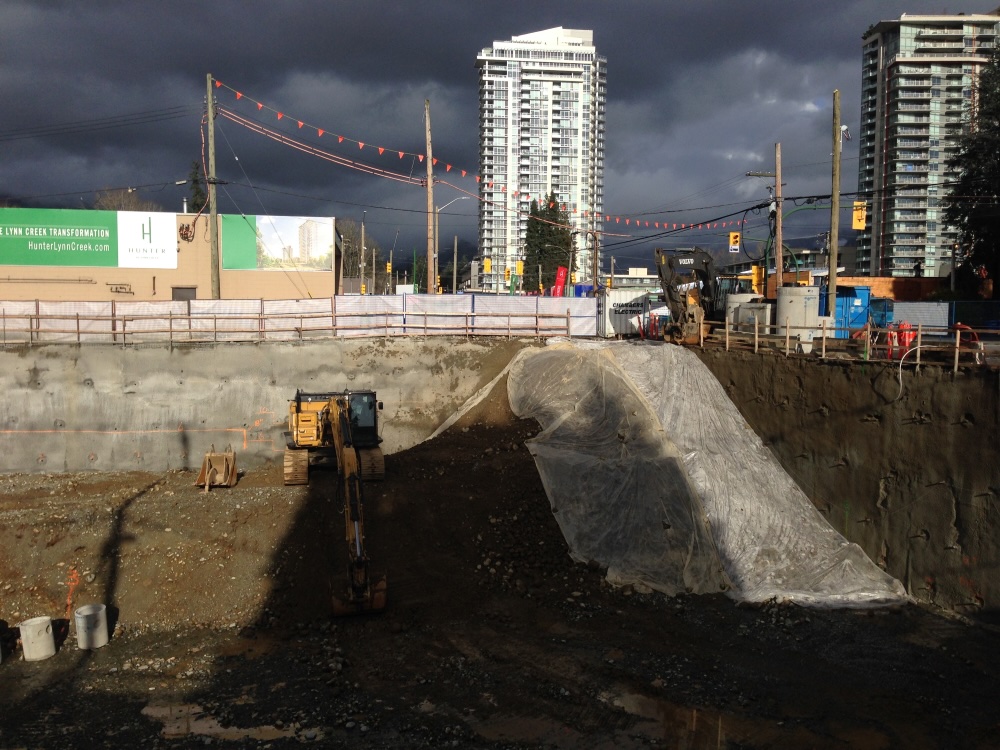
There’s been a lot of attention given to B.C.’s $1.4 billion “condo bailout” — plans to spend public money to purchase unsold condominium units to turn them into affordable housing.
But a far larger and more damaging giveaway has slipped through with little scrutiny.
Provincial and federal governments have ponied up another $3.2 billion to cover half of the “development charges” normally paid by B.C. developers.
Local officials in Burnaby and Vancouver have gone even further by reducing or eliminating affordable housing agreements, in many cases to zero.
These moves are presented as essential medicine to restart construction and deliver affordability. They are nothing of the sort. They constitute a direct subsidy to developers and a protective shield for land speculators who locked in elevated gains when the market was white hot.
Development charges exist for a simple reason: new residents require new roads, sewers, water systems, parks and transit. Those who profit from building should help pay for the infrastructure their projects demand. This has been the normal way development has proceeded for decades. Absorbing these charges shifts the cost onto existing taxpayers or forces municipalities to defer maintenance and expansion.
Importantly, development charges do not add to final home prices as some contend. They are paid out of the “land price residual” — the amount a developer can afford to pay for the land after construction costs and a reasonable developer profit are subtracted. Reducing or eliminating development charges simply increases what developers can bid for land, delivering a direct subsidy to whoever sold the parcel to the development corporation who builds the building.
Burnaby and Vancouver are removing another powerful lever for maintaining affordability by removing inclusionary zoning, which requires some percentage of below market units within projects. Imperfect as it’s been, this was one of the few mechanisms that required new market projects to deliver a share of somewhat more affordable units. Neutering that obligation means new higher density projects can be built with no requirement to house anyone but those who can pay top dollar.
Proponents insist these reductions will lower the cost of building and therefore the price of housing. This claim collapses under examination of how urban land markets actually work.
Rewarding the speculators
Land does not behave like other commodities. If you take a parcel of land and permit denser building upon it, or reduce fees attached, or relax public obligations for how it is used, its value does change. It tends to rise. Land speculators are willing to pay more for the land because of its new potential. That doesn’t necessarily deliver more savings to whoever lives in what’s built on that parcel.
In a down market like today’s, speculators who bought parcels years ago, when prices reflected the widespread expectation of big profits under boom-era conditions, will be the beneficiaries of the new government subsidies and dropped affordable housing requirements. All that’s accomplished is that yesterday’s speculators now see their positions secured, paid for, in effect, by the public.
If the past is any guide, the government’s attempt to lower development costs will be for nought as land prices rise to neutralize the supposed cost savings. New units will remain expensive and the gap between housing costs and local incomes widens.
Developers will still make their margins. Land speculators will collect their unearned gains. Ordinary households see little relief.
The condo inventory problem that Vancouver, Toronto and other cities face itself is largely a symptom of this speculative dynamic. Too many units were financed and marketed on the assumption that prices would keep climbing forever. Buying up some of that inventory may provide short-term relief for a few residents, but it does nothing to change the underlying rules that reward speculation over stable, affordable supply.
Do this instead
If the goal is more affordable housing, the three levels of government should try very different policies. Increased density or reduced charges should be granted only in exchange for substantial, permanent affordability — through strong inclusionary requirements, public land trusts or direct capture of land lift to fund non-market housing.
We have tried the supply-only, deregulation-first approach for years. It has produced record construction in some periods and record unaffordability in the same places. The dirt under the building continues to inflate faster than incomes. Halving development charges and gutting inclusionary zoning will not break that cycle. It will merely subsidize and protect the participants who have profited most from it.
True progress requires confronting the land market directly. Until we do, every new concession framed as “helping affordability” will continue to function as a transfer from the public to those who already own the most valuable asset in our cities: the land itself. ![[Tyee]](/design-article.thetyee.ca/ui/img/yellowblob.png)
Read more: Housing












Tyee Commenting Guidelines
Please note that email notifications for replies are not currently working due to a software issue which may be resolved in a future update.
Comments that violate guidelines risk being deleted, and violations may result in a temporary or permanent user ban. Maintain the spirit of good conversation to stay in the discussion and be patient with moderators. Comments are reviewed regularly but not in real time.
Do:
Do not: