


 SHARE:
The turn of the millennium doesn’t seem all that long ago. But it’s been a quarter-century since the Whistler Film Festival threw open its doors and invited the world for a bevy of films, industry events, parties and a wee bit of skiing, if you could fit it in.
My son Louis was still a toddler when I attended my first Whistler festival. The idea that I would be gone, if only for a few days, brought on soul-shattering tears and a dramatic announcement that he wouldn’t have a mother anymore because I had gone to “Whis-a-lerrrr.” I still pronounce it like that in my head.
Louis is now 24 years old. So maybe it was a long time ago! But the festival is looking bright and shiny this year on its 25th anniversary. It’s chock-a-block with films drawn both from the international circuit as well more home-grown varieties.
In the opening-night film, a glorious reunion of comedy greats
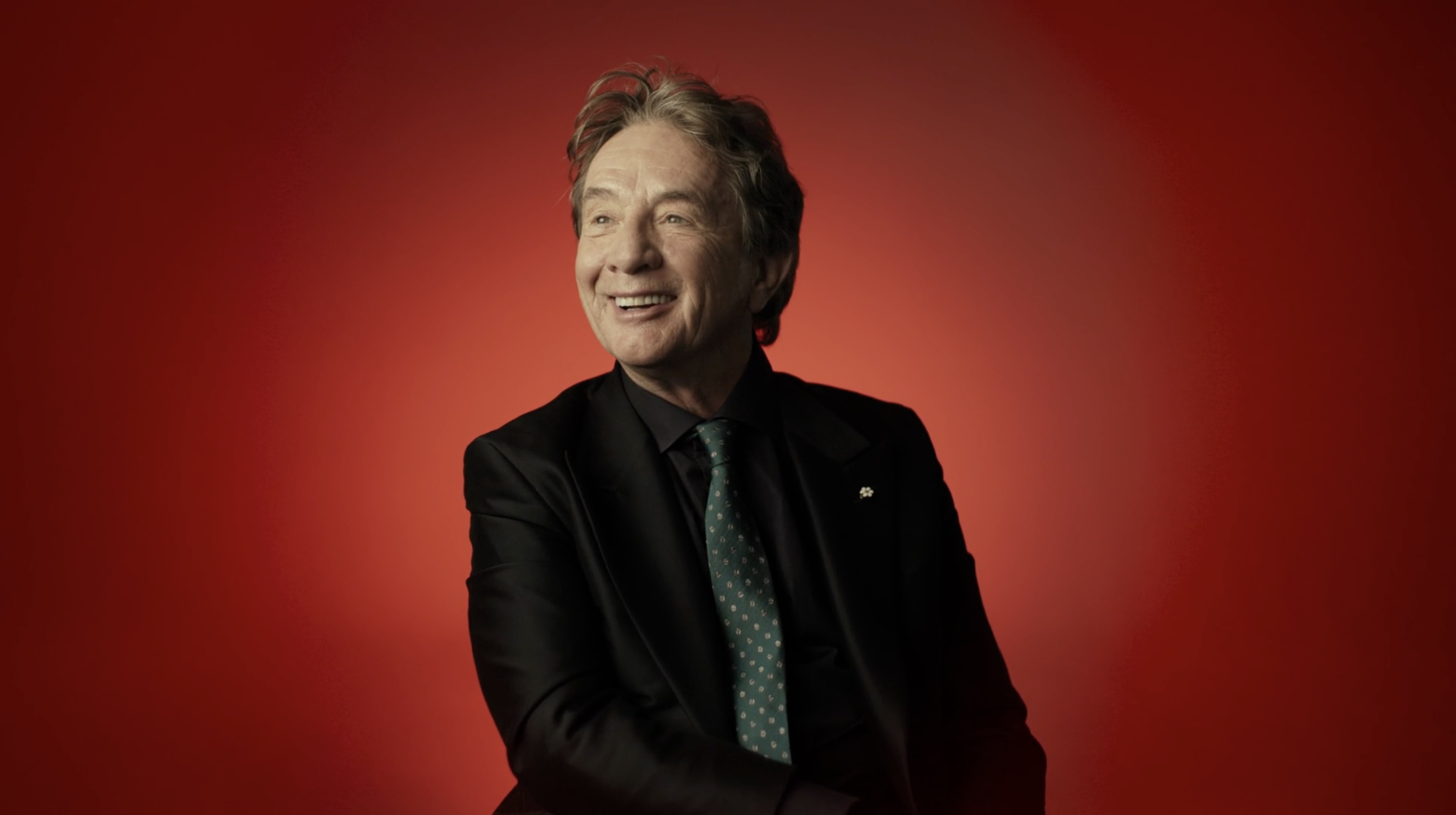
In amongst the narrative features, documentaries and shorts, there is a wealth of great stuff, none more so than the festival’s opening film You Had to Be There: How the Toronto Godspell ignited the comedy revolution, spread love & overalls, and created a community that changed the world (in a Canadian kind of way).
The title pretty much says it all. Early 1970s Toronto might not seem the logical setting for a comedic revolution, but in the style of Seabiscuit, or a moment of genuine, unforeseen serendipity, it was the big bang of funny people.
The names and faces are familiar: Martin Short, Gilda Radner, Eugene Levy, Andrea Martin, Dave Thomas, Paul Shaffer, the list goes on. All of these folks had the good fortune to be cast in the 1972 Toronto production of Godspell, composer Stephen Schwartz’s homage to hippy Jesus and his clown disciples — by this, I mean the disciples were actual clowns in the show; no disrespect intended to Jesus and his followers.
The catch of You Had to Be There is that there isn’t any actual footage of the 1972 production. The only evidence was a cassette tape, illegally recorded by Martin Short, on an ancient tape deck. In lieu of archival footage, the film makes good use of bright and silly animation that references a style favoured by ‘70s entertainment stalwarts such as Sesame Street and The Electric Company.
It’s a genius move, allowing the documentary an ease and bounce, as well as access to unfettered imagination. The action is made even more buoyant by the fact that all the assembled interviewees are among the funniest people on the planet. So, let it roll, and roll it does.
The most interesting thing about the film isn’t even so much the original production, although that is charming enough, but what happened afterwards.
As one person notes in the film, Godspell marked a cosmic meeting of the minds whose effects still ripple out today. At the time of the original stage production, no one was famous, and everyone was dreaming of stardom — none more so than Martin Short, who describes his youth as an extended audition session. He pretended to be Frank Sinatra in his childhood bedroom, crooning old standards into a crappy tape deck, and he would host fantasy variety shows for an imagined audience of millions.
Director Nick Davis takes a brisk hand, starting with the collective memories of the open auditions in Toronto that drew thousands of would-be superstars for only 10 roles in Godspell.
Competition, as you can imagine, was ferocious. It was Gilda Radner who brought down the house, with her pigtails hairstyle and lunatic rendition of “Zip-a-Dee-Doo-Dah.” At the time, Radner was one of the few actors in the cast with a nascent career as well as one of the only Americans in the production.
Andrea Martin, who had seen Godspell in New York and London and was desperate for a role, didn’t make the original cut, but a tiny bit of good fortune rectified that oversight. The show was a massive hit right out of the gate, riding that unforgettable 1970s wave of irreverence and earnestness.
As the actors were getting to know each other, performing eight shows per week, they were also getting their first taste of true celebrity. Heady stuff. In addition to their antics onstage, cast members hung out in their free time, along with other members of Toronto’s improv community, including folks like John Candy, Catherine O’Hara and Dan Aykroyd.
From the nuts of Godspell sprung a mighty forest of its cast members’ involvement with comedy institutions including Second City Television, Saturday Night Live and film and television productions that continue to dominate popular culture.
The anecdotes and funny stories come fast and furious. One of the goofiest being when Eugene Levy, who took over the role of Jesus after Victor Garber left to do the film version of Godspell, was asked to wax his extremely hairy body lest he scare the children in the audience. Other memories are more bittersweet, including Short and Radner’s on-again, off-again romantic relationship, as well as her death from cancer at the tender age of 40.
To the film’s credit, it doesn’t skimp on the darkness and complexities of fame. It considers why some cast members went onto to be become super-duper stars, while others puddled about on Canadian television for decades. It also addresses the ephemerality of art, how something so powerful can never be truly replicated, only remembered, albeit imperfectly.
But at the very root of the film is the mysterious hand of fate. How a collected group of people could come together, and then spin off in their own paths, while remaining curiously connected forever.
The pièce de résistance comes in the film’s reunion of the original cast, who reunite to sing songs and generally whoop it up.
The film reserves a special surprise until the very end. I won’t spoil here.
Suffice to say, it is well-worth trucking it up the Sea to Sky Highway, getting a ticket, finding your seat, waiting till the lights come down and the silver screen dawns like a new day. ‘Tis the magic of cinema, y’all.
Across the festival, gems abound
In addition to the opening night film, there are plenty of other terrific options, including director Chandler Levack’s coming-of-age comedy Mile End Kicks, Alison Reid’s documentary The Art of Adventure and one of my favourite nonfiction films from the previous year, Agatha’s Almanac.
There’s also Kate Green’s documentary Menopause: Coming in Hot, and the third installation in director Rian Johnson’s Knives Out series, Wake Up Dead Man, a romp-and-a-half with a strangely serious centre that takes on some of the weightiest of theological and moral debates of the age with equal parts gravity and zaniness. Call it gravziness.
The festival’s closing-night offering is The Choral. While well-meaning, it pales in comparison to other works by its filmmakers. My suggestion is to look off the beaten track for films like director Mayumi Yoshida’s feature debut AKASHI or director Luke Gleeson’s documentary Wədzįh Nəne’ | Caribou Country.
In addition to the films, Whistler has long been a place for industry to gather and talk shop. With attendees like producer Chris Ferguson (Keeper, The Monkey) and director Osgood Perkins (The Monkey, Longlegs), there is interesting international presence. Canadian culture is still at the centre of the action; the festival’s ambassador of all things Canuck is celebrated broadcaster and former MuchMusic VJ George Stroumboulopoulos.
It is interesting to think back about past Whistler Festivals. Each iteration has had something fascinating to offer, whether it was an onstage interview with Norman Jewison recounting his career highlights, or producer Robert Lantos looking a little askance when a clip from Heavenly Bodies, the 1984 vehicle starring Cynthia Dale and an over-taxed leotard, rolled.
Back in 2001, I was still getting my sea legs as a writer. I was figuring out what I truly wanted to write about, and I was discovering it was film. That first year at the Whistler fest set me on a path, and for that, I’m grateful.
Happy anniversary, Whis-a-lerr!
The Whistler Film Festival runs from Dec. 3 to 7. Tickets are available online. ![[Tyee]](/design-article.thetyee.ca/ui/img/yellowblob.png)
Read more: Film





Notice about commenting changes
The Tyee’s commenting system will be moving to a new platform on Nov. 12. If you’re already a Tyee commenter you must register with the new system on or after Nov. 12 with your preferred username.More information can be found here.