


 SHARE:
“Genocide is as human as art and prayer.” — Philosopher John Gray
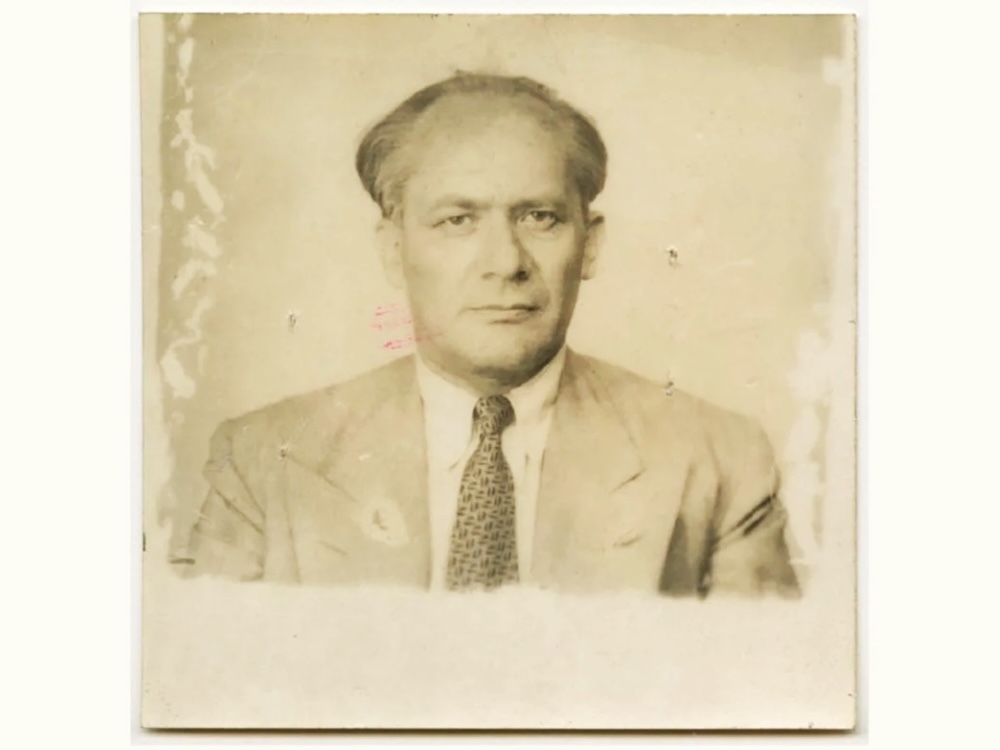
Before Raphael Lemkin collapsed on 42nd Street in New York City and died at a local police station in 1959, he knew these truths about genocide.
He knew then in his heart what the world still cannot accept.
He knew that genocide was a constant and ancient crime directed against different groups of people throughout history. He knew it was multi-faceted and patterned. He knew it proceeded in stages.
First, an occupier deprived a people of their rights, property and culture. Then they closed or razed schools, museums, hospitals, churches, archives and orchards. Then the occupier degraded their health through starvation and disease. Genocide utilized a vast technological arsenal from barbed wire to camps. Famine remained a constant tool.
As a lawyer, Lemkin knew that laws and edicts facilitated every modern genocide. That way its perpetrators could deny or hide the horror.
Lemkin also knew that a state didn’t have to engage in mass murder to destroy a culture. The erasure of language, the seizure of the property, the displacement of people and other humiliations could do that dirty work.
Once in motion, Lemkin knew, each genocide proceeded with its own unique fury. It burned libraries of memory. It devoured communities of bakers and poets. It extinguished traditions. It emptied cities and obliterated orchards. It expanded a kind of unholy darkness. It ate souls.
He knew, too, that genocide was contagious, a reality that truly haunted him.
And yes, he knew that yesterday’s victims could become tomorrow’s executioners. The Holocaust was not the world’s only genocide or even a singular one; it merely illustrated the powers of new technologies of destruction.
He knew that every time a genocide erased another culture from this world, it impoverished the world. It blinked out a spiritual light like stars in some great constellation. To Lemkin every genocide silenced a precious instrument from the Earth’s orchestra of diversity.
Lemkin also knew that it was not the number of dead that mattered. Rather it was the administrative and deliberate removal of a people’s sense of security, liberty, health and dignity over time, piece by piece. Such atrocities could happen in war and in peace. They could occur swiftly in 100 days or slowly over decades. Can anyone truly fathom the ruthless cruelty of genocide?
And yet, as Lemkin knew, genocide hides in plain sight. “Genocide is so easy to commit because people don’t want to believe it until after it happens.”
Before he collapsed in a moth-eaten suit, Lemkin admitted another reality about powerful nations. “They want non-enforceable laws with many loopholes in them, so that they can manage life like currency in a bank.”
Lemkin knew these truths because he lost 49 relatives to the Holocaust during the Nazi occupation of Europe.
And as he lay dying on 42nd Street he knew that the rain of his many efforts to punish and prevent such barbarism “fell on a fallow plain.”
Everyone in the world now knows that too.
Have you ever heard of Raphael Lemkin? Probably not. The reasons... well, there are lots of reasons for that. The Polish jurist was an insufferable pain. A dreamer. A fanatic. “A persistent bugger,” as the British diplomats called him.
In particular, he remained a sad and witty believer in the ability of international law to prevent and punish atrocities. And so, in 1944, in his book Axis Rule in Occupied Europe, Lemkin invented the term “genocide” by combining the Greek root genos (race, tribe) with the Latin suffix -cide (killing).
He went on to help found a convention to criminalize the concerted destruction of national, ethnic, racial or religious groups. In so doing he merely tried to set a higher bar for civilization, or what we still call civilization.
“Living in sin with history” was just never an option for Lemkin. Nemesis, he argued, will eventually run down those guilty of mass destruction.
His story begins on a farm. It echoes all the way from Cambodia to Gaza.
Imagine a boyhood that starts in the blood-soaked soils of eastern Europe, where Russians, Poles and Jews mingle warily. Picture a farm near an ancient forest of oak, birch and pine trees. Put a Jewish family in that farmhouse. Bribe the local policeman to live there. Then place at the dinner table a brilliant mother named Bella, an artist and teacher. Around that table sit Lemkin, his two brothers and cousins. Open the book Quo Vadis by Henryk Sienkiewicz. Hear Bella read about the Roman persecution of early Christians. Listen as Lemkin asks his mother why the Christians did not call upon the police for help. Bella tells the boy the truth: the oppressed do not turn to the state for protection from mobs.
Haunted by such tales, Lemkin reads and reads. To the boy, stories of mass murder seem never-ending. The devastation of Thebes. The Roman annihilation of Carthage. The siege of Tenochtitlan. The African slave trade. The roasting of Huguenots in Lyon. He tries to comprehend a French king ordering servants to shed more light on the killing scene so he can better see the faces of the tormented.
A seed forms in the boy’s mind. He traces a line between the ruins of Carthage to the pogroms in the nearby city of Bialystok where, when Lemkin is six, the stomachs of dead Jews are slit open and stuffed with feathers. Decades later he writes, “The need for the innocent to be protected set off a chain reaction in my mind. It followed me all my life.”
At the University of Lviv in Ukraine, Lemkin studies languages but everyone is talking about Soghomon Tehlirian.
Consider the shocking scene: A 25-year-old Armenian walks up to Talaat Pasha on a busy street in Berlin. He walks past the Turkish diplomat, the former vizier of the Ottoman Empire, turns, pulls a Luger P08 from his waistband and calmly puts a bullet in the back of the man’s head. He does so in the name of his dead mother. Her corpse, he confesses in court, demanded justice. Tehlirian’s trial becomes a global sensation. In the courtroom all roles are reversed, and the young assassin, a mandolin player, becomes the accuser.
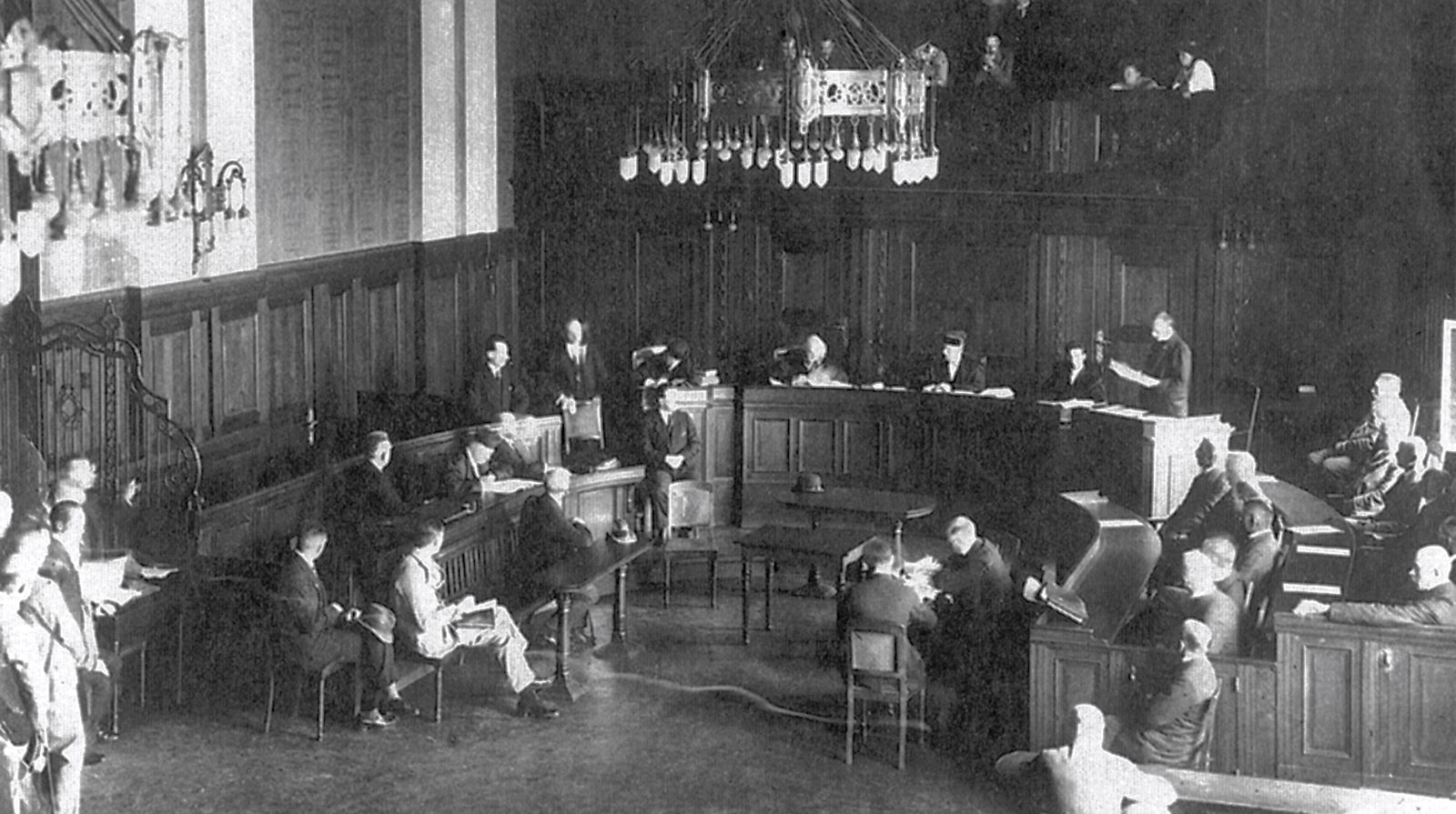
The German court now judges the actions of Turkey’s great patriotic administrator. During the First World War Talaat served as interior minister. In that role, using telegrams and trains, the father of modern Turkey designed and engineered the destruction of Armenians and their economic wealth. On his orders soldiers marched women, the elderly and children into deserts. He disguised their annihilation as deportation. He signed decrees that read, “The goal of deportation is nothingness.” In that nothingness soldiers raped and bludgeoned Tehlirian’s relatives. They butchered one of his brothers and parents. Laws then rationalized the confiscation of their wealth.
The British arrested Talaat and 150 war criminals after the war but then released them. “A nation was killed and the guilty persons set free,” thinks Lemkin. “Why is a man punished when he kills another man, yet the killing of a million is a lesser crime than the killing of an individual?”
At university Lemkin debates the incoherence of international law with a professor. The academic reminds him that the sovereignty of the state comes first and must be defended.
“Consider the case of a farmer who owns a flock of chickens,” explains the academic. “He kills them, that’s his job; if you intervene, you are harassing him.”
Wait a moment, says Lemkin. “Armenians are not chickens.”
How could the flag of sovereignty protect the murders of a million people? he asks.
A Berlin jury finds Tehlirian not guilty.
Lemkin changes his studies from linguistics to international law.
When Adolf Hitler legally ascends to power in Germany in 1933, European leaders park their heads in sand. The ostriches refuse to take his imperial rhetoric seriously. Democracies fail so easily because no one wants to believe it until after it happens.
So Lemkin, now a deputy public prosecutor for Warsaw, prepares a paper for an international penal conference in Madrid. If international law can ban the slavery of women and counterfeit coins, he asks, then surely it can ban “the destruction of a religious or racial collective.” Why not hold the heads of state guilty of crimes against their citizens no matter where they live?
His paper proposes to outlaw two crimes against civilians. One is acts of barbarity, the destruction of national or religious groups. The other is acts of vandalism, the destruction of their cultural heritage. Lemkin warns that acts of barbarity pose “a general transnational danger” because they are infectious. “Similar to epidemics, they can pass from one country to another.”
His proposal does not mention Germany by name, but everyone reads between the lines. A Polish newspaper quickly denounces the paper as a biased effort to protect Jews in Europe. It accuses Lemkin of not defending the Polish state, which is seeking a non-aggression pact with the mighty Hitler. In a panic the Polish government loses all courage and doesn’t even allow Lemkin to travel to Madrid. His paper sits on a table without discussion.
Lemkin then leaves public office and turns to private tax law. He makes good money and collects fine art on the representation of justice. He analyzes the way totalitarian governments manipulate international money laundering and currency exchange rates to devastate the economies of nations they covet.
His obsession with barbarism burns away like a chronic fever.
Meanwhile Europe convulses under the weight of authoritarians. In preparation for the invasion of Poland, Adolf Hitler gives a speech on Aug. 22, 1939, to his generals. The speech justifies the killing of Polish women and children without mercy.
“Our strength consists in our speed and in our brutality. Genghis Khan led millions of women and children to slaughter — with premeditation and a happy heart. History sees in him solely the founder of a state. It’s a matter of indifference to me what a weak western European civilization will say about me.... Only thus shall we gain the living space (lebensraum) which we need. Who, after all, speaks today of the annihilation of the Armenians?”
Four years later, Hitler digs up the remains of Talaat Pasha and returns his bones to Istanbul. There the hero of the fatherland now rests on the hill of the Monument of Liberty.
When the invasion of Poland begins, Lemkin flees by train. Planes bomb the locomotive off its tracks, and Lemkin wanders on foot through a burning forest. Eventually he finds solace in the home of a Jewish baker in the Pale of Settlement, a place in the Russian Empire where Jews could reside permanently. The baker is reluctant to admit the refugee into his home. Lemkin appeals to him in Hebrew. The ancient tradition of affording hospitality to strangers prevails.
Over tea the baker asks Lemkin if the Jews really have good reason to flee from the Germans.
“Have you heard of a book written by Hitler called Mein Kampf?” asks Lemkin. The baker shakes his head. Lemkin tells him how the book compared Jews to vampires and rats and called for their extermination. The baker listens. He thinks that even if Hitler had written such awful things, he could not have meant them. “How can Hitler destroy the Jews if he must trade with them?” It is the lot of Jews to suffer and wait, sighs the baker. God will deliver us.
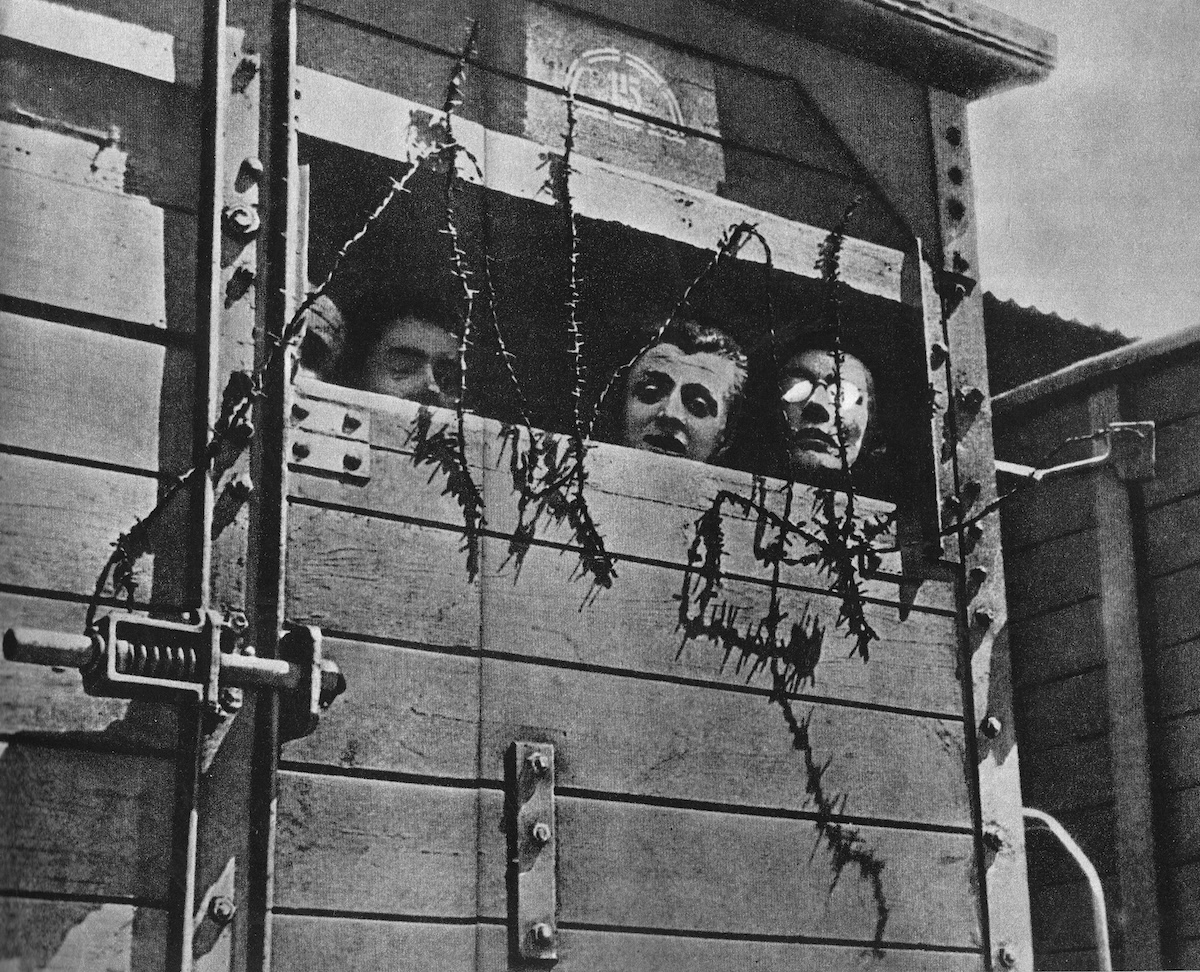
Lemkin, ever the jurist, prosecutes his case. “But this is a different war,” he gently tells his host. It is not so much a war to grab territories “as to destroy whole people and replace them with Germans.” It was like the kings of Assyria whose armies impaled and beheaded the conquered, he adds with emphasis.
But the baker cannot see the ugly reality at his doorstep. He can’t fathom a night sky without stars or an orchestra without instruments. He could not accept, as Lemkin later wrote, “the reality of genocide because it went against nature, against logic, against life itself, and against the warm smell of bread in the house.”
Lemkin’s parents, Józef and Bella, could not believe that reality either. They and every European member of Raphael Lemkin’s family besides his brother, his brother’s wife and their children, will be murdered by the Nazis.
In 1941 Lemkin, the balding refugee, arrives in the United States via Sweden and Japan. For the life of him he cannot understand why Americans insist on talking about refrigerators and vacuum cleaners at the dinner table. Yet he loves their open faces. Neither fear nor suspicion stalks them, and that pleasant reality relieves the jurist.
In North Carolina the refugee begins a new job teaching at the law school of Duke University. One night his hosts ask him to give a talk. Lemkin speaks some dozen languages but his English is rusty. He picks his well-worn topic. How could the rule of law mean anything or serve a higher purpose if the destruction of entire peoples, races and religions was not considered a crime under the law of nations?
In a Polish accent he poses a question: “If women, children, and old people would be murdered a hundred miles from here, wouldn’t you run to help? Then why do you stop this decision of your heart when the distance is 5,000 miles instead of a hundred?”
The audience erupts in applause. Women seem to clap the loudest.
At the U.S. Board of Economic Welfare Lemkin finds his new colleagues in “complete unawareness” that Hitler plans to destroy the Jewish and Slavic people under his control. It is 1942. The board must co-ordinate the United States’ war efforts, and Lemkin cannot understand their blindness. He produces trunks of legal documents issued by the Nazi occupiers to prove his argument. Everyone listens politely.
With introductions from the board, he talks to U.S. Vice-President Henry Wallace about stopping the industrial killing unfolding in Europe. But the finality and scale of genocide somehow elude Wallace. A friend suggests President Franklin Roosevelt. So, Lemkin drafts a short letter. It suggests that the U.S. government author a treaty to outlaw genocide, the crime of crimes. Lemkin argues for global ratification across nations. The treaty, he writes, would take the life of nations out of the hands of politicians and into “the objective basis of law.” Someone must send a warning to Hitler.
A friend delivers the letter. Weeks later Lemkin gets a reply through the Washington grapevine. “Patience,” says the president. Lemkin now lives like a man who cannot escape a nightmare. Patience? He compares himself to a mourner trapped in the blackest of hearses followed by millions of the dead.
“‘Patience’ is a good word for when one expects an appointment, a budgetary allocation, or the building of a road,” he later writes. “But when the rope is already around the neck of the victim and strangulation is imminent, isn’t the word ‘patience’ an insult to reason and nature?”
When Lemkin publishes Axis Rule in Occupied Europe in 1944, the 700-page book meticulously details the legal, political and economic techniques deployed by the German state to conquer and subject other peoples across Europe. It makes no bestseller lists. But it releases a new word into the world: genocide. A word, writes Lemkin, “to signify a co-ordinated plan of different actions aiming at the destruction of essential foundations of the life of national groups, with the aim of annihilating the groups themselves.”
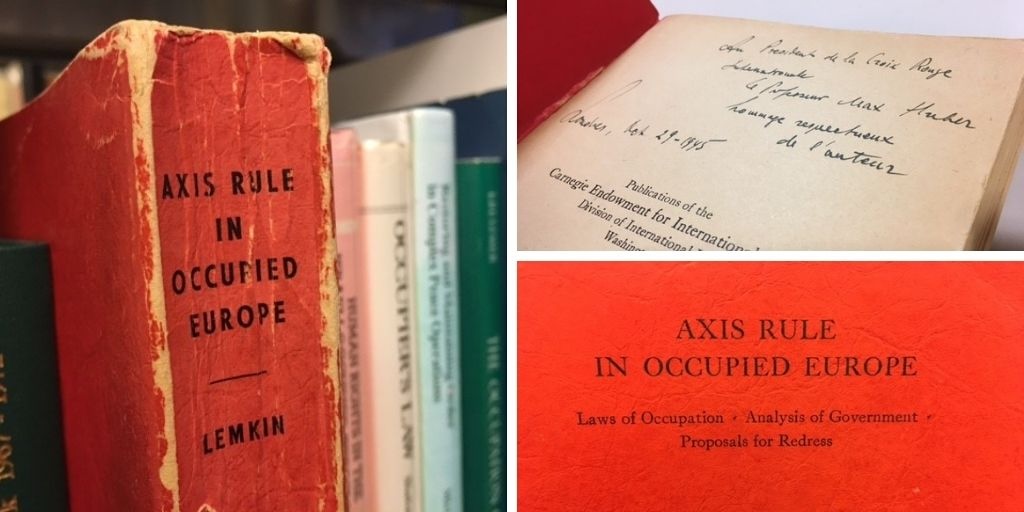
Genocide, he elaborates, is a colonial, two-phased project: “one, destruction of the national pattern of the oppressed group; the other, the imposition of the national pattern of the oppressor.”
The conflict begins with laws and administrative coercion and comes in stages. First, a series of laws remove rights and property of specific populations. Events progress to the killing of intellectuals and clergy. The whole process advances with open and covert attacks on the unwanted group, affecting their health, nourishment, family and children. It includes the destruction of schools, museums, hospitals, libraries, gardens and places of worship. New laws move people about like cattle and put them into ghettos.
And then there is the tool of starvation. The extermination of “sub-humans” begins with racially based food allocations. The Germans get a full diet; Jews, Poles, Romas get much less. Jews are allotted 20 per cent. Starvation and disease winnow the occupied while the birth rate of the occupiers remains strong. Genocide, writes Lemkin, reduces life to “a daily fight literally for bread and for physical survival.”
During the Nuremberg trials the prosecutors have an unusual debate about legal distinctions. Should the Nazis be tried for crimes against humanity or genocide? Should the prosecution focus on the killing of individuals or of groups? One definition requires no intent; the other, extensive proof of the motivation. Lemkin’s new word rests on everyone’s lips, but no one at Nuremberg is convicted of genocide.
Albert Camus, the editor of the French Resistance paper Combat, draws on another Gauloise and drinks his coffee. The great war has ended, but the dread of its violence and killing hangs over him like blue smoke. In seven Paris essays he concludes that humanity faces one choice: neither victims nor executioners be.
A vast economic experiment, he writes, has set the human ship on a course governed by the laws of power and domination. The experiment, both inevitable and unstoppable, places an “apocalyptic historical vista” before us all.
In this world humans have but one choice to make. We can distinguish between those that “accept the consequences of being murderers themselves or the accomplices of murderers” and those that refuse to do so “with every fibre of their being.”
The paper Combat interviews Lemkin about his plans for an international convention to end genocide. He explains the convention is necessary because the Nuremberg judgment “did not establish any legal precedent.”
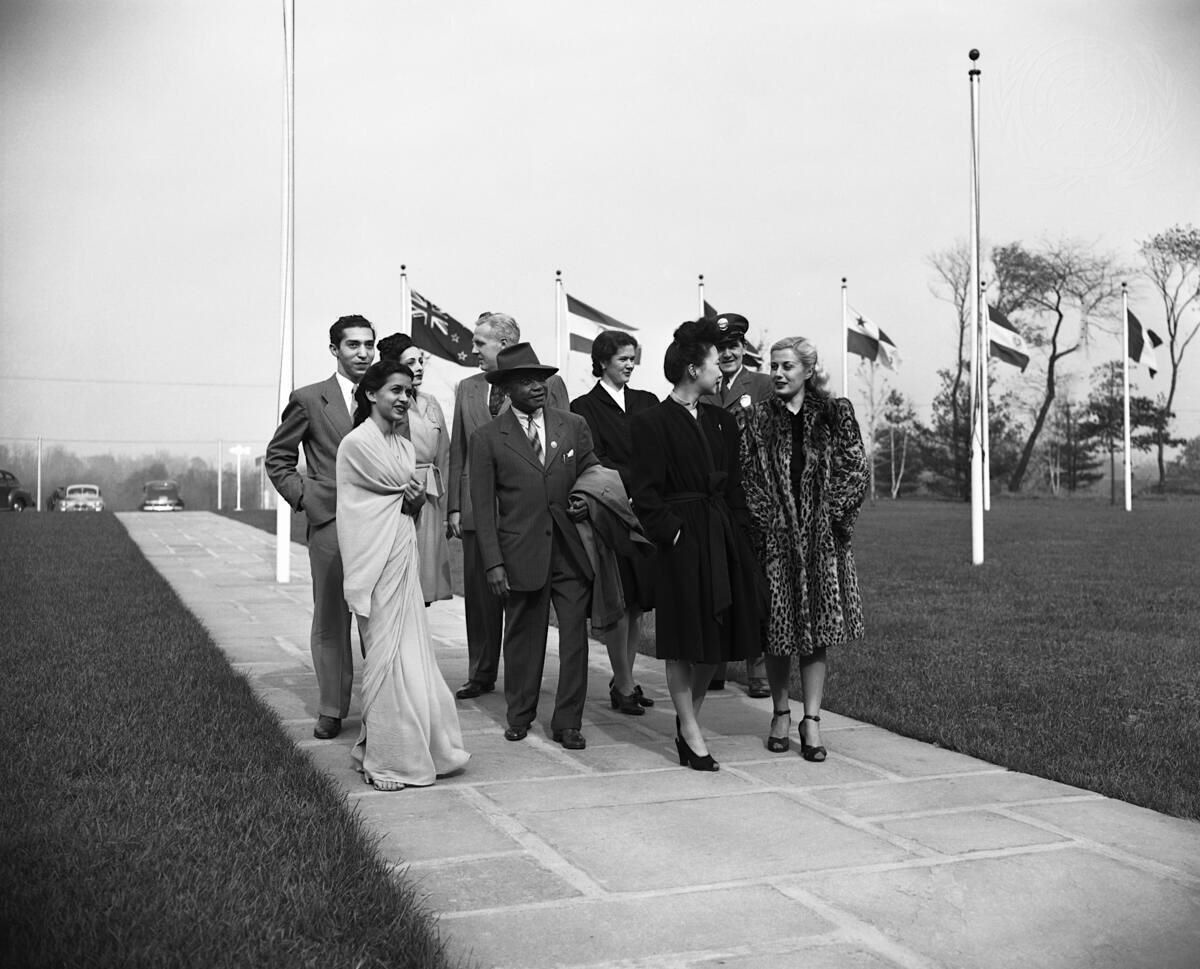
From 1946 to 1948 Lemkin patiently walks the halls of the United Nations at Lake Success, New York. Soon the guards all recognize the grey-suited man with a briefcase, a sandwich and enough conviction to fill two rooms. They let him pass. Lemkin believes that he carries in his valise the voice of history. It holds accounts on the starvation of Ukrainians. The extermination of Indigenous Peoples in the Americas. The massacre of the Herero and Nama peoples in Namibia. The case against genocide can only be made with many examples, argues Lemkin. History has been too generous.
In this daily work the determined jurist represents no country or nation. He has no formal associates. He holds no power. He is just Dr. Lemkin. The New York Times calls him that “totally unofficial man.” Whenever delegates see the lawyer approaching, some smile, others duck into offices. He strategically ambushes ambassadors in bars and reception rooms. Lemkin wheedles and pleads. He politely grabs startled diplomats by the arm. “First we make existence safe,” argues Lemkin. “Then we work to improve it.”
He readily builds alliances with small nations abused by colonial powers. He courts diplomats from Egypt, Lebanon, Panama, Costa Rica and Pakistan. Writers and women’s groups heed Lemkin’s call to end the slaughter of innocents. Soon there is an international movement supporting the proposed treaty. The Chinese-born novelist Pearl Buck and the Chilean poet Gabriela Mistral lend their forceful pens. So, too, does the Norwegian Nobel Prize winner Sigrid Undset and the British author Aldous Huxley. A Canadian human rights official later writes: “Never in the history of the United Nations has one individual conducted such a lobby.”
During the hustle and bustle of convention politics, a cynical New York Times columnist asks the totally unofficial man a basic question.
“Lemkin, what good will it do to write mass murder down as a crime; will a piece of paper stop a new Hitler or Stalin?”
Lemkin stiffens. “Only man has law. Law must be built, do you understand me? You must build the law!”
Yet an unasked question hangs in the air. What if the law is unenforceable? Or no one wants to enforce it?
In Paris Lemkin sits in a Left Bank café with his head buried in his hands. The diplomatic machinations to undermine his efforts to create the UN Genocide Convention are unending.
Clearly the great powers including the United States, the United Kingdom and the Soviet Union don’t think an international law is necessary. Every diplomat wants a humanitarian propaganda coup but not a law that will limit their nation’s actions.
The Soviets in particular don’t want a “bourgeois” treaty that might question the legality of its gulags, labour camps and forced relocations. The Americans are leery of a definition that might implicate segregation and the lynching of 10,000 Black people or “sporadic outbreaks against the Negro people.” (Lemkin to his shame demurs to the concerns of his host country.) Some delegates from various nations even defend the necessity of eliminating whole groups — such as “backwards peoples” and “cannibals.”
Somehow, Lemkin perseveres.
In Paris again, he awakes one morning with a new tactic. He abandons his earnestness. He puts away his detailed memorandums on the murder of Muslims in India, the killing of Iraqi Christians and the unredeemed slaughter of Armenians. Instead, he goes to social receptions and drinks cocktails. He dances and jokes. For an instant he enjoys the warm fall that has embraced Paris in 1948.
Whenever a diplomat raises the subject of Lemkin’s enduring obsession, Lemkin has a new reply: “Genocide, what’s that?”
The functionary winks and expels a knowing laugh, too.
“Genocide, what’s that?”
At that moment Lemkin feels the essential weight of his life. The ache of a prophetic voice that cannot stay silent. The duty of a jurist who must compromise to build the law.
And then it happens.
Lemkin calls the passage of the UN Genocide Convention on Dec. 9, 1948, an early Christmas gift for the world. “The odious scourge” is no longer legal. On paper it is now a crime to destroy in whole or in part a national, ethnical, racial or religious group. That crime includes killing, causing mental or physical harm, preventing births, inflicting conditions to cause physical harm and forcibly removing children from their families.
There is no mention of political groups or cultural destruction or rape and sexual violence against women.
Aerial bombardment of civilian populations is not included because total war as practised by sovereign states will demand its efficiency.
Eager reporters file their stories and then go looking for Lemkin. Is it not a great day for humanity? They want a comment from the man who coined the word that has captivated the world’s attention. But they can’t find the jurist. Hours later they locate a man weeping in a dark hall. “Let me stay here alone,” he says.
A day later Lemkin falls ill with a fever. Bewildered and sick, he goes to the hospital. He offers his own diagnosis: genociditis. He later calls the convention and its many compromises “an epitaph for Bella, his mother.”
For the rest of his life, he will lament what he regards as the convention’s central omission: the destruction of culture, a people’s language, traditions and beliefs: “the soul of a nation.”
After one legal mountain Lemkin climbs another even though his blood pressure runs high and depression dogs his shadow.
Now, he throws himself into the international crusade to ratify the agreement. Twenty states must sign on before the convention goes into force. The first adopters include Ecuador, Australia, Norway, Iceland and Ethiopia, where Benito Mussolini gassed tribal peoples in 1935. Lemkin writes letter after letter to energize the process: “Happy New Year and Best Wishes to you. Genocide again. Could you help?”
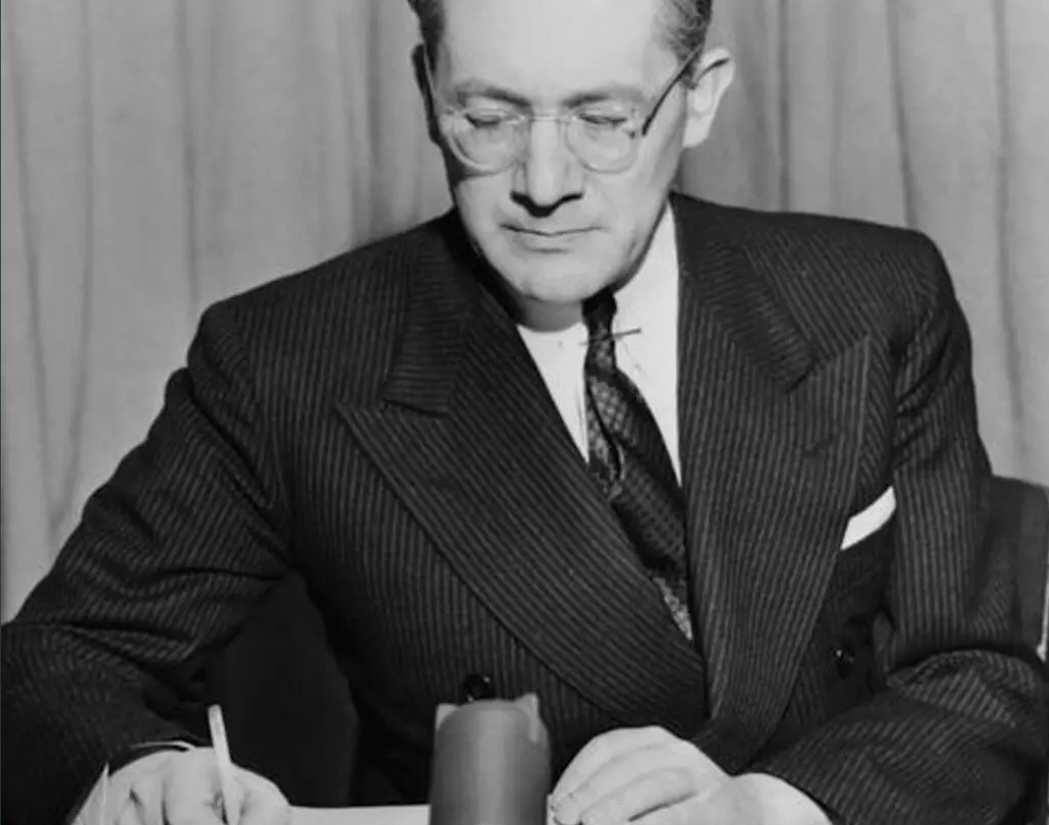
During the campaign Lemkin’s language becomes increasingly grandiose. In one letter he suggests the convention might become “an international Magna Carta for life and culture — something the whole world yearns for.” In another he admits the law won’t end the killing but will start an era of “progress and tolerance.” His health continues to decline. He blames “overwork and overexcitement.” Edward Bernays, “the father of public relations,” writes to congratulate Lemkin on the great effort “to dramatize reason and peace.”
Three years after the passage of the Genocide Convention, Hannah Arendt, the Jewish émigré, publishes The Origins of Totalitarianism in 1951. She argues that there is something about the modernity of totalitarianism that makes it different from the barbarisms of the past. Something unprecedented and monstrous in its technological scale, efficiency and psychology.
Therefore, she doubts conventions and laws can restore the world’s political fabric or that “a few international jurists without political experience or professional philanthropists supported by the uncertain sentiments of professional idealists” can restore an unravelling tapestry.
The two refugees never meet. Yet their ideas speak to each other every day.
A poet says you cannot love other peoples unless you love the Ukraine. And that’s how Lemkin beings his speech on the Holodomor on the 20th anniversary of Joseph Stalin’s engineered famine. Lemkin tells a large New York audience that the killing of millions of peasants was but “the longest and broadest experiment in Russification.”
You could draw an imperial line from the drowning of 10,000 Crimean Tartars to the extermination of Polish leaders under the czars to Stalin’s atrocities. They all follow a familiar pattern: the genocide begins with the killing or deportation of intellectuals. Then it assaults the church. Next comes some five million peasants, “the repository of folklore tradition and music.” They die of starvation in the wheat basket of the world.
The goal is not total annihilation (there were too many Ukrainians for that) but the destruction of a national spirit. “For the Soviet national unity is being created, not by any union of ideas and cultures, but by the complete destruction of all cultures and of all ideas save one — the Soviet.”
Lemkin walks in the quadrangle before the library at Yale University. Soon the university will stop employing the difficult man because of his “extreme devotion” to genocide. No matter. The light of the night sky frees Lemkin’s thinking and calms his heart. Sometimes his students join him on these sojourns. They are the ones who don’t mind law classes peppered with poetry, literature and history. One night a pupil asks what is worse, an evil statesman or one blind to the reaction he is creating in others. Lemkin pulls a story out from the dairies of the U.S. Ambassador Henry Morgenthau Sr.
During the Armenian genocide, the one that was never punished and that the Turkish government still denies, Morgenthau did everything he could to protest the death marches. Talaat Pasha, the planner of those killings, listened impassively to Morgenthau before interrupting him with an “innocent” question.
“By the way, Mr. Ambassador, on some of the Armenians we found insurance policies, and even reassurance policies from companies in the American city of Hartford, Connecticut. Since they are Turkish citizens, could you help the Turkish government to cash these policies?”
The moral isolation of the perpetrators of genocide is always absolute, says Lemkin.
In Lemkin’s final years disappointment and ill health occupy his apartment like a group of uninvited taxmen.
He proposes a four-volume history of genocide with chapters on the Mongols, the Moors and the Incas. But publishers remain unconvinced. Why not start with an autobiography? they suggest. Lemkin obliges but never finishes the tale.
He pens an article condemning the genocide in Algeria. The French government immediately replies that they are only fighting “terrorism” and defending progress.
And yet whenever anyone suggests that genocide is inevitable, Lemkin bristles with indignation.
Some mornings he reflects on his hero, the Dominican friar Bartolomé de las Casas. That crusader, too, died penniless after daring to denounce the “repeated Injuries, violent Torments, and injust Butcheries” of the Spanish conquest in the Indies. He, too, patiently documented “all manner of Cruelties, that Hell and Malice could invent.”
Did the rain of de las Casas’ work fall on a fallow plain too?
Cannot bigger hearts make better laws? Lemkin asks himself.
A rowdy fight with a rapacious landlord erupts, and Lemkin’s living space suddenly grows smaller. On a lucky day a good meal consists of a bowl of soup.
And then his heart stops on 42nd Street.
Several veiled women, a small group of friends, a Korean ambassador and the Israeli press attaché attend the funeral. They remember that the man liked to dance and visit art galleries.
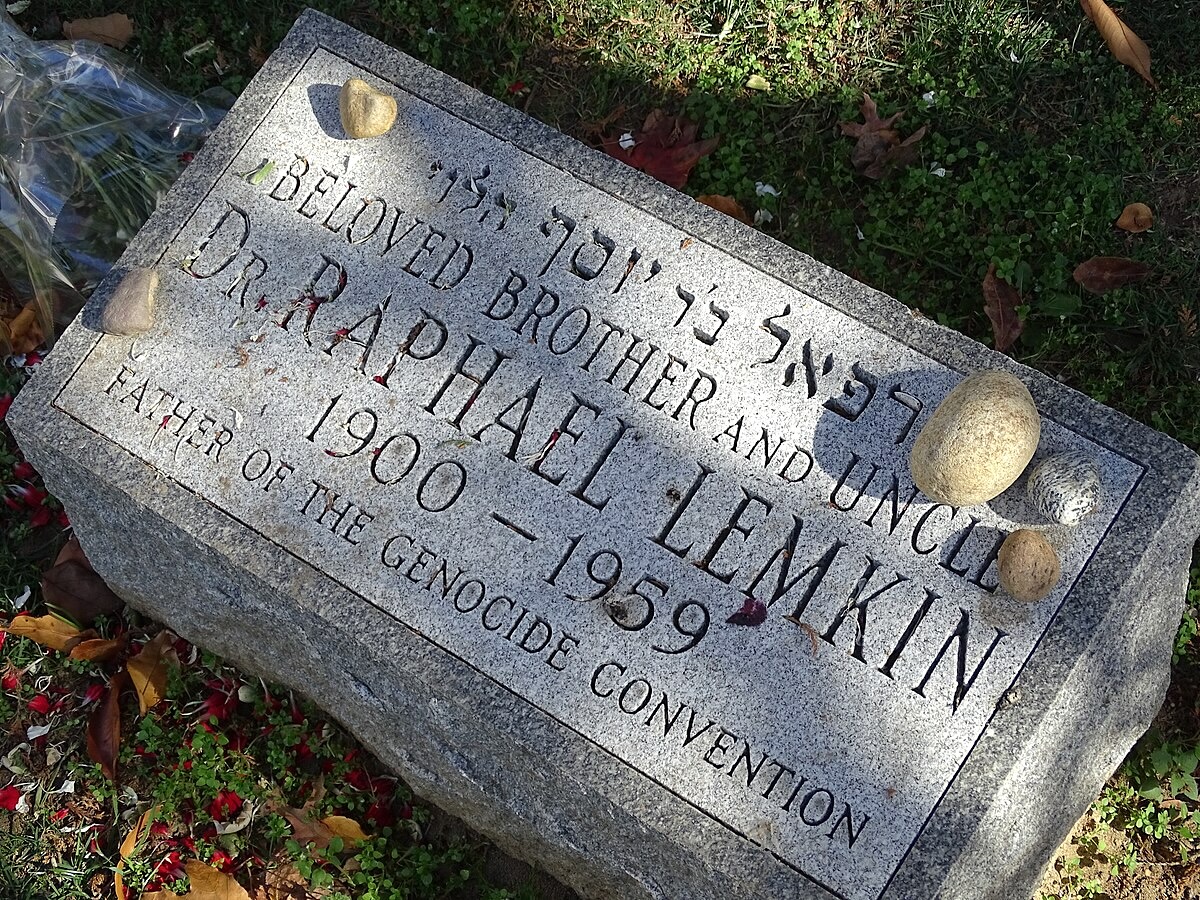
His gravestone reads: “Beloved Brother and Uncle, Father of the Genocide Convention.”
Two years after Lemkin’s death, Hannah Arendt goes to Jerusalem. She can’t hide her indignation at the televised show trial of Adolf Eichmann. During the war Eichmann directed the bureaucracy that deported more than 1.5 million Jews from all over Europe to death camps and killing centres. Kidnapped from Argentina, he now stands trial. The many crimes Eichmann committed against Jews and other groups were surely a collective crime against mankind, argues Arendt, and so they should be tried before an international tribunal for genocide. “The very monstrousness of the events is ‘minimized’ before a tribunal that represents one nation only.”
But it is the brick wall of genocide that confounds her most. During the trial the bespectacled Eichmann acts and speaks like an eternal functionary, neither feeble-minded nor indoctrinated. As Eichmann relates, genocide is merely the product of following orders. You had to go along with it because, as one functionary after another admits in court, they wanted “to prevent something worse.” Repentance, adds Herr Eichmann, was something for children.
Arendt can’t believe her ears, and her heart pounds. She writes about the banality of evil — an expression that baffles and upsets people to this day. Mass murder, they protest, could only be demonic or demonically inspired. How could genocide ever be banal? Or normal?
Arendt defends her case. Eichmann is not a devil because that would make him interesting. In fact, he remains a very uninteresting man, a functionary lost without a leader. The frightful thing about Eichmann, concludes Arendt, is his thick-headedness. “It was like talking to a brick wall,” she later tells the historian Joachim Fest. This wall is the mental resistance to imagining the lives of others. “The inability to think in the place of every other person — this inability, this thoughtlessness is like talking to a brick wall.”
Lemkin fought this brick wall his entire life.
After his death Raphael Lemkin became a largely forgotten man.
It took the United States, Lemkin’s adopted home, almost 40 years to ratify the Genocide Convention in 1986, and that was largely because of the efforts of one Democratic senator from Wisconsin, William Proxmire.
Lemkin’s incomplete autobiography, Totally Unofficial, wasn’t published until 2013.
To this day the distribution of his 1953 speech on “Soviet Genocide in the Ukraine” remains forbidden in Vladimir Putin’s Russia, where it is classified as an “extremist publication.”
Nowadays, however, the serial histories of murder, imperialism and displacement that so consumed Lemkin have become an academic industry.
Genocide studies arose in the 1980s followed by the usual conferences, journals and endless debates over definitions and the faults of the UN convention. It then exploded in the 1990s when genocides in Guatemala, Yugoslavia, Chechnya and Rwanda rekindled interest in the jurist’s singular obsession. Since then, Lemkin has been the subject of countless academic articles, 10 biographies and two plays.
And yet, to a growing number of scholars, there exists a widening discrepancy between optimistic statements about how modern laws and methods can prevent genocide “and the magnitude and complexity of the phenomenon of genocide itself.”
With Gaza in ruins, A. Dirk Moses, a historian and senior editor of the Journal of Genocide Research, now asks, “What’s the point of this field?”
The Genocide Convention did not really get a formal enforcement mechanism until 1998 with the creation of the International Criminal Court. Its authority to prosecute genocide and crimes against humanity and the waging of atrocities did not come into effect until 2002.
Since 1948, UN-sanctioned international courts and tribunals have found the crime of genocide to have been committed only three times.
In 1998, the International Criminal Tribunal for Rwanda became the first international court to convict a defendant, Jean-Paul Akayesu, a mayor and former teacher, of genocide.
The International Criminal Tribunal for the Former Yugoslavia took 24 years to convict Ratko Mladić, the “Butcher of Bosnia,” for genocide, crimes against humanity and war crimes.
The UN-backed Extraordinary Chambers in the Courts of Cambodia took 16 years and more than $300 million to win a mere three convictions related to the genocide of nearly three million citizens by the Khmer Rouge in the 1970s.
No state has ever been punished for a genocide under the convention.
In a recent essay Paul O’Brien, the executive director of Amnesty International USA and a graduate of Harvard Law School, reviews Lemkin’s work and asks an important question: “Is genocide law fit for the purpose Lemkin intended?”
In October 2023 the non-partisan Lemkin Institute for Genocide Prevention was one of the first to condemn both the violence of Hamas and that of the Israeli government.
The institute, which came into being in 2017, warned world leaders that without legal and diplomatic action Gaza would descend into “the mass murder pattern of genocide.”
This year the Lemkin Institute accused human rights and international legal industries of ignoring “the voices of threatened communities” and gatekeeping the term genocide “to the extent that it can only ‘correctly’ be used by lawyers who graduated from elite European universities and who are involved in expensive trials decades after the violence has concluded.”
The institute had more to say, as if summoning the moral urgency of Raphael Lemkin 66 years after his heart stopped on a New York sidewalk.
“Throughout the horror in Gaza, it is only the people of the world who have consistently viewed the situation clearly and have shown the courage to speak out against genocide.”
“An enormous reckoning is necessary, and it is coming.”
[Editor’s note: This essay draws upon the published writings of Raphael Lemkin and the works of several key scholars who have written extensively about his legacy. They include Douglas Irvin-Erickson, Dirk Moses, William Korey, Anton Weiss-Wendt and Philippe Sands. Lemkin’s key writings on genocide can be found here.] ![[Tyee]](/design-article.thetyee.ca/ui/img/yellowblob.png)
Read more: Rights + Justice, Politics












Tyee Commenting Guidelines
Please note that email notifications for replies are not currently working due to a software issue which may be resolved in a future update.
Comments that violate guidelines risk being deleted, and violations may result in a temporary or permanent user ban. Maintain the spirit of good conversation to stay in the discussion and be patient with moderators. Comments are reviewed regularly but not in real time.
Do:
Do not: