

 SHARE:
South Korea’s Truth and Reconciliation Commission has found that, in the nation’s rush to facilitate adoptions abroad, its agencies committed widespread fraud, malpractice including the falsification of documents and “serious violations of the rights of adoptees.”
As a government agency, the commission’s report marked the first time South Korea has acknowledged the problems inherent in becoming the world’s largest “baby exporter,” with over 200,000 South Korean children sent to 15 countries worldwide since 1950 — more than any other nation.
Some adoptees were given away without birth parents’ knowledge or legal consent, “sent abroad like luggage,” the commission said in its report.
“This is a shameful part of our history,” said commission chairperson Park Sun-young, when the report was released on March 26.
“While many adoptees were fortunate to grow up in loving families, others suffered great hardship and trauma due to flawed adoption processes. Even today, many continue to face challenges.”
South Korea’s government is required by law to follow the commission’s recommendations; in this instance, the commission recommends that they apologize.
It’s not much, but at least it’s validation, and maybe a sign that the tide is beginning to turn and the world is beginning to heed criticism and concerns from adoptees once called “ungrateful” — transracial adoptees especially, including the 367 Korean adoptees brought up in 11 separate countries who petitioned for this historic investigation.
Many Korean adoptees have been outspoken about their experiences. Several have written incredible books, including Sarah Myer, author of graphic memoir Monstrous, Nicole Chung, author of 2018 memoir All You Can Ever Know, and Jenny Heijun Wills, whose debut memoir, Older Sister. Not Necessarily Related, detailed her return to Seoul some 20 years after being adopted as an infant to a white family in small-town Canada.
Wills’s followup essay collection, Everything and Nothing at All, was released in 2024.
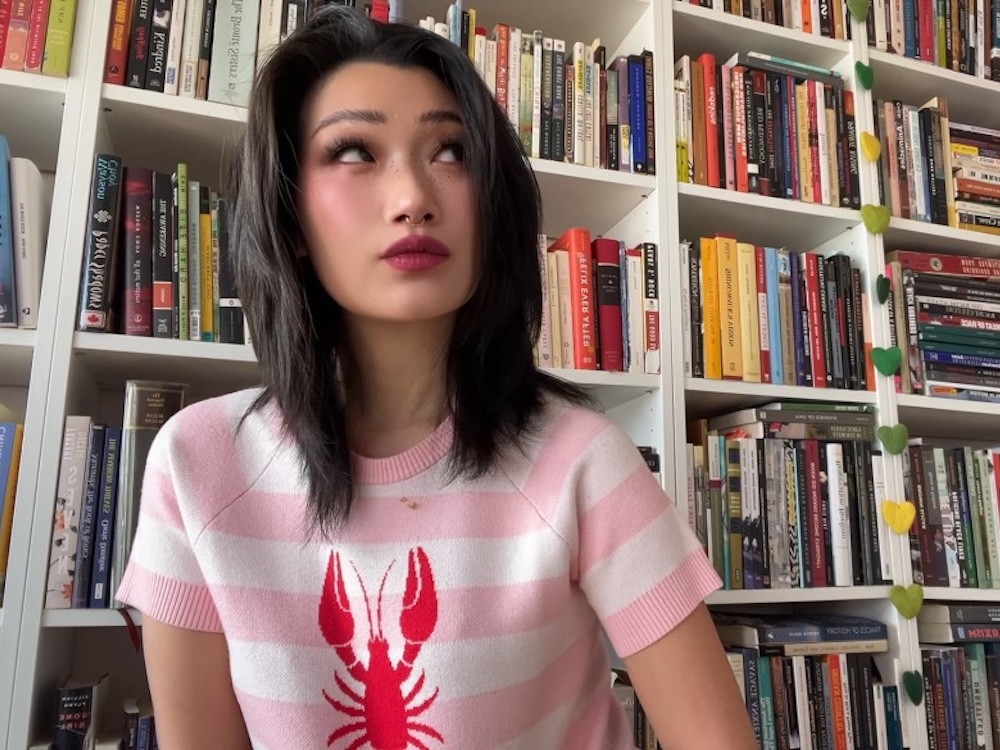
In the wake of South Korea’s historic admission, The Tyee sat down with Wills to unpack what it means, in the grand scheme of things, and what, if anything, would feel like justice after what’s been done.
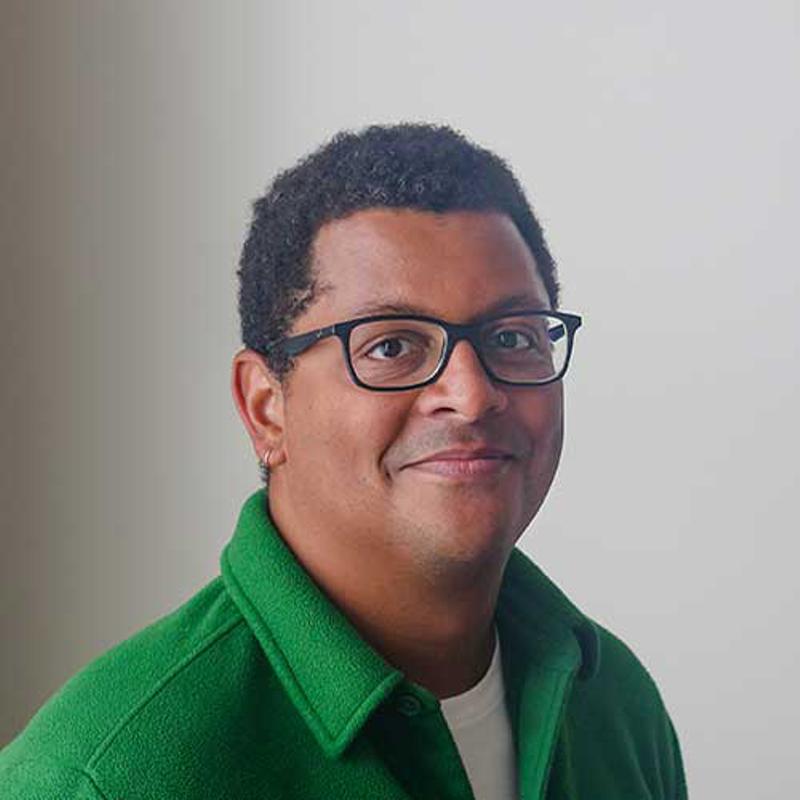
I brought my perspective to the interview as the author of Invisible Boy, a memoir about my own transracial adoption and upbringing within a white Christian family. I used to think of my adoption story as singular, but since the book’s publication in 2022, I’ve spoken to hundreds of adoptees and read numerous adoptee authors whose stories mirror mine in remarkable ways. I cherish conversations like the one I had with Wills, as I learn so much. I feel so seen and understood. I can’t believe I ever thought that I was all alone.
Our conversation has been edited for length and clarity.
The Tyee: I want to talk about what’s happening in South Korea. The reporting is that South Korea admits to adoption fraud, and I feel like that’s kind of true. It’s their truth and reconciliation commission, which is a government agency. But it also feels a bit like a rogue wing within the government, as opposed to the government saying, we did this. What are your thoughts about this news?
Jenny Heijun Wills: From the outset, I think that, whenever a government “admits” or gives or grants any of these things, these kinds of gestures are always couched in this energy of generosity or accountability. Whereas in reality, like so many political movements, it’s not a gift from the government to receive basic human rights. It’s a concession — after years if not decades of protest and sacrifice by people from within the community.
Isn’t that always the way? Even this little concession is framed as charity towards us. But I find myself wondering what it will do. Where is the justice here? Where is the healing here? I know the government has been “encouraged to apologize,” and maybe they will. But what is an apology after all this?
What is an apology when international adoption from Korea persists, first of all. I realize that it’s waned in quantities and the processes have been altered. But it seems like a misdirection.
I think that it’s a comfortable time for South Korea to come out with this. China just closed their doors to overseas adoption. It’s not a popular thing anymore. It’s less meaningful, I think, when countries in the West are like, actually, we’re good. And then all of a sudden, our governments say, hey guys, we’re going to stop doing this. No one’s asking at this point.
The problem is that the damage not only has been done, but it continues to be done. As we see in these reports, the residual effects of not just poor record-keeping, but mendacious and deliberately false record-keeping mean that the ripple effects for generations of adopted individuals will continue.
I find it interesting, too, that the poor record-keeping is letting people off the hook. One of the investigators, Sang Hoon Lee, said the commission had deferred assessments on 42 adoptee cases due to a lack of documentation that could prove that the adoptions were problematic. But doesn’t the lack of documentation itself prove that the adoptions were problematic?
We remain at the mercy of the crummy job that everybody did. And now we’re supposed to trust that these same people will fix it. But it’s reform instead of abolition. How can you reform this broken system? I do wonder if it’s my cynicism as an adoptee, or if it’s fair for me to feel like this is something, but still also nothing.
What does it mean to say that we’re going to fix it? It means that you’re not going to stop doing it.
Right.
Because the things that have been done are unfixable, right? Inventing records for people, throwing away histories of people — that’s irreversible. There’s still a commitment to the system. Whether it’s done with a more “ethical” POV or not kind of defeats the purpose, and it leaves the hundreds of thousands of adopted individuals in limbo.
I know some adoptees are celebrating this. It’s at least some kind of win, right? What would you say to somebody who says that we’re being too cynical about this, that maybe this is the beginning of something greater?
I agree that it’s not an insignificant thing. I’m happy for people who can see so much value in those things. It’s not that, I guess, I feel so politically cynical. I feel emotionally distraught over the situation. Part of me thinks that if you’re by yourself and saying these things that you believe to be true, these horrors, but it’s not confirmed necessarily, you can sort of avoid your feelings.
Right. Maybe I’m just imagining things.
But when it’s out there in the New York Times or whatever… not that that’s necessarily fact or any sense of reality, but it’s more than yourself. More than that part of your brain that’s screaming these things from inside your body. It brings it into existence in ways that are simultaneously validating and scary. Because when one is acknowledged to have been possibly the victim of a wrong like that: what do you do with that after the fact?
Especially when a lot of the harm that adoption does feels so unquantifiable. It’s psychological, ontological, it affects our sense of self, our sense of belonging, our connection to our body. That’s a lot harder to address than, say, admitting that the paperwork was fraudulent. You have this great quote about the disconnect between the private and public self, the mind and body, the real person and the curated spectacle. “Are there actual roots with which to fasten this performance to anything real?” That’s what’s lost. Self-certainty. How do we restore that? Like, give me my body back.
We talked once about why adopted individuals could be at the forefront of challenging our expectations of the genre of life writing and memoir. And I think what you’re describing is precisely why. Because there’s this unspoken expectation in memoir that we’re always telling the truth. But as adopted individuals, we know the truth is a very perilous, ungraspable thing. One of the things that I tell my students in life writing class is that, as life writers, we’re not here to tell the truth, because truth is extremely subjective. It’s very mutable and it’s impossible for some of us. But our job is not to lie.
I have to imagine that’s why so many adoptees write memoirs. So much about your own story feels false, or specious. Somehow, you’re kind of a secondary character. If we’re not fighting to reclaim that first-person perspective, to tell these truths ourselves, they won’t get told.
Writing oneself into existence is definitely a tactic. I’m thinking a lot these days of neurodivergent masks and writing as a mask — trying to figure out what things are that mask versus what things are assimilation, versus what things are adoption trauma, versus what things are related to our complicated, interlocking experiences of race and gender and sexuality.
Is there any way to know for sure, or even to know what should matter the most? Adoption makes everything fuzzy. For instance, I understand that the title of your essay collection, Everything and Nothing at All, comes from your sense of what family might mean, which is wild: I feel like I’ve said that to people. Family is everything, but it also doesn’t matter. I know because I lost mine and had to rebuild myself just to survive, so it had to not matter. There’s so much psychological reconstruction that occurs.
We’re the perfect post-structural subjects in so many ways.
As an adoptee who has really found their voice, and a language for their experiences, and an outlet and success, do you feel a responsibility to the community?
I feel a very close connection to a lot of adopted individuals. It makes me sad that there are enough of us to have a community that identifies that way. I’m glad it exists, but I’m sad that it does.
It’s a huge community. I find it really overwhelming sometimes.
It’s a lot of trauma bonding. So it can be overwhelming. It can be emotionally dysregulating. It’s amazing that there’s so many because political work can be done and emotional support work can be done. But it sucks because it’s so large and so multifarious because so many of us have been harmed in this way. Like, that’s a shitty thing to belong to.
It’s the worst. I don’t want to belong to this club. I want to belong to the We Were All Treated Very Well Club.
It’s the paradox, right? It’s the same thing — Everything and Nothing At All — it means everything, but you want it to mean nothing at the same time.
All told, is there anything that could happen for adoptees that would feel like justice or reparations or restitution or reconstruction to you?
I think the closure of overseas adoption would feel like an actual gesture of accountability. ![[Tyee]](/design-article.thetyee.ca/ui/img/yellowblob.png)








Tyee Commenting Guidelines
Comments that violate guidelines risk being deleted, and violations may result in a temporary or permanent user ban. Maintain the spirit of good conversation to stay in the discussion and be patient with moderators. Comments are reviewed regularly but not in real time.
Do:
Do not: