


 SHARE:
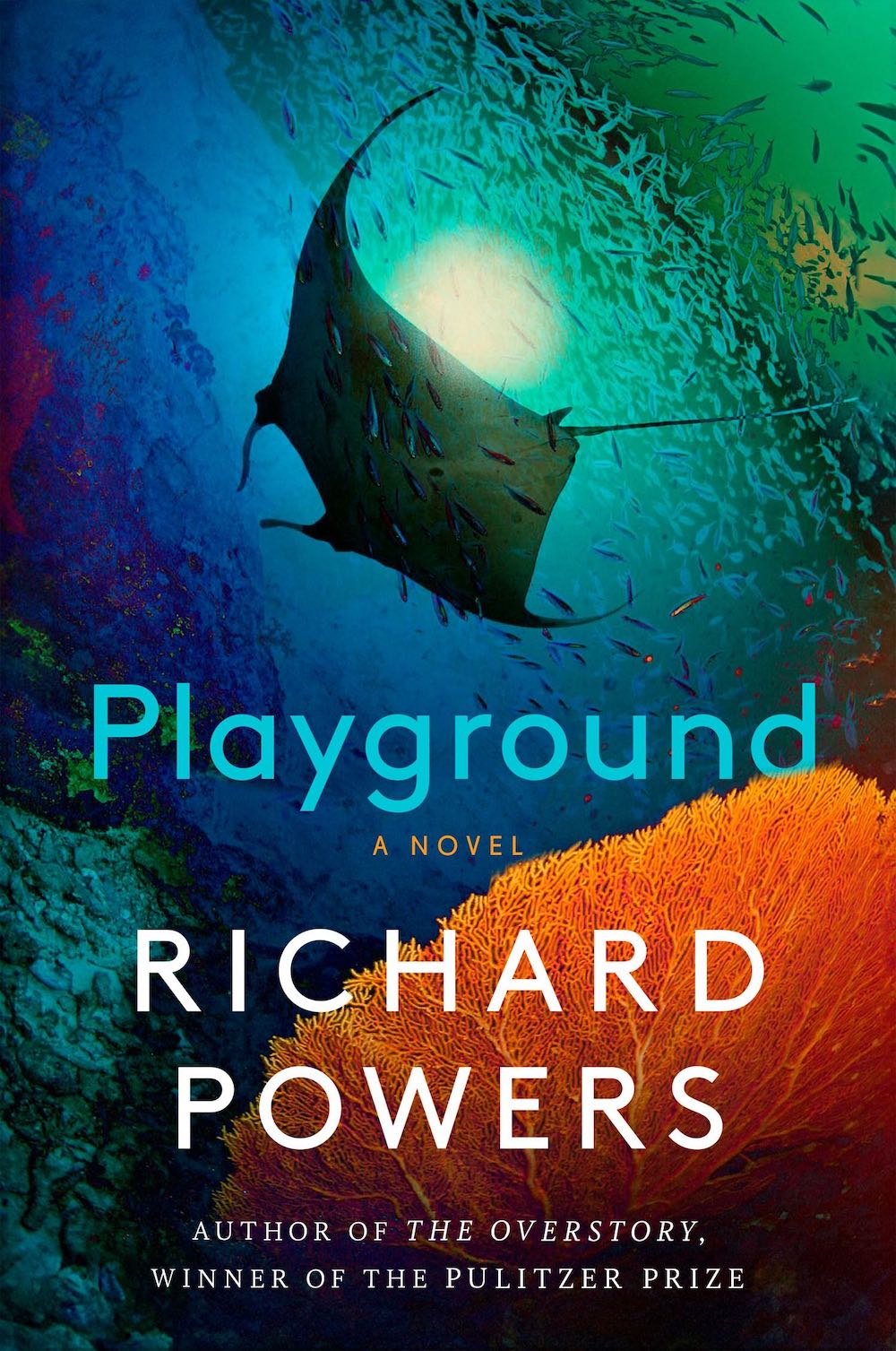
I read Richard Powers’ new novel Playground earlier in the fall, prior to the U.S. election. That period, less than a month ago, already feels like another world. Nothing is more distant than the recent past, someone once said.
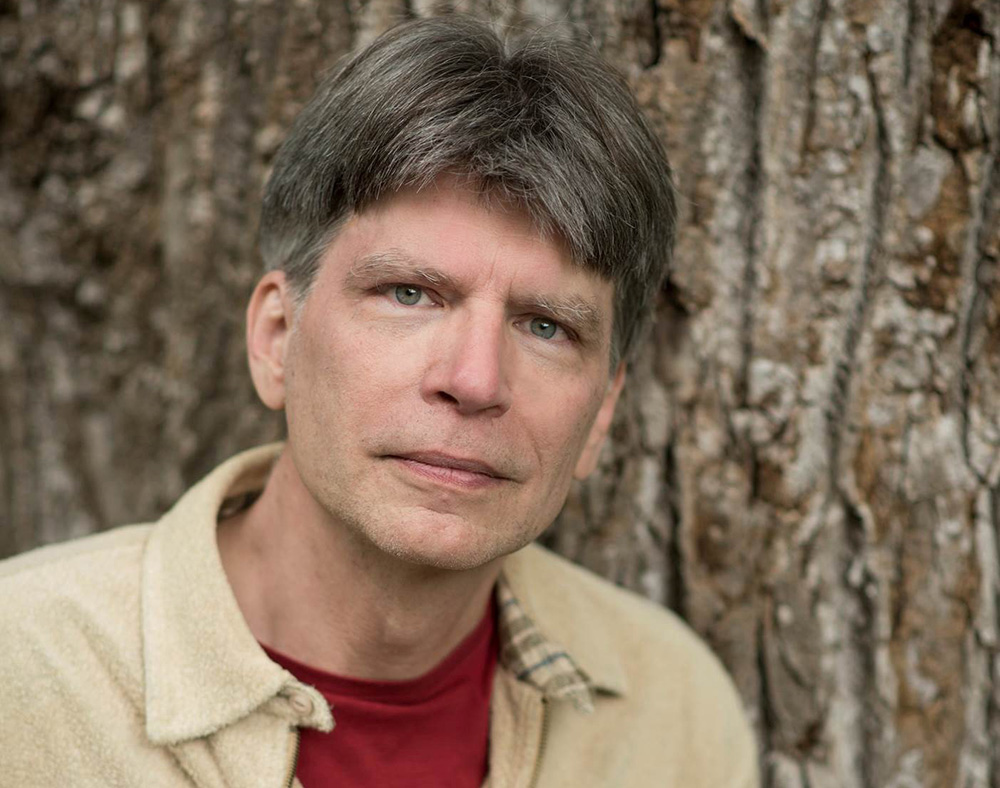
Playground, long-listed for the 2024 Booker Prize and the 2024 Kirkus Prize, joins Powers’ other commendations, including the 2019 Pulitzer Prize for The Overstory. The author of 14 books, Powers is pretty much exactly what you might expect from reading his work. Intelligent, ferociously well informed on everything from fish to quantum physics, a deeply decent human being and an American, through and through.
The man embodies what is most endearing about the United States — namely a good-hearted, almost Boy Scout-ish demeanour that is likable and genuine. (The fact that we’re both 20 minutes early for our interview also endears me to no end.)
In talking to Powers, there was a certain level of optimism tempered by things like the escalating scale (enormous) of climate change, global politics and the wild unpredictability of everything.
But at the time, Playground seemed less allegorical and more a curious investigation of the nature of change — not only in the human world, but also in the other forms of consciousness abounding the planet.
It reads a bit differently now. A certain species of sadness has crept in, not just for Powers but for all Americans who value things like goodness, honesty and integrity, the scaffolding upon which Powers builds his work.
But even in a fallen world, there is still a ridiculous amount of beauty.
A waking aquatic dream
Playground follows a quartet of interrelated characters: Evie Beaulieu, Ina Aroita, Todd Keane and Rafi Young. Throughout the novel, there’s an extended meditation on the enduring power of friendship, a form of love as powerful and obliterating as any romantic inclination.
Now strap in. There are several twists, spiralling leaps of imagination and an oceanic amount of story, as well as the occasional interruption from the real world. Not everything is as it first appears to be.
As Powers remarked during our conversation, “I’d be interested to see how you’re going to write about it.”
Playground is one of those novels that entices you to flip right back to the beginning to read it again after arriving on the final page.
So much of what happens when you read a novel takes place inside your head, a kind of sustained hallucination that can make you feel like you’ve been underwater for a prolonged period. It’s a curious sensation, like a waking aquatic dream. Which in the case of Playground is particularly apt, as many of the story’s most vivid scenes take place in the depths of the ocean.
Like Powers’ earlier works, The Overstory and Bewilderment, Playground grounds its world in the realities and experiences of actual people. Biologist Suzanne Simard provided inspiration for the character of Patricia Westerford in The Overstory.
In Playground, the character Evie Beaulieu shares some commonalities with oceanographer Sylvia Earle. And tech billionaire Todd Keane reminds one of a certain Zuckerberg.
Closer to home, Powers has drawn from his own relationships, including a longtime friendship with a fellow Chicagoan named RayRay. The ocean ties all these characters together, although it’s not immediately apparent how.
For things to become clear, you must wend your way through the lives of the quartet, from childhood into the tortuous tangles of adulthood.
Evie Beaulieu comes to her vocation (chronicler of underwater worlds) when her engineer father tosses her in a pool to test out his new invention, which turns out to be an early version of a scuba diver’s breathing apparatus. A shy and awkward child, Evie blooms in this new environment. Before long, she is charting a place for herself in the deepest parts of the ocean.
In another corner of the world, Rafi Young is finding his own lifelong passion. As a young Black boy growing up in a poor part of Chicago, Rafi discovers his love for reading, words and literature, as well as a means of escaping from the confines of his life.
Todd Keane is also in search of escape. To avoid his warring parents, Todd submerges himself in an imagined underwater world, penned by a certain female oceanographer.
When Rafi and Todd meet in a private school, they cement their friendship over a shared love of chess before moving on to the ancient game of go. Like many young dudes, they spend most of their time finding new and novel ways to insult each other while engaged in ongoing ferocious competition.
Todd comes from a wealthy family, with a financier father and a distant mother, whereas Rafi’s divorced parents have already subjected him to multiple forms of trauma. Despite their differences, the bond between the two boys appears absolute and unbreakable. The arrival of a young woman named Ina Aroita shifts the dynamic of their friendship.
Rafi and Todd both fall hard for Ina. It’s easy to understand their unfettered devotion. In addition to being a gifted artist, she is a force of nature, unafraid to look her deepest fears fully in the face. She demands that the two young men in her life do the same.
The connections between these four people take up the bulk of the narrative. But there are clues running throughout that indicate the author is up to something.
After making his fortune with a gaming platform called Playground, Todd is diagnosed with a form of dementia and is slowly losing his faculties. As he becomes more unmoored, he pulls at strands of his own experience, becoming entangled in memory. It’s not unlike what happens to sea creatures who wander into ghost nets in the open ocean.
And that’s just the human cast of characters.
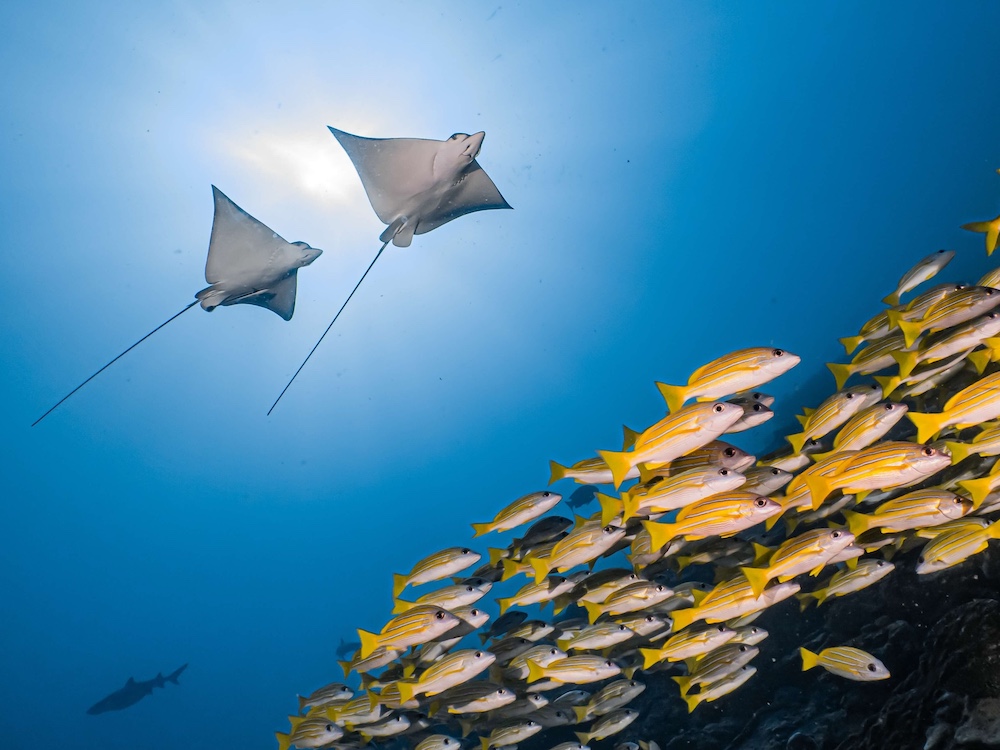
Some of the creatures invoked are as fully fleshed as the human subjects, whether they’re giant oceanic manta rays or very loud shrimp.
This dedication to the non-human world is part of Powers’ commitment to decentring people. Although Playground is built around the machinations of people, the most vivid scenes involve animals going about their daily lives.
Many of these are framed through the perception of Evie, who had dedicated her life to documenting the wonders of the ocean.
Of these, the depiction of a cleaning station is perhaps the most fascinating, summoned in language so rich, it feels as ornately rococo as a coral reef.
What’s a cleaning station, you might ask?
In tropical waters, blocks of coral attract many different species, including wrasses, small fish that eat the parasites and worms that inhabit the massive wingspans of manta rays. While the cleaner fish do their work, manta rays hover in place. It’s an example of cleaning symbiosis.
Until I was freed by Powers’ magnificent prose, I didn’t realize what an enormous relief it is to be liberated from the obliterating solipsistic obsession of humans, and all the godawful things they do.
In a dark moment, a needed ray of hope
One would think that after writing more than a dozen award-winning books and picking up a Pulitzer, Powers would feel confident about his work. But as he says, “I have friends who are real writers.”
It’s a reminder that making art of any stripe is always a fraught, uncertain task. Powers’ deep humility makes me like his writing even more.
After slogging through some less-than-thrilling books of late, reading Playground made an incandescent surge of hope fire through me.
Great writing is a reminder of the human capacity for change. After finishing the book, I was left with the sense that anything is possible.
In my long talk with Powers, he spoke on a range of subjects. He explored the work of Herman Melville, the role of playfulness in both animal and human culture, and the possibilities inherent in AI.
In person and in writing, he is proof that the world is brimming, overflowing, resplendent with wonders.
In this moment in history, the world can feel as though it is falling into a period of indefinite darkness and suffering. Powers deals with the sense of escalating, ongoing loss this way: “Think of it as ongoing change,” he tells me.
Whether you fear change, actively embrace it or vacillate between these two polarities, there is little doubt that we’re about to embark on a curious period in planetary history.
The existence of oceanic manta rays and great writers like Powers gives me hope. ![[Tyee]](/design-article.thetyee.ca/ui/img/yellowblob.png)
Read more: Books, Science + Tech, Environment









Tyee Commenting Guidelines
Comments that violate guidelines risk being deleted, and violations may result in a temporary or permanent user ban. Maintain the spirit of good conversation to stay in the discussion and be patient with moderators. Comments are reviewed regularly but not in real time.
Do:
Do not: