

 SHARE:
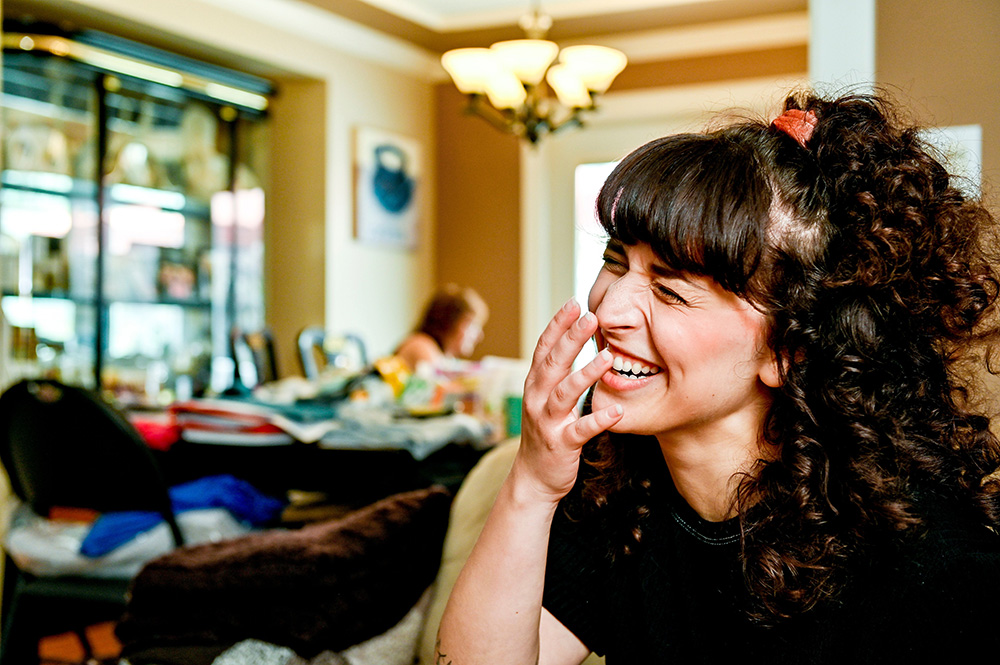
COVID-19 has caused profound shifts to many vocations — for example, it’s stripped comedians of their live audiences and laughter, which is the only way to know if something is funny. Since comedy does not often pay the bills for emerging Canadian comedians, what’s the incentive to stay focused on jokes?
We spoke with six Vancouver-based performers to understand how they’re adapting without laughs and what they’re learning through these new constraints. Our interviews were edited for length and clarity.
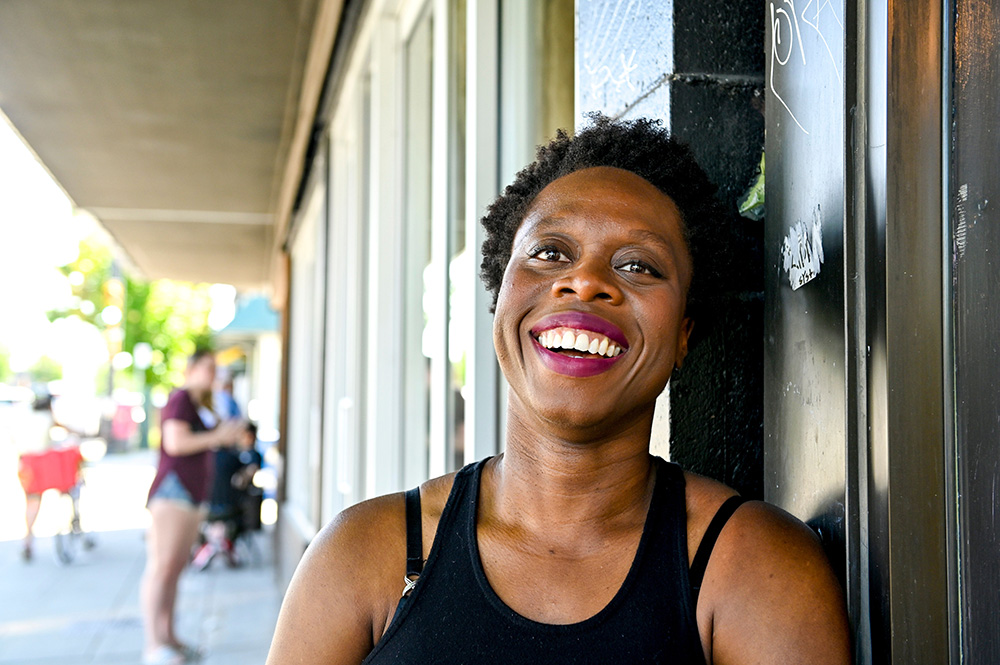
Ese Atawo is a Nigerian Canadian actor and comedian. She’s a member of improv troupes such as Your Moms and Nasty Women, a faculty member and diversity co-ordinator for Blind Tiger Comedy school and involved in theatrical events and festivals in Vancouver and abroad.
What is the role of comedians during a pandemic?
Comedy is supposed to give joy and light. We are all already so isolated with our jobs and the rat race. During this time, we are even more isolated. Good comedy is mundane, but it’s also so true and simple. The simple things are always the hardest and the funniest.
I try and find things that I find funny, then I find ways to testify, to argue on behalf of the idea and really make it funny. I try to get the best ingredients for the cake — good sugar, good eggs, good flour and try hard to get all the ingredients right — and if it doesn’t turn out, I won’t cook it again.
What’s the hardest aspect of the pandemic for you?
Having time is the hardest. Having time to reflect. I don’t know how to respect time. I have to figure that out. Time is forgiving — respect it — but don’t let it go by. Time is a bitch — but don’t leave me! The mirror is closer than ever, and it’s harder to ignore. It’s just me and the mirror.
Do you miss performing?
I so much miss performing. We do daily performances at my house with my two roommates, but I really miss people laughing at my dumb jokes. Audiences give me energy. I miss the taste, the feel, everything about it.
Pro tip for surviving a pandemic?
I suggest connecting with people. Actively seek out friends, Zoom, call people, reach out and take lots of walks. Journaling is good too. Listen to music and dance like everyone is watching you. Dance like you are staring at your crush. Lately I’ve been finding it hard to commit, plan, write or imagine. Hey, it’s my first pandemic! It’s been heavy and hard, the creative process. But slowly, it’s coming. I always have to question if my writing is good enough. I sabotage myself with my censor voice. I think that I do better with less time. I have been reaching out to help strangers and connecting with students to see how they are doing — being an ear and creating space.
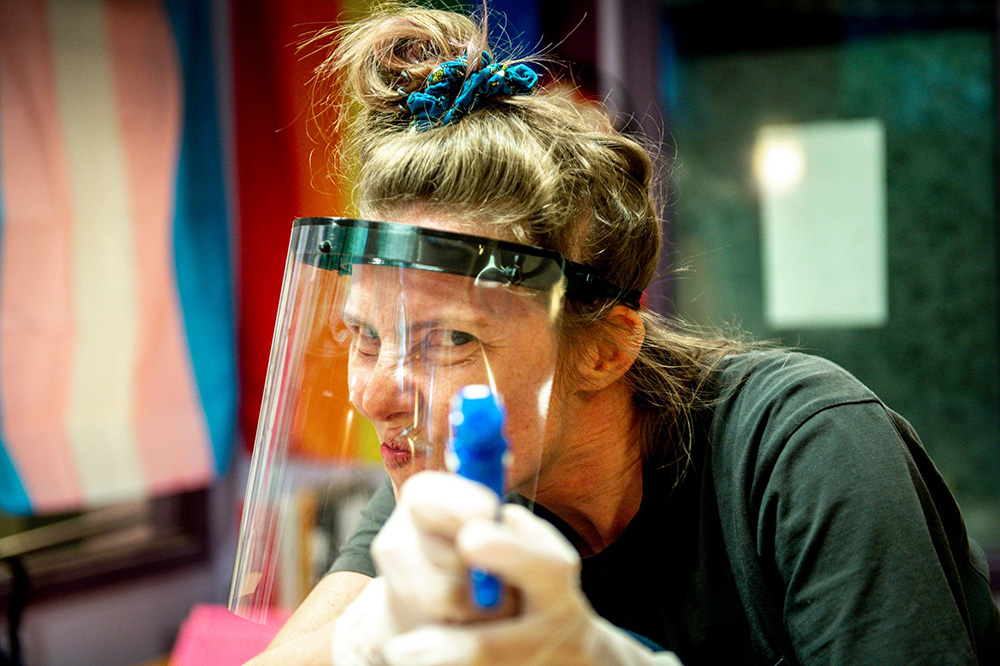
Amber Harper-Young was a finalist in B.C.’s Funniest Female 2014. In 2015, she co-created and performed in a live series of Tragedy Comedy Shows at Yuk Yuk’s. She also co-hosts Vancouverite, a monthly show. We interviewed her at the end of her shift at Downtown Eastside Women’s Centre where she’s worked for the past three years.
What is the role of comedians during a pandemic?
I can make people laugh. I can add levity to people’s lives.
What’s been the hardest aspect of the pandemic for you?
No live comedy. It’s what I live for. Every show, every set is different. The weird laugher in the back of the audience. Comedy is another language, and not like anything else in life. Before COVID, I felt like I was getting to my essence on stage, there was an exciting momentum. Then we got cut off. I wondered how I was going to live, to express myself? The high from performing is a byproduct of people relating to me when I am communicating great things about them. That is funny. Getting crowds wound up, seeing and hearing people. I love when the audience is funny.
But my day job is valuable. I have to stay well-rested and to focus on that. There is not a lot of room for writing.
Tips for surviving a pandemic?
Surrender. Accept what is going on. Do the best you can. I have only had one full meltdown. We are fools if we don’t make the corrections on things that we have been exposed to us during this time. I have gone deeper into service work. Comics are flakes and jokers. I am here to do real work.
What have we learned about ourselves during this time?
We overload ourselves to the point of not being aware. We now have time to process how we lived in the past. I want to be a different person, changing the pace of my life — shift priorities, with more time for friends and strangers — these things have the highest value. I have learned a lot. Nature is saying to us: “Hold on a sec, wash up, cleanse this air and water.” Right now, the air is fresher; we can see details on the mountains.
Do you miss performing?
I am going to cry, I miss it so much. Please don’t mention it again. Ha!
I have to embrace my on-stage failure. I used to be paralyzed by stage fright, but now, after 10 years, the audience is more accepting that I am human. They want to see me mess up — but with a smile. Then, they can judge themselves less. I deal with my issues through comedy. It’s not well articulated and I am never sure what is funny. There is a lot of failure. I can work on something for three years. I don’t write quickly.
If you are not nervous, then you are bored, and you might as well not do comedy. I have to integrate growth into every set. Then reassess. I am constantly challenging myself to do better work. It’s my existential crisis. I have to keep changing who I am. And constantly be in the moment. Now that I am talking about performing, I am missing it more. It’s so intimate. I can’t over-analyze the creativity. I have to just see the beauty. The more I perform from the heart, the more genuine I become and the easier it is to communicate.
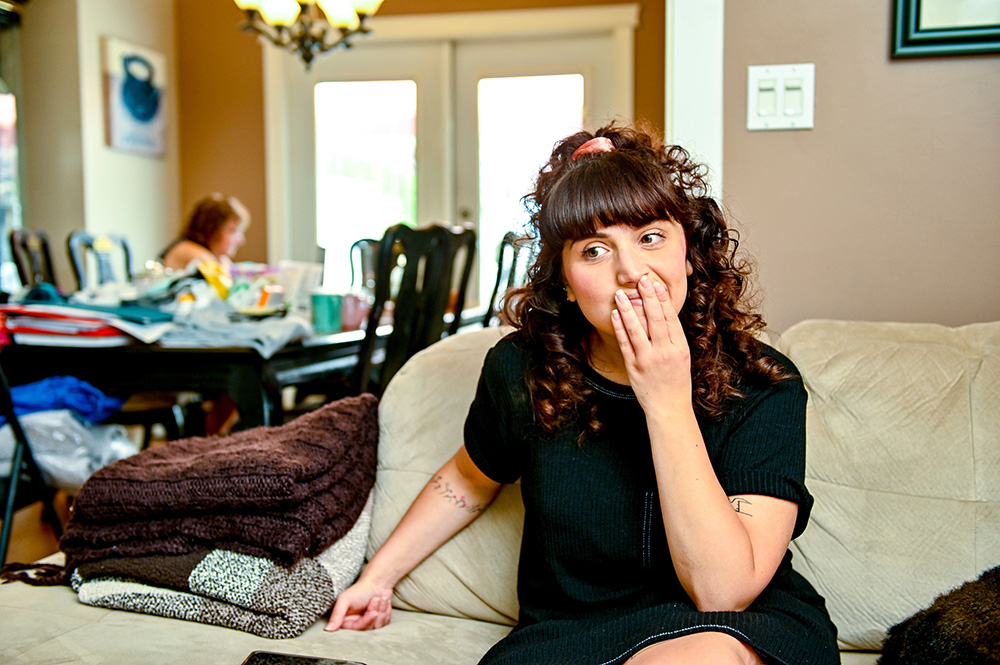
Racquel Belmonte is a voice actor, sketch comedian, improviser and writer living in Vancouver. When she’s not performing in her comedy duo Carmelahhh, she is performing with her all-female comedy troupe Nasty Women. She also works as a residential youth worker in a five-bed shelter in Vancouver.
What is the role of the comedian during this pandemic?
I see my role as comedian to make this crisis easier for other people to get through. I can use YouTube or other social media to make people laugh. Laughter is a beautiful release. We have had enough tears. Laughter doesn’t fix anything but it’s nice. My friends are all comedians. I don’t know what I would do without that community. I think of comedy like the Good Samaritan Act — you cannot pass by an opportunity to brighten someone’s day.
The Nasty Women comedy troupe has been using our audience to donate to good causes, like where I work. It’s great seeing my two worlds collide.
What’s been the hardest aspect of the pandemic for you?
I was supposed to leave for Toronto on April 26 to further my career in improv and sketch comedy. But I was living with my parents while waiting to go, and now I am back in my old childhood room stuck here for months. With my two brothers and my mom and dad. At first there was a ton of uncertainty and fear. I had no control over my feeling. And my therapist is away on maternity leave.
Tips for surviving a pandemic?
Going to London Drugs and stocking up on beauty products. I dyed my hair but then burned my scalp. It took a month to recover from that. I can’t control much, so I am trying to control my appearances. Foam roller was the last thing that I bought. My hair never looks like this. Just ask my mom.
Edibles are getting me through this. I just couldn’t shut off my brain. They salvaged my mental health and allowed me to sleep and relax. Being with my family has been helpful, crazy and amazing.
Do you miss performing?
I feel like I don’t even know how to perform anymore. Improv is scaring me. I don’t normally get nervous, but I have completely stopped writing comedy, except notes on my phone and texting.
What have you learned from the pandemic?
I’ve learned that I need to be around people. I am independent but always choose to talk or have physical contact with my comedian friends. I miss sitting in a huge auditorium after a show and chatting. I miss all the bodies and laughing together. I love that we would all come together for the same reason — to laugh.
I have become a Zoom queen. I am a voice actor. But it’s busy at home, so that can be challenging with five people in a busy house, especially with two younger brothers.
During this time, I’ve been more observant as a comedian, taking more time to flesh out ideas and see how far I can take an idea.
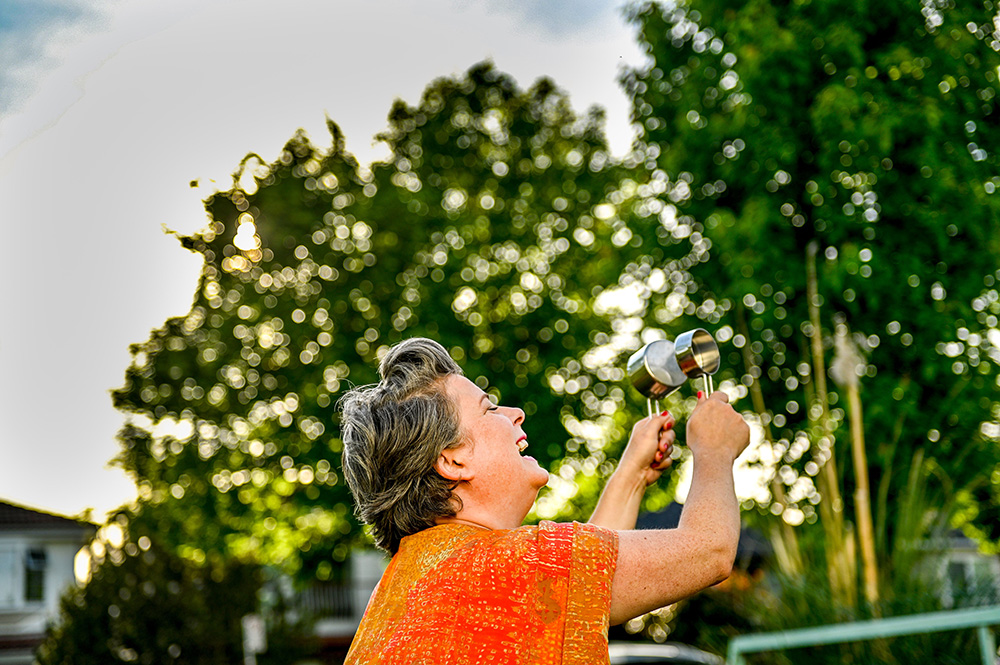
Morgan Brayton is a writer and performer who lives in Vancouver with her wife and an excessive number of cats. A Canadian Comedy Award nominee, she’s one quarter of The Lady Show, winners of best variety show at the Vancouver Comedy Awards and pick of the Fringe at the Vancouver Fringe Festival.
Pro tips for surviving a pandemic?
Kaftans have been my key to surviving the pandemic. I have three of them now. My neighbours call me Maude from the ’70s TV show. I haven’t worn makeup for months. I am wearing the total ’70s feminist uniform. There is such freedom in not wearing a bra.
Being in service to others makes me feel better. I have been sewing masks. So far, I have sewn over 200. If people want a mask, then they have to donate to one of four organizations that are helping people during COVID (the United Way, Battered Women’s Support Services, Vancouver Orphan Kitten Rescue Association and the food bank). When people come to pick up their masks on our front porch, they have to dance. We have installed a video camera and we get to watch. We are creating our own entertainment.
I have also been shopping for friends. Folks that are immune compromised or just can’t get out. And I have been organizing Dumpling Day. There’s a 50/50 chance that Hey, Dumplings! restaurant is going to go under. So we created Dumpling Day, and a whole bunch of artists donated their time and quirky prizes. I find all this gratifying.
What is the role of comedians during the pandemic?
I have no huge urge to make comedy right now. I see that lots of comics are freaking out. Comedy for the sake of comedy is not interesting to me. I’m living this thing, which makes it very interesting — and funny — to me. I don’t think that output is always necessary.
What’s been the hardest aspect of the pandemic for you?
When I taught comedy, I used to say to my students if you find it funny, then others will also find it funny. Last week, I finally shaved one leg. I just didn’t get around to the other leg for another week. I thought it was hilarious. So did other people I shared it with on social media.
I am not a disciplined person. I wish that I was. I don’t have a process, it’s all instinct.
I just wrote a pilot for a TV series. The virtual stuff just takes a different kind of energy. I am happy to stay at home with the cats and write. Just because you can catch up on everything on TV doesn’t mean that you have to. I have almost caught up on the entire Murdoch Mysteries series, which is really very good.
Do you miss performing?
Yes, I miss performing. There are seasons and a time for everything. You can’t output all the time. Sometimes I need to not perform. I have other things in my life. I can now trust that if I don’t feel like performing, it’s OK. If I never perform again, it wouldn’t be the end of the world. But it will be fine when the time comes. I have a solid relationship and I have cats.
The day before the show I am a wreck. I am anxious, I can’t eat, I can’t drink. I drive my partner crazy. And this is after years of performing. But once I am a couple of minutes into the show and I get the first laugh — no wine, no drug, no cat is as good as that feeling. Making an audience laugh — that’s why we keep doing it.
Comedy is a unifying act, it’s a human shared experience. There is a power in making people laugh, especially in a theatre. It’s a shared experience.
There is no point in making comedy unless it has a strong, underlying message of social change — unless it makes people laugh. Then it’s OK.
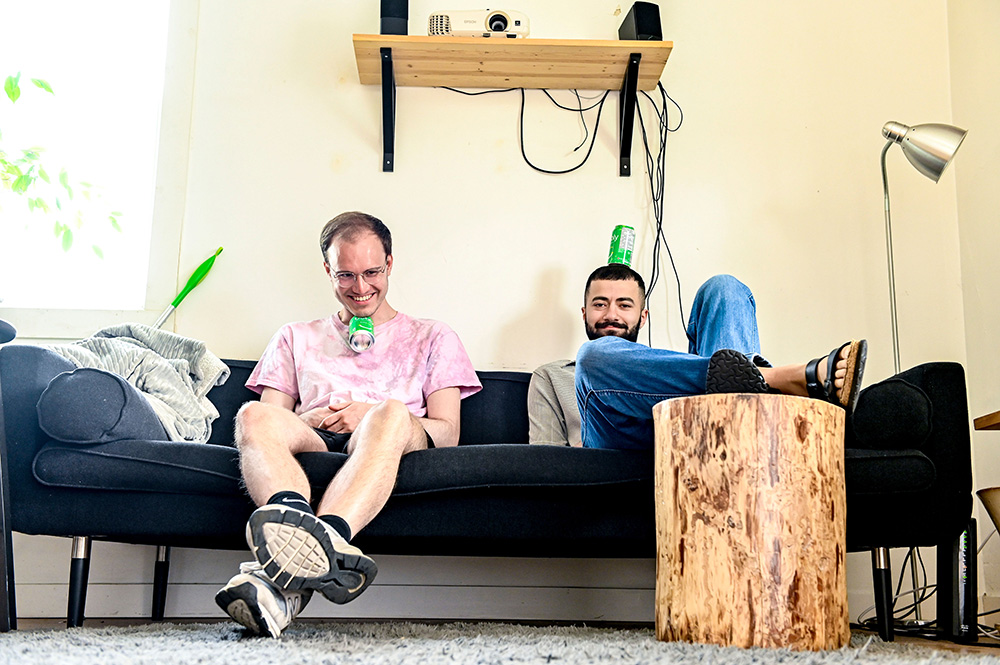
Nathan Hare and Nima Gholamipour live together in a Commercial Drive apartment that’s housed up-and-coming comedians for years. Hare performs around Vancouver and co-hosts the show Soda Fountain at Little Mountain Gallery. Gholamipour is an Iranian Canadian who’s done comedy and made all sorts of art in the city for almost a decade.
What’s the role of comedians during a pandemic?
Hare: We have to provide levity so that people don’t feel alone.
Gholamipour: We can all relate to this situation, to the daily struggles. Making fun of basic shit, like cooking, when I don’t know how to cook. It’s funny because we are all in it. Most of us comedians have mental health issues. It’s a side of us that we don’t talk about. We need the support of our community. We are so separate. The loneliness is hard. We are missing our community.
Pro tip for surviving this pandemic?
Gholamipour: Get off the phone. My phone time has spiked.
Hare: Get outside. Get off the phone. Engage in healthy news. And don’t put pressure on yourself to be productive. We don’t all need to create a masterpiece.
Gholamipour: I am waking up to new lessons every day. A lot of people have learned new lessons. And keep the sparkling water coming. Have some non-alcoholic beverages around. Cook stuff that you like to eat. We started having pizza Friday where we would make pizza from scratch. Then we analyze every aspect of the pizza. Is this crust too thick?
Do you miss performing?
Gholamipour: Yes and no. I don’t miss the expectation to be funny. When you say, “yes” to a show, you put this pressure on yourself. It’s nice to just relax and have funny thoughts. Comedy stresses me out.
Hare: I don’t miss the exhaustion. People love you when you are funny. People love politicians when they are funny. Comedy is an amazing tool.
Gholamipour: There are other things that are important right now, which may influence my work later.
Hare: When I’m performing, I’m eating out a lot and drinking a lot. It’s great to be at home cooking. But I do miss performing. I am enjoying a Comedy Vacation. The stress before shows is pretty great. I think that artists get a pass to be nervous. Everyone has their own way of dealing with this. We think that if you’re not nervous before a show, then it’s not that important.
Gholamipour: You have to find your own clown, your own style. Improv, sketch and standup all have their own different vibe. With improv, it can be euphoric. It can be so magical. At times, I don’t even remember what went on. I’ve had people tell me that they loved some bit that I did, and honestly, I’ve done so many shows now they all bleed into one big memory.
Hare: When we started out, every show was huge. It’s absurd to think about it now. After a bad show, I would say to myself: “I have to rethink my life. I gotta make some changes. Maybe I should become an electrician. Dad was right.”
How was the pandemic affected you?
Gholamipour: Being a single dude, it’s not been great. And I had to stay away from my family. With the new rules, I have just started seeing them. It’s really nice to see family.
Hare: I still only go out when necessary. I still think twice about everything. The handshake is gone. Totally gone.
Gholamipour: My breakthrough is that it’s nice to have time to create without forcing things. But then sometimes it gets cringy and less spontaneous when you have too much time. Sometimes we just make up shit and do little videos for ourselves that we find funny. We are up-and-coming performers. We are learning to have a voice. We are mastering sharing our message with limited resources. The pandemic sort of levels the playing field — now everyone has limited resources. Even SNL started performing with limited resources.
Sometimes, no audience equals no energy. But social media, retweets are the new audience. We spend so much time trying to crack each other up.
Hare: Social media gives you a sense of community. Memes become part of our community. I don’t care about likes or retweets — I gotta go with my comic voice. I have to do what I think is funny. ![[Tyee]](/design-article.thetyee.ca/ui/img/yellowblob.png)
Read more: Media




Tyee Commenting Guidelines
Comments that violate guidelines risk being deleted, and violations may result in a temporary or permanent user ban. Maintain the spirit of good conversation to stay in the discussion.
*Please note The Tyee is not a forum for spreading misinformation about COVID-19, denying its existence or minimizing its risk to public health.
Do:
Do not: