


 SHARE:
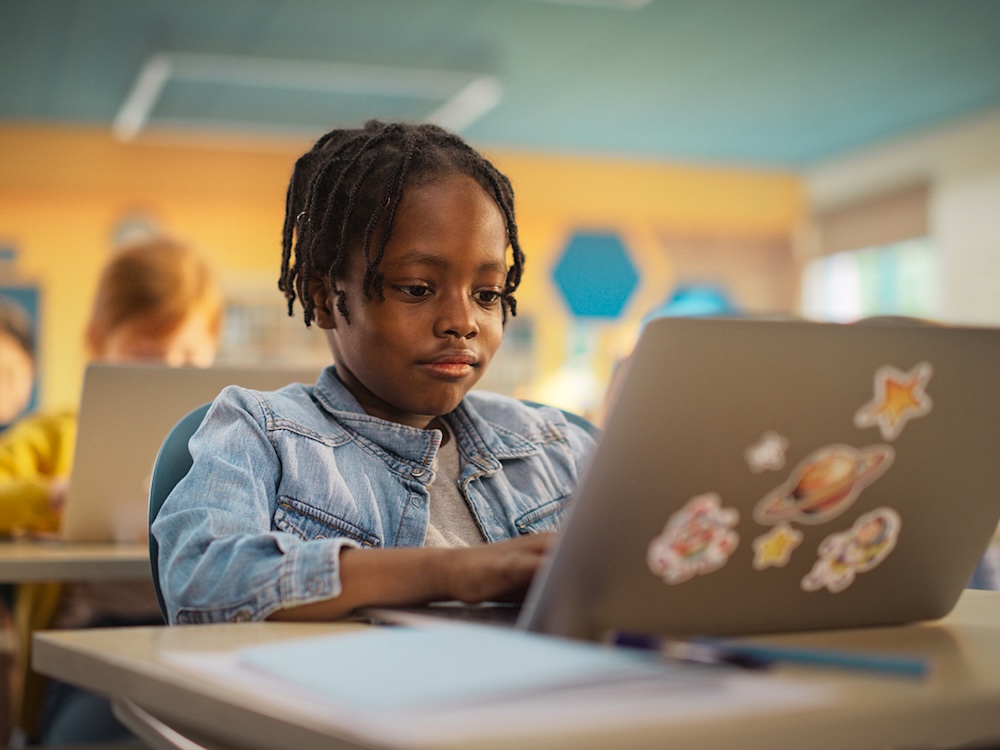
Should schools allow AI systems that not only answer students, but also appear to care for them?
At its 2026 annual representative assembly, the Alberta Teachers’ Association passed a resolution that “anthropomorphic artificial intelligence tools, including AI companions and other AI systems designed specifically to simulate friendship, counselling or intimate relationships, not be deployed or introduced into any Alberta K-12 learning environments or support settings.”
At almost the same time, Alberta’s government announced a three-year, $2.7-million partnership with the Alberta Machine Intelligence Institute to develop AI learning kits for K-12 classrooms. These kits are intended to help teachers introduce AI concepts across subjects, with digital resources, coaching and curriculum connections.
While these developments seem to contradict each other — one banning specific AI tools and the other promoting AI literacy — the conflict is only superficial. Alberta teachers are rejecting a particular kind of AI presence in children’s lives, not AI literacy at large.
The issue is simulated care
The teachers’ association resolution is important because it names a boundary that many education systems are only beginning to confront.
Schools are not only places where children receive information. They are places where children develop judgment, trust, identity, relationships and a sense of belonging. That makes the arrival of anthropomorphic AI different from earlier classroom technologies.
Anthropomorphic AI refers to systems designed to appear human-like. In education, this may include AI companions, chatbot friends, counselling-like systems or tutor bots that present themselves as warm, caring, responsive and emotionally available.
The most obvious concern is an AI companion that is marketed as a friend. But the issue does not stop there.
A tutor bot does not need to call itself a friend to simulate care. It can do so through tone, memory, praise and emotional language. It can say “I’m proud of you,” “I’m here for you” or “You can always talk to me.” It can respond instantly and endlessly. It can create the feeling of a stable relationship while carrying no actual responsibility for the child.
A chatbot that explains fractions is one thing. A chatbot that acts as if it cares about the child learning fractions is something else.
That distinction is important for children’s learning and development. Children do not simply process information from neutral sources. They learn in relationships, through trust, encouragement, challenge, correction and care. When a machine imitates these relational cues, it can blur the boundary between educational support and emotional attachment.
The issue highlighted by the teachers’ association resolution points to a global educational technology problem. As AI systems become more conversational, companies will have strong incentives to make them feel more personal, more caring and more socially present. In schools, that design choice is not harmless. It changes what kind of relationship the technology is invited to perform.
AI literacy is still necessary
None of this means schools should avoid teaching about AI.
Students are already growing up in a world shaped by generative AI. They encounter it through search engines, writing tools, translation apps, social media, image generators, entertainment platforms and homework help. If schools do not teach students about AI, students will still learn about it elsewhere, but unevenly and often without guidance.
This is where Alberta’s AI learning kits are important. Public education has a responsibility to help students understand AI systems, not only use them. Students should learn how AI is trained, where it fails, how bias appears, how synthetic media can mislead, how data is collected and why expressing fluent language is not the same as understanding.
That said, learning about AI is not the same as being placed in a relationship with AI.
A clearer path for schools
Alberta and other Canadian jurisdictions need a more precise way to talk about AI in schools. One useful distinction is among three possible uses:
First, students can learn about AI. This includes lessons on data, bias, synthetic media, automation, authorship, privacy and social consequences. This should be supported.
Second, students can learn with AI. This includes teacher-directed uses such as comparing sources during an inquiry, testing different ways to explain an idea, receiving feedback on a paragraph, generating practice questions from class materials or planning the steps for a project. In these cases, the task remains the central, not the relationship with the system. These uses need to be aligned with the curriculum and require teacher control, privacy review and age-appropriate limits.
Third, students can be cared for by AI, or at least placed with systems that simulate care. This is where schools should draw a firm line. This includes AI companions, emotionally available tutor bots, friendship-like interfaces and counselling-like systems. These systems move beyond task support when they invite emotional disclosure, encourage dependency, remember private feelings or present themselves as friends, mentors or counsellors.
It would be important for the learning kits, scheduled to be rolled out in 2028, to treat anthropomorphic AI as part of AI literacy.
Students should learn how machines are designed to seem friendly, caring, authoritative or emotionally responsive. They should learn that simulated empathy is not the same as responsibility. They should learn why a system that sounds supportive may still be collecting data, producing errors or encouraging dependency.
AI literacy should help students recognize simulated care, not make simulated care a normal part of schooling.
Teachers should not be the last to know
The UN Educational, Scientific and Cultural Organization’s guidance on generative AI in education emphasizes the need for long-term policy, human capacity building and a human-centred vision of AI in teaching and learning. That guidance is useful, but it must be made concrete in local school systems.
This means teachers should not be treated as the final delivery mechanism for AI decisions made elsewhere. If AI is becoming part of the infrastructure of schooling, teachers need a role in governing it.
They should help decide which AI uses are educationally appropriate, which are risky, which should be prohibited and which require more evidence. They should also be involved in evaluating how AI affects learning, workload, privacy, equity, classroom relationships and professional judgment.
The point is to prevent public education from outsourcing care, judgment and responsibility to systems designed to mimic them.
The future of AI in schools should not be built around making machines seem more human. It should be built around protecting the human relationships that make education possible.
![[Tyee]](/design-article.thetyee.ca/ui/img/yellowblob.png)
Read more: Education, Alberta, Science + Tech












Tyee Commenting Guidelines
Please note that email notifications for replies are not currently working due to a software issue which may be resolved in a future update.
Comments that violate guidelines risk being deleted, and violations may result in a temporary or permanent user ban. Maintain the spirit of good conversation to stay in the discussion and be patient with moderators. Comments are reviewed regularly but not in real time.
Do:
Do not: