


 SHARE:
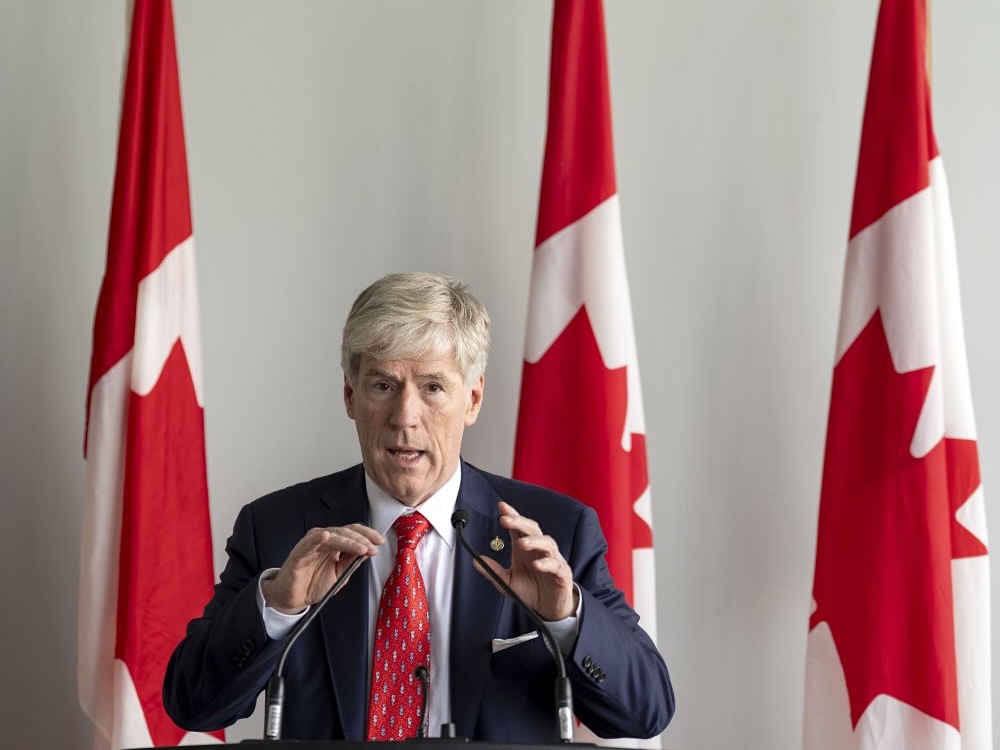
Canada is extending its hand to friendly nations hurt by their dependence on oil made scarce by conflict in the Middle East.
But look closely, and you’ll see that hand is largely empty.
Today, despite bad behaviour by the United States and China towards Canada, those two countries benefit most from our reliable oil production.
That’s not what Canada’s minister of energy and natural resources, Tim Hodgson, signalled in March when he delivered a big promise at the world’s most important energy conference in Houston.
“Over the last two weeks, with Iran closing the Strait of Hormuz, it has truly never been clearer that oil and gas from reliable producers like Canada are what our allies need,” he said. “We hear you, and we will deliver for you.”
It’s a preposterous pledge, now and in the foreseeable future. Trustworthy allies such as Japan, South Korea and European nations are benefiting very little, if at all, from this year’s record Canadian production of more than five million barrels of oil per day.
Why? Start with the long-standing north-south orientation in Canadian petroleum trade. Seventy years ago, Alberta’s oil industry was in trouble. The province needed new export markets for rapidly growing oil production. Alberta Premier Ernest Manning wanted a pipeline to Montreal to sell Alberta crude.
Neither Prime Minister John Diefenbaker’s Conservatives nor the opposition Liberals agreed. In fact, future prime minister Lester Pearson endorsed courting U.S. consumers when it came to exploiting oil and other natural resources. Challenged briefly by Prime Minister Pierre Trudeau’s National Energy Program in 1980, continentalism in oil was enthusiastically embraced and institutionalized in the free-trade agreements of 1988 and 1994.
This continentalist orientation in energy trade, industry’s preference since the 1970s, bred a pipeline infrastructure system designed to satisfy the United States’ thirst for oil. As recently as 2023, all but three per cent of Canada’s oil exports went to the United States.
In March the Canada Energy Regulator reported that Canada keeps 12 per cent of western Canadian oil production while more than 76 per cent of it goes south.
The main reason is that most Canadian oil export infrastructure was built to supply U.S. refineries and consumers. Today, thanks to the Trans Mountain pipeline expansion, some 11 per cent of western Canadian production may go to non-U.S. destinations through this network. But this maximum isn’t being realized because California refiners buy some of the expansion’s heavy crude.
Industry and government happily built a pipeline system over the last 50 years that makes it literally impossible to deliver significant amounts of oil to our European and Asian allies.
Some may argue the Trans Mountain pipeline expansion changes this. Line 2 of the pipeline now carries 540,000 barrels per day of oilsands crude to Burnaby, B.C.
Why not ship this oil to Japan and South Korea? This would amount to about 11 per cent of the roughly five million barrels of oil Japan and South Korea together imported daily before the United States and Israel began bombing Iran.
But because the market rules when it comes to selling Canadian oil, those allies will get that oil only if they outbid other countries for it. Since mid-January most of this new crude supply goes to China and the United States.
Kpler ship tracking data shows that 102 tankers loaded oil at Trans Mountain’s Westridge terminal between Jan. 13 and May 14. Fifty-two of those tankers (51 per cent) listed Chinese ports as their destination. Another 30 ships (29 per cent) headed to U.S. ports. Only seven tankers listed South Korea as their destination; three tankers headed to Singapore; none listed Japan as a destination. The markets receiving the oil shipped in the remaining 10 tankers were unidentified.
So Trans Mountain isn’t helping the allies who respect us at all. It’s primarily supplying China and the United States.
The first country, hardly an ally, was identified just last year as “the most active perpetrator of foreign interference targeting Canada’s democratic institutions.”
And the president of the United States, tolerated by supplicants in Congress, belittles our prime ministers and levies crippling tariffs against key Canadian industries. The oil market doesn’t care a whit about these realities.
Given market forces, there’s no guarantee that, even if Alberta Premier Danielle Smith and Prime Minister Mark Carney get their new pipeline to the west coast, it will deliver significant amounts of oil to our Asian allies a decade from now.
Hodgson’s promise also doesn’t square with how the oilsands industry works. Oilsands plants produce oil continuously, 24 hours a day, seven days a week. Operators cannot just flip a switch to increase production; they already are striving to operate at their maximum efficiency. This year’s production increases will result from the established plans of oilsands companies. They are not a response to the U.S. and Israeli war against Iran.
If Canada was serious about keeping Hodgson’s promise, it would have to turn oilsands production and trade on its head. It would require governments to adopt unimaginable policies — like abandoning the market mechanism and instead directing what countries could buy Canadian oil.
No Canadian political party with aspirations to govern would do this.
Sorry, Japan, sorry, South Korea, sorry, European countries. The smart money says Minister Hodgson’s promise will remain empty and unfulfilled. ![[Tyee]](/design-article.thetyee.ca/ui/img/yellowblob.png)










Tyee Commenting Guidelines
Please note that email notifications for replies are not currently working due to a software issue which may be resolved in a future update.
Comments that violate guidelines risk being deleted, and violations may result in a temporary or permanent user ban. Maintain the spirit of good conversation to stay in the discussion and be patient with moderators. Comments are reviewed regularly but not in real time.
Do:
Do not: