


 SHARE:
If you buy an $800,000 condo in British Columbia you will likely pay provincial property transfer tax of about $14,000.
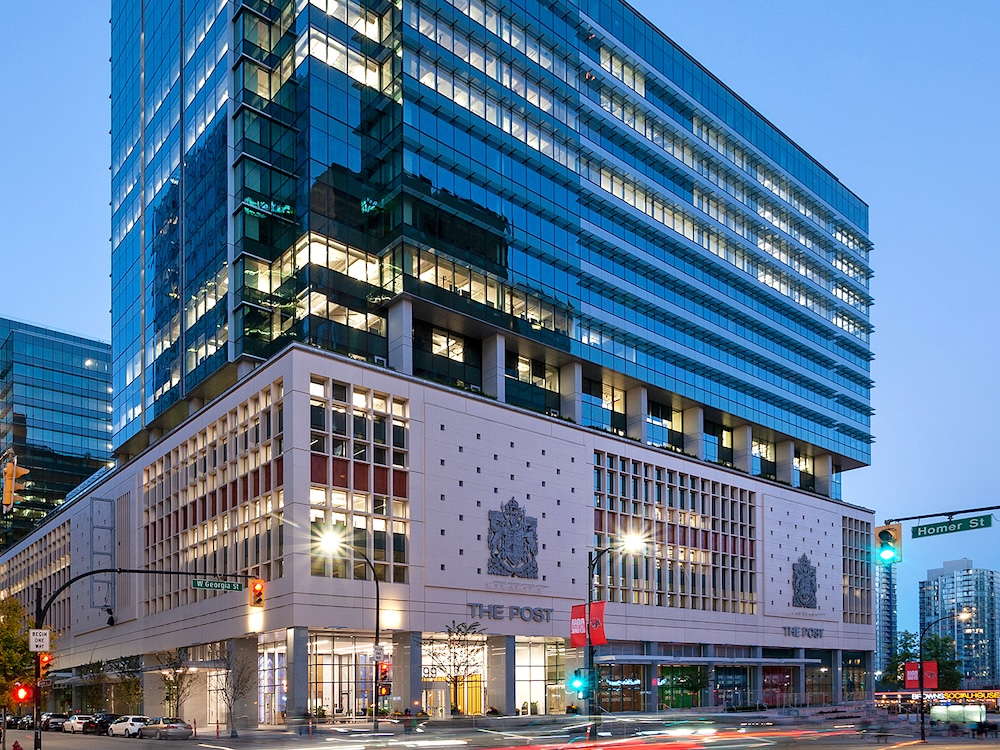
But Spanish billionaire Amancio Ortega, founder of the Zara clothing chain, and his private investment company Pontegadea paid no property transfer tax when he bought the Post office-retail development in downtown Vancouver for $1.2 billion last year.
Instead of buying the building, Ortega bought 8384410 Canada Inc., which owned it. As a result he didn’t have to pay the $36 million in property tax that would otherwise have been levied.
It is routine strategy in the B.C. real estate and development business to establish a bare trustee company and register it in the land title office as the owner of a property. The beneficial owner of the property is whoever owns the shares in that company.
When they want to sell, they sell the shares of the company (and the property) with no change of ownership in the land title office and no property transfer tax payable.
That’s the case in B.C. but not in Ontario, which taxes the transfer of a beneficial interest in land in the same way as property sales transfers. It closed the loophole back in 1989.
NDP hypocrisy on the loophole
Ten years ago, then-opposition NDP MLA John Horgan introduced private member’s “Bill M210 — 2016: Property Transfer Tax Fairness Act” to close the share sales loophole. As expected for an opposition MLA’s bill, his proposed act was not passed.
In a stunning display of hypocrisy, however, the NDP government, under Horgan and now David Eby, has chosen to maintain this loophole during its nine years in power. This is especially hard to understand given the government’s record deficits and its austerity measures, such as reneging on commitments to affordable housing.
It is, however, consistent with the Eby government’s increasing alignment in recent years with real estate development interests. The property transfer tax loophole is of great benefit, for example, to developers who build and then sell market rental housing projects and to the investors who purchase them, such as real estate investment trusts and private equity and financial asset management firms. The government increased its support for such transactions in its 2024 budget by introducing a property transfer tax exemption for new purpose-built rental buildings.
BC’s contradictory legal case against the loophole
Surprisingly, the province opposed the use of the loophole in the B.C. Supreme Court in 2023.
The court was being asked to allow the sale of an insolvent debtor’s property for $72 million through a share sale in order to avoid paying $3.5 million in property transfer tax.
The province argued that allowing the sale “would be to bless the objective of avoiding a tax liability.” The judge was not persuaded, pointing out that it is common in B.C. to transfer property through share sales to avoid paying property transfer tax, or PTT.
“The Province’s arguments on this issue appear to be based on the premise that the transfer of property by means of the sale of the corporate property owner’s shares constitutes unlawful tax avoidance,” the judgment noted. “However, it seems clear that, at least outside of the insolvency context, this proposition is not correct.... It is common for purchasers to acquire land in British Columbia by acquiring the shares of a nominee to avoid paying PTT.”
The property transfer tax “is readily avoidable in a non-insolvency context,” the court found. And the province “has not been able to satisfactorily explain” why the attempt to avoid the tax is unlawful.
The province appealed, but the judges in the Court of Appeal dismissed its arguments.
“The Province explicitly accepts the fact that transactions of this kind are routine outside the insolvency context,” the judges found. “I can see no error in the judge’s conclusion that structuring a transaction to avoid the transfer of title and thereby PTT is a legitimate commercial practice outside the insolvency context.”
The conclusions of the judges seem perfectly obvious. Why not close this loophole for everyone, instead of going to court with feeble arguments against its use in the insolvency context?
Legislation is not required to close the loophole
Importantly, the B.C. Supreme Court judge in this case pointed out that the province doesn’t need to pursue any legislation to start taxing the transfer of property through share sales. The existing act lets the government achieve this by regulation.
Could the NDP government be persuaded to enact such regulations? Or will it continue to preserve the existing loophole, which serves the interests of land speculators, property flippers, developers, corporate landlords and so on?
A broken commitment to close the loophole
The BC Green Party has called for the closure of the bare trust property transfer tax loophole since 2015 — before Horgan introduced his private member’s bill in 2016.
The 2024 B.C. election resulted in a slim one-seat majority for the NDP with 47 seats. To strengthen the stability of the government and to pursue shared priorities, the two-person BC Green caucus and the NDP caucus entered into the 2025 Cooperation and Responsible Government Accord, or CARGA. In an encouraging development for tax fairness, it included a commitment, as a “2025 Deliverable,” for government to end the property transfer tax loophole.
The NDP government reneged on this commitment. Closing the loophole was not included in the premier’s mandate letter to the minister of finance or in the 2025 B.C. budget. The developers’ lobby group Urban Development Institute nevertheless followed up with the government to express its concern regarding the commitment and later celebrated “no change to PTT treatment of bare trusts” as one of its many “2025 Provincial Wins.”
Eby, Finance Minister Brenda Bailey and BC Green Leader Emily Lowan did not respond to requests for comment on the lack of action to close the loophole.
A spokesperson for the Ministry of Finance responded: “Government continues to review all aspects of the PTT to ensure that everyone pays their fair share, and government has not closed the door on changes to this policy.” They also pointed to the establishment in 2020 of the Land Owner Transparency Registry of beneficial ownership of land.
A BC Green Party spokesperson explained that they had decided not to renew the CARGA deal because the NDP did not fulfil many of its “2025 Deliverables” commitments.
“The PTT loophole is just another example of the BC NDP succumbing to corporate power. It is political cowardice and pro-corporate agenda that has driven this government's decisions, laundered through the BC NDP’s reputation as a workers’ party.” ![[Tyee]](/design-article.thetyee.ca/ui/img/yellowblob.png)
Read more: BC Politics












Tyee Commenting Guidelines
Please note that email notifications for replies are not currently working due to a software issue which may be resolved in a future update.
Comments that violate guidelines risk being deleted, and violations may result in a temporary or permanent user ban. Maintain the spirit of good conversation to stay in the discussion and be patient with moderators. Comments are reviewed regularly but not in real time.
Do:
Do not: