


 SHARE:
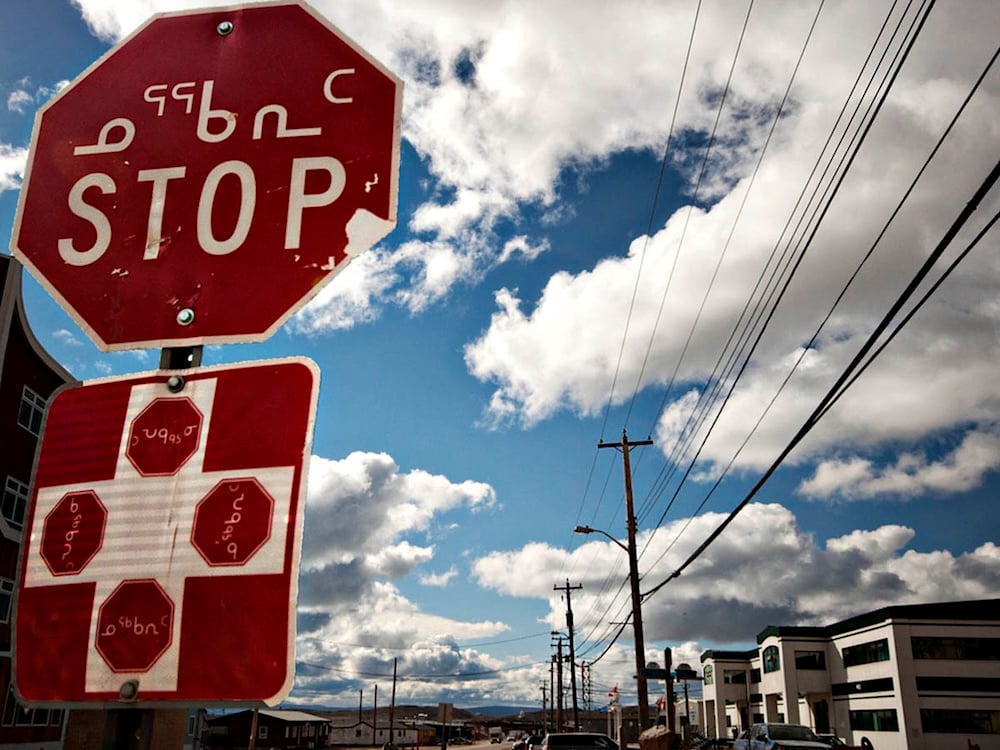
Canada’s hold on its Arctic territories depends on Inuit and can be bolstered by strengthening their communities, a leading expert says.
University of British Columbia global affairs professor Michael Byers, who has spent much of his career studying power and international politics in the North, says the legal system that underpins sovereignty questions in the Arctic remains “robust,” despite recent rhetoric from Donald Trump about Greenland.
Byers says it still makes sense for Canada to improve military capabilities. But he says investing in infrastructure and support for Arctic communities would also help strengthen Canada’s sovereignty in the North.
Tyee senior editor Tyler Olsen spoke to Byers, who has written two books about the intersection of international law and Arctic sovereignty, about how worried Canadians should be about international superpowers and Trump’s fixation on Greenland. This interview has been edited for length and clarity.
The Tyee: You wrote a book called Who Owns The Arctic? in 2009 that was all about Arctic sovereignty. Have recent events changed your thinking about the future of the North?
Michael Byers: No. There is an international legal system — which, in the Arctic, is mostly centred on the Law of the Sea — that remains in place and has worked very well and continues to work well. Part of that legal system concerns the prohibition on the use of force against the territorial integrity or political independence of states, and that rule has proven robust in the face of Donald Trump’s desire to acquire Greenland.
So no, I don’t really see much change. I just remind people that just three and a half years ago, Canada and Denmark negotiated a solution to our dispute over Hans Island. We now have a treaty between those countries that resolved the last land dispute in the circumpolar Arctic.
So no, and the beauty of rules is that they are designed to provide stability and predictability over the long term. Sometimes they’re tested, and certainly some of the rules that apply in the Arctic have been tested recently, but they’ve remained robust.
It seems like part of this requires one to predict the future when it comes to US politics and the behaviour not just of this present president but future politicians who might lead that country. You’re suggesting that the rules in place will either be respected or have enough force to restrain politicians now and in the future, is that correct?
Yes, in the sense that there have been no intrusions on Canadian sovereignty by other nation-states. We have the longest coastline of any country in the world, and there has been no invasion by any foreign country. We have the second-largest geography of any country in the world, and no country has sought to occupy any of it. We have the longest undefended border in the world with the United States, and we retain control over that border.
The one big change in the last year is the unpredictability of the United States now joins the security concerns that we’ve had for a long time in the Arctic with regard to Russia and China. So it’s not just two superpowers that pose a risk for us. It’s a third country.
It’s not a risk of occupation or conquest, I don’t think, from any of them, but there’s certainly a risk of espionage, of sabotage and, in the case of the United States, conceivably a challenge to Canada’s position that we have full control over the Northwest Passage — because that is a long-standing dispute with the United States, something that for 30, 40 years now, we’ve agreed to disagree about.
I could imagine Donald Trump deciding that he wanted to send a US Coast Guard icebreaker through the Northwest Passage without Canada’s permission. I could imagine the United States wanting to put missile interceptors on Canadian soil as part of Golden Dome, and that we might end up in some tense negotiations with his administration, but these are manageable issues, as opposed to the kind of threats of invasion and conquest that countries elsewhere in the world regularly face. I’m thinking here of Ukraine.
In Davos, Prime Minister Mark Carney laid out a revised interpretation of the current structure of international politics. Does that change how Canada will act, or its strategy or policies regarding its North? How do you see that fitting into the actions and strategies protecting Canadian sovereignty in the North?
I think there were two messages in Mr. Carney’s speech. One is that we can no longer be assured that the United States is on our side — that is, that the interests of the United States and Canada are somehow aligned and therefore the U.S. wants to co-operate with us as a trusted ally. We just can’t assume that the United States will be on our side, and that means that we need to develop greater autonomy, greater capability, greater capacity to do things on our own and in concert with other countries.
That leads to the second key message in Mr. Carney’s speech, which is that the countries that are not superpowers need to work together more, that we need to co-operate more closely with the countries of the European Union, with Indo-Pacific countries like South Korea and Japan and Australia and New Zealand; that intensified co-operation is actually part of the answer. So he is actually talking about international law, because intensified co-operation will lead to new treaties. The comments he had about the international rule of law being broken were referencing a U.S.-led situation, and he’s saying that the less powerful countries need to build a new system among themselves.
You’ve written about the need for co-operation with Inuit in Canada’s North and how that can strengthen Canada’s sovereignty. Do recent events change that or reinforce that? How do you think about that now?
One of the big factors in the recent crisis over Greenland, one of the big factors that was largely ignored by the global media, is the fact that the majority of residents of Greenland are Inuit and Denmark has a self-governance agreement with Greenland that explicitly states that Greenlanders not only have a right of self-determination, that they have a right to independence once the economic conditions are right for that.
So Denmark can’t sell Greenland. Greenlanders are the only ones who can decide what happens to their country. And a similar logic applies in Canada’s Arctic, and indeed across this country — you can’t imagine selling or trading the territory of Indigenous Peoples, and we have to respect Aboriginal rights, we have to respect our treaties with them. If we ever got into a situation where someone was seeking to claim part of Canada’s Arctic, the correct response on the part of the federal government would be “Well, you’re not talking to the right people here.”
This is not just a national issue in terms of the federal government in Ottawa. This is an issue that concerns the different Indigenous Peoples of the North, their governments, their organizations. That’s consistent with Canada’s long-standing position concerning the Northwest Passage, which is that Canada’s claim is built upon thousands of years of Inuit use and occupation of the land and the sea ice, that we are stronger as a country and our borders are even more concrete as a result of the partnership between the Canadian government and Indigenous Peoples.
It’s not just Inuit in the Arctic — but let me stress that Inuit in Canada are the same people as Inuit in Greenland. They speak the same language, they have the same culture, and indeed there are extended families that live on both sides of the international boundary.
Today, an American cabinet minister has been talking about Albertan sovereignty. When that came up last year, there was significant pushback from First Nations located in Alberta, who noted that politicians were talking about their rights and territories, and restating the need for that to be respected. It’s interesting to hear you talk about how land claims can help strengthen Canadian sovereignty in certain ways.
A better parallel with the Greenland situation would be Haida Gwaii. So imagine that Donald Trump decided that he needed to acquire Haida Gwaii, and the Haida Nation said no way. That in itself would kill any potential deal with Donald Trump, right? You couldn’t imagine selling Haida Gwaii without the free and informed consent of the Haida people, and that’s the situation that Denmark is in vis-a-vis Greenland. It’s just not an option. Because it depends on the free and informed consent of the Indigenous people who live there on their traditional lands.
Do you see the Greenland crisis, and the fact that we’re talking right now, as reflective of just one man’s whims and fixation on a certain place, or a sign of something larger in the United States or elsewhere?
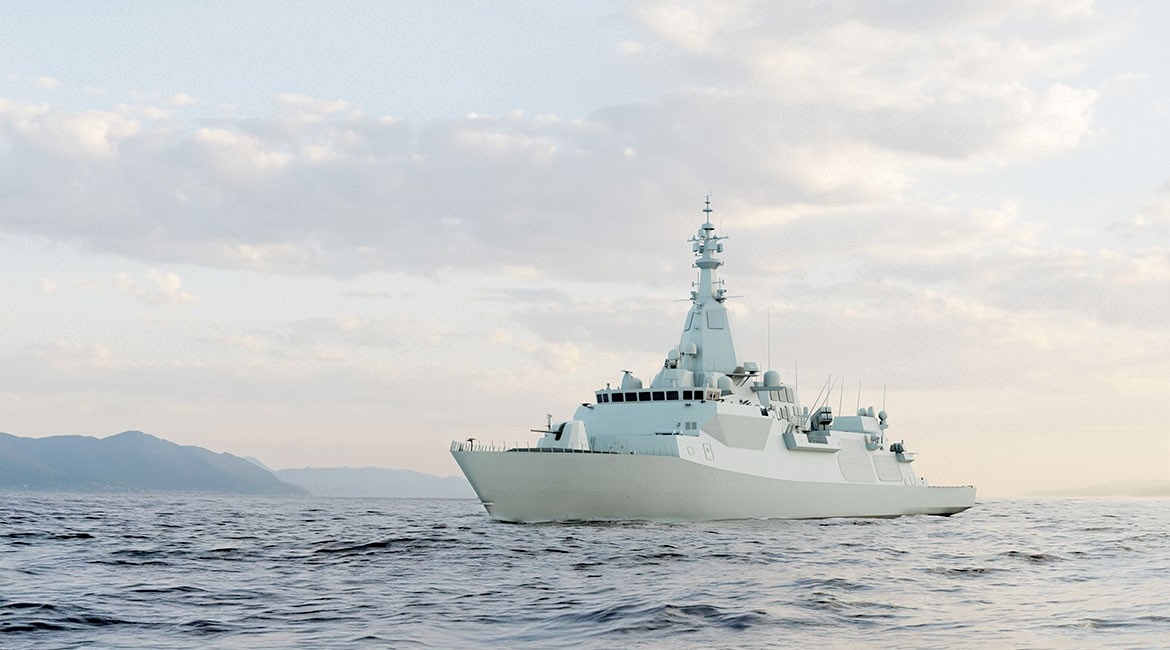
The relationship between NATO countries and Russia is much worse than it was before the annexation of Crimea in 2014 and before the full-scale invasion of Ukraine in 2022. Russian aggression in Ukraine has been a game-changer and there is, quite properly, a major move by both Canada and the United States to upgrade the radar stations in Canada’s Arctic that are designed to detect and provide early warning of incoming Russian intercontinental ballistic missiles and cruise missiles. And I think that’s a good thing. And with that, there’s an increased concern to maintain our naval capabilities. The plans to buy new surface warships and now the plan to buy 12 new submarines are all part of the fact the world is definitely more dangerous than it was just 12 years ago.
China is becoming a much more powerful country, but it has not demonstrated any particular willingness to use military force. It hasn’t invaded Taiwan, at least not yet. And it certainly hasn’t invaded any countries in Africa or Latin America from which it secures an awful lot of resources through international trade and investment.
So China is a concern, but unlike Russia, it hasn’t demonstrated aggressive intent. For all those reasons, yes, we need to renew our military, and so I think we would be increasing our percentage of GDP spent on the military even without pressure from Donald Trump.
But in terms of other things that some people worry about, like a Russian or Chinese invasion of the Arctic, I don’t see that as a real risk. Russia is the largest country in the world; it already has half of the Arctic because of that. It doesn’t need any more, and although it’s certainly capable of engaging in espionage and sabotage, militarily, it’s fully occupied with war in Ukraine, which drags on at an incredible loss to the Russian military. They’ve lost over half a million men in that war.
And as for China, we continue to trade with China. Mark Carney was just in China negotiating tariff reductions, and if you look at English Bay, you’ll see 15 or 20 cargo ships waiting to load Canadian natural resources to carry them to China. We’re in a pretty high state of interdependency with China, and so I don’t see them as a military threat, at least not with regard to Canadian territory.
So for Greenland in particular, do you just see it as a Donald Trump fixation? It’s hard to read into too much of his thinking, but lots of people have pointed out that it looks awfully big on a Mercator projection map. Do you just see it as his personal fixation?
There was no rational reason for his wanting Greenland.
The United States already has full access to Greenland for security purposes under a 1951 treaty with Denmark. It also has full economic access because Greenland and Denmark are trading countries. They welcome foreign investment. For any U.S. company that wants to invest in Greenland, the door is wide open.
So there wasn’t any rational explanation for this, and the assertion that it was necessary for security purposes because it was surrounded by Russian and Chinese naval vessels, that’s just a complete falsehood.
Without trying to psychoanalyze Donald Trump, because I’m not competent to psychoanalyze anyone, it’s quite possible he just looked at the map and said, “Wow, that would look really good as Trumpland.” And had some idea, in his own conception of an all-powerful presidency, he could expand the United States and put his name on a big chunk of it.
What do you think is the most misunderstood conception people have about sovereignty and security issues in Canada’s North?
I don’t know if it’s a misconception, but the best way to strengthen Canadian sovereignty and security in the Arctic would be to work with the people who live there to strengthen their communities.
We have widespread poverty in Canada’s Arctic. We have an affordable housing crisis. We have endemic tuberculosis. We have one of the highest suicide rates in the world. There’s a desperate need for education and for employment opportunities for young people. So if I had $20 billion to spend on the Arctic, I would be spending more than half of it on social and economic needs, rather than military guns and planes and ships.
When we talk about security, we often forget about human security. We have to understand that the needs of the Arctic are multiple, and many of the needs are not directly related to what we say covers national security but are just as important in the long term.
Successive Canadian governments have talked a good game when it comes to Arctic sovereignty and security — I’m thinking of Stephen Harper, but also Justin Trudeau — and in reality, they delivered very little. One possible consequence of this recent crisis over Greenland is that maybe, finally, a Canadian government will take the Canadian Arctic seriously and work with northern residents to build their communities and make the Arctic even stronger as part of a safe and prosperous country.
It’s interesting you say that. When I was reporting on the Fraser Valley, I covered the flooding there, and immediately after, there was hope that maybe this would wake up governments who had talked about protecting communities from floods and natural disasters but not delivered. Today, if you talk to people on the ground, that hasn’t occurred. It seems like one of those constant tropes of Canadian politics: governments suggesting they’re going to do more and then moving on to the next crisis before fixing what caused the last one.
I’m hearing you say that that’s also kind of something to watch in the North.
I remember once a resident of Iqaluit saying to me, “The prime minister is coming to Iqaluit next week. He must be about to call an election.” There are only three federal seats in the entire Canadian Arctic, one for each of the territories, and there’s not a lot of electoral value there. It does help that the ridings do swing back and forth between different parties, but from a crass political point of view, this is not where a government that’s seeking re-election spends the big bucks.
One thing to see would be if that changes — if the broader public suddenly sees a particular value or importance of increasing security in the North, maybe that incentivized government to act on its statements a little more.
Yeah. Or if a government is committed to spending five per cent of GDP on the military, some of that spending could be accounted by improving the runways at northern airports, for instance, or running a hydroelectric line from Churchill, Manitoba, up to Rankin Inlet and Baker Lake. There are things that would strengthen our security in the Arctic that would also be of enormous benefit to the people who live there. ![[Tyee]](/design-article.thetyee.ca/ui/img/yellowblob.png)
Read more: Indigenous, Politics







Notice about commenting changes
The Tyee’s commenting system will be moving to a new platform on Nov. 12. If you’re already a Tyee commenter you must register with the new system on or after Nov. 12 with your preferred username.More information can be found here.