


 SHARE:
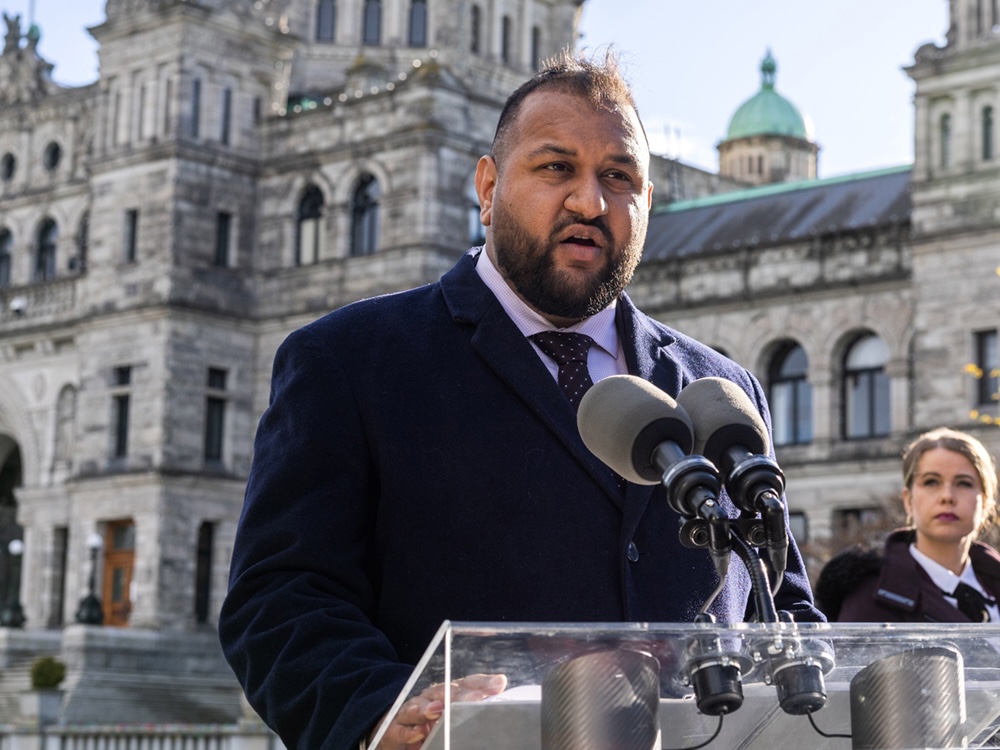
Shortly before his appearance at a timber industry conference in Prince George this April, Ravi Parmar, British Columbia’s recently named forests minister, had blunt words for the industry his ministry regulates.
“If you have fibre and you’re not using it, we’re coming for it,” Parmar said during an hour-long sit-down interview with John Brink, a veteran of the province’s value-added forest products industry.
“To those companies that have reaped the benefits here in British Columbia in good times, especially with high lumber prices, and decide to take that investment elsewhere, you’ve got very little time for that. Very little time,” Parmar added.
Parmar didn’t name names, but he was clearly referring to a number of companies in B.C. that have spent billions of dollars buying lumber mills in the southeastern United States while simultaneously shuttering mills in B.C. after having logged much of the province’s forests and pocketing billions in profits in the process.
The list includes Canfor, West Fraser, Interfor and a number of others.
But if Parmar’s patience is indeed running out, then it’s time his actions squared with his words.
Numerous communities in B.C. have endured one or more mill closures in recent years at a combined cost of tens of thousands of lost jobs, many of which were among the highest-paying in their communities.
Those shell-shocked communities deserve a clear signal from the provincial government that business as usual is over.
An economic gut punch
If Parmar is looking for where he might set a much-needed new tone, he’d be hard pressed to find a better candidate than Fort Nelson. The community of 3,000 or so residents in the remote northeast corner of the province has been given a giant middle finger by the log-it-and-flee-it fraternity and is now a poster child for what happens when the social contract is shredded and corporate interests trump community needs.
In 2008, Canfor, B.C.’s biggest forest company at the time, closed two panel mills in Fort Nelson, triggering an economic meltdown that was offset only fleetingly by a short-lived natural gas industry boom that just as quickly went bust.
The closures resulted in the loss of approximately 600 milling and related log transport jobs in Fort Nelson.
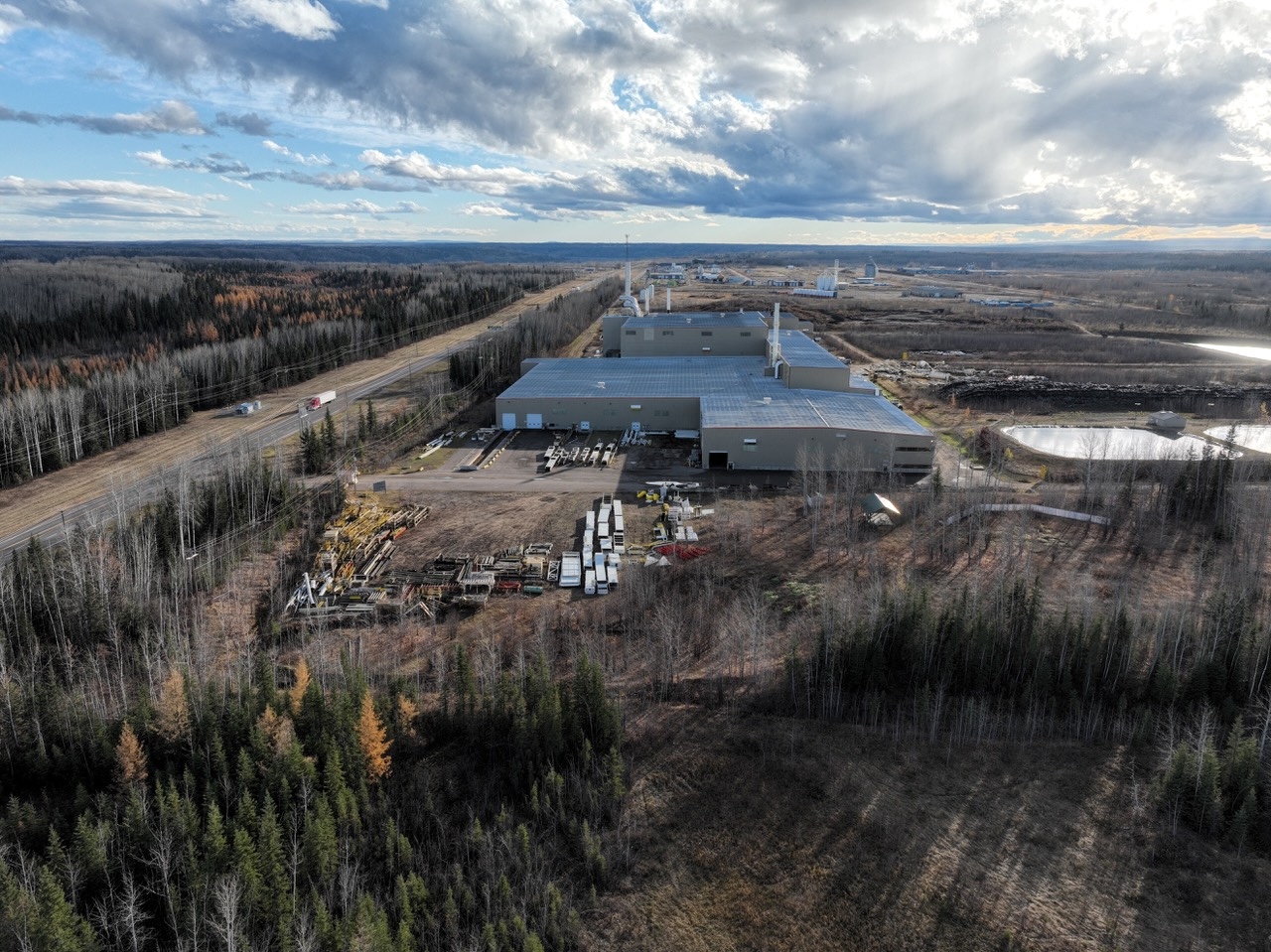
The company retained its logging rights, however, something the then-Liberal government led by Gordon Campbell made possible by eliminating a clause in forest licence and tree farm licence agreements that required companies to operate local mills in exchange for gaining exclusive rights to log trees in publicly owned forests under the province’s jurisdiction.
For 13 years after delivering that economic gut punch, Canfor sat on its Fort Nelson forest licence, logging not a single tree as the community’s increasingly frustrated municipal and business leaders looked on.
A $30-million purchase?
In 2021, Canfor announced it was selling its Fort Nelson forest licence to Peak Renewables, a company proposing to build Canada’s largest wood pellet mill. The provincial Forests Ministry approved the transfer.
But Peak’s pellet mill never materialized, and the company hasn’t done any logging under the licence, either.
And while Canfor said it had reached “multi-year $30-million agreements” with Peak to sell the licence, neither publicly traded Canfor nor privately held Peak have said how much money, if any, actually exchanged hands.
Such details matter, because if Parmar were to get serious about “coming for” Canfor’s forest licence in Fort Nelson, he’d almost certainly have to be prepared to address claims by Canfor and Peak that they were owed compensation for the licence being taken back.
But this should not be a deterrent. There is good reason to believe that if the companies tried to sue for compensation, Parmar and the provincial government would have a strong case to make that the companies were owed either nothing or very little.
Historically, logging companies have been compensated when the provincial government took back portions of their logging rights to make way for new parks or to move cutting rights from one entity to another. But in this case, Parmar would be revoking a licence that hasn’t been used in 17 years.
If what Canfor held and later sold to Peak had a value of $30 million, then why did neither company act on that value and log the trees they were entitled to?
As minister, Parmar could also do something else that logging companies know is within his powers to do and that would not be subject to compensation claims. Under the Forest Act, the minister can reassign logging volumes of timber not used by the companies that the logging rights were bestowed to.
In the case of Peak and Canfor, the Fort Nelson forest licence gave the companies the right to log more than 553,000 cubic metres of timber per year. Since no logging occurred on the licence for 17 years, that means that well over nine million cubic metres of trees were not logged that between Canfor and Peak could have been logged.
In response to questions filed by The Tyee, the Ministry of Forests said it “can choose to give someone other than the tenure [licence] holder the right” to log trees that the original licence holder did not.
Typically, this occurs once every five years when one regulated cut control periods ends and another begins.
The ministry went on to say that if any unlogged timber is “given to another party, it’s usually through a one-time, short-term licence such as a non-replaceable forest licence” and that in all cases before that occurs the “affected First Nation must be consulted.”
Presumably if Parmar were to reassign such rights in Fort Nelson, he would want to do so in a way that most directly benefits Fort Nelson’s local residents, including members of the Fort Nelson First Nation.
Taking use-it-or-lose-it seriously
Taking such action would send a strong signal to the area’s residents, including members of the Fort Nelson First Nation, that the provincial government takes seriously the “use-it-or-lose-it” stance advanced by Parmar.
But if Parmar wants to take back and reassign wood, he needs to do so in a responsible manner. Logging everything everywhere has proven a disaster for the province as mills closed, in part, as timber supplies dwindled across the province.
And all indications are that supplies may dwindle further still thanks to the increasing frequency and severity of wildfires.
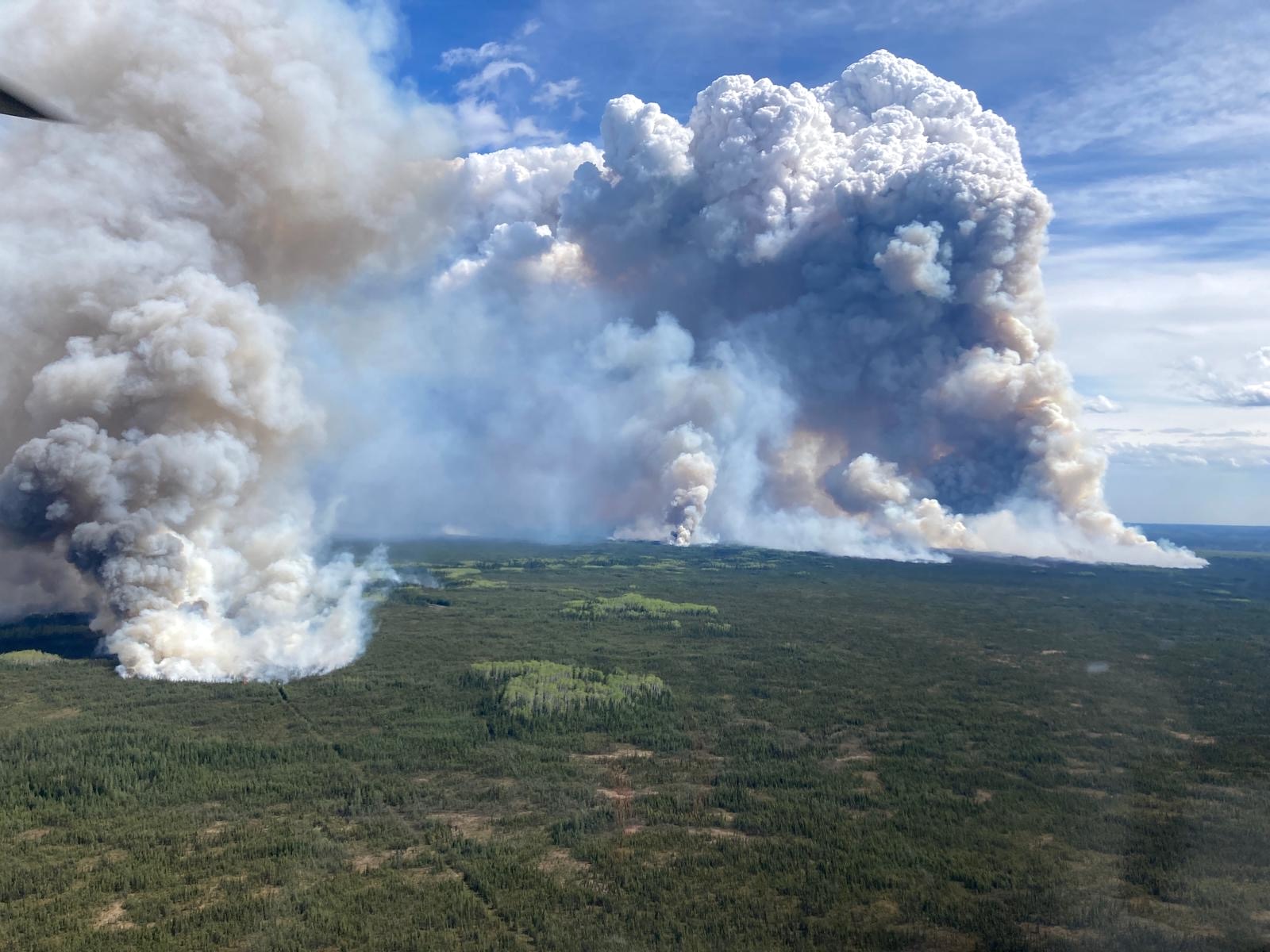
In the vast Fort Nelson Timber Supply Area, very large fires have burned uncontrolled in the late spring, summer and autumn months. In response to questions filed with the Ministry of Forests’ chief forester, the ministry replied that 11 per cent of the Fort Nelson TSA has gone up in smoke in recent years. Many of those fires were so large and so severe that they continued to smoulder and burn underground, only to reignite at the surface the following year when the snow melted.
The result of that below-ground burning, as captured in a recent and humbling BC Wildfire Service video, is that swaths of forest in the Fort Nelson area blew down the following year after their roots were consumed by fire.
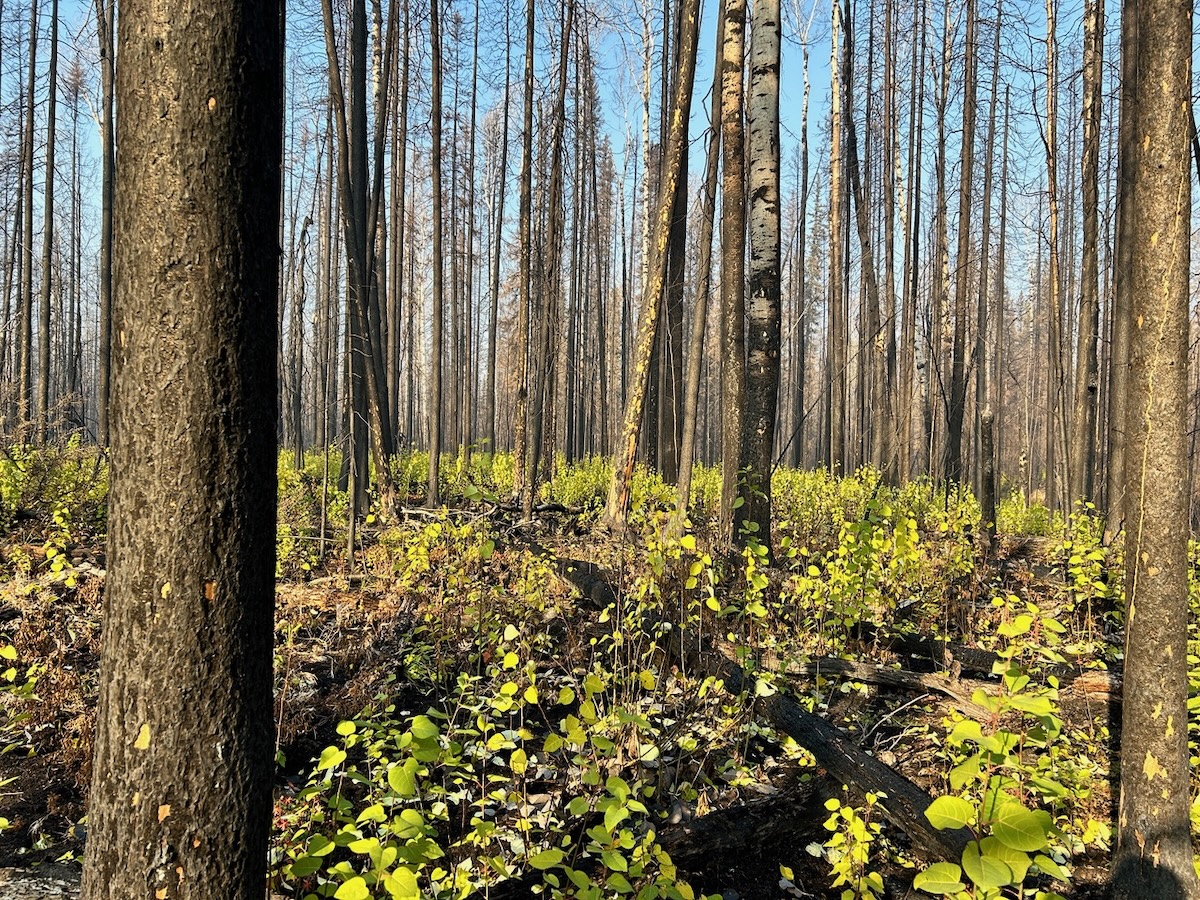
So Fort Nelson is dealing both with vast areas of forest that burned and that will, within one or two years, lose their utility as economically viable sources of timber, and with emerging areas of forest that won’t be logged either because they are blanketed in a carpet of fallen tree trunks and branches that are a hazard to work in.
More to the point, many of those burned tracts of forest, vast though they are, are from an ecological perspective better left alone. They are already in some cases showing vigorous signs of new plant growth following the fires and are known to improve conditions for certain wildlife species such as woodpeckers.
Do logging targets make sense?
If the government’s objective is the economic and ecological health of its forestry regions, then the Forests Ministry should prioritize giving communities like Fort Nelson a clear assessment of how much forest is left to be logged sustainably after wildfires, blowdowns and historical logging activities.
The government also needs to produce a clear assessment about whether some forests ought to be ruled off limits to logging for other reasons. Those other reasons include the protection of critical water supplies — a matter that is becoming more pressing in the face of increasing droughts — and protection of threatened and endangered wildlife and ecosystems.
Premier David Eby should also refrain from offering communities false hope. In his mandate letter to Parmar, Eby instructed the minister to achieve an annual rate of logging in the province’s forests of 45 million cubic metres of timber per year.
The government’s stated goal is to create a “sustainable land base” to “enable” that logging rate, providing certainty to communities where the forest industry is still a significant part of the local economy.
But is the figure realistic in light of the ongoing dramatic changes being wrought by wildfires, changes that are layered on top of massive insect infestations that triggered equally massive increases in logging rates?
The Tyee looked at logging data for the first seven months of this years as captured in the Forests Ministry’s Harvest Billing System.
The data suggests that logging rates in the province may be in the range of 35 million cubic metres in 2025, well off the 45-million goal. This is based on logging rates for the first seven months of 2025 already being one million cubic metres below the same time period last year and an industry performance for the remainder of this year that matched that of 2024.
Logging declines are not explained just by the availability of trees, of course — forest product prices are also an important factor, as are U.S. President Donald Trump’s on-again, off-again tariffs and softwood lumber duties.
But logging rates are also a function of what is economically viable to log. As historical logging activities, wildfires and insect infestations force the industry into more geographically far-flung locales, it is almost certain that there will be fewer resources to extract because so much is either gone or too expensive to harvest.
Both Parmar and Eby need to be honest with rural, forestry-dependent communities about what lies ahead. We are likely entering a future of far less available timber and even greater uncertainty.
If that is the case, then it becomes vital to ensure that the logs that do come out of our forests are processed as far up the value chain as possible. This is one way that communities heavily affected by forest industry job losses may possibly build job numbers up from the lows they have fallen to. Ensuring communities themselves also have more direct management authority over nearby forests may help to encourage more local jobs as well.
To the government’s credit, Eby flagged the need for both more value-adding and more community-held licences in his mandate letter to Parmar.
If Parmar shows leadership and takes back Canfor’s licence in Fort Nelson, he could reassign it to the Fort Nelson Community Forest, the largest of its kind in the province and a licence jointly held by the Northern Rockies Regional Municipality, which governs Fort Nelson, and the Fort Nelson First Nation.
That licence has already been significantly impacted by wildfires in recent years, fires that also threatened the town’s very existence. Fort Nelson and the Fort Nelson First Nation deserve to see what they have lost replaced by something else. The licence held but not logged by Canfor, and then Peak Renewables, would be a good place to start.
All that would be required, should the licence be turned back to Fort Nelson’s Indigenous and non-Indigenous communities, would be for them both, as partners in the community forest, to require all logs taken from the old Canfor licence to be delivered to local mills and not shipped out of the region to the benefit of distant mills in distant towns.
And maybe, just maybe, that could serve as the inspiration for action in other hard-hit communities around the province. ![[Tyee]](/design-article.thetyee.ca/ui/img/yellowblob.png)
Read more: Labour + Industry, Environment







Tyee Commenting Guidelines
Please note that email notifications for replies are not currently working due to a software issue which may be resolved in a future update.
Comments that violate guidelines risk being deleted, and violations may result in a temporary or permanent user ban. Maintain the spirit of good conversation to stay in the discussion and be patient with moderators. Comments are reviewed regularly but not in real time.
Do:
Do not: