

 SHARE:
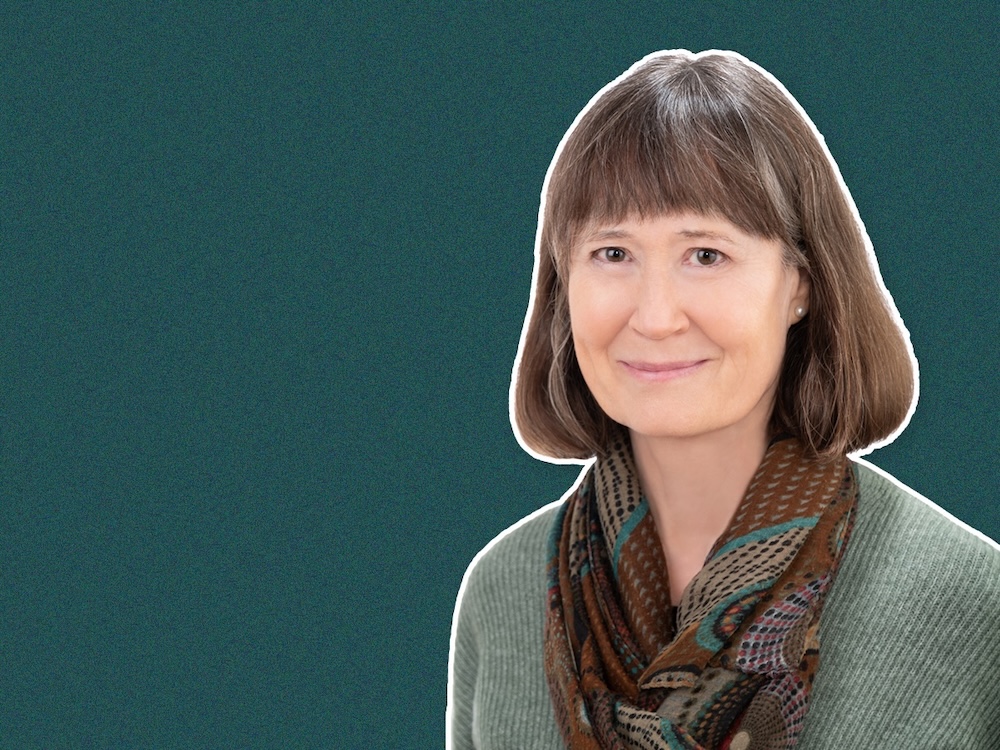
The cat is out of the bag: Sarah Cox is The Tyee’s new biodiversity reporter. (Maybe that should be: The owl is out of its burrow. The salmon is out of its creek!)
Cox is a highly accomplished journalist who has spent decades holding governments and other bodies accountable on the climate and environment beat.
She is the author of Signs of Life: Field Notes from the Frontlines of Extinction, and Breaching the Peace: The Site C Dam and a Valley’s Stand Against Big Hydro, which won a BC Book Prize and was a finalist for the Writers’ Trust of Canada’s Shaughnessy Cohen Prize for Political Writing. Her investigative reporting on the Site C dam for the Narwhal won a World Press Freedom Award and the Canadian Journalism Foundation’s Jackman Award for Excellence in Journalism.
With support from the Wild Island Foundation for the Environment — and drawing on our long history of climate, environment and creature feature coverage — The Tyee is starting a new biodiversity module with a special focus on oceans and rivers in Western Canada.
Cox will be the lead reporter for this module. She’ll be joined by our health reporter Michelle Gamage, who will now be splitting her time between health and biodiversity. J.B. MacKinnon will join as a contributing editor.
You may have noticed Cox hit the ground running with The Tyee, publishing a piece on a study that revealed that only 14 of the 1,726 species on B.C.’s threatened and endangered lists had genuinely seen improvement since being listed.
We’re excited to share what she’s working on next. (We tried to grill her about that in this Q&A, but she’s had too much media training.)
The Tyee: We’re so happy to welcome you to The Tyee, Sarah! Can you tell us a bit about your pathway towards writing about biodiversity?
It was a bit of a roundabout path. I used to be woken up, through double-paned windows, by the birds singing madly at dawn. Now it’s more like a small choir of birds instead of a huge orchestra. I used to see butterflies all the time in my backyard. Now I might see a handful a year. Insects used to be plastered across car windshields; now we have the insect apocalypse. I’ve noticed so many changes in the natural world around me, even as a city dweller, and I feel a great sense of loss. I feel compelled to write about what we’re losing, what it means for nature on so many different levels and what needs to happen to turn things around.
What’s the weirdest or most mind-blowing thing you’ve learned about a species in your time as a reporter?
I just learned that there’s an endangered tarantula the size of a blueberry that lives in B.C.’s old-growth coastal forests. Who ever knew?
Also, cloning is a thing now for some endangered species. The first black-footed ferret clone was born a few years ago and named Elizabeth Ann. Her first birthday was celebrated with a cake made from dog kibble, mice and minced prairie dogs.
And then there are bats, which are the most curious of creatures — and they also eat mosquitoes and agricultural and forest pests. Northern myotis bats, which are endangered, roost together and take turns looking after each other’s babies when they go out to forage for insects. Imagine a bat daycare. That’s so cool.
Is it true that your most recent book, ‘Signs of Life,’ was almost called ‘The Dead Species Society’?
Yes, that was my original name for it, which funnily enough was suggested by Tyee contributing editor Andrew Nikiforuk. My publisher nixed it, because they thought it sounded too depressing.
In your piece last week for The Tyee, you wrote about a study that found that only 14 species have genuinely improved on BC’s threatened species and endangered species lists. Is this type of thing typical to what you’ve uncovered as a reporter? What should we be doing differently to more genuinely support plants and animals in BC?
I’m passionate about public interest reporting. I also like writing about contradictions — for example, the differences between what government and industry say they will do, or are legally obliged to do, and what really happens. Things like last-ditch efforts to save an endangered species, often at considerable public expense, while governments sanction the continuing destruction of the places these species need to survive. Hatching spotted owls in a lab while a wildlife habitat area that the B.C. government supposedly set aside for the owls is clear cut. Or flying pregnant caribou to mountaintop pens to safely give birth, when logging roads and other human disturbances have given wolves and other predators easy access to the caribou. And then taxpayers foot the bill for shooting the wolves that are eating the caribou that we’ve endangered. Make it make sense...
I enjoy filing freedom of information or access to information requests to find out what is really going on behind the scenes, as much as anybody can with all the redactions these days. I also love getting out on the ground and seeing things through the eyes of biologists and ecologists and community members.
What part of the province have you not gotten to that you really want to visit — or cover?
I’ve only been to northwest B.C. once and that was eons ago. I’d love to explore that area, especially the coast, and write some biodiversity stories.
What do you think is a criminally under-covered story on the biodiversity beat?
There are so many. Every community has a story. In the big picture, oceans don’t often get the attention they deserve. And now oceans and the huge diversity of species that live in them are threatened by deep-sea mining.
Then there are the enormous and largely undocumented biodiversity impacts of LNG, from the fracked gas wells where boreal forest once stood to the crushing environmental impacts of large hydro dams, which few people talk about.
What is really in the public interest? Who’s going to benefit financially from these projects, and who’s going to lose? I’m interested in an honest conversation about the impacts of “clean” energy and exploring solutions that don’t destroy the natural world. Solar panels are made in China with coal-fired power, wind turbines can kill birds and bats, and large hydro dams destroy river valleys rich in biodiversity. Let’s talk about this. What are the solutions that protect both the climate and biodiversity?
What are your non-work obsessions these days?
Well, knitting is not one of them. I taught myself to knit at the beginning of the COVID-19 pandemic and managed to make a scratchy cowl. Then I signed up for a knitting class and made one lonely mitten. And that was the end of knitting for me.
I’m a little obsessed with hiking. Spending a day in nature, usually hiking up a mountain or two, is an antidote to the ills of the world. I love listening to the ravens, the thrushes, the flickers and the flycatchers. This time of year, the Pacific tree frogs make me smile with their crazy loud croaking. I also love long-distance walking and hiking, especially if I’m also learning about history and politics.
I was on a weeklong hike in Spain a few years ago and we came across a stone table in the middle of the forest, with four stone benches that were separate but formed a circle around the table. It was the place where the mayors of the surrounding communities would meet to talk about how to allocate forest resources and also, by the looks of it, decide which forests to leave for nature. I love stumbling on interesting things like that.
I’m also a little obsessed with reading cosy crime mysteries right now. I’m in the middle of Jacqueline Winspear’s Maisie Dobbs series, which takes place around the time of the First and Second World Wars. They’re gripping historical novels as well as mysteries, with so many political parallels to the deeply disturbing things happening today.
Rapid fire round: Cake or pie? Coffee or tea? Oceans or mountains? Birkenstocks or Blundstones?
Probably cake if it’s not overly sweet. I made an apple cake with caramel sauce last weekend but can’t remember the last time I made a pie, although I wouldn’t say no to lemon meringue or key lime pie if it’s on offer.
Coffee, no question.
It’s a tie for oceans and mountains. I couldn’t possibly choose!
Definitely Blundstones. I only got my first pair two or three years ago and have practically lived in them ever since. ![[Tyee]](/design-article.thetyee.ca/ui/img/yellowblob.png)
Read more: Environment


Tyee Commenting Guidelines
Please note that email notifications for replies are not currently working due to a software issue which may be resolved in a future update.
Comments that violate guidelines risk being deleted, and violations may result in a temporary or permanent user ban. Maintain the spirit of good conversation to stay in the discussion and be patient with moderators. Comments are reviewed regularly but not in real time.
Do:
Do not: