


 SHARE:
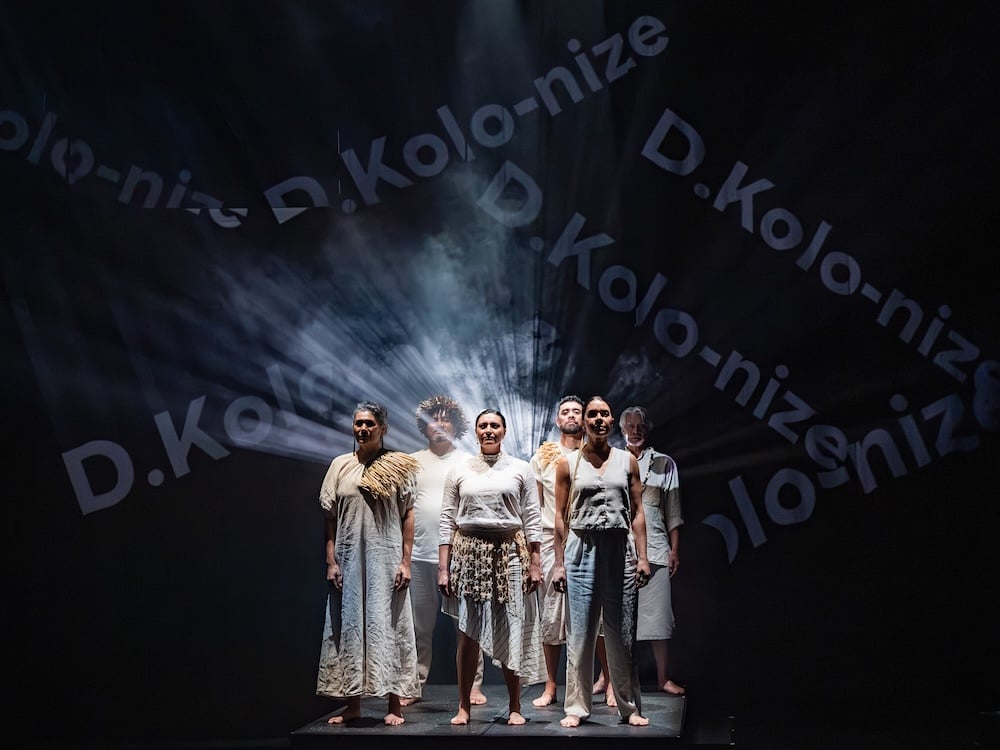
This Feb. 11 to March 19, The Cultch’s Warrior Festival returns to Vancouver stages for its much-anticipated second year. Building on a powerful inaugural season, the festival continues to spotlight artists whose work engages with themes of resistance, identity and justice — often through humour and experimentation of form.
The 2026 program brings together local, national and international creators working across theatre, dance and poetry. While the forms vary, each production works to challenge dominant narratives and create space for stories that may be overlooked.
The festival opens with Batshit, a solo performance created and performed by Leah Shelton and directed by Ursula Martinez. The work examines cultural ideas about female “madness,” drawing on the experiences of Shelton’s grandmother alongside historical research. Through a satirical lens, Batshit looks at how psychiatric practices have been shaped by gender bias.
Opening Feb. 17, UPU offers an immersive experience with the poetry of the Pacific Islands. Curated by New Zealand poet Grace Iwashita-Taylor, this production brings together the voices of 23 poets from across the Pacific. UPU (meaning “words”) uses visual design and a layered soundscape to support the storytelling, all in honour of Te Moana Nui a Kiwa — the Pacific Ocean.
Two limited-run productions follow. Red Like Fruit, by Canadian playwright Hannah Moscovitch, explores the complexities of consent, memory and power in the context of life after the #MeToo movement. The play continues Moscovitch’s practice of pairing sharp dialogue with emotional ambiguity. Tomboy (Chłopczyca), a new queer dance-theatre work by Vancouver artist Anais Mateusz West, examines masculinity through movement and folklore, drawing inspiration from vampires from Slavic mythology.
Also part of the festival is People, Places & Things, presented by The Search Party. The production marks the Vancouver premiere of the internationally acclaimed play by U.K. playwright Duncan Macmillan, which follows an actor managing addiction and treatment in rehab. The work is known for its darkly comedic tone and for the fresh way it examines addiction.
From March 25 to 29, the Warrior Festival concludes with The Horse of Jenin, a solo performance by Palestinian actor and comedian Alaa Shehada, who uses masks to tell his powerful stories. Built from Shehada’s own memories, the piece reflects on a sculpture in the city of Jenin and his experiences as a child growing up in occupied Palestine.
“The success of the inaugural 2025 Warrior Festival reaffirmed what we’ve always known at The Cultch — that when artists take the stage to tell brave stories, they transform it,” say Cultch executive director Heather Redfern and associate executive director Nicole McLuckie.
“The overwhelming response we got from audiences was that it was some of the most meaningful live performances they had experienced. This year, we’re thrilled to build on that momentum with six new shows. These artists are pushing boundaries, telling necessary stories and continuing to challenge the world around us with radical creativity. We can’t wait to welcome you back to Warrior Festival!”
To learn more about Warrior Festival, including show dates and tickets, visit The Cultch’s website. ![[Tyee]](/design-article.thetyee.ca/ui/img/yellowblob.png)
Read more: Theatre
This article is part of a Tyee Presents initiative. Tyee Presents is the special sponsored content section within The Tyee where we highlight contests, events and other initiatives that are put on either by us or by our select partners. The Tyee does not and cannot vouch for or endorse products advertised on The Tyee. We choose our partners carefully and consciously, to fit with The Tyee’s reputation as B.C.’s Home for News, Culture and Solutions. Learn more about Tyee Presents.









Notice about commenting changes
The Tyee’s commenting system will be moving to a new platform on Nov. 12. If you’re already a Tyee commenter you must register with the new system on or after Nov. 12 with your preferred username.More information can be found here.