


 SHARE:
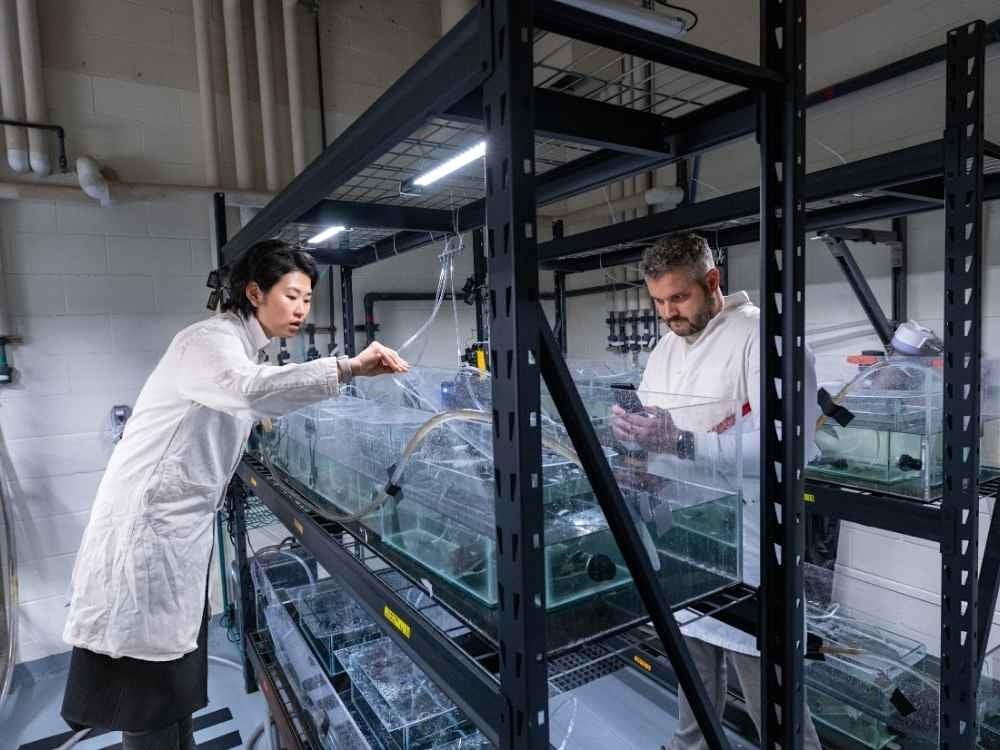
The clean economy is scaling whether we are ready or not. Clean Energy Canada projects that B.C.’s clean energy workforce will grow from about 83,100 jobs in 2025 to around 400,800 by 2050.
This is not a distant scenario. It is electricians delivering deep energy retrofits to protect people during heat waves. It is analysts mapping wildfire and flood risk so insurers do not leave communities. It is supply chain leads cutting carbon from construction bids so projects still qualify for financing and public procurement. This is how we keep hospitals cool during heat domes, lower winter bills, keep infrastructure bankable and keep people employed.
Policymakers see the collision of shocks. Ottawa has expanded employment insurance and funded retraining to cushion tariff pain, arriving at the same time as transition pain. These steps provide breathing room, but breathing room is not a career pathway. This is the moment to stop hoping the market will figure it out and start training the people who will sustain B.C.’s economy for the next two decades. The British Columbia Institute of Technology’s sustainable business leadership advanced diploma program exists for that purpose.
The program is applied, accelerated and practical. Over three consecutive terms from September to June, students upskill without uprooting their lives. Classes run two evenings a week in a blended format at BCIT’s downtown campus plus online. The design works for mid-career workers, supervisors, line managers and recent graduates. It is also a fit for people in tariff-exposed or carbon-exposed sectors who want to pivot into roles that make communities more resilient and businesses more competitive.
What do students learn? Strategy and program design. Climate and operational risk. Circularity and zero-waste systems. Scope 1 to 3 decarbonization in supply chains and procurement. Stakeholder engagement and change management. Decision-useful reporting and disclosure that leaders, lenders, municipalities and regulators can act on. This is not green cheerleading. It is the discipline to design a plan, move it through internal resistance and prove results.
Learning is led by practitioners who are delivering climate strategy, sustainability operations and impact measurement today. Small classes provide access to not only content, but expertise. There is also a real-world bridge. Every student completes a 24-week industry consulting project in the final two terms. Students work on live priorities such as circular economy pilots, adaptation plans, fleet decarbonization road maps, waste reduction business cases and impact baselines. Companies get immediate capacity, and students graduate with applied experience, not only a credential.
Who hires SBL graduates? Municipalities, health authorities, universities, utilities, builders and developers, logistics and retail, finance and insurance, and mission-driven small and medium-sized enterprises. Job titles include sustainability manager, ESG or business consultant, program or project manager, environmental data specialist, engagement specialist, research or impact analyst, green building co-ordinator and zero-waste co-ordinator. These roles are local, labor intensive and not offshorable. They involve retrofitting schools and hospitals, hardening infrastructure, managing heat and smoke risks, cutting waste and fuel costs, and producing disclosures that unlock capital and win contracts.
And access matters. The program welcomes applicants with a diploma or degree. It also provides an alternate entry pathway for people with five or more years of relevant professional experience. In a slowdown, that pathway converts practical expertise into leadership capacity for the transition.
The choice in front of BC
Either we build and fund the bridge to a workforce that can deliver clean, resilient and just growth here, or we watch investment, contracts and young talent leave for places that can. Layoffs in traditional industries do not automatically convert into adaptation, decarbonization or circular systems roles. Someone must run the conversion mechanism and keep it running.
Training people to lead the transition is not a side project — it is an industrial strategy and community survival. BCIT’s sustainable business leadership advanced diploma program makes that strategy real. To learn more, visit BCIT’s website.
BCIT Business + Media offers over 100 programs and 300 courses designed to provide practical, industry-connected education that helps students achieve their career goals. With flexible and full-time learning options, students gain hands-on experience in finance, marketing, journalism, accounting, new media, animation, sustainability, HR and business management. Courses are taught by industry professionals, and students can progress from certificates to diplomas, degrees and graduate certificates. For 60 years, the British Columbia Institute of Technology has been recognized as a leading provider of applied business and media education in British Columbia. ![[Tyee]](/design-article.thetyee.ca/ui/img/yellowblob.png)
Read more: Education
This article is part of a Tyee Presents initiative. Tyee Presents is the special sponsored content section within The Tyee where we highlight contests, events and other initiatives that are put on either by us or by our select partners. The Tyee does not and cannot vouch for or endorse products advertised on The Tyee. We choose our partners carefully and consciously, to fit with The Tyee’s reputation as B.C.’s Home for News, Culture and Solutions. Learn more about Tyee Presents.





Notice about commenting changes
The Tyee’s commenting system will be moving to a new platform on Nov. 12. If you’re already a Tyee commenter you must register with the new system on or after Nov. 12 with your preferred username.More information can be found here.