


 SHARE:
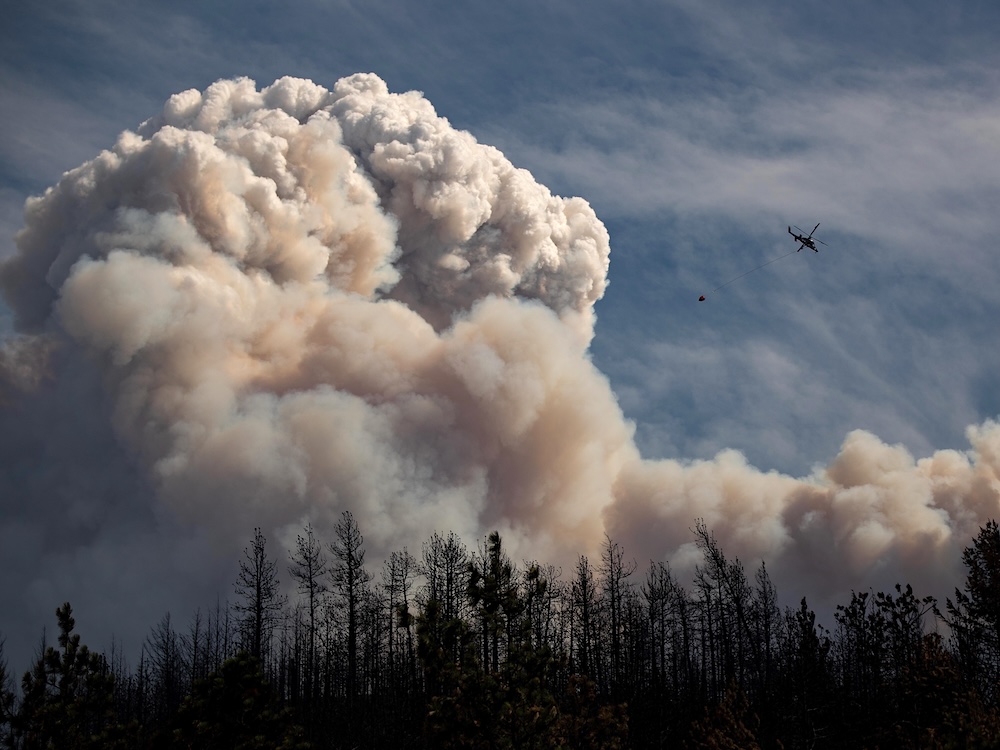
The heat wave that hammered British Columbia during the summer of 2021 began with what may have been the five worst days in the province’s history, starting with the silent death of 619 Metro Vancouver residents and ending with the complete destruction of Lytton, one of our most historic communities.
These two events have since been considered separately, as if they were unconnected. In fact, both were consequences of extreme dry weather, culminating in an epic heat wave, that had already left the province tinder dry. In retrospect, they were the beginning of a summer of unprecedented death and destruction, one year’s down payment on the enormous costs of climate change.
Now a review of the halting attempts to rebuild Lytton by Bridget Parrish, B.C.’s auditor general, offers new insights into the sudden destruction of that village of 200, which stands on the site of Tl’kémtsin, the central community for the Nlaka’pamux people for thousands of years.
Its companion piece, a death review panel report on the heat-related deaths, issued in 2022 by the BC Coroners Service, summarized in stark terms the staggering human toll of the “heat dome” in Metro Vancouver.
Read together, these two reports tell a story, now almost forgotten, of a terrible week in the life of the province.
Both events were over before anyone could react.
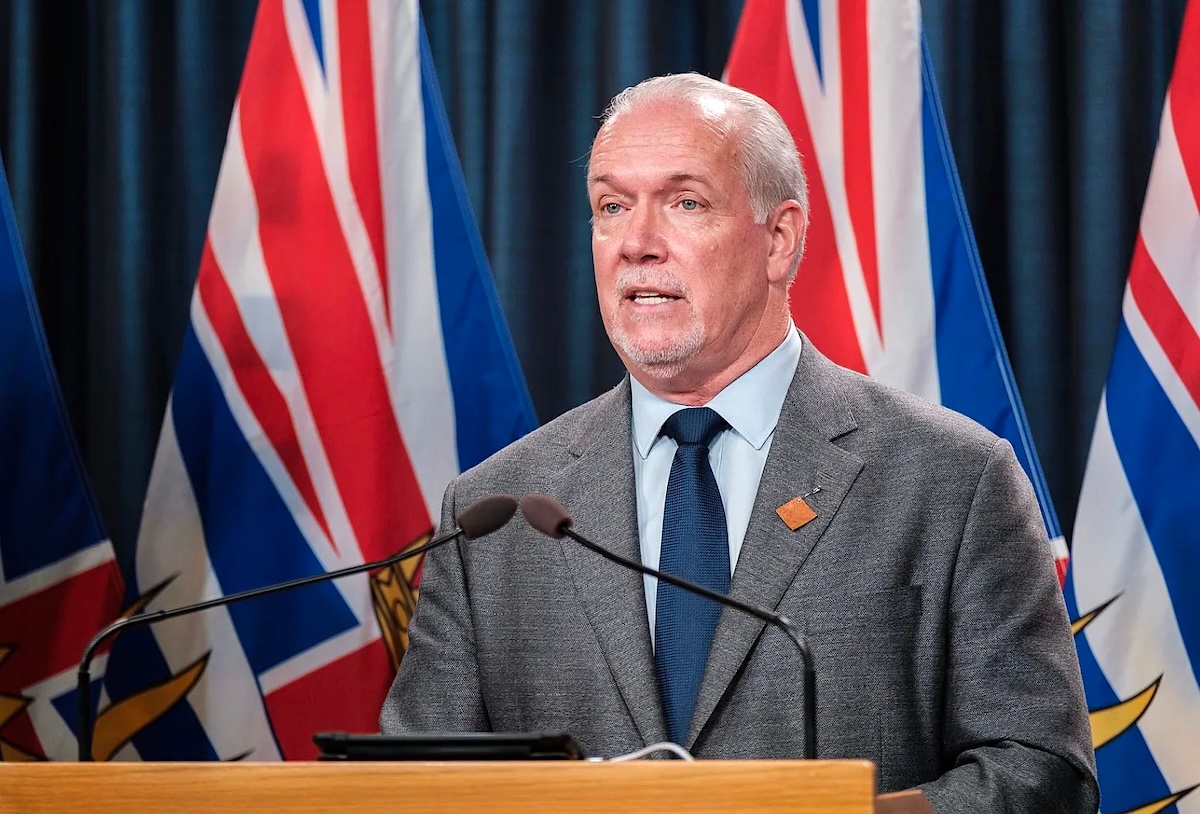
I was working that summer in the legislature’s West Annex as chief of staff to then-premier John Horgan, in a ground-floor office cooled by breezes off the Strait of Juan de Fuca even on the hottest days. The heat wave settled in on Friday, June 25. The province prepared for a quiet weekend, not least because daily case counts in the COVID-19 pandemic were steadily dropping at last.
Temperatures in Vancouver rose to more than 30 C but elsewhere in the province hit record levels, sometimes smashing previous highs by five degrees or more. In Lytton, often a hot spot, the heat broke records three days in a row, establishing the highest temperature ever recorded in Canada on June 29 at 49.6 C. This was 4.5 degrees higher than the previous record.
Even Victoria was baking by the weekend. As Horgan recounted in his memoir, he found the heat so oppressive in his Langford home that he called Health Ministry officials to check on preparations.
“I was assured everything was good, which was a relief to know. Two days later, of course, we found out that 600 people had died.”
Despite record temperatures in Vancouver, there was no sign of trouble until Sunday night, when emergency rooms reported 56 heat-related deaths. Worse, the overrun ambulance service seemed unable to keep up with the calls. That was just the beginning.
The toll on Monday was 137, then 234 on Tuesday and 58 on Wednesday, June 30. Although some may have died waiting for an ambulance, many more died alone in their homes. It would be weeks before the final toll was confirmed as 619, equivalent to a Boeing 747 crash killing all aboard.
The victims were invisible. Ninety-eight per cent died indoors, often had chronic conditions, two-thirds were over 70 and more than half lived alone. Paramedics had attended about half of the deaths and, once called, arrived in a median time of 10 minutes. The emergency response system had staggered under the strain but not collapsed.
There was no time to absorb these brutal numbers.
Late on the afternoon of Wednesday, June 30, the province’s emergency management team reported that Lytton was on fire. An examination of how the fire occurred put the time of ignition at between 4 and 5 p.m. It was first reported at 4:38 p.m.
Within an hour, another call: “Lytton is gone.”
Embers from grass fires that ignited at the south end of the community, close to Canadian National’s railway tracks, were driven north by the Fraser Canyon’s strong summer winds. Fire destroyed 90 per cent of the village of Lytton and 45 homes and many buildings in two Lytton First Nation communities.
“Two people lost their lives, and several thousand people lost their service centre,” Parrish writes, “including the grocery store, bank, post office, school and health centre. The devastation was overwhelming.”
“The land was covered in debris and ash containing asbestos, heavy metals, and other contaminants. The fire destroyed the village’s electrical infrastructure and it worsened pre-existing water and sewer systems issues. Nearly all municipal records, including building and planning bylaws, were destroyed.”
The Lytton blaze then caused a true wildfire that raged on until August, consuming 83,000 hectares of woodland.
Parrish’s account of subsequent events is conveyed in the bloodless prose of an accountant, but certain human realities seep through.
How the village subsequently spent $60 million of recovery funds, an issue that preoccupied Vancouver Sun columnist Vaughn Palmer, is swiftly passed over, given that all members of the tiny village council had lost their own homes, been scattered to different locations and could not even have pulled together enough chairs in Lytton’s moonscape to sit down for a meeting. (There is no suggestion of wrongdoing.)
Parrish details for the first time the grave consequences of obsolete provincial legislation that put the burden of rebuilding on municipal governments and did not contemplate the possibility that an entire community could lie both under a blanket of toxic ash and on top of critical archeological assets.
Worse, the old legislation was silent on collaboration between government and First Nations, a gap that Parrish concluded delayed reconstruction and proved a source of tension between the Nlaka’pamux and Lytton leaders. (It is precisely this type of collaboration that the Declaration on the Rights of Indigenous Peoples Act is designed to foster.)
By the fall of 2023, the province had completed a major overhaul of the legislation, a task Parrish believes should continue.
Remediation in the village was not completed until late 2023, and the first home construction did not begin until December 2024. About 20 homes have now been rebuilt and occupied.
Devastating as the Lytton fire was, the province’s attention quickly moved on. The fire season was a month early. Lightning storms ignited new blazes across the Cariboo. In early July, it was sometimes too hot for firefighting helicopters to fly.
The wildfire season that followed lasted until September. Sixteen hundred fires consumed 870,000 hectares of forest, displacing thousands of residents, and shrouding the province in smoke. Fire suppression alone cost $565 million, nearly four times what had been budgeted.
Exactly how the Lytton fire began is still disputed. It was not caused by a nearby wildfire. A 2022 review by the Institute for Catastrophic Loss Reduction, commissioned by FireSmart, showed that surrounding forest was untouched. Careful reconstruction from aerial photos showed flames racing from south to north, igniting buildings along at least four burn paths.
The institute concluded that no firefighting assets existed in the region that could have stopped the conflagration.
The embers of the 2021 fire season were still warm in October, when the Transportation Safety Board concluded that there was no evidence linking rail activity to the fire, despite a finding that ignition occurred within a few metres of the CN track. Residents reject this finding.
In September 2024, the RCMP reported that an exhaustive investigation, including review of the Transportation Safety Board findings and the BC Coroners Service review, had been unable to determine the cause of the Lytton fire and therefore to determine whether criminality had been a factor.
The debate over the direct cause of the Lytton fire is far from over. In December 2025, B.C. Supreme Court Justice Ward Branch certified a class-action suit brought by community residents against Canadian National and Canadian Pacific railways alleging one of their trains sparked the fire.
Perhaps the village will finally be reconstructed by the time that verdict comes in.
“I thought climate change was a problem for the next generation,” said then-Lytton mayor Jan Polderman. “Now I’m mayor of a town that no longer exists.”
(Authors Peter Edwards and Kevin Loring have written a book to keep the Lytton story alive in Lytton: Climate Change, Colonialism and Life Before the Fire.)
In a province growing hardened by tragedy, the events of June 2021 are in a league of their own. But in an era of disasters, some are more memorable than others.
Terrible as the COVID-19 pandemic was, its toll was clearly easing in the spring of 2021. During the week of the heat wave, there were only 10 new deaths, bringing the cumulative total to 1,754 by June 30. All of us have had some experience of COVID — lost a loved one, fell ill, got vaccinated — and understand the social, economic and political consequences of those years of mandates, distancing and isolation.
The toxic drug crisis, like COVID, was part of the backdrop of daily life. In 2021, the overdose death rate was spiking, rising 26 per cent above the 2020 rate. The illicit drug supply would take 2,293 lives in 2021, an average of six a day. (The total overdose death toll in June 2021 was 177.)
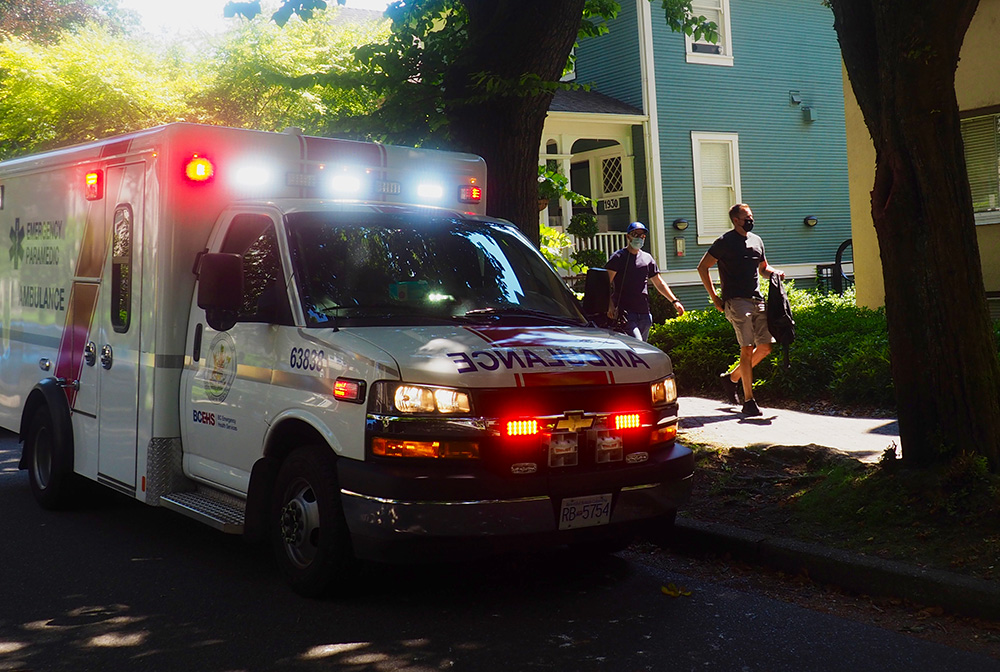
The heat dome, in other words, took more lives in three days than the pandemic did in a year or the illicit drug supply did over three months. Yet the stories of the hundreds who died that weekend, often alone and unnoticed, in the days before Lytton burned, will probably never be told.
None of this was obvious, however, on the morning of June 29, when Horgan held a COVID-related news conference and found himself under fire for inadequate public warnings, insufficient ambulance services and crowded emergency rooms. Although then-chief coroner Lisa Lapointe had confirmed only 137 heat-related deaths by that date, a public used to an “all-of-government” COVID response was angry and unforgiving. No one knew that the real death toll was much, much worse.
The usually sure-footed Horgan pushed back.
“The public was acutely aware we had a heat problem,” he said. “There’s a level of personal responsibility. Fatalities are a part of life.”
It was a tone-deaf comment he quickly had to walk back, tweeting, “Mourning families deserve our compassion and my comments didn’t reflect that.”
That terrible year, later dubbed “annus horribilis” by Horgan, ended in an atmospheric river that devastated coastal British Columbia in November, washing out highways, flooding the Fraser Valley and leaving Metro Vancouver cut off from the rest of the country for several days.
But it began in June, with devastating loss of life and the erasure of an entire town, both now fading from memory.
Perhaps Horgan’s comments, while insensitive at the time, are closer to public opinion now: “Fatalities are a part of life.” ![[Tyee]](/design-article.thetyee.ca/ui/img/yellowblob.png)
Read more: BC Politics, Environment






Tyee Commenting Guidelines
Please note that email notifications for replies are not currently working due to a software issue which may be resolved in a future update.
Comments that violate guidelines risk being deleted, and violations may result in a temporary or permanent user ban. Maintain the spirit of good conversation to stay in the discussion and be patient with moderators. Comments are reviewed regularly but not in real time.
Do:
Do not: