


 SHARE:
The rules are the rules because they’re the rules.
That seems to be the argument Port Coquitlam city council was making when they decided last week to delay the approval of a supportive-housing development in their city. But that kind of circular logic is a big reason why housing remains out of reach for too many people.
There are often bright spots within the community housing sector. This July has been no exception.
Over the last two weeks, the District of Central Saanich approved a 187-unit rental development after many delays, Vancouver council unanimously greenlighted a redevelopment that will ultimately result in 180 net new affordable homes, and the Rental Protection Fund announced a non-profit society’s acquisition of 45 homes from private landlords in Richmond, just to name a few.
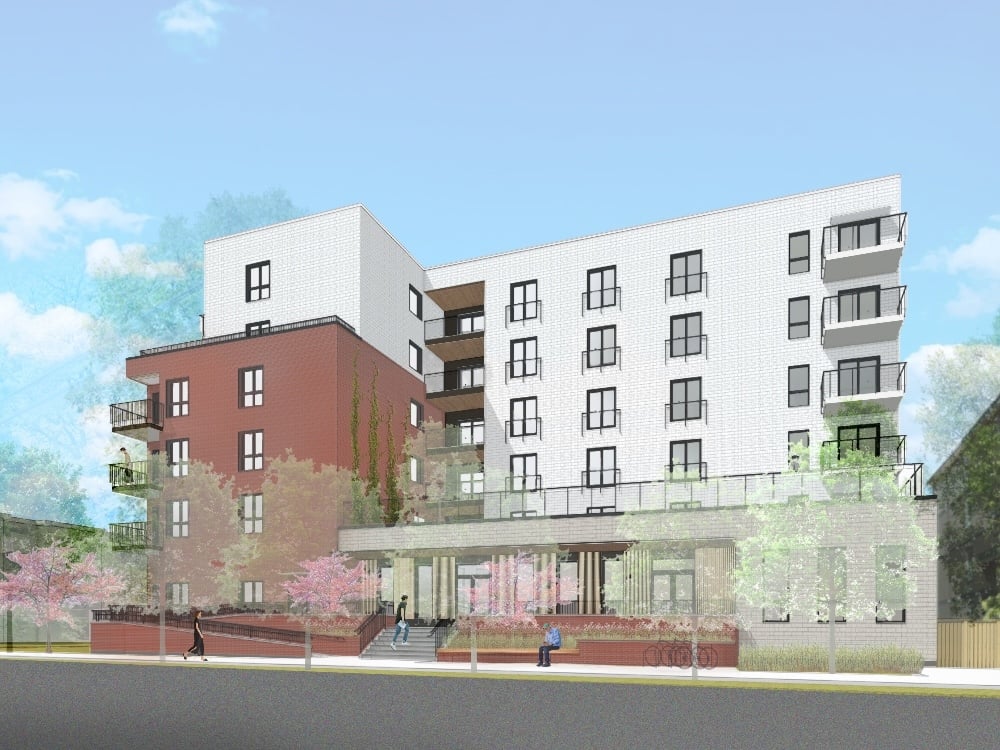
But too often we see efforts to increase the supply of affordable homes stymied by head-scratching decisions made by local governments. Last week’s example comes to us from Port Coquitlam, where council made a decision that should have us all concerned. A proposal to build 74 affordable homes for people living with mental illness was rejected and sent back to the drawing board. But council didn’t delay the project because the homes weren’t needed or because the funding wasn’t in place. Its approval has been stalled because of concerns over a supposed shortage of parking and the length of the operating agreement with BC Housing.
This delay has real consequences on real lives. Too many people in the Tri-Cities are waiting for affordable housing options, which are particularly scarce for those who need supports like the future residents of the PoCo development. These homes help to fill a critical gap in the housing continuum in the community.
Does that mean that in a crisis, anything goes, anywhere, any time? Not necessarily. But it does mean that councils should have a serious reason to delay housing.
Concerns about the duration of the five-year operating agreement are understandable but misplaced. Our organization, BC Non-Profit Housing Association, sees the need for stability that longer agreements can bring. Long-term stability in operations is the foundation for proper housing and health supports for residents. But in reality, these operating agreements are often rolled over, and changes in operators in supportive housing are the exception, not the norm.
If New View Society is not able to continue operating the building into the future, the non-profit housing sector has the expertise and capacity to step in. We are a robust, collaborative sector with decades of experience supporting people. By all means, push BC Housing for longer operator agreements, but let’s not leave 74 homes hanging in the balance.
As for parking, councils across the province are tasked with making difficult decisions and balancing the needs of broad and diverse populations. It’s not easy work. I can imagine that parking tops the list of phone calls and messages to city halls everywhere.
Port Coquitlam’s bylaws stipulate that one parking stall must be constructed for every home in a multi-unit residential building. The policies were likely created with market rental or condo developments in mind, where residents are much more likely to own a car.
But supportive-housing projects serve residents who may not have the means or ability to own and drive a vehicle. Each parking stall in this development will cost a minimum of $40,000. Meeting Port Coquitlam’s requirements would add more than $2 million to the cost of this publicly funded project to create parking stalls that will ultimately sit empty. As New View and many other non-profits have learned, supportive-housing residents living in areas well supported by transit are not likely to own cars.
The mayor has argued that municipal taxpayers will be footing the bill for forgone revenue due to the parking variances. The challenge with this argument is that municipal and provincial taxpayers are the same people. Back-of-the-envelope math suggests that for every month delayed, $70,000 in interest costs will be added to the project, not to mention the more than $2 million that would be needed to build those empty parking stalls. This additional financial cost will be carried by the provincial government, but the true impacts will be felt most by the 74 people in need of housing who have had their hopes kicked down the road.
Everyone who believes in the right to safe, secure, affordable housing should be concerned by decisions like these. It’s a reflection of how we, as a society, stand in the way of our own progress on affordable housing and homelessness, an issue that is consistently a top priority when voters head to the ballot box.
Municipalities have a critical role to play in solving this crisis. But that role must include a willingness to seize opportunities when they present themselves and challenge policies that stand in the way of important projects. That means rethinking parking requirements. It means trusting non-profit partners like New View Society, who have deep roots in the community and a proven commitment to supporting people with mental illness. And it means recognizing that the perfect should not be the enemy of the good.
This mayor and council have reconsidered and reversed bad decisions before, and now they have an opportunity to show that Port Coquitlam is a city that puts people first. Because in the end, homes matter more than parking stalls. And people matter more than process. ![[Tyee]](/design-article.thetyee.ca/ui/img/yellowblob.png)
Read more: Housing, Municipal Politics











Tyee Commenting Guidelines
Please note that email notifications for replies are not currently working due to a software issue which may be resolved in a future update.
Comments that violate guidelines risk being deleted, and violations may result in a temporary or permanent user ban. Maintain the spirit of good conversation to stay in the discussion and be patient with moderators. Comments are reviewed regularly but not in real time.
Do:
Do not: