


 SHARE:
In the weeks leading up to the federal election, warnings of a looming “national unity crisis” rang out from Alberta. Premier Danielle Smith and conservative elder Preston Manning suggested that another Liberal victory could trigger an existential reckoning for Confederation.
With the votes tallied and the Liberals clinging to a minority government, the picture is a bit murkier than anticipated.
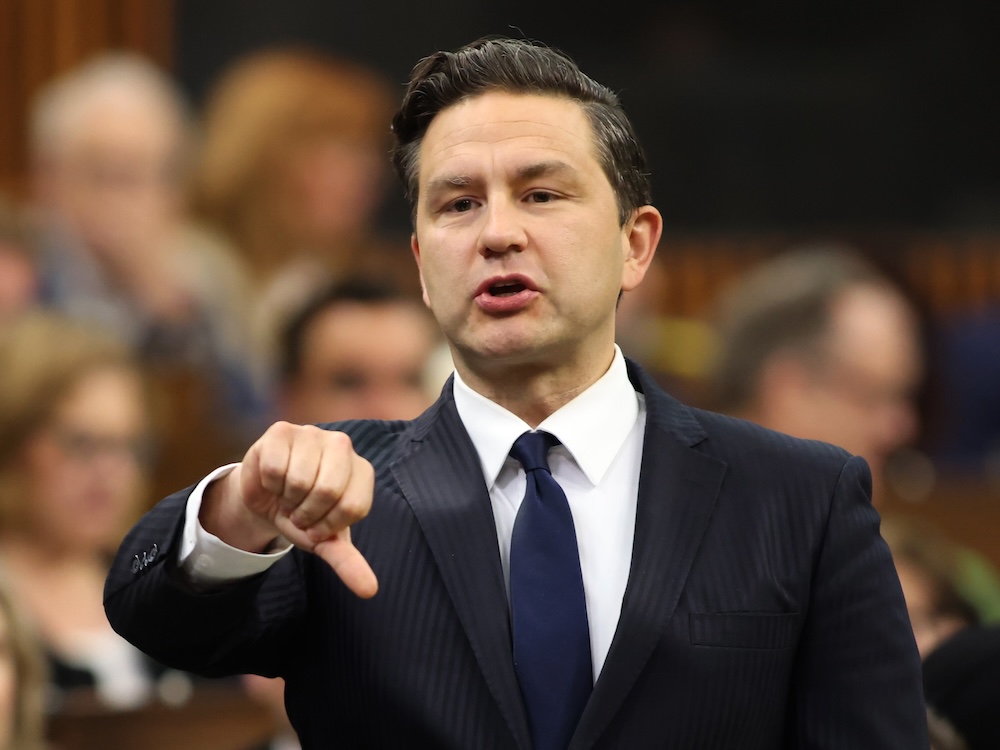
Under Pierre Poilievre’s leadership, the Conservative Party of Canada actually increased its seat count and captured a greater share of the popular vote than in any election since Brian Mulroney’s 1988 triumph. And yet Poilievre is not prime minister. Worse still for him, he lost his own seat in Carleton.
The outcome places Canadian conservatives, both big C and small c, at a critical juncture, and the direction they take could either help strengthen the country’s political fabric at a critical time in our history, or pull at its seams.
Two possible paths lie ahead.
Path 1: Rage Road
In this scenario, discontent festers and metastasizes.
Despite growing their popular support, many Conservatives view the election result as a moral victory denied by an unfair and broken system. This grievance is likely to be amplified in the Prairies, especially Alberta, where the Conservatives continued to sweep seats but saw little return in political influence. Calls to “fight for Alberta” or even “separate” are likely to resurface.
The mood is ripe for populist figures to gain traction, arguing that compromise with moderate Canadians (who voted for the Liberals) and accommodation within Confederation are no longer possible.
Smith’s earlier framing of a unity crisis could become a self-fulfilling prophecy, as she and others within the United Conservative Party escalate matters by invoking the Sovereignty Act or similar initiatives designed to provoke the prime minister and the courts.
The UCP establishment may publicly advocate against separatism, or remain strategically ambiguous on the point. As former UCP premier Jason Kenney’s resumé reveals, however, it might not matter much what the party’s official stance is on these matters if the grassroots of the party decides it wants otherwise.
Meanwhile, federal Conservatives disillusioned with another near miss may use the mandatory leadership review of Poilievre to push for radical or extremist measures of him or the new leader.
This could force the Conservative leader to tack to the far right or to the West in order to maintain enough support to maintain a grip on power internally. Doing so would only inflame tensions with the Ontario wing of the party and movement, who are already skeptical about the party’s western roots and strategies.
It is entirely unclear how such moves would generate enough support in the rest of Canada to push the party over the top (or even hold the gains it made).
In short, if the conservative movement becomes a vessel for anger and alienation, the prospect of collaborative federalism and a united front against Donald Trump dims. (For what it’s worth, this is precisely the goal of the U.S. right, the global populist movement and other foreign adversaries.)
National unity would not rupture overnight, but the centrifugal forces pulling provinces like Alberta away from Ottawa and the rest of Canada would intensify over the course of the minority government.
Path 2: Brokerage Boulevard
There’s another possibility: one rooted not in grievance, but in pragmatism.
Despite the loss, many Conservatives will see this election as proof that victory is within reach. They finished a close second, improved their national vote share (making inroads in the all-important ridings around Toronto) and remain the only opposition party with a credible shot at forming government next time.
A post-mortem may reveal that the “Trump question” hobbled the party and that any further affiliation with U.S.-style populism (including insurrection and denying losers consent embedded in Alberta separatism) would be detrimental to the party’s chances of gaining ground nationally. In this frame, it would be politically reckless to throw the party into disarray through internal purges or incendiary rhetoric.
If Poilievre survives the mandatory leadership review (and that’s a big if), he could attempt a strategic reset. Some of his advisers may argue for further outreach to moderate, urban voters, especially in Ontario and British Columbia, where the party’s gains were uneven. That would likely require tamping down the more radical voices in his caucus and the broader conservative movement (like Alberta separatists) and distancing the party from provincial leaders who threaten national cohesion.
In short, the CPC could position itself as a genuine brokerage party, building bridges among regions.
If any leader has the following to make this work, it’s Poilievre. Barring a massive election-night hangover, many of his followers are apt to remain loyal. This gives him an opportunity to push back against the forces of division and separatism, continuing his efforts to position the Conservatives as the party of Team Canada and not Team Trump.
It’s not quite a “Nixon goes to China” moment for Poilievre and the forces of populism and separatism. But it would require the same level of courage and conviction.
Even if Poilievre is replaced, prospective leaders will be aware that the Conservatives’ proximity to power gives the party an opportunity to make further gains — provided it looks like a government-in-waiting, not a party at war with itself or the federation. In any prospective leadership race, there will be voices of moderation. Whether they can amass enough support to overcome the Alberta angst is an open question.
On this path, the conservative movement acts as a stabilizer, not a saboteur.
Alberta’s government might still grumble about Ottawa to score political points, but the rhetoric would stop short of constitutional confrontation. Premier Smith may become convinced that having a sympathetic ear in the prime minister’s office is better for her, and Alberta, than another four years or more of Liberal rule. The CPC would still provide loyal opposition to Carney’s government, but with an eye to building support across the country, not spoiling its chances at power.
What lies ahead
The election didn’t deliver the national unity crisis some predicted. But it didn’t dispel it either. The country remains divided, and the federal system will again be tested in the months ahead.
Prime Minister Mark Carney has his work cut out for him.
The conservative movement, especially its leaders in Alberta and Ottawa, now hold a unique responsibility. They can fan the flames of grievance, hoping to consolidate power among the angry.
Or they can channel their electoral momentum into a constructive alternative, one that binds regions together in a common purpose.
Which road they choose will shape not just the future of their parties, but the politics of national unity in the months and years ahead. ![[Tyee]](/design-article.thetyee.ca/ui/img/yellowblob.png)
Read more: Election 2025












Tyee Commenting Guidelines
Comments that violate guidelines risk being deleted, and violations may result in a temporary or permanent user ban. Maintain the spirit of good conversation to stay in the discussion and be patient with moderators. Comments are reviewed regularly but not in real time.
Do:
Do not: