


 SHARE:
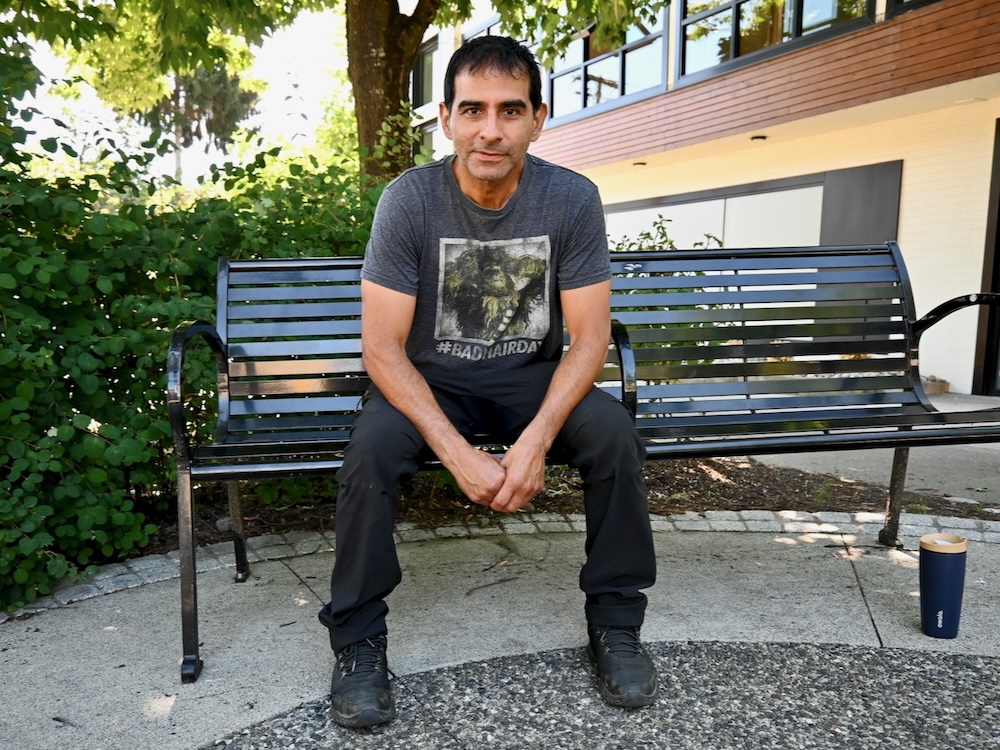
Giovanni Vanzzini was walking around a leafy Vancouver neighbourhood three weeks ago when a police officer stopped him.
The 49-year-old B.C. firefighter was in town to meet up with a family member. The Vancouver police officer who stopped Vanzzini said he had gotten a call about a suspicious person and that Vanzzini was being detained.
Vanzzini told the officer he hadn’t done anything. The officer said he was resisting and put him in handcuffs as two other police cruisers pulled up. At least four VPD officers driving three separate squad cars attended the call.
The officer opened Vanzzini’s backpack and unpacked it on the hood of a police cruiser, pulling out neatly folded clothes and digging through a first-aid kit.
This was very likely police overstep because officers are not allowed to search a bag unless under very specific circumstances, such as an arrest, said Randall Cohn, a lawyer and executive director of Pivot Legal Society.
Cohn told The Tyee it’s “common” for VPD officers to detain people and unlawfully search their bags and confiscate things without an arrest.
That’s a problem, Cohn said, because without an arrest there’s no paper trail and therefore no police accountability or access to legal recourse.
Samona Marsh, a member of Police Oversight with Evidence and Research and vice-president of the Coalition of Peers Dismantling the Drug War, said she sees a VPD officer detaining someone and searching their bag daily along Hastings Street between Main Street and Dunlevy Avenue.
Police often confiscate drugs and cash during these searches, which increases the rate of violence and crime in the Downtown Eastside neighbourhood, she said.
If a person has their own drugs or cash confiscated then they often turn to crime to recoup what they’ve lost, Marsh said. There’s also a risk of violence if police confiscate something that didn’t belong to the person it was taken from.
Without an arrest there’s no paperwork to take to your drug dealer to say the cops confiscated drugs or cash, she said, adding this can lead to drug dealers getting violent, including throwing people out of windows.
“It’s hard if the cops took $1,000 worth of dope and you only make $500 a month,” she added.
Vanzzini’s detention
Vanzzini wasn’t in the Downtown Eastside when he was stopped by police. He was walking around Fairview, a residential neighbourhood located on the south side of False Creek. He later told The Tyee he was surprised to find himself handcuffed during this interaction — after all, he works regularly with police responding to emergencies such as car accidents. But he was also relaxed.
He grew up in Mexico and has been living in B.C. for the past two decades. Vanzzini does not live or work in the Vancouver area, but he asked The Tyee to describe him only as a “B.C. firefighter” to avoid any potential friction with local police in his job.
Growing up in Mexico means you have experience with police officers shaking people down and threatening them, waiting to be bribed, he said.
So he wasn’t intimidated by the VPD officers and stood calmly, knowing he hadn’t done anything wrong and they wouldn’t find anything in his backpack.
About 25 minutes later he was released and allowed to re-pack his bag.
The Tyee witnessed the incident and approached an officer afterward to ask why the man’s bag had been searched. (The reporter didn’t identify herself as a journalist to the police at this time because she was not thinking of writing an article. It was only after the incident concluded that Tyee editors assigned the story.)
The officer said the man had been “temporarily arrested” and then let go.
The Tyee directed follow-up questions to Sergeant William Briscoe, who had overseen the incident.
The Tyee contacted the VPD media liaison for comment about the incident but they declined to comment on any specifics, including what had happened that day.
Briscoe said Vanzzini had been “arrestable for mischief” so “he was detained and, as such, was searched. He was arrestable at that time but he was not arrested.”
He continued, “the difference between detention and arrest is, you know, kind of more of a semantics thing.”
Being detained vs. being arrested
There are important legal differences between being detained and arrested, including when police are and aren’t allowed to search a bag.
Cohn said police detaining Vanzzini and searching his bag was “neither legal nor surprising,” and that it seems that the VPD officers were not following procedure.
There are three ways a police officer can search someone’s bag.
First, an officer can ask to see inside it. People have the right to say no — although speaking with a police officer can feel intimidating and officers will often “use that to their advantage to get people to give consent,” he said.
Police officers don’t have to suspect the person has committed a crime to ask to see inside their bag.
Second, an officer can detain a person if they have a reasonable basis for suspecting that person of being involved in a specific crime or having evidence of a crime, Cohn said.
When a person is detained the officer is allowed to frisk them to check for weapons.
“That does not — and this is very clear in the law — extend to a bag,” he said.
If a bag can be set down, is closed and there’s no reason for an officer to think they are in danger from what is inside the bag, then the officer is not allowed to search it, he added.
Vanzzini said the VDP officers didn’t ask for permission to search his bag and didn’t ask about any weapons. The officers took his wallet and phone out of his pants pocket after they’d searched his bag.
If an officer is stopping a person on the street who matches a description of a suspect, that meets the threshold for suspicion, and therefore a detention, but not an arrest, Cohn said.
Third, an officer can search a bag after a person has been arrested.
An arrest requires an officer to believe someone was involved in a crime, which is a step up from detention, Cohn said.
Once a person is arrested, their belongings, including their bags, can be searched, he said. This can include an on-site search. If officers don’t find anything, they can determine they won’t be pressing charges, and terminate the arrest.
Vanzzini said he was never told he was under arrest and the officers never asked permission to look in his bag, or if he had any weapons on himself or in his bag.
Cohn said it’s possible the VPD officer thought it would be more efficient to search someone’s bag before arresting them.
After witnessing Vanzzini’s detention, The Tyee sent the VPD questions by email, asking the force to explain how an officer could search a bag without arresting someone, and if the VPD was aware of or addressing concerns that officers were regularly unlawfully searching bags.
In response, Sergeant Adam Donaldson told The Tyee that officers are allowed to search bags following an arrest, or during a detention if the officer suspected the bag contained weapons or items that could assist in an escape.
“I am not going to address any specific incidents for privacy reasons,” he added. ![[Tyee]](/design-article.thetyee.ca/ui/img/yellowblob.png)
Read more: Rights + Justice








Tyee Commenting Guidelines
Please note that email notifications for replies are not currently working due to a software issue which may be resolved in a future update.
Comments that violate guidelines risk being deleted, and violations may result in a temporary or permanent user ban. Maintain the spirit of good conversation to stay in the discussion and be patient with moderators. Comments are reviewed regularly but not in real time.
Do:
Do not: