

 SHARE:
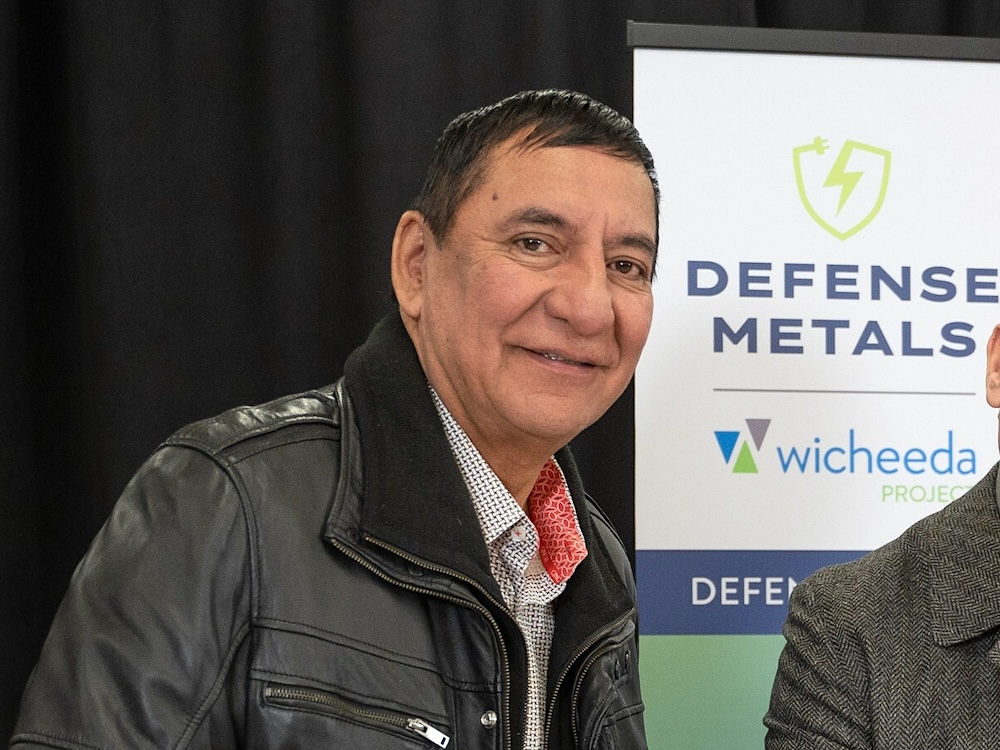
Chief Harley Chingee of the McLeod Lake Indian Band has been stripped of the use of his band-issued credit card after an investigation by The Tyee found that he racked up more than $372,000 in expenses on the card in just three years.
In a written statement to members on April 22, McLeod Lake’s band council said it made its decision following “recent media coverage” and subsequent concerns raised by some of McLeod Lake’s 556 members.
“As part of Council’s fiduciary responsibility, steps have already been taken to strengthen oversight, including a temporary suspension of band-issued credit card access,” the statement said. “Council remains committed to ensuring all expenditures are properly authorized and that members are kept informed. Our priority is to protect the integrity, trust, and long-term interests of our Nation.”
In March, The Tyee reported on Chingee’s spending, which vastly exceeded that of all other First Nations Chiefs for whom records are available.
Big spender
The Tyee scrutinized the spending after receiving paper copies of statements for Chingee’s band-issued Visa credit card. The statements covered numerous purchases in 2021 and 2022 and showed that in one month Chingee claimed nearly $22,000 in expenses on the credit card.
It was unclear how some of the spending was linked to band business. Charges included more than $5,000 in purchases at women’s clothing stores in a single month, $6,760 in charges at Rogers Arena, thousands of dollars spent at high-end hotels and on restaurant meals, Ticketmaster purchases, and contributions to provincial and federal parties that may have violated election rules.
The Tyee also used a federal government website to review the expense claims of more than 100 other elected First Nations Chiefs in British Columbia.
The site revealed that no other elected B.C. First Nations leader for whom records are available spent as much as Chingee. Last year, Chingee claimed more than $109,000 in expenses — 11 times more than the median expense claim posted by B.C. Chiefs.
The Tyee tried repeatedly to speak to Chingee and the six elected McLeod Lake Indian Band councillors but did not receive any response.
‘It takes money to make money’
In an interview with the Prince George Citizen following The Tyee’s story, Chingee was unapologetic about the spending, saying that it helped facilitate the economic gains recorded by the band during his years in office.
“White people, the vast majority, understand business and it takes money to make money; they understand that concept,” Chingee told the Citizen. “On First Nations land it’s a little different. They think you’re gouging somebody or they have a suspicion it’s not right because they don’t know business. But the guys that know me in First Nations country know that it takes money to make money.”
Chingee said that under his leadership the band’s finances had improved dramatically. McLeod Lake’s annual revenues have increased nearly tenfold from 2018, and its accumulated surplus has also grown significantly and now sits at $120 million.
“I got tired of our people depending on Indian Affairs money only,” he said. “That’s poverty. It’s only two to three million dollars a year that they give us, and that can sustain us in bare times, but we’re not in bare times.”
Chingee said the band was doing well financially in part because of its long-standing ties to the logging industry.
“We’re in a good position in McLeod Lake,” he said. “We own a forest licence, 600,000 cubic metres. Around us is timber and five mills. We’re smack dab in the middle; nobody else has got that. Nothing but timber. That’s an opportunity I seized. I saw it years ago, and my father also saw that.”
When asked about his spending at women’s clothing outlets — including Aritzia, Sephora, Kate Spade and Dynamite — Chingee told the Citizen that it was necessary to outfit “two girls” who were dressed inappropriately for business meetings.
“They did not have proper professional attire and looked too poor, so I had to upscale them to look professional,” Chingee said. “I did that for two of the girls who worked for me.”
Are the revenues sustainable?
Part of the surge in recent band revenues is attributable to the rapid logging of all the band’s treaty settlement lands over a few short years. The logging meant a massive increase in revenues, with log sales in one year surpassing $80 million.
The downside, however, is that there are now no trees left to log on those lands, which the band owns outright.
In the two most recent fiscal years, the band’s single largest source of revenue has come not from band-owned businesses, but from the B.C. government, which paid the band more than $55 million in 2024 and roughly half that amount — $25 million — last year.
The surge in provincial government payments came after Chingee signed a new revenue-sharing agreement with the provincial government one month before the band’s last election.
An upcoming election
Chingee has been the band’s top elected official for nine years and is seeking a fourth three-year term, with the election scheduled for June 5.
He handily won the last band election in 2023, when he received 110 votes. His two closest rivals, Eureka Carty and Tania Solonas, received 77 and 65 votes, respectively.
Also running to be Chief in the upcoming election are band members Jodie Ware, who has been on council for the past three years and who previously served as a trustee; Patrick Prince, an Elder and Tse’Khene language speaker; and Trevor Aubichon, who has worked in sales for decades.
Last August, with the band’s election just under a year away, a number of women wore bright red T-shirts to the band’s annual general meeting calling for female leadership.
This year’s election comes roughly two years after all six elected councillors wrote an open letter to band members saying they had ceased face-to-face meetings with Chingee as allegations of “serious misconduct and potential misappropriation of funds” were investigated.
Band members have not been told what was investigated or what the investigation found. In its most recent interview with Chingee, the Citizen reported that “none of the allegations were proven” and that the Chief “continues to meet monthly with his council.”
The Citizen story did not disclose what the allegations were, who made the allegations or who led the investigation.
In an online campaign document, Aubichon warned that the dispute between the Chief and the band’s six councillors risked doing financial harm to band members.
He wrote that the “negativity from [Chief and council] was beginning to spill over into the public arena, and such behaviour could have a negative impact on any industry partners as well as on our community.”
More promises of money
Campaign documents from all Chief and council candidates have been posted online, with Chingee’s opponents calling for more collective decision-making.
In the lead-up to the previous McLeod Lake Indian Band election in 2023, Chingee promised that each eligible band member would receive cheques worth a combined $25,000 if he was re-elected.
Kandy Stout, a band member who is now running to be a councillor, told The Tyee that she believed the promised payments were a deciding factor in Chingee’s electoral wins.
“It’s huge,” Stout said. “Every time he gets in, he does that. It’s an expectation among the band members. ‘Well, this guy’s bringing in the money.’”
In his current campaign document, Chingee is once again promising money, saying that if he is elected, band members will receive two $5,000 “distribution payments” — one in late June and another around Christmas.
Anticipating such a promise, Ware wrote in her campaign document that if she is elected Chief she will work to match any such offer, but flagged that such a decision would not be up to her alone.
“If elected as Chief, I will advocate for matching any payments offered by another candidate within the same time frame, while respecting that all such decisions require Council approval,” Ware stated.
Ware is also promising more financial transparency and that decisions will be made “through Council motions, not backroom deals” if she is elected.
Prince emphasized in his campaign document that there is a need for more collaboration and less combat and vowed that if he is elected he will be a “non-autocratic Council Team Leader.”
A ‘secret weapon’
Chingee’s campaign document is alone among the candidates in promising “major projects” on the band’s reserve lands and wider traditional territory.
The document says the projects include an unspecified $4.2-billion development on the band’s now fully logged Kerry Lake reserve lands; a gas plant also on the Kerry Lake reserve lands valued at $1.5 billion; a new timber licence that would give the band and an unidentified First Nation partner access to another 550,000 cubic metres of timber to log each year; and a data centre valued at $400 million.
The $4.2-billion number is likely associated with a proposed hydrogen plant that Chingee and Premier David Eby said in October 2023 they hoped to see built as part of a $7-billion “energy hub” on the Kerry Lake lands. The hub also included the gas plant.
The plan appeared to have the backing of Mitsubishi, but work on it and a number of other proposed B.C. hydrogen plants has stalled due to spiralling construction costs, transportation challenges and questions about the supply of necessary electricity.
Chingee’s campaign document also features a quote attributed to Prime Minister Mark Carney.
The document quotes the prime minister as saying: “Chief Harley Chingee is the First Nation’s secret weapon, and McLeod Lake should be proud of their Chief, as his skills, intelligence and leadership abilities will move his Nation forward in a good way.”
The document says Carney made the remarks in July 2025 in Ottawa. The Tyee could find no such quote online in which Carney refers directly to Chingee. Carney did, however, convene and attend the First Nations Major Projects Summit on July 17 along with more than 450 First Nations leaders in Gatineau, Quebec.
The Tyee asked the Prime Minister’s Office about the quote but did not receive a response. ![[Tyee]](/design-article.thetyee.ca/ui/img/yellowblob.png)
Read more: Indigenous, Politics








Tyee Commenting Guidelines
Please note that email notifications for replies are not currently working due to a software issue which may be resolved in a future update.
Comments that violate guidelines risk being deleted, and violations may result in a temporary or permanent user ban. Maintain the spirit of good conversation to stay in the discussion and be patient with moderators. Comments are reviewed regularly but not in real time.
Do:
Do not: