


 SHARE:

[Editor’s note: This story contains distressing details about the deaths of animals.]
A series of ill-fated events led to the poisoning deaths of more than a dozen cattle in the B.C. Interior last fall — and a hefty fine for the company involved.
The cattle died after a Ministry of Forests decision to avoid buying fertilizer from the United States led to the use of a new product from Saskatchewan that was harder to handle and clean up, according to the province.
The 13 cows were discovered dead in late September and early October in a rural area east of Quesnel. It’s believed that they died of nitrogen poisoning after consuming fertilizer that had dissolved into puddles. The product spilled while workers refilled helicopters used to fertilize replanted forests and accelerate timber growth as part of B.C.’s Forest Investment Program.
Details about what led to the poisonings were released in an April 28 final determination posted to B.C.’s natural resource compliance and enforcement database. The report describes how Western Aerial Applications Ltd., the company responsible for the spill, struggled with the “sticky” substance and a “disgruntled employee” leading up to the deaths.
Timing was also a factor. The Chilliwack-based company told the Ministry of Environment and Parks’ compliance and enforcement branch that although aerial fertilization in the area usually occurs later in the season, it moved the work up when another contract near Prince George fell through. That caused the fertilization to occur while cattle were still grazing.
“We admit making mistakes on the Quesnel project,” Western Aerial Applications general manager Josh Jonker told The Tyee in an email. The company has voluntarily compensated the rancher for the livestock losses and “greatly improved our ground crew training and service quality monitoring processes” to ensure the incident is not repeated, he said.
“As a 40-year-old B.C. family-owned company that has treated over seven million acres throughout Canada, you learn that sometimes things don’t go exactly to plan, despite your best efforts,” Jonker said.
Last month, Western Aerial Applications was fined $32,500 under B.C.’s Environmental Management Act for its role in the cattle deaths. While the province originally calculated the fine at more than $110,000, it reduced the amount following a submission from the company that showed it had compensated the rancher, demonstrated remorse and taken steps to prevent a reoccurrence.
The fine is among more than two dozen administrative penalties issued under the Environmental Management Act since the start of this year. The fines ranged from about $1,000 to more than $160,000 and totalled more than $500,000. They were frequently issued to mining operations and often related to water quality, hazardous waste and air quality infractions.
In the case of Western Aerial Applications, the province determined that the contravention was “major” with “very high” potential adverse effects, including the possibility of widespread damage to plants and animals.
The company is not appealing the fine, Jonker said.
According to the final determination report, Western Aerial Applications was subcontracted by Central Interior Mapping Co. Ltd., a forestry management company based in Quesnel, to apply fertilizer in a rural area off Highway 26 between Sept. 23 and Sept. 30.
Over five days in late September and early October, a rancher with a grazing lease in the area “observed spilled fertilizer blend and 13 deceased cows” at six locations, according to the report. On Oct. 1, a Ministry of Forests range officer also visited and observed dead cattle along with “spilled fertilizer, standing water and hoof prints,” it said.
While Western Aerial Applications had taken steps to prevent spills — including checklists, safety meetings, risk assessments and training — a forester with Central Interior Mapping Co. told a provincial investigator that its own staff had returned and cleaned up spilled fertilizer at six locations over the course of several days in late September.
“On several occasions I told [Western Aerial Applications] crew members that cleanup needed to improve,” the forester told a Ministry of Environment environmental enforcement officer, adding that the need for further cleanup was “a common situation that didn’t seem to improve” despite repeated requests.
In its submission to the province, Western Aerial Applications described “minimal efforts performed by one disgruntled employee” — apparently a new hire who overfilled the helicopter buckets, spilling fertilizer on the ground.
That employee was terminated as a result, according to the report.
Notes recorded by the environmental enforcement officer state that the site had “control issues” and that a new operator “lasted one day.”
But the spilled fertilizer lasted much longer, records show. It remained in the environment for seven days.
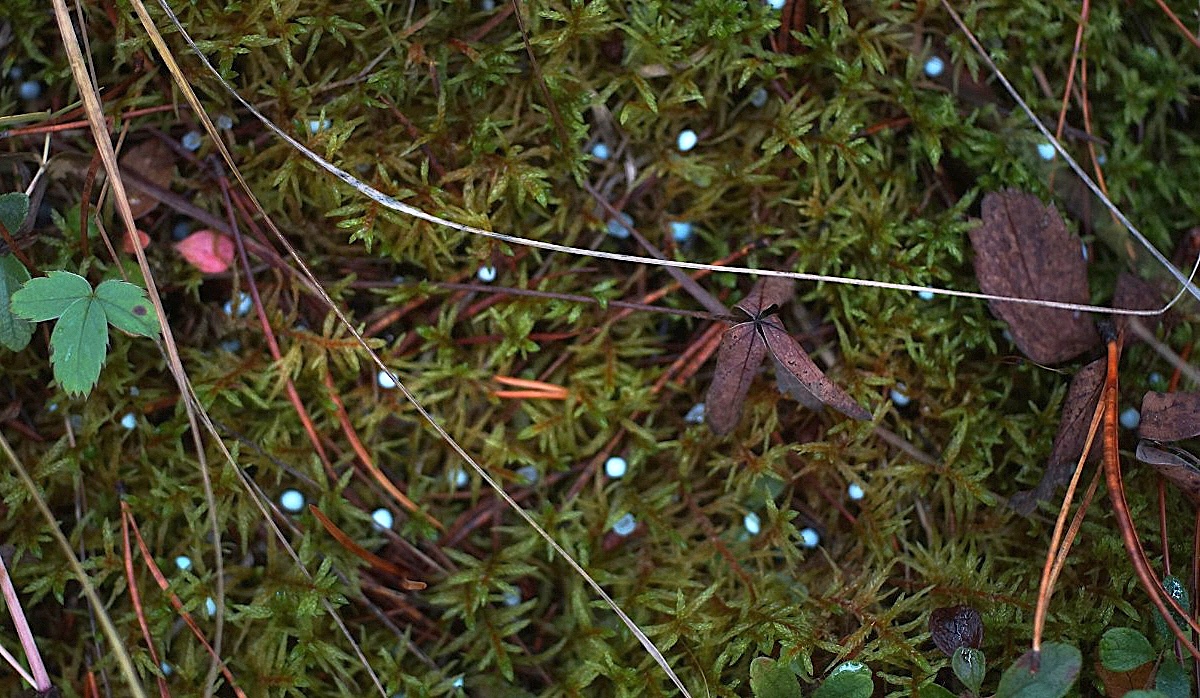
The fertilizer, a urea-sulphur-boron blend high in nitrogen, resulted in “a pile of blue gunk,” believed to be the blue urea coating on the fertilizer, collecting under the hopper used to fill the helicopter bucket, the report said.
Western Aerial Applications told the province that the new fertilizer blend displayed “unusual adhesion and persistence” that caused pellets to stick to soil and vegetation, hampering cleanup efforts.
“The product was blue this year due to a government decision to source it from outside the U.S. for political reasons,” the environmental enforcement officer noted. “Unfortunately, cattle can see blue well, which may have attracted them. The blue product was also problematic operationally — it was sticky and clogged equipment.”
Samples taken from inside the stomachs of three cows found over several locations contained “blue-coloured contents.” Based on a combination of the cows’ sudden deaths, fertilizer exposure, the blue substance in the cows’ rumen and no other cause of death, investigators determined the deaths to be the result of urea toxicity caused by ingesting the fertilizer.
While urea does not pose a significant risk to humans, small quantities can be lethal for ruminant animals like cattle, other livestock and wild ungulates like deer, elk and moose, because their digestive systems rapidly convert urea to ammonia. Death typically occurs within four hours, according to a veterinary pathologist cited in the province’s report.
Some cows were found with blood coming from their eyes, mouths and noses, the report said. In some cases, their calves remained nearby. Nitrogen poisoning also increases the risk of abortions in surviving cattle, it said.
B.C.’s Forests Ministry confirmed that it will no longer be using the product for its forest fertilization program.
“The fertilizer product was discontinued immediately after the events in Quesnel last year and is not being purchased or utilized again,” a spokesperson wrote in a statement, adding that all contractors are monitored for compliance with contract standards. “Where issues have been identified with a given contractor, additional monitoring is done to ensure proper compliance.”
Jonker defended the fertilization program, pointing to benefits beyond timber growth, such as encouraging the growth of forage for wildlife and increased sequestration of carbon dioxide from the atmosphere because of tree growth.
Since the incident the company has updated its emergency response and occupational health and surveillance plans and instructed staff that they have the “sole responsibility” for cleaning up a site prior to leaving.
In addition to compensating the rancher for the lost livestock, the company incurred more than $91,000 in costs, including from “operational disruptions, internal investigation and the implementation of corrective measures,” the report said.
Indirect costs include projects that were cancelled until another fertilizer can be sourced, it added.
“Obviously, the cattle incident in Quesnel was terrible, nobody wants animals to suffer or die unnecessarily,” Jonker said in an email. “Mistakes were made, and we’ve paid a hefty price... but we’ve made significant improvements to our ground crew training and service quality monitoring processes to ensure this never happens again.” ![[Tyee]](/design-article.thetyee.ca/ui/img/yellowblob.png)
Read more: Environment











Tyee Commenting Guidelines
Please note that email notifications for replies are not currently working due to a software issue which may be resolved in a future update.
Comments that violate guidelines risk being deleted, and violations may result in a temporary or permanent user ban. Maintain the spirit of good conversation to stay in the discussion and be patient with moderators. Comments are reviewed regularly but not in real time.
Do:
Do not: