


 SHARE:
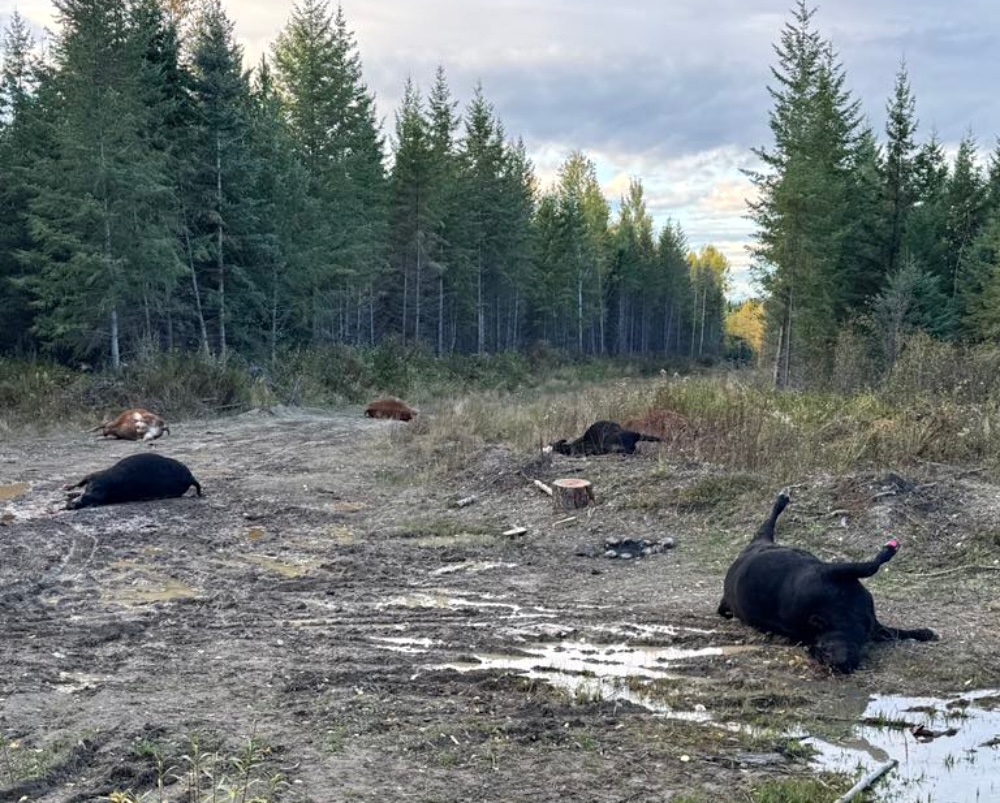
[Editor’s note: This story contains an image of dead cows that could be distressing to some people.]
The B.C. government is recommending a fine against those responsible for the deaths of more than a dozen cattle last fall, but the Ministry of Environment and Parks won’t say who, exactly, investigators believe is to blame for poisoning at least 13 cattle in the province’s Interior.
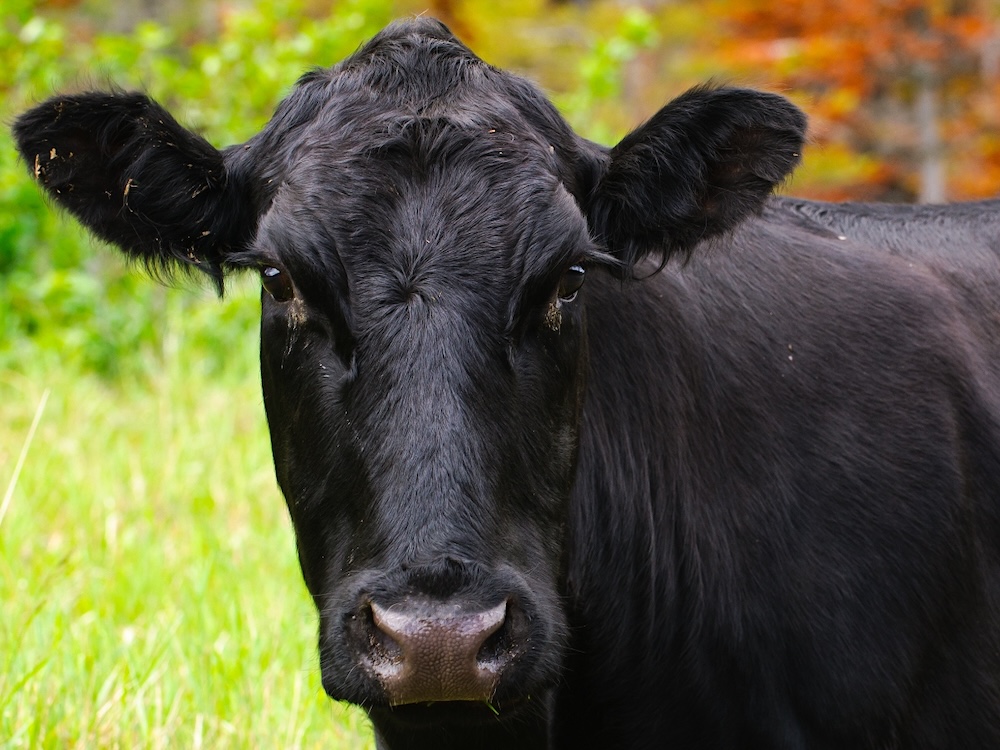
The incident prompted public outcry last October after photos of dead cows began circulating on social media. The cattle, which belonged to a rancher with a grazing tenure in the Quesnel area, were believed to have been poisoned when they consumed nitrogen fertilizer meant to accelerate timber growth.
B.C.’s Ministry of Forests told The Tyee that laboratory analyses of the fertilizer and animal tissues are still being completed.
“Until results are known, we are strengthening cleanup protocols, retraining crews, and reviewing all field handling and safety procedures to prevent any future incidents,” a spokesperson wrote.
Meanwhile, the Environment Ministry said its investigation under the Environmental Management Act has concluded with investigators recommending an administrative penalty — a fine imposed on a person or business alleged to have violated a regulatory requirement.
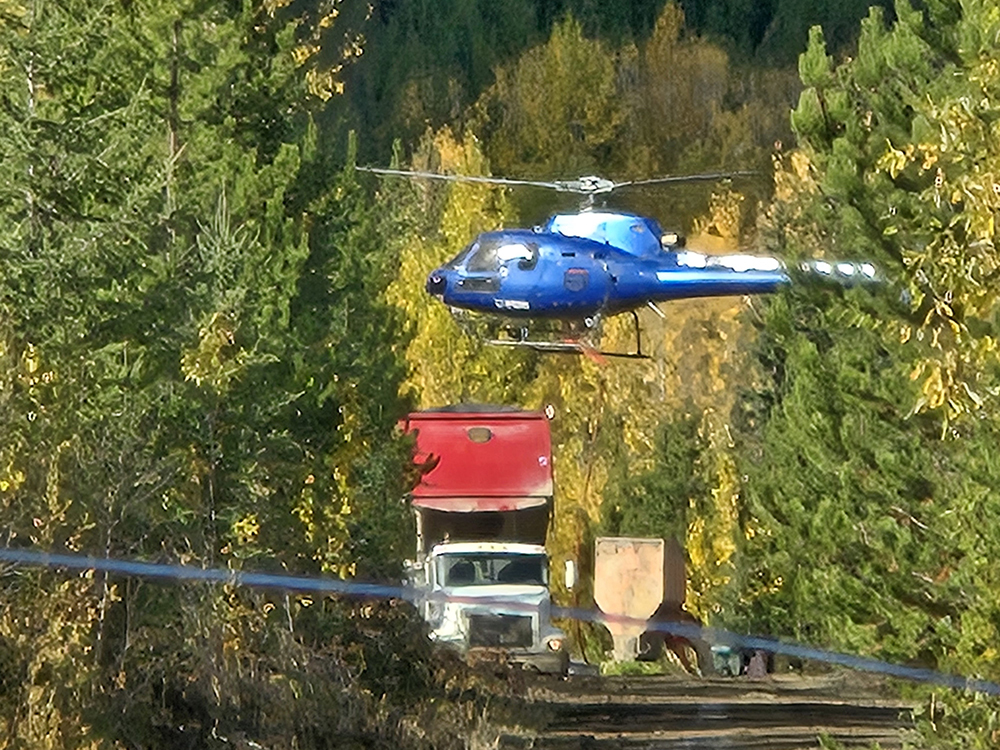
The Ministry of Forests hires contractors to spread fertilizer by helicopter as part of its forest nutrient management program. B.C. first began fertilizing coastal Douglas fir forests in 1978 and expanded the program to include Interior forests during the 1980s.
The province touts the program’s economic and environmental benefits, saying more rapid tree growth accelerates carbon sequestration and supports jobs in the forest industry. While nitrogen is an essential crop nutrient, it is toxic to humans and animals in high concentrations.
The ministry would not confirm whether the penalty is being levied against the contractor hired to spread the fertilizer, nor would it name the contractor. Anyone facing an administrative penalty has 30 days to appeal to B.C.’s Environmental Appeal Board, which provides an opportunity to be heard through an administrative hearing.
A final determination is expected in the coming months and will be posted to the province’s Natural Resource Compliance and Enforcement Database, the ministry said. Usually, companies are identified at that time.
In recent years, the province has fertilized roughly 30,000 hectares of forest every year and pays about $20 million annually for the purchase and management of forest nutrients, according to annual reports.
It’s unclear whether last fall’s cattle deaths resulted from a spill, which could occur during the refilling of a helicopter used to distribute the fertilizer, or through water contamination.
Following the cattle deaths in October, BC Cattlemen’s Association general manager Kevin Boon told CBC that fertilizer pellets spilled at refill sites could be ingested by cattle and “possibly some wildlife as well.”
“There was enough of it there that these cows were able to ingest it and became sick and died,” Boon said.
While grazing tenures commonly overlap forestry operations, Boon said that contractors distributing the fertilizer normally begin their work after cattle are removed for the season. In this case, the deaths occurred about two weeks before the rancher’s grazing licence ended in mid-October, he said.
He estimated the cost to the rancher could be as high as $80,000.
A Ministry of Forests spokesperson said negotiations are ongoing regarding compensation for the rancher.
The BC Cattlemen’s Association declined The Tyee’s recent request for an interview, saying in an email that it had no further updates.
“Typically, when events like this happen, it is an isolated incident and then additional precautions are taken by all parties so it doesn’t happen again,” communications manager Julie-Anne Puhallo wrote.
Prince George resident James Steidle, whose organization Stop the Spray BC advocates against the use of the herbicide glyphosate on B.C.’s forests, worries that the poisonings did not result from a mishap but from standard forestry practices.
“The rancher in that situation did not see any piles of fertilizer, so the assumption was that the rain had collected the distributed scattered amounts of fertilizer into the puddles the cattle drank from,” he said.
Steidle told The Tyee that the dead cows were discovered spread over one kilometre and appeared to have been poisoned at multiple sites.
“There’s a bunch of this chemical fertilizer being distributed on public forest where there’s no doubt going to be an impact on wildlife,” he told The Tyee. “To just chalk that up to some kind of contractor oversight, I don’t think is a fair representation of the problem.”
Steidle added that it would be unfair to penalize the contractor if they were “just doing what everybody else is doing.”
In an email to The Tyee, the Forests Ministry described the incident as “isolated” and said there was no risk of contamination to any water body.
“We have determined the cows in this incident ingested the fertilizer from the ground or from rain puddles,” a spokesperson wrote.

The ministry’s forest nutrient management standards say that fertilizer must be loaded into dispensing equipment at least 10 metres from a water body. In the event of a spill, operations must stop and the fertilizer must be cleaned up the same day.
There is also a duty to immediately report the spill.
B.C.’s Forests Ministry said the standards were last updated in November 2024 and “had been in place long before this incident occurred.” It said a small change last July regarding hand fertilization was unrelated to the cattle incident.
“The latest Forest Nutrient Policies were not created considering recent events but will be further reviewed this fall,” Forest Investment and Reporting Branch director Leith McKenzie wrote in an Oct. 13, 2025, email sent to ministry staff and several forestry consultants employed by the multinational firm PricewaterhouseCoopers. The internal email was obtained by The Tyee through a freedom of information request.
B.C.’s Forests Ministry gathered nearly 2,000 pages of records in response to The Tyee’s freedom of information request for communications about the cattle poisoning incident. However, it released just 94 pages — most of them unrelated to the incident. The remaining pages were withheld under legislation that protects law enforcement activities. ![[Tyee]](/design-article.thetyee.ca/ui/img/yellowblob.png)
Read more: Environment











Tyee Commenting Guidelines
Please note that email notifications for replies are not currently working due to a software issue which may be resolved in a future update.
Comments that violate guidelines risk being deleted, and violations may result in a temporary or permanent user ban. Maintain the spirit of good conversation to stay in the discussion and be patient with moderators. Comments are reviewed regularly but not in real time.
Do:
Do not: