


 SHARE:
A damning audit of British Columbia’s speculation and vacancy tax shows why it should be scrapped, says Peter Milobar, the Conservative Party of BC’s finance critic.
“I think it’s very clear it’s not collecting anywhere near the revenues the government said it would collect,” said Milobar, who is also a candidate to lead the party. “I think it’s perhaps time for the government to admit this is a tax that isn’t working as intended... and scrap it and get back to the drawing board.”
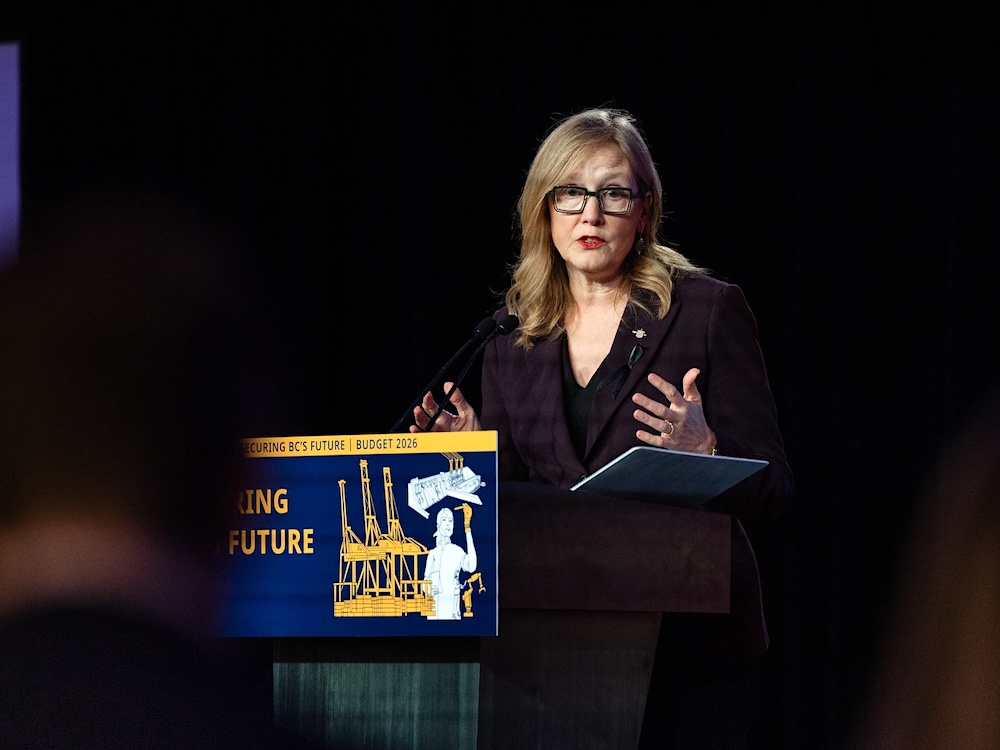
Finance Minister Brenda Bailey says the speculation and vacancy tax is staying.
It has been really effective at making more homes available for rent, she said. “It’s an important tax to help us accomplish our goals in the housing market. We want this to run well, which is why we did an audit.”
Conducted in 2023 and recently made public, the report by the Finance Ministry’s internal audit team found the ministry had few tools to ensure compliance with the speculation and vacancy tax, or SVT.
The government wasn’t collecting the revenue it should have been and the backlog of files requiring collection action would take the ministry five years to clear, according to the “Internal Audit Report on Provincial Taxation Revenues: Speculation and Vacancy Tax.”
“The cumulative effects of the issues described in this report is that the Ministry is not able to collect significant amounts of SVT owing to the Province,” found the auditors.
“A mature tax administration consistently collects its tax revenues,” said the report. “In the case of SVT, significant collections issues exist, and amounts owing to the Province are not being collected in a timely manner.”
When introduced in 2018, the speculation and vacancy tax could be between 0.5 and two per cent of the property’s value, depending on how the owners used the property, their residency status and where they earned and reported their income.
In December the province raised the tax to three per cent for foreign owners and people who report most of their income outside Canada and to one per cent for Canadian citizens and permanent residents.
By March 31 each year, residents of the 59 communities where the tax applies are required to file a declaration that will determine whether they have to pay the tax.
The audit found that as of March 31, 2023, five years after the introduction of the tax, the government had filed liens of $74 million on properties where payment was overdue and there was another $317 million “pending collection activity, reassessment, or subsequent declarations.”
The amount owed to the government exceeded the $311 million it had collected and made up 30 per cent of the bad debt on the government’s books.
Bailey said the ministry is acting on what the auditors found.
“We took the results of the audit and we’re looking at them and we’re making improvements,” she said. “Essentially we go through the audit and pull out areas that we’re going to make positive changes, and that work is going on now.”
One change, she said, is the introduction of a $250 penalty starting in 2027 for people who fail to make declarations by the March 31 deadline.
“It’s been in place a couple years now and most people are getting into the habit of on March 31 making their declarations, but some people have chosen not to and we want to make sure that they also participate,” she said.
Bailey said she didn’t know the updated figures for the file backlog or the amount of speculation and vacancy payments due to the province, but that she would get the information to The Tyee later. By publication time it had not arrived.
Milobar said opposition MLAs continue to hear from people in their communities about ongoing problems with the speculation and vacancy tax and that many people rightfully feel that it is punitive.
“The reality is there are a lot of people caught up in these rules in terms of filing,” he said. “At a time that we’re trying to grow our economy, attract investment, make sure people with skills stay in British Columbia and don’t leave en masse, these extra layers of cost to people that are literally not doing anything other than trying to live in their home, it is very detrimental.”
When the government introduced the tax it said it was intended to pay for housing in the communities where the money was raised, said Milobar.
“If they’re going to cancel a bunch of housing projects and long-term care facilities in this budget, maybe they should cancel the tax that was supposed to help pay for those things in the first place,” he said.
According to the audit, the government expects to collect the speculation and vacancy tax on about 11,000 properties, but administering it requires sending out 1.7 million letters. A significant number of people fail to make a declaration or don’t comply with the requirements.
The declarations are a bureaucratic step that annoys many people, said Milobar. “A lot of people that are not filing are either unaware they have to or fundamentally think they live in their home [so] why are they having to prove to the government they live in their home.” ![[Tyee]](/design-article.thetyee.ca/ui/img/yellowblob.png)
Read more: BC Politics, Housing










Tyee Commenting Guidelines
Please note that email notifications for replies are not currently working due to a software issue which may be resolved in a future update.
Comments that violate guidelines risk being deleted, and violations may result in a temporary or permanent user ban. Maintain the spirit of good conversation to stay in the discussion and be patient with moderators. Comments are reviewed regularly but not in real time.
Do:
Do not: