


 SHARE:
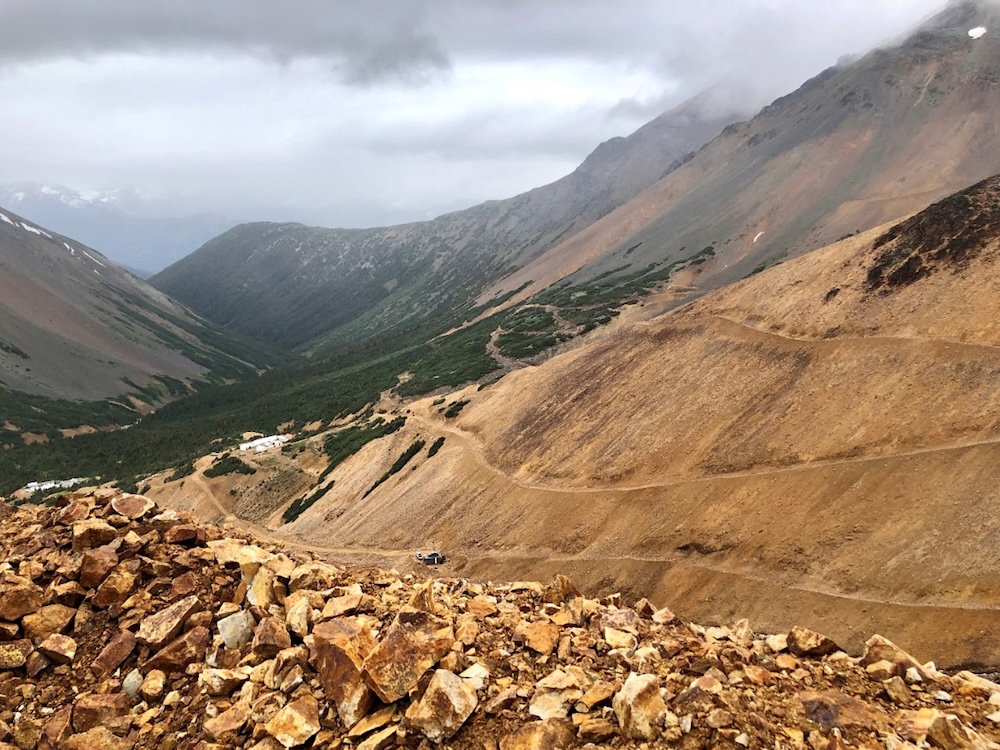
B.C. has provided a first glimpse into its planned fast-tracked environmental assessment process for major projects, including mines.
The changes are a major part of the province’s Infrastructure Projects Act (Bill 15), which gives the government new powers to exempt selected projects from existing rules. The law requires enabling regulations, and last week the government released a discussion paper outlining what those might include.
The suggested measures include a new 20-month deadline and a proposal to replace a required list of assessments — including on issues like a project’s impact on climate change and its cumulative effects with other industrial activities — with a narrower assessment that considers only issues deemed to be “high risk.”
The changes would also remove opportunities for Indigenous-led environmental assessments and would halve the number of public comment periods and opportunities for consensus-seeking with First Nations.
The public has until April 13 to provide feedback through a survey on the province’s website. People can also email written submissions, and the province says it is also consulting with First Nations, local governments and industry groups.
Last spring, Premier David Eby pitched the new fast-track law as a necessary tool in response to economic uncertainty caused by tariffs levied by U.S. President Donald Trump.
“It is time to build again, and we don’t have a moment to waste,” Eby said. B.C. needed to return to more development, he said, citing the construction of dams and major highways.
“We cannot allow slow permitting processes and bureaucratic processes to delay what we know has to happen,” he said. “That will cost us at a time we can least afford it.”
But Nikki Skuce, co-chair of the BC Mining Law Reform network and director of conservation organization Northern Confluence, questioned that claim.
“It's not the environmental assessment process that's the problem and causes all of these delays,” said Skuce. Research, for example, suggests that economic factors like commodity prices were the prime drivers of delay in mining projects. Skuce said the province’s current environmental assessment process for mine approvals is an important tool for mitigating environmental risks and helping inform the public about those risks that remain.
Merle Alexander, a Hereditary Chief of the Kitasoo Xai’xais First Nation and a lawyer focusing on Indigenous resource law, sees the proposed changes as part of a broader retreat on Indigenous rights, including the province’s commitment to amend the Declaration on the Rights of Indigenous Peoples Act.
“Five years ago, we would have thought legal reform was going to make things consistent with UNDRIP [United Nations Declaration on the Rights of Indigenous Peoples], and now there's a legal reform, but it's actually going in the complete opposite direction,” he said. A foundation of court decisions on Indigenous rights, title and UNDRIP will come into play if the process is tested in court.
The current environmental assessment process
Seven years ago B.C. overhauled its environmental assessment process.
The changes aimed to address long-standing issues in resource management, which has carved up resource impacts into bureaucratic silos for specific industries like mining, forestry and oil and gas.
Over time, the broader impacts of development — including mining, forestry and road-building — have increased, and a given resource project’s effect on ecosystems can’t be understood without looking at other ways it impacts the land.
B.C.’s auditor general noted the issue in her 2015 report, finding that “neither legislation nor other government directives explicitly requires this ministry, or any other government ministry or agency, to manage cumulative effects when authorizing the use of natural resources.”
Blueberry River First Nations filed a notice of civil claim that year, arguing that the cumulative effects of resource development in its traditional territories had breached the nation’s treaty rights. In 2021, it won its case in a landmark ruling.
The province responded to the auditor general’s report, in part, by overhauling its environmental assessment regime. The government introduced a new law that then-minister of environment and climate change strategy George Heyman said was aimed at “enhancing public confidence” and “advancing reconciliation.”
The new process would assess projects against a mandatory list of criteria, including impacts on health and culture, future generations, greenhouse gas emissions and cumulative effects. The changes meant, for example, that a mine proposal assessment could be required to address the cumulative impacts of other forms of industrial resource development — like forestry — when a project’s influence on caribou herds is being assessed.
Though the new process was developed before the Declaration on the Rights of Indigenous Peoples Act was passed, it was intended to align with UNDRIP and recent developments in case law on Indigenous title.
It included explicit requirements to consider Indigenous rights and Indigenous land-use plans and tools to better include First Nations decision-making, including Indigenous-led environmental assessments and a dispute resolution process.
What would a fast-tracked assessment change?
Unlike the standard assessment, which takes between two and four years, the proposed expedited assessment would receive a 20-month time limit. To facilitate the shorter timeline, the fast-tracked approach would remove many of the changes added in 2019.
It would scrap the list of assessment criteria, including cumulative effects. Instead, the fast-track version of the process would assess only criteria deemed to be “high risk.” The public would have two weeks to provide input.
The new approach could also change how the province assesses information.
B.C.’s regular process involves a back and forth between the environmental assessment office and the project proponent, letting the province request additional information or analyses based on the information it receives.
But the new, expedited approach would scrap that, shifting instead to a “validation-based model” during which the province would focus on checking the accuracy of the information already provided.
In the regular assessment, the back and forth is the meat-and-potatoes section of the process. Companies have up to three years to conduct studies, refine them with the government, engage with Indigenous nations and submit their application. Under the fast-tracked version, that part of the process would be shortened to 180 days.
The new process could also eliminate some of the province’s commitments to involve First Nations in decision-making.
It would remove the option to conduct a separate, Indigenous-led environmental assessment, for example, and omit half of the points during the standard environmental assessment when the province is obligated to “seek consensus” with First Nations.
Whereas the standard assessment process required four points of consensus-seeking, it now requires just two: before the company has applied and after the province has conducted its assessment and made its recommendations to mitigate its effects.
The process also reduces opportunities for public comment. Under the expedited process, the public can comment before the project has submitted its application and would have one opportunity after the application has been submitted. The public would lose the opportunity to provide feedback on government recommendations aimed at mitigating a project’s effects.
The province is also planning to redesign its approach to dispute resolution with First Nations, another recent addition in the 2019 environmental assessment process.
Which projects will be eligible?
The fast-tracked process wouldn’t apply to every resource project in B.C.
In September, the province concluded its public engagement on the types of projects eligible for the fast-track process. It’s now drafting the associated regulations. During the engagement, it set out a list of criteria under consideration.
The proposed criteria indicate that First Nations “significantly and directly impacted” by a given project must “support” any fast-tracking designating of a project.
The province has defined a list of project types that could apply for designation, including critical minerals mines, supply chain capacity and environmental restoration. It also cited projects to support “energy security,” defined as a project that secures “affordable and sustainable energy.”
Premier David Eby has said that pipelines and LNG projects won’t be eligible — though that limitation isn’t part of the law.
The province has also indicated projects must have a degree of “readiness,” including financing and a feasibility study. Private projects must either exceed a capital cost of $100 million or provide other benefits like access to new markets or improving community “livability.”
In February, the province announced it would fast-track early-stage permitting for three proposed mines. It is still unclear, though, whether the projects would be deemed eligible for fast-tracked environmental assessment processes.
Private contractors play a bigger role
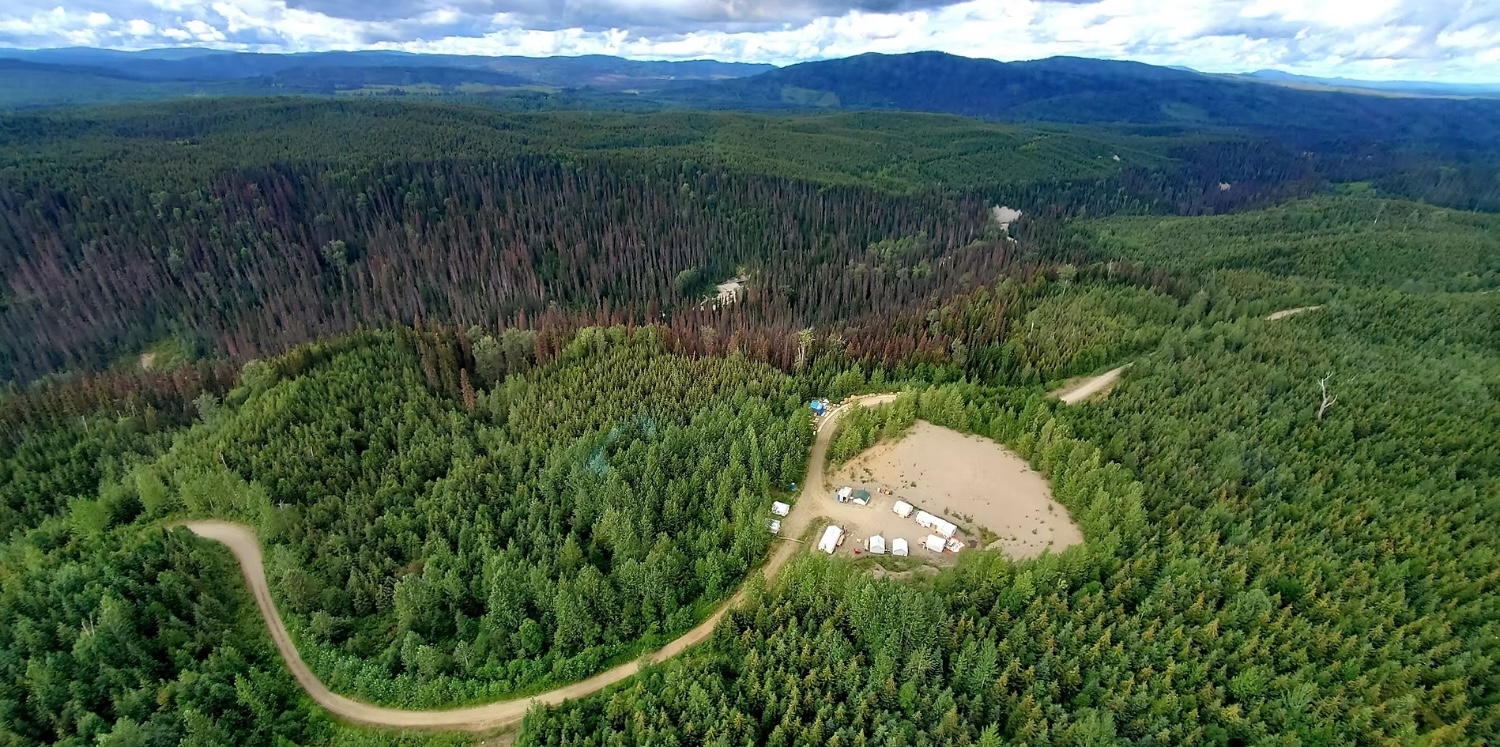
The province also hopes to expedite projects under its new Bill 15 tools by diverting assessment responsibilities from government to private contractors. It concluded public engagement on coming regulations last fall.
Under standard processes, projects apply for permits allowing them to impact the environment, such as pumping effluent into a local stream. But if a project is designated for the expedited process, the province could decide to offload its responsibilities to assess and certify certain permits to private contractors.
The practice of shifting government responsibilities onto private contractors was a flagship policy approach of the BC Liberals in the 2000s and 2010s.
After the NDP took power in 2017, a government audit identified various shortcomings with the approach and made 121 recommendations to improve the model.
The discussion paper says that under the new expedited process, the province will transfer responsibilities to private contractors only when the assessment is “straightforward and objective” and involves standards that “do not require significant interpretation or need to exercise judgment.”
The early response
Matthew Nefstead, a staff lawyer with West Coast Environmental Law, is among those worried about what the province has signalled.
“I’m concerned about the assessment being limited to what the environmental assessment office considers to be high risk,” he said. “There’s a significant risk that cumulative effects impacts will be missed.”
Nefstead also worries about the province’s decision to scrap its iterative approach to information gathering.
“It will be up to the proponent to frame how the effects of the project will be investigated,” he said. “I would just be concerned that the quality of information that's feeding into the assessment is going to be lower as a result.”
In its discussion paper, the province suggests it will address that concern by requiring that projects demonstrate “advanced readiness,” including by engaging with those affected at the outset of the process.
It says it will establish “continuation criteria” developed in the pre-assessment phase. If they are not met, the project could lose its fast-track status. But because these conditions are established before the actual assessment, Nefstead worries they could miss important discoveries that become apparent during the assessment.
In a statement to The Tyee, the Union of BC Indian Chiefs president, Grand Chief Stewart Phillip, said that “robust environmental assessment processes” are critical to protect the environment and First Nations' inherent and Aboriginal rights, including title rights.
“Without those processes, the risk for unmitigated environmental harms and infringements increases significantly,” he said, adding that First Nations’ free, prior and informed consent “needs to be hard-wired into any regulation or guidance that allows environmental assessments to be expedited.”
Alexander, the lawyer and Hereditary Chief, said the province’s proposed approach falls short of that standard, as shown by its pledge to limit the fast-track approach to projects that have “support” from “significantly and directly impacted” First Nations.
“The word ‘support’ is not consent,” he said, noting that the words “support” and “impact” don’t have clear legal definitions, potentially opening up new legal risks for the province.
“The courts are going to use language that they know,” he said. “They're going to use the common law that they know.”
Alexander noted that the province will hold the power to determine which First Nations are “significantly impacted” by a project, potentially allowing it to tip the process in its favour.
Alexander is concerned a fast-tracked assessment could disproportionately affect First Nations with fewer resources that would face challenges in meeting tighter timelines. Alexander added that the government’s proposal to remove Indigenous-led environmental assessments is another damaging rollback.
“That highest standard is almost getting deregulated out of the process.” ![[Tyee]](/design-article.thetyee.ca/ui/img/yellowblob.png)
Read more: Indigenous, Energy, Labour + Industry, Environment










Tyee Commenting Guidelines
Please note that email notifications for replies are not currently working due to a software issue which may be resolved in a future update.
Comments that violate guidelines risk being deleted, and violations may result in a temporary or permanent user ban. Maintain the spirit of good conversation to stay in the discussion and be patient with moderators. Comments are reviewed regularly but not in real time.
Do:
Do not: